 YardMate
Clover Dodder
Cuscuta epithymum
Hard · Experienced growersAbout Clover Dodder
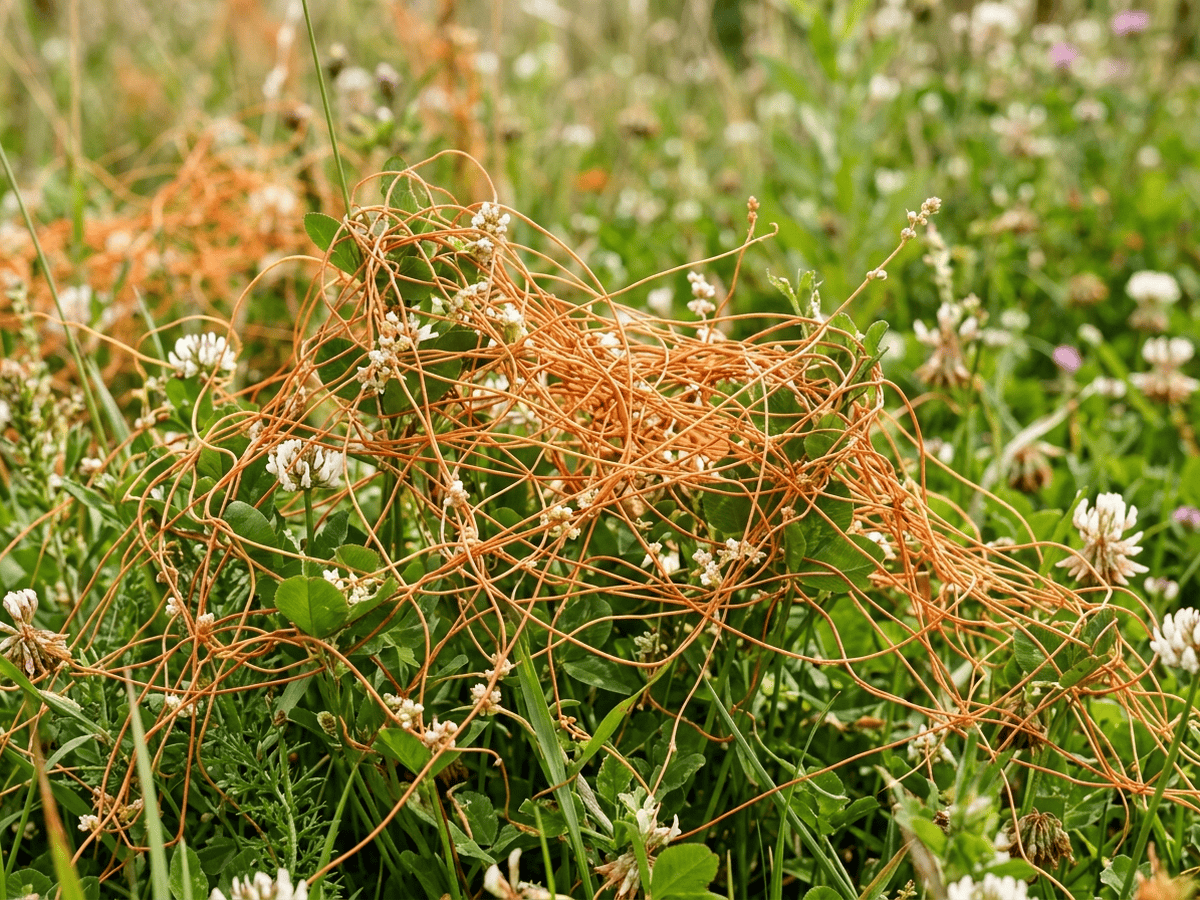
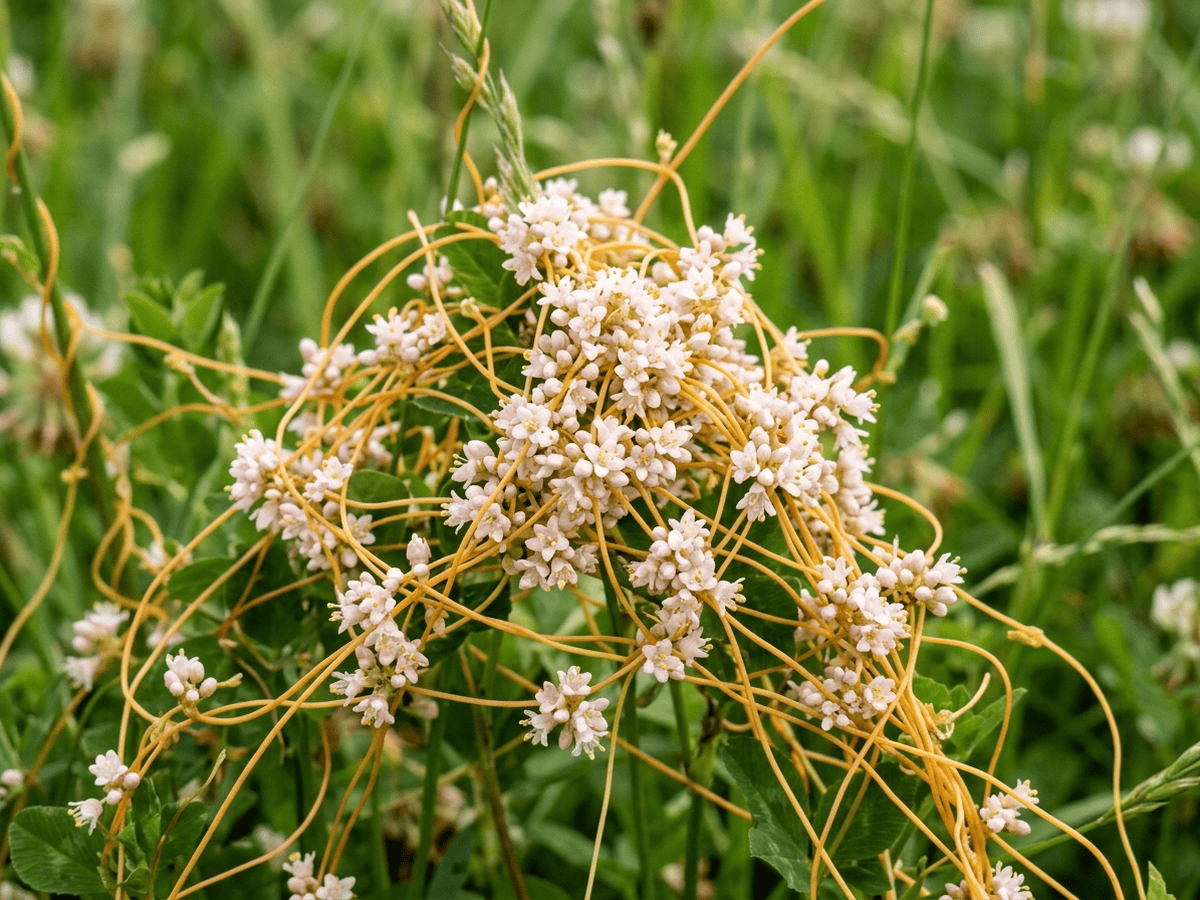
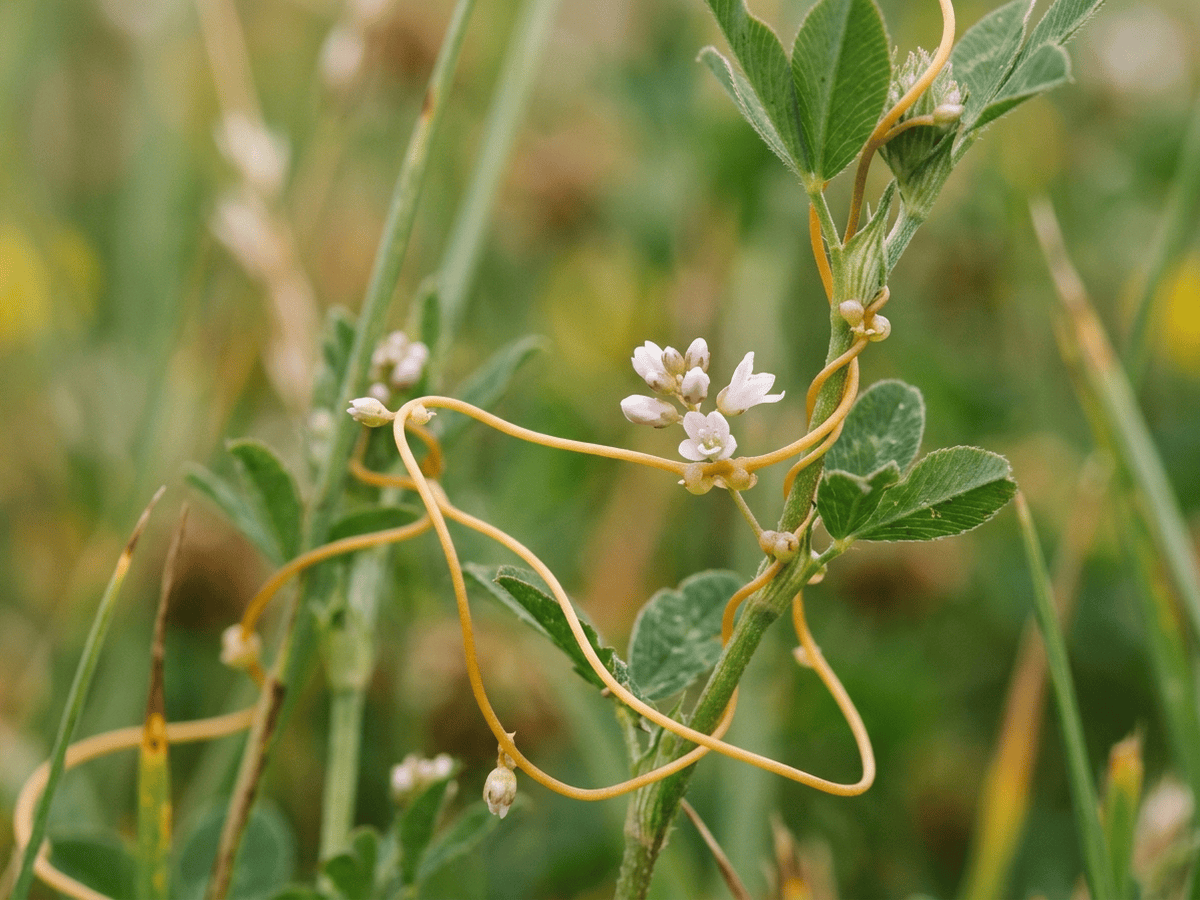
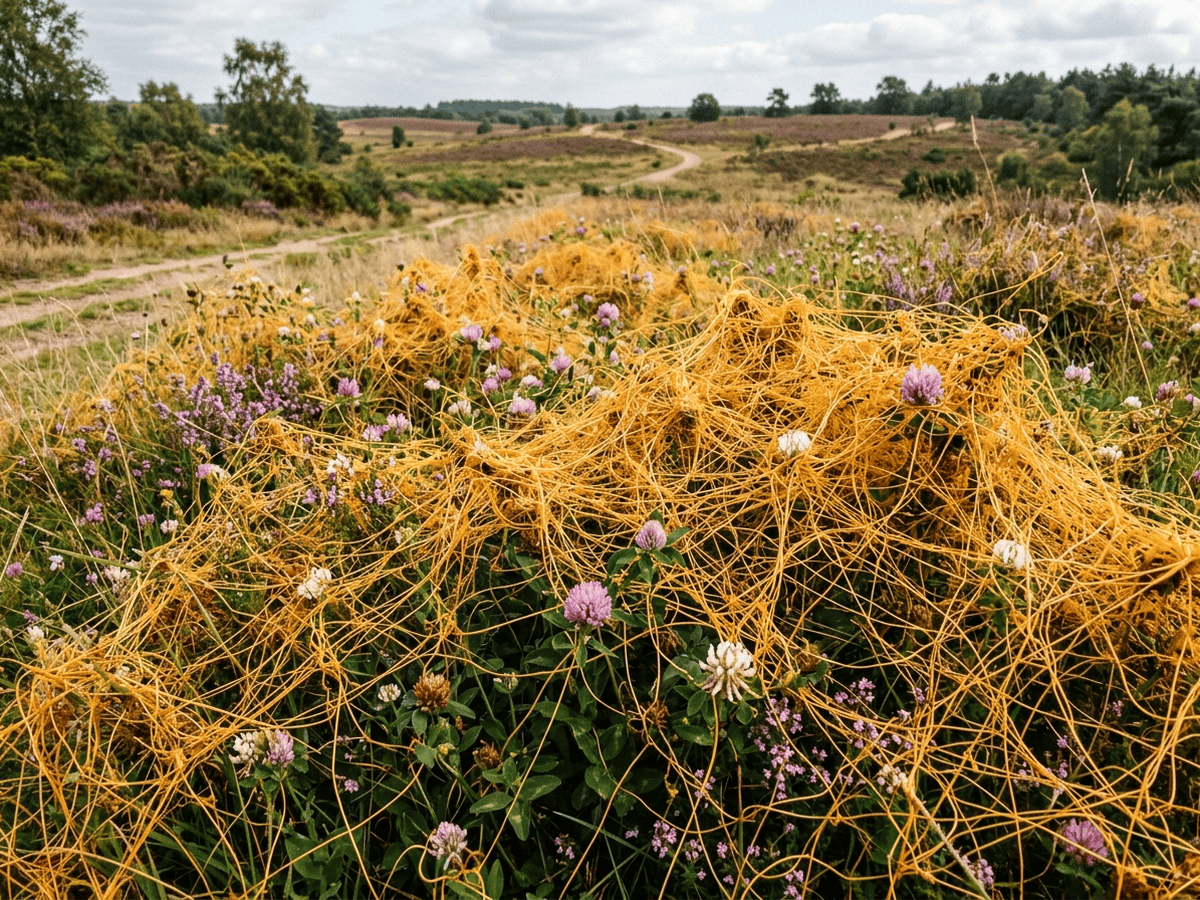
Cuscuta epithymum, the Clover Dodder, is a remarkable holoparasitic annual vine native to Europe and Asia with no chlorophyll, no functional roots, and no leaves—it survives entirely by tapping into host plants through specialized sucking organs called haustoria. Its thin, thread-like orange-red stems twine across heathland, grassland, and garden plants, particularly clover, thyme, and heather, forming dense orange tangles. Tight clusters of tiny pink-white flowers appear in midsummer. An obligate parasite, it cannot survive without a host.
- Climbing
- Deciduous
- Drought-tolerant
How to care for Clover Dodder
Watering
- Springevery 7 days
- Summerevery 5 days
- Fallevery 10 days
- Winterevery 14 days
Soil · Well-draining
- Top dressingPine bark mulch10%
- Main mixPotting soil + perlite 2:170%
- DrainageLECA / gravel20%
Never skip the drainage layer — standing water is the top cause of root rot.
FERTILIZER
This plant needs little to no feeding.
At a Glance
- NativeEurope, Asia
- Height0.5–1 ft (0.2–0.3 m)
- Spread1 ft (0.3 m)
- Flower colorYellow
- Foliage colorGreen
- SoilWell-drained
- LocationsYard
Bloom time
BLOOM CYCLE
Peak bloom
Jun–Aug
Flowers appear in summer, adding charm to the landscape.
Fragrance
LIGHT FRAGRANCE
Small flowers have a faint sweet scent in warm conditions.
Toxicity
Toxicity unknown
None reported
Unknown
EXPOSURE No exposure route is reported.
EFFECT No toxic effect is reported.
NOTE Toxicity for humans is not well documented; use caution until verified.
Unknown
EXPOSURE No exposure route is reported.
EFFECT No toxic effect is reported.
NOTE Toxicity for dogs is not well documented; use caution until verified.
Unknown
EXPOSURE No exposure route is reported.
EFFECT No toxic effect is reported.
NOTE Toxicity for cats is not well documented; use caution until verified.
Educational information, not medical or veterinary advice. If exposure is suspected, contact a doctor or veterinarian.
DISTRIBUTION

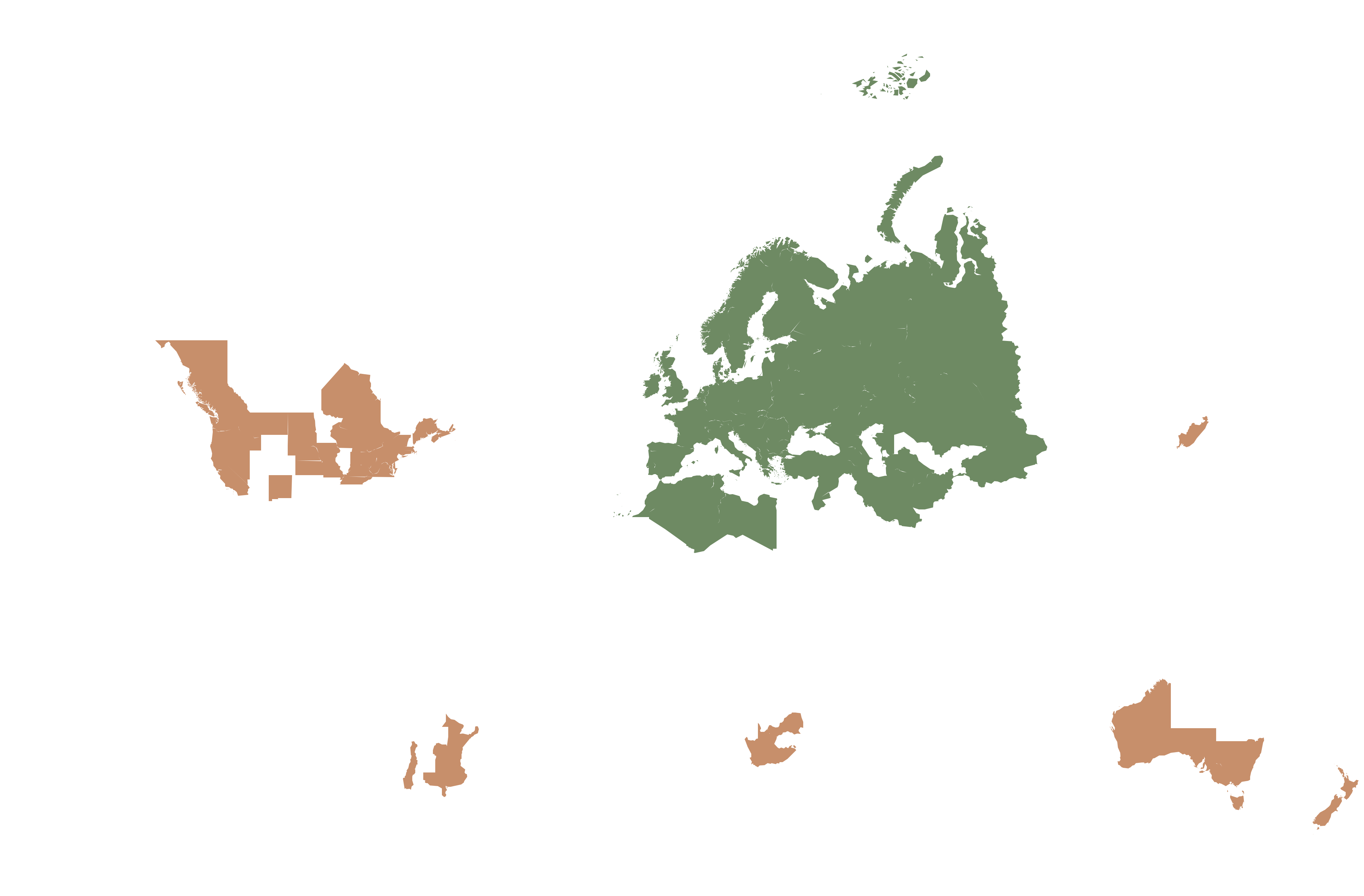
- Native
- Introduced
- Europe
- Asia
History
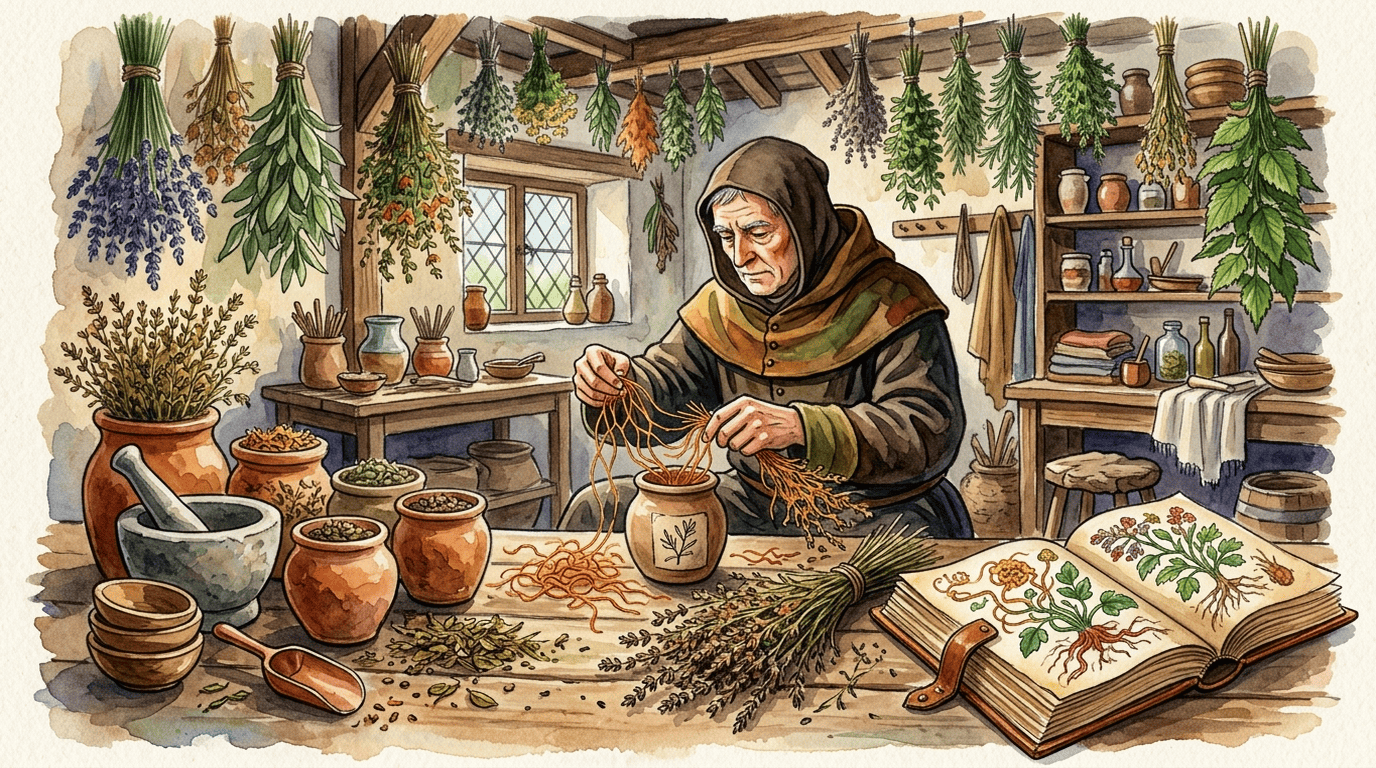
Cuscuta epithymum has attracted human attention since antiquity precisely because it is so unlike any other plant. The ancient Greek physician Dioscorides described it in his first-century work De Materia Medica, noting that it grew entangled on thyme and savory and could be used as a purgative and to treat melancholic and bilious ailments. His description established dodder in the Western medical tradition for over a thousand years.
In medieval Islamic medicine, Avicenna (Ibn Sina) dedicated extensive passages of his Canon of Medicine to Cuscuta—which he called hashishat al-dhanab—recommending it for liver complaints, depression, and diseases of the spleen. He believed its entangling nature gave it power over conditions involving 'obstruction' in the body, a reflection of the Doctrine of Signatures that linked a plant's appearance to its curative properties.
Medieval European herbalists adopted this reasoning enthusiastically. Nicholas Culpeper in the 17th century wrote that dodder 'openeth obstructions of the spleen, liver, and kidneys.' It was widely gathered from thyme and sold in apothecaries across Europe as a medicinal herb, typically boiled into decoctions taken for constipation, jaundice, and 'melancholy.'
Modern science has vindicated some aspects of traditional use: Cuscuta species contain bioactive flavonoids, alkaloids, and phenolic compounds with verified antioxidant and anti-inflammatory activity. Seeds of related species are used in traditional Chinese medicine (Tusizi) as a kidney tonic. Despite being a pest to farmers—capable of causing significant crop losses in clover and alfalfa fields—Clover Dodder remains a subject of scientific interest for its unique parasitic biology and medicinal phytochemistry.
Symbolism & meaning
What It Symbolizes
Medieval herbalists saw in the dodder a living metaphor for the entanglements of the human soul—a plant that could not stand alone, that wound itself around whatever grew near it and drew its life from another. In the language of flowers and doctrine of signatures, it was the plant of dependency and obsession. That same quality gave it its medicinal purpose: if a plant that entangles can loosen what is bound inside the body, perhaps that was reason enough to believe in its power.
- entanglement — The dodder's strangling threads became a medieval metaphor for obsession, dependency, and the inescapable bonds of attachment.
- hidden power — A plant with no leaves, no roots, no green—yet vigorous and tenacious, extracting its life entirely from others, unseen until it has taken hold.
Where the Name Comes From
The genus name Cuscuta comes from the medieval Latin, possibly derived from the Arabic 'kshuth' or 'kashah,' names used for dodder in Islamic medicine. The species epithet epithymum means 'upon thyme' in Greek, from 'epi' (upon) and 'thymon' (thyme), describing its preferred host plant. The English common name Dodder derives from the Low German 'dodder' meaning to tremble or entangle.
Uses & Fun Facts
- Used in traditional European and Islamic medicine as a purgative and for liver and spleen ailments; related Cuscuta species used in Traditional Chinese Medicine as a kidney tonic
- The intricate orange thread-like stems create an unusual visual texture over heathland plants in naturalistic or wild garden settings
Related plants
Plants with similar care
Frequently asked questions
How often should I water Clover Dodder?
In summer, water about every 5 days; in winter, about every 14 days. Adjust for heat, pot size and drainage.
How much light does Clover Dodder need?
Part shade: 2–4 hrs direct. Watch the leaves — scorching or stretching means the light needs adjusting.
Is Clover Dodder toxic to cats or dogs?
Pets Unknown (Dogs Unknown · Cats Unknown) Educational information, not medical or veterinary advice. If exposure is suspected, contact a doctor or veterinarian.
Is Clover Dodder easy to grow?
It is considered challenging and rewards experienced growers.
When does Clover Dodder bloom?
It typically blooms Jun–Aug in the Northern Hemisphere.
YardMate
Identify any plant in seconds
Snap a photo — YardMate names the plant, diagnoses problems, and reminds you when to water.
Download on the App Store