 YardMate
Ghost Orchid
Dendrophylax lindenii
Hard · Experienced growersAbout Ghost Orchid
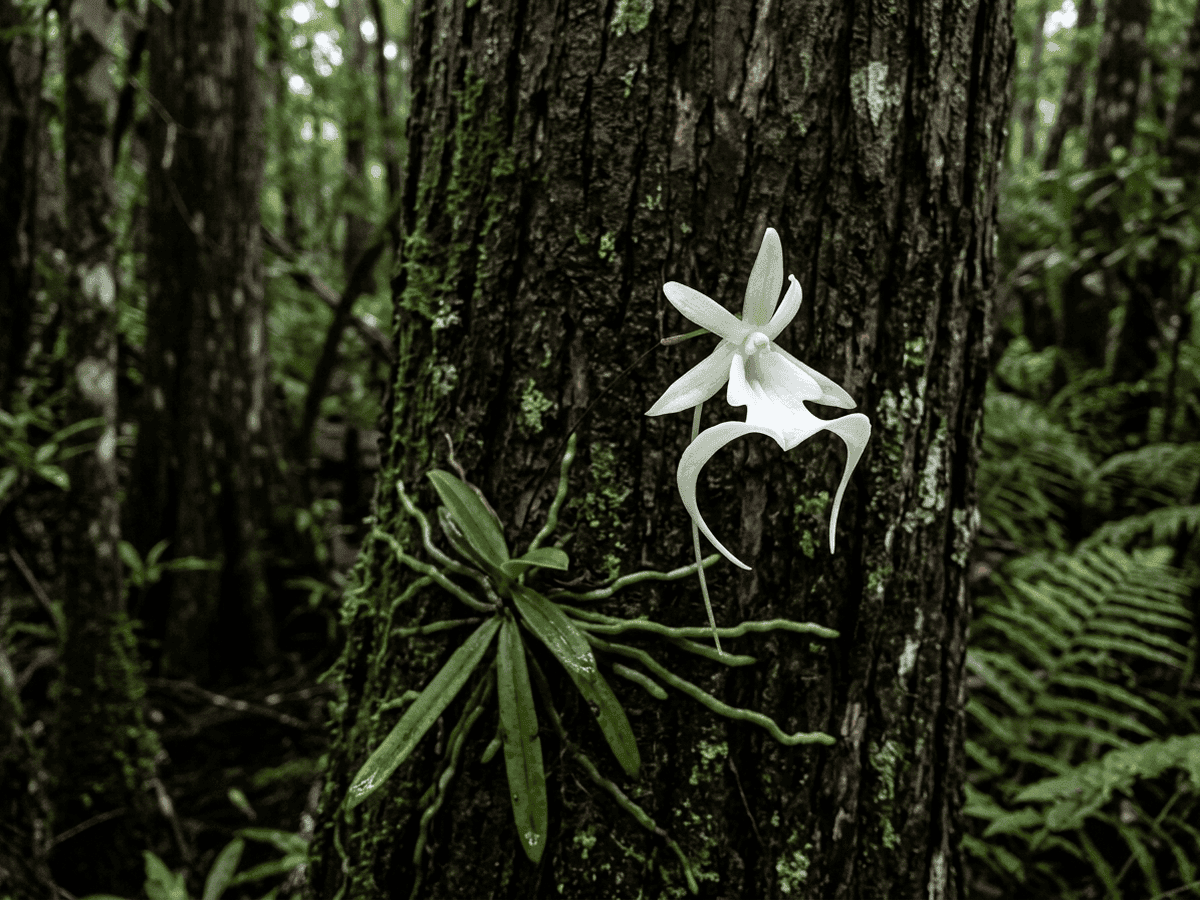
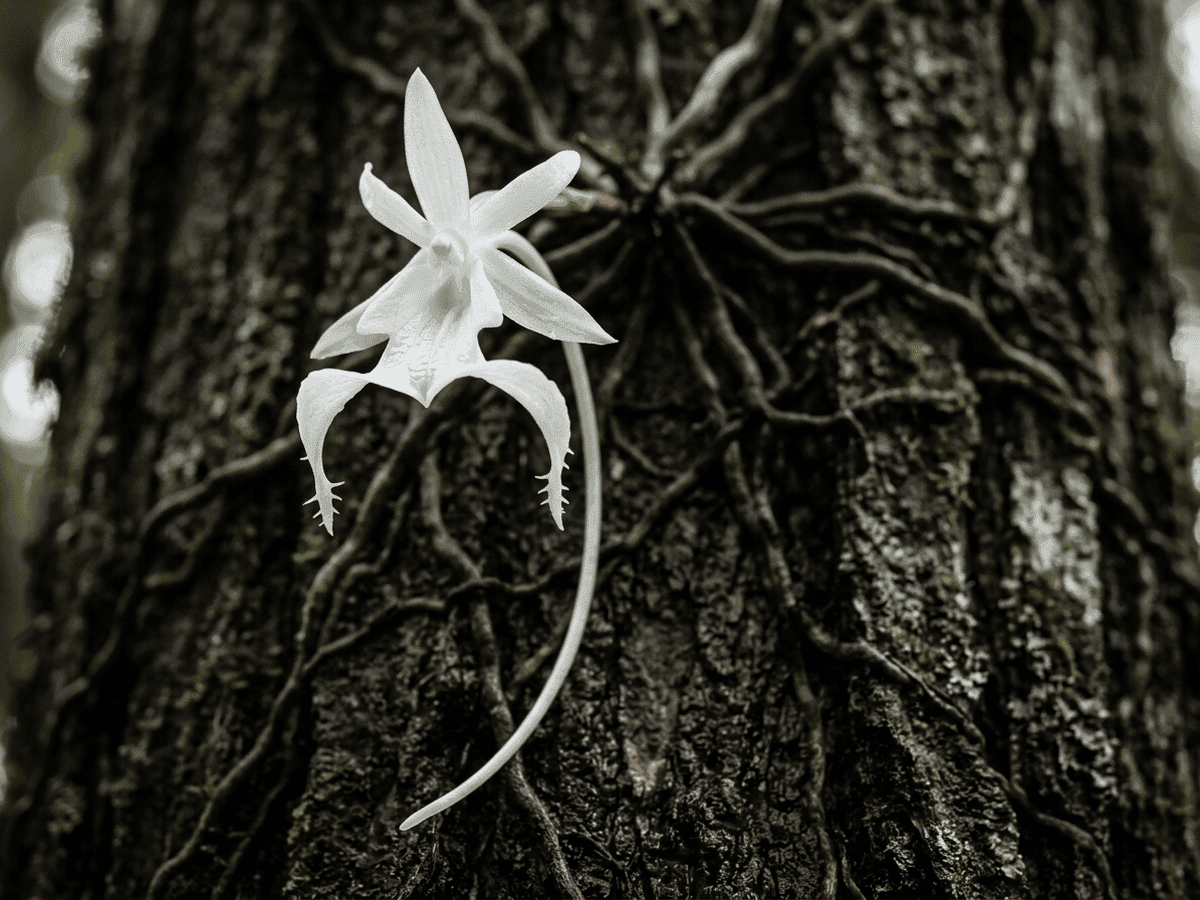
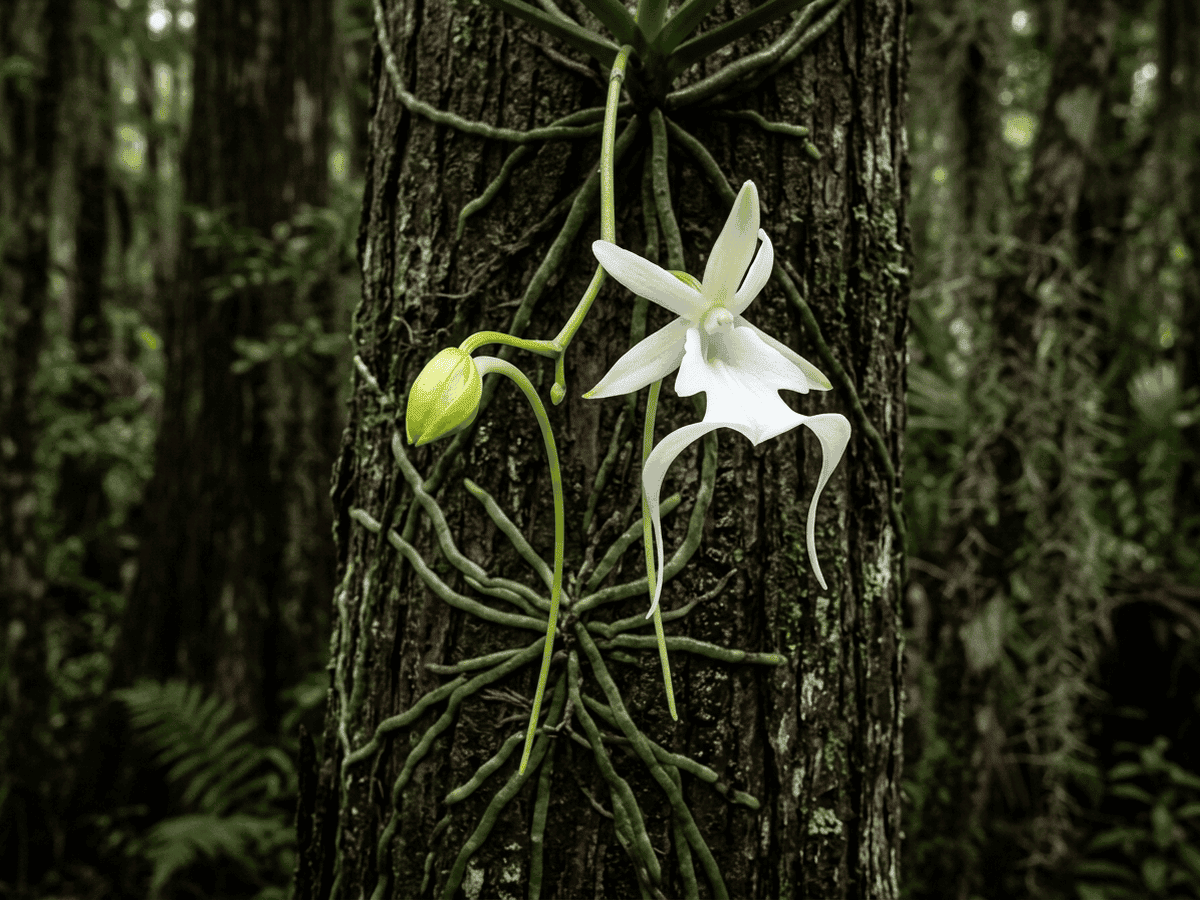
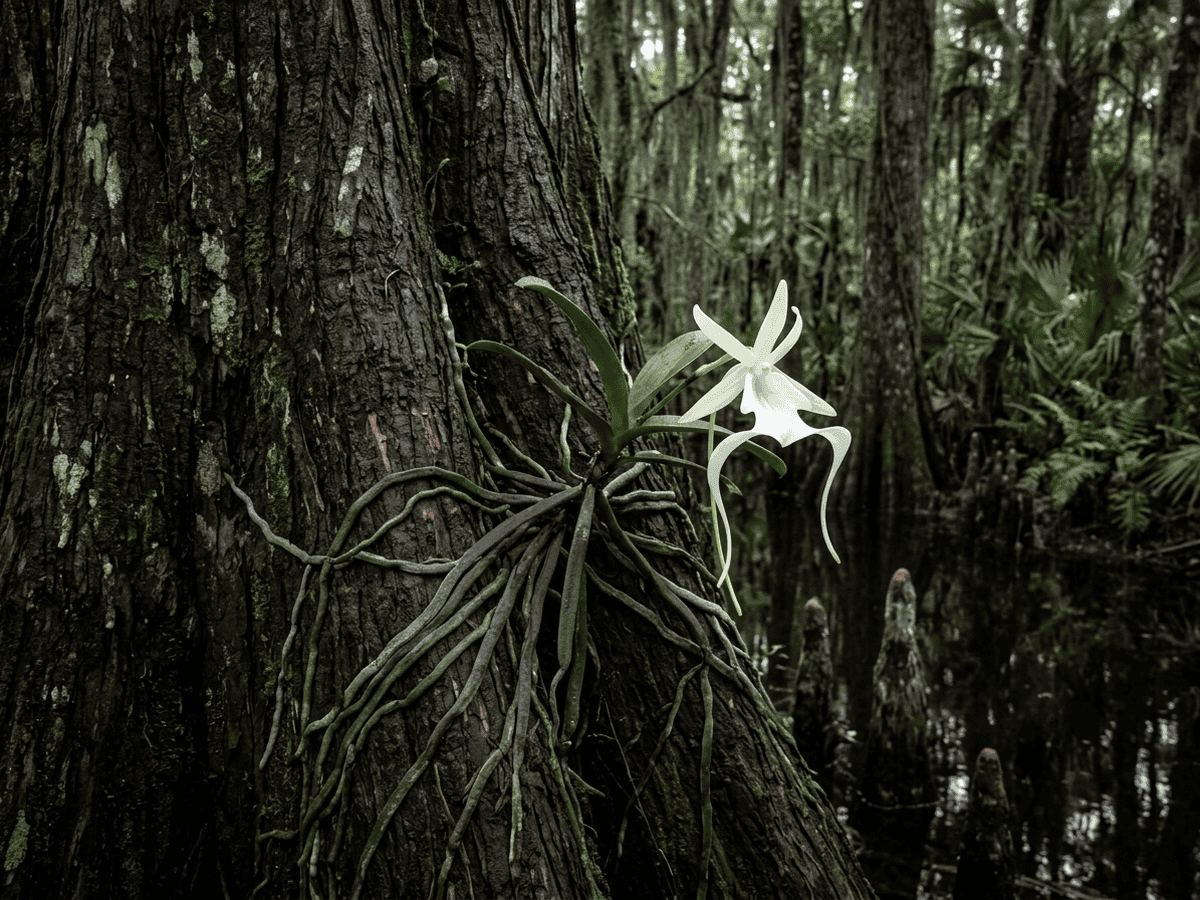
Dendrophylax lindenii, the Ghost Orchid, is one of the rarest and most mysterious flowering plants in North America—a completely leafless epiphytic orchid native to the swamp forests of South Florida and Cuba. With no leaves, it photosynthesizes entirely through its flat green aerial roots pressed against the bark of cypress and pop ash trees. When it blooms in May and June, a single ghostly white flower hovers on an almost invisible stem, emitting a soapy-apricot fragrance at night to attract its sole pollinator: the giant sphinx moth.
- Fragrant
- Pollinator-friendly
- Shade-tolerant
How to care for Ghost Orchid
Watering
- Springevery 14 days
- Summerevery 7 days
- Fallevery 30 days
- Winterevery 30 days
Soil · Airy & open
- Single layerOrchid bark + charcoal100%
No soil at all — orchid roots need air moving around them.
FERTILIZER
- Springevery 30 days
- Summerevery 30 days
At a Glance
- NativeNorth America, Caribbean
- Height1 ft (0.3 m)
- Spread1 ft (0.3 m)
- Flower colorWhite, Green
- Foliage colorGreen
- SoilMoist, Well-drained
- LocationsYard · Balcony
Bloom time
BLOOM CYCLE
Peak bloom
May–Jun
The Ghost Orchid blooms in spring with unusual, fragrant flowers that are pale green and white.
Fragrance
MODERATE FRAGRANCE
Sweet soapy-apricot fragrance at night, attracting sphinx moths.
Toxicity
Pets Safe
None reported
Not reported
EXPOSURE No exposure route is reported.
EFFECT No toxic effect is reported.
NOTE No toxicity is reported for humans in this catalog; this is not evidence that the plant is edible or harmless.
Safe
EXPOSURE No exposure route is reported.
EFFECT No toxic effect is reported.
NOTE Authoritative sources report this plant as non-toxic to dogs; this is not evidence that the plant is edible.
Safe
EXPOSURE No exposure route is reported.
EFFECT No toxic effect is reported.
NOTE Authoritative sources report this plant as non-toxic to cats; this is not evidence that the plant is edible.
Educational information, not medical or veterinary advice. If exposure is suspected, contact a doctor or veterinarian.
DISTRIBUTION


- Native
- North America
- Caribbean
History
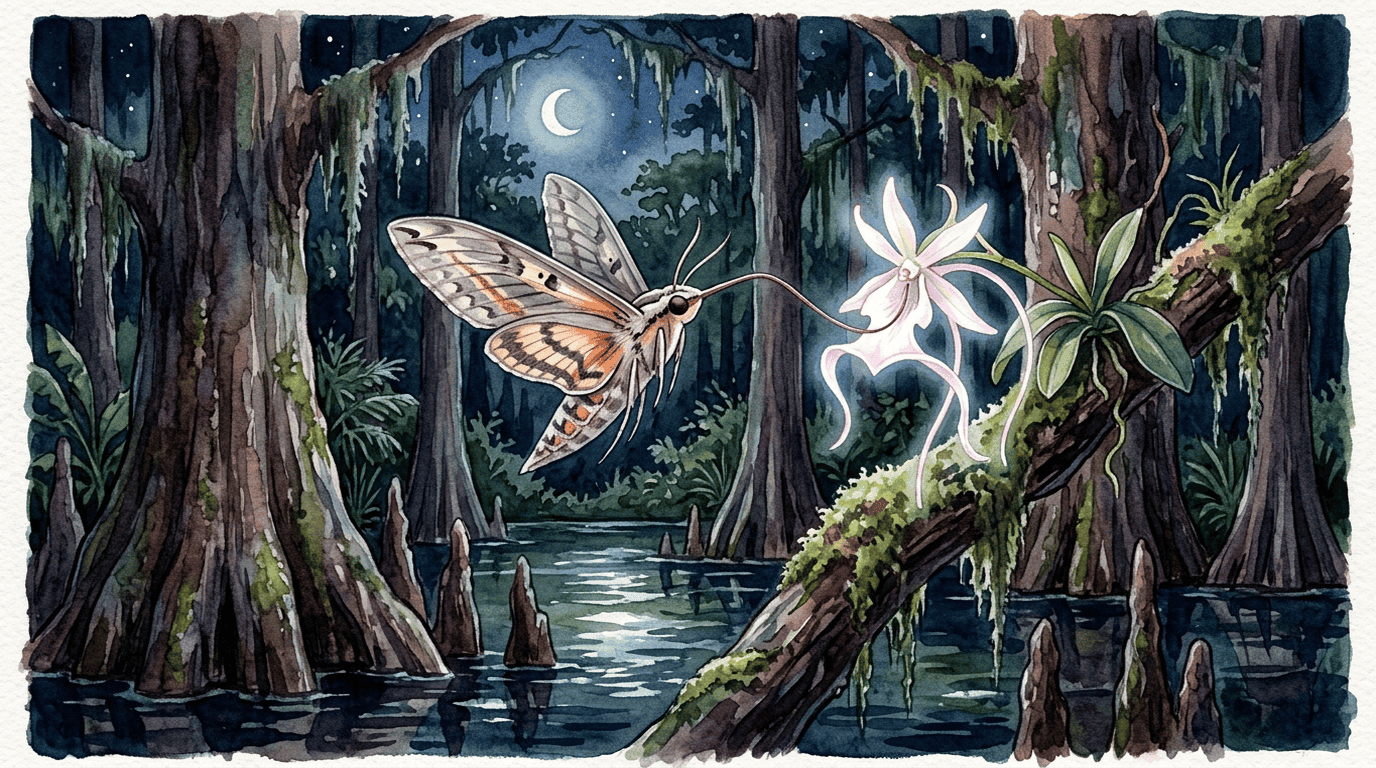
Dendrophylax lindenii has captivated naturalists since Jean Jules Linden, the Belgian orchid collector, first encountered it in Cuba in the 1840s. Even then it was recognized as extraordinary: a plant that seemed to defy classification, clinging to trees with flat green roots and producing flowers that appeared to float in mid-air without visible support.
In Florida, the Ghost Orchid survives only in the humid swamp forests of the southwestern part of the state—particularly in the Big Cypress National Preserve, Corkscrew Swamp Sanctuary, and Fakahatchee Strand Preserve State Park. The total wild population in Florida is estimated at only a few hundred plants, each one precious and intensely monitored. It is strictly protected under state and federal law.
Its pollination biology was long a mystery. The flowers hang from an almost-invisible stem, positioned in the air like tiny white frogs mid-leap. The nectar spur is long and narrow. Research eventually confirmed that the only pollinator capable of reaching the nectar is the giant sphinx moth (Cocytius antaeus), one of the largest moths in North America, whose proboscis can extend four inches. This tight co-dependency means the Ghost Orchid's survival is tied entirely to the survival of its forest habitat and this single moth species.
The orchid became internationally famous through Susan Orlean's 1998 book The Orchid Thief, which followed a Florida poacher arrested for taking Ghost Orchids from the Fakahatchee Strand. The subsequent film Adaptation (2002) brought it to an even wider audience. Fame and rarity are a dangerous combination: illegal collecting has remained a threat, and conservation organizations work continuously to monitor populations and prosecute poachers.
Symbolism & meaning
What It Symbolizes
People have searched for the Ghost Orchid in the Florida swamps knowing they might find it or might not. That uncertainty is part of the experience—the possibility of seeing something so rare it might as well be imaginary. The plant has become a symbol of what wildness means: not just beauty, but irreducible difficulty.
- mystery — A flower with no leaves, almost no visible stem—just white blooms floating in a dark swamp, night-scented, pollinated by a moth almost no one sees.
- vulnerability — A few hundred plants in all of Florida, each dependent on a single moth and a single forest type. Beauty and fragility indistinguishable.
Where the Name Comes From
The genus name Dendrophylax comes from the Greek dendron (tree) and phylax (guardian or dweller), referring to the plant's habit of growing on trees. The species name lindenii honors Jean Jules Linden (1817–1898), the Belgian-born orchid collector and botanist who first collected specimens in Cuba.
Uses & Fun Facts
- Among the most coveted wild orchids; nearly impossible to cultivate outside its native swamp habitat—best appreciated in the wild or at specialist conservation collections
- Provides a vital nectar source for the giant sphinx moth in South Florida and Cuban swamp forests; the two species depend entirely on each other
Related plants
Plants with similar care
Frequently asked questions
How often should I water Ghost Orchid?
In summer, water about every 7 days; in winter, about every 30 days. Adjust for heat, pot size and drainage.
How much light does Ghost Orchid need?
Part shade: 2–4 hrs direct. Watch the leaves — scorching or stretching means the light needs adjusting.
Is Ghost Orchid toxic to cats or dogs?
Pets Safe (Dogs Safe · Cats Safe) Educational information, not medical or veterinary advice. If exposure is suspected, contact a doctor or veterinarian.
Is Ghost Orchid easy to grow?
It is considered challenging and rewards experienced growers.
When does Ghost Orchid bloom?
It typically blooms May–Jun in the Northern Hemisphere.
YardMate
Identify any plant in seconds
Snap a photo — YardMate names the plant, diagnoses problems, and reminds you when to water.
Download on the App Store