 YardMate
Nodding Pincushion
Leucospermum cordifolium
Hard · Experienced growersAbout Nodding Pincushion
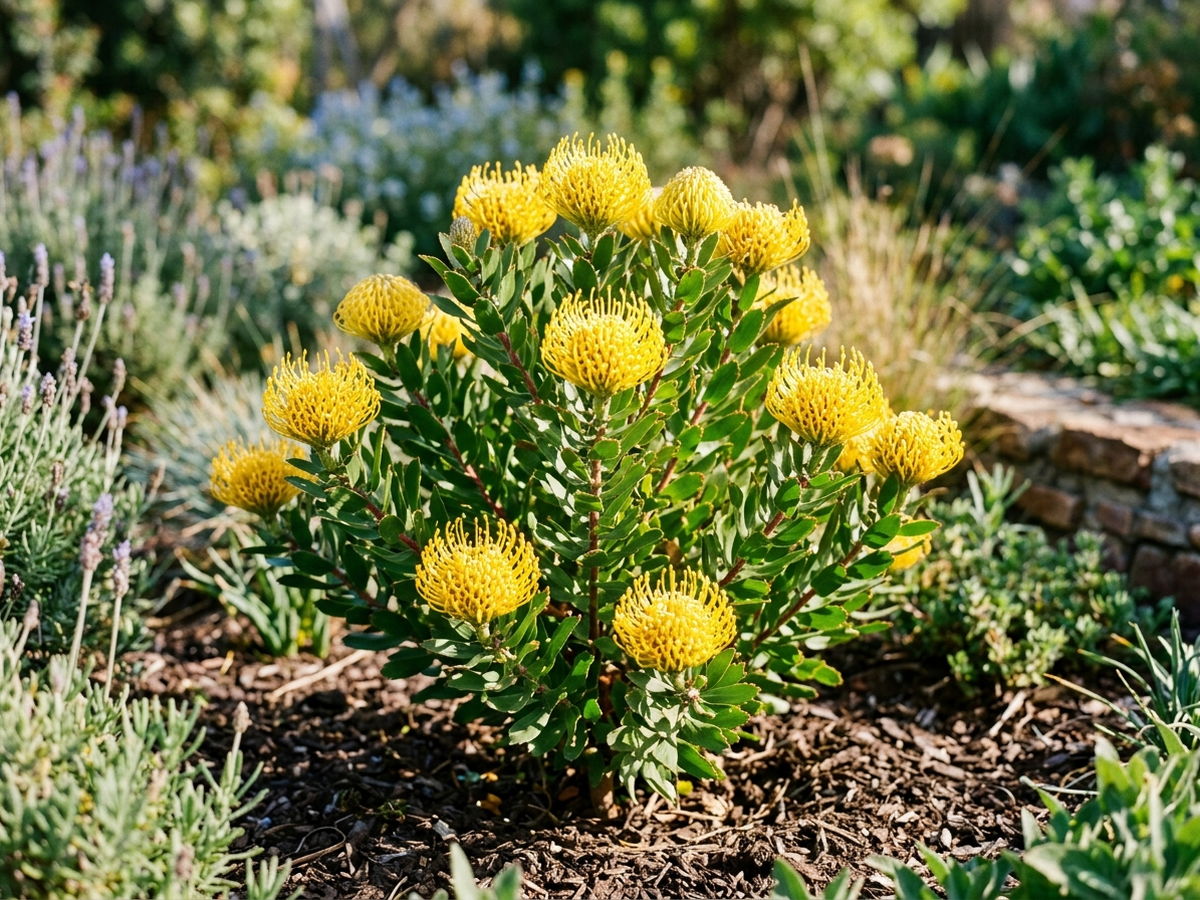
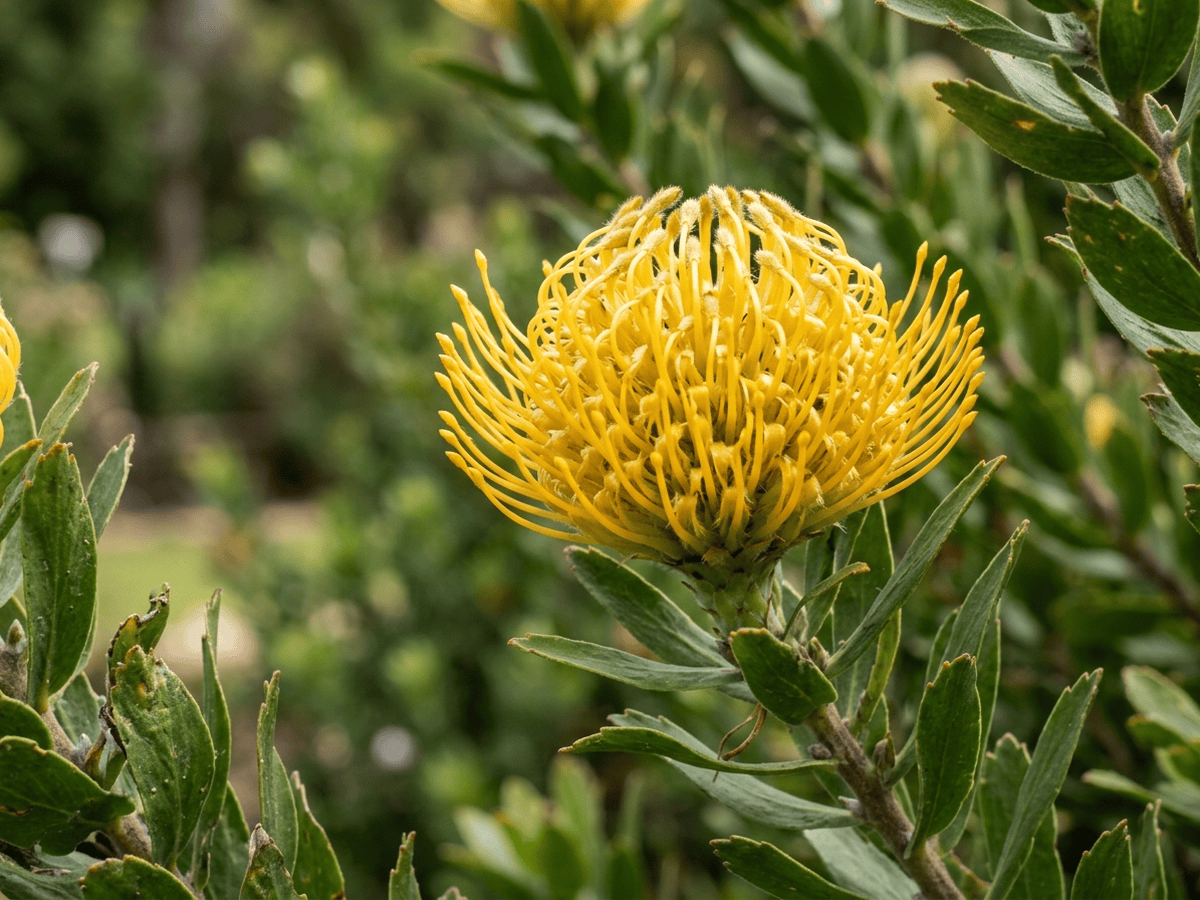
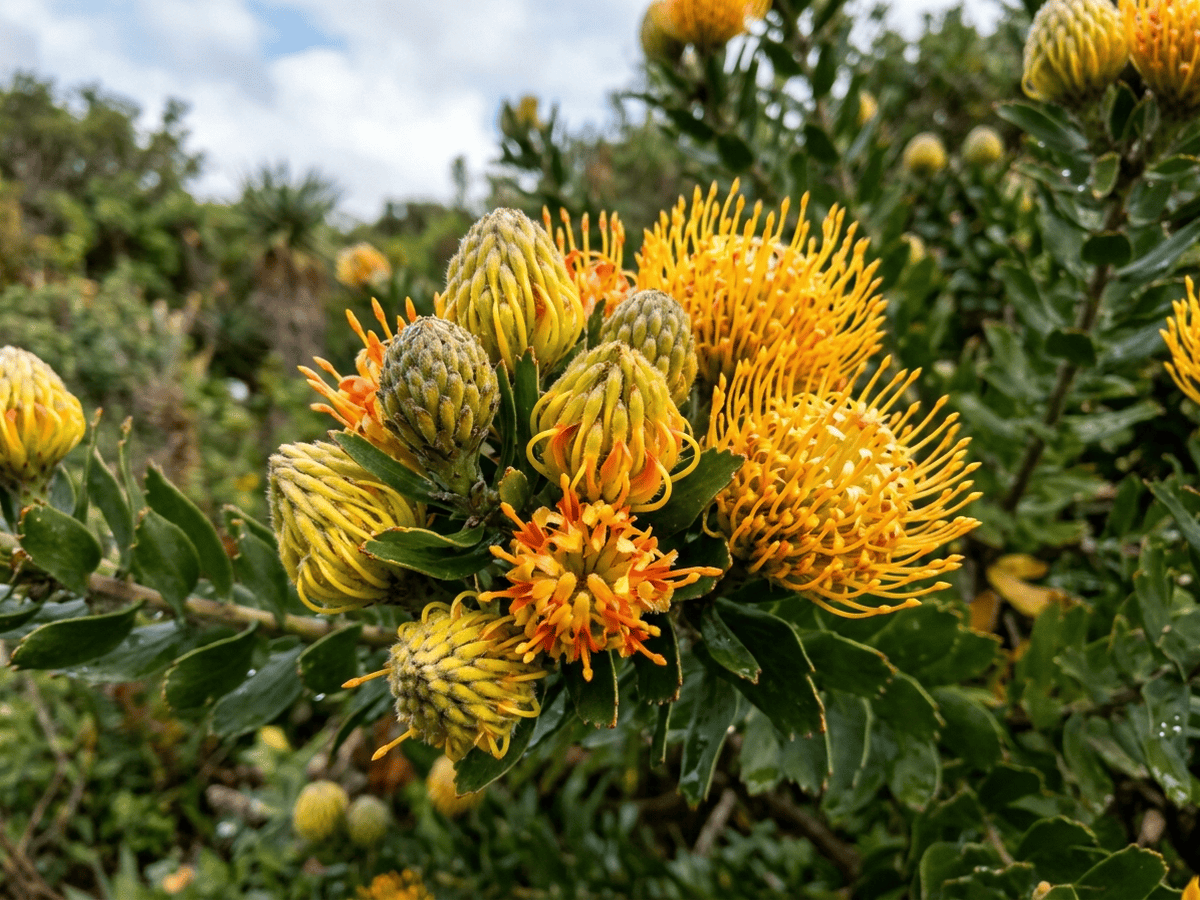
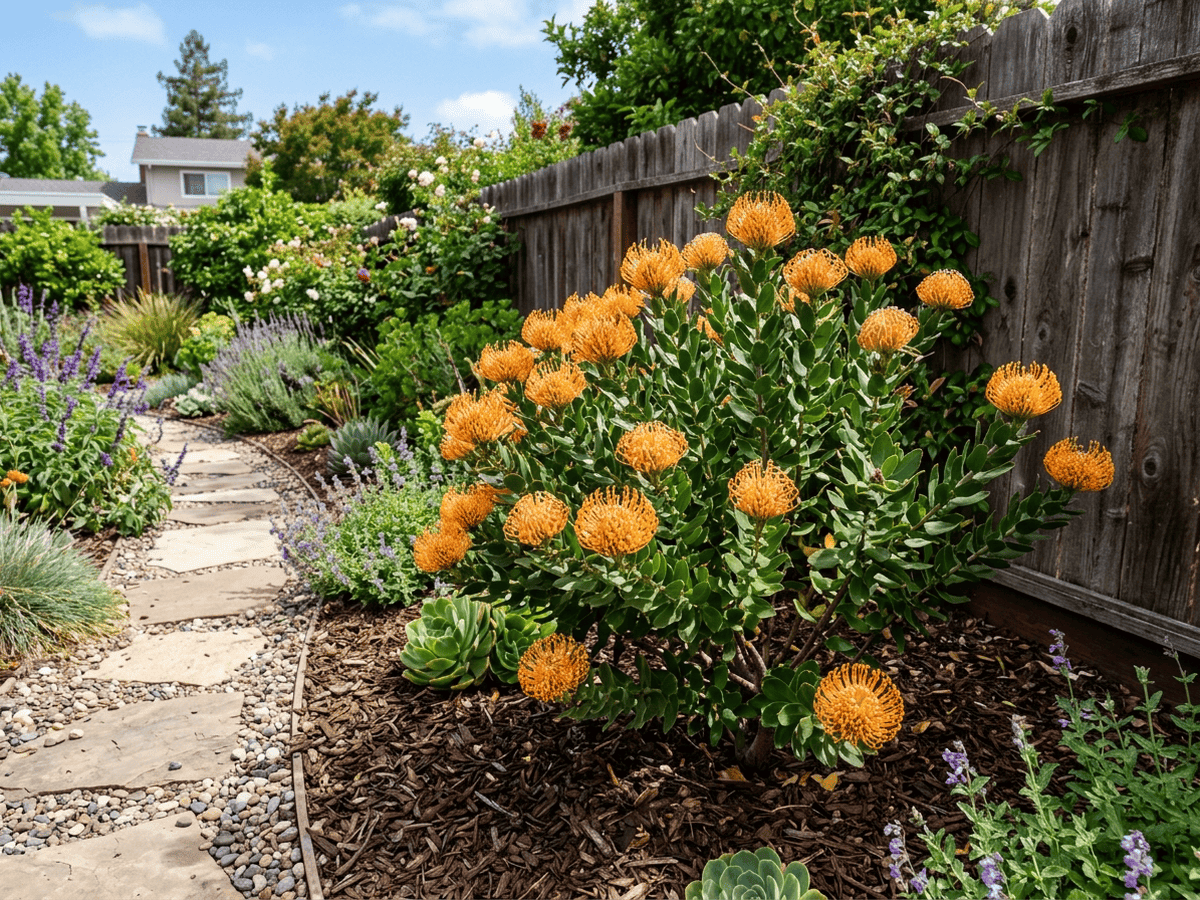
The Nodding Pincushion (Leucospermum cordifolium) is a rounded, evergreen shrub from the Cape fynbos of South Africa, prized for dome-shaped flowerheads of dozens of curved styles tipped with tiny hooked stigmas, resembling a pincushion full of pins. Blooming orange, red, and yellow from late spring into summer, the flowerheads nod on wiry stems and draw nectar-feeding sunbirds. Its heart-shaped, blue-green leaves stay attractive year-round. Thriving in sandy, nutrient-poor, well-drained soil and full sun, this drought-tolerant shrub is a fynbos icon prized by cut-flower growers worldwide.
- Evergreen
- Drought-tolerant
- Pollinator-friendly
- Showy-fruit
- Long-blooming
How to care for Nodding Pincushion
Watering
- Springevery 14 days
- Summerevery 7 days
- Fallevery 30 days
- Winterpause watering
Soil · Acidic · pH 4.5–6
- Top dressingPine needle mulch10%
- Main mixAcid-lover mix + peat 3:175%
- DrainageGravel15%
Never add lime or wood ash — it cancels out the acidity.
FERTILIZER
- Springevery 30 days
- Summerevery 30 days
- Fallevery 30 days
At a Glance
- NativeSouth Africa
- Height3–6 ft (0.9–1.8 m)
- Spread4–6 ft (1.2–1.8 m)
- Flower colorYellow, Orange, Red
- Foliage colorGreen
- Fruit colorBrown
- SoilWell-drained, Loamy, Sandy
- LocationsYard · Patio
Bloom time
BLOOM CYCLE
Peak bloom
Jun–Aug
Give the Nodding Pincushion full sun and sharp drainage; once established it tolerates drought and rewards you with vivid dome-shaped blooms from late spring through summer.
Fragrance
NO FRAGRANCE
Bird-pollinated by sunbirds that respond to color and nectar rather than scent, this pincushion is essentially unscented.
Toxicity
No toxicity has been reported for this plant. Still, it is wise to keep pets from chewing on any houseplant.
Educational information, not medical or veterinary advice. If exposure is suspected, contact a doctor or veterinarian.
DISTRIBUTION


- Native
- South Africa
History
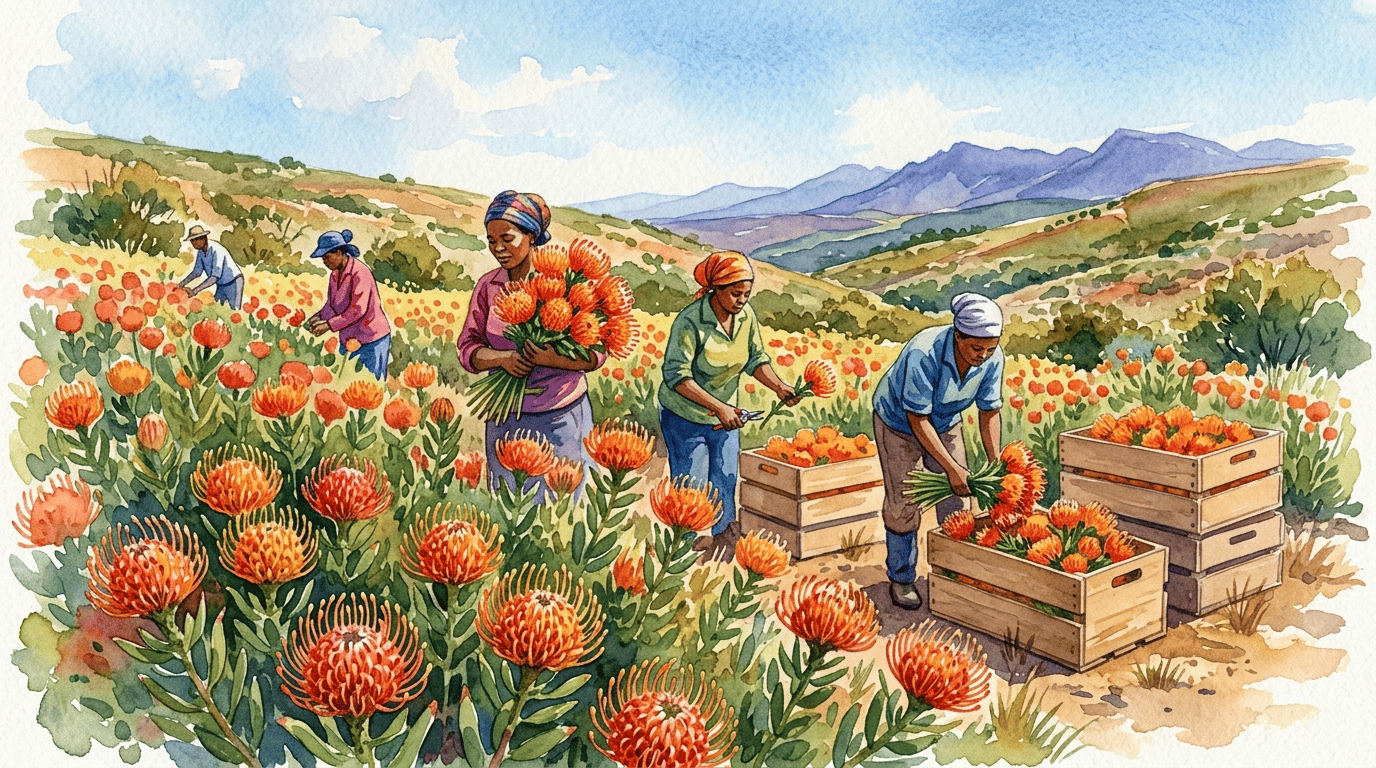
Long before it graced florists' buckets around the world, the Nodding Pincushion grew wild in the Cape Floristic Region of South Africa, a narrow strip of fynbos vegetation famed for its extraordinary plant diversity. There, on rocky, nutrient-poor slopes swept by wildfire and salt-laden wind, it evolved its signature flowerhead: a dense dome of curved styles tipped with small hooked stigmas, engineered to brush pollen onto the foreheads of nectar-feeding sunbirds and Cape sugarbirds as they probed for nectar. After flowering, the plant scatters its seeds to the ground, where native ants carry them underground to fat-rich elaiosomes, unknowingly burying them safe from fire and rodents until the next blaze clears the way for germination. European botanists first documented the Cape's Proteaceae in the eighteenth century, and cordifolium, meaning 'heart-leaved' for its rounded, blue-green foliage, was named among them. For nearly two centuries the plant remained a regional curiosity, admired mostly by Cape gardeners. That changed in the mid-twentieth century, when growers in South Africa, California, and Hawaii discovered how well its long-lasting, spiky blooms traveled and how vividly they lit up mixed bouquets. Breeders selected the showiest orange, red, and yellow forms, and by the 1970s the Nodding Pincushion had become one of the most recognizable stars of the international cut-flower trade, still hand-picked from sprawling flower farms each blooming season.
Symbolism & meaning
What It Symbolizes
In its native Cape fynbos, the Nodding Pincushion survives wildfire, drought, and poor soil by relying on ants to bury its seeds until fire clears the land for new growth. This tenacity, paired with its bold, sunburst-colored flowerhead, has made the pincushion a favorite emblem of resilience and fearless beauty among South African growers and floral designers alike.
- Boldness — The pincushion's fiery, spiky flowerhead is often read as a symbol of boldness and vibrant energy, standing out dramatically in any arrangement.
- Resilience — Thriving in harsh, fire-swept, nutrient-poor fynbos soils, the plant has come to represent resilience and adaptability in the face of adversity.
Where the Name Comes From
The genus name Leucospermum comes from the Greek leukos ('white') and sperma ('seed'), referring to the plant's pale seeds, while the species name cordifolium is Latin for 'heart-leaved,' describing its rounded, heart-shaped foliage. The common name 'Nodding Pincushion' comes from the way its dense, pin-like flowerheads droop or nod on their stems, resembling a pincushion bristling with pins.
Uses & Fun Facts
- Long-lasting, spiky stems make it a top choice for cut-flower arrangements and export bouquets.
- Nectar-rich flowerheads attract sunbirds and other pollinators to the garden.
- Bold, dome-shaped blooms add striking color and texture to borders and rock gardens.
- Supports birds and beneficial insects in fynbos-style and drought-tolerant landscapes.
Frequently asked questions
How often should I water Nodding Pincushion?
Water about every 14 days during the growing season, and always let excess water drain away.
How much light does Nodding Pincushion need?
Full sun: 6+ hrs direct. Watch the leaves — scorching or stretching means the light needs adjusting.
Is Nodding Pincushion toxic to cats or dogs?
No toxicity has been reported for this plant. Still, it is wise to keep pets from chewing on any houseplant. Educational information, not medical or veterinary advice. If exposure is suspected, contact a doctor or veterinarian.
Is Nodding Pincushion easy to grow?
It is considered challenging and rewards experienced growers.
When does Nodding Pincushion bloom?
It typically blooms Jun–Aug in the Northern Hemisphere.
YardMate
Identify any plant in seconds
Snap a photo — YardMate names the plant, diagnoses problems, and reminds you when to water.
Download on the App Store