 YardMate


Devil's Club
Oplopanax horridus
Hard · Experienced growersAbout Devil's Club
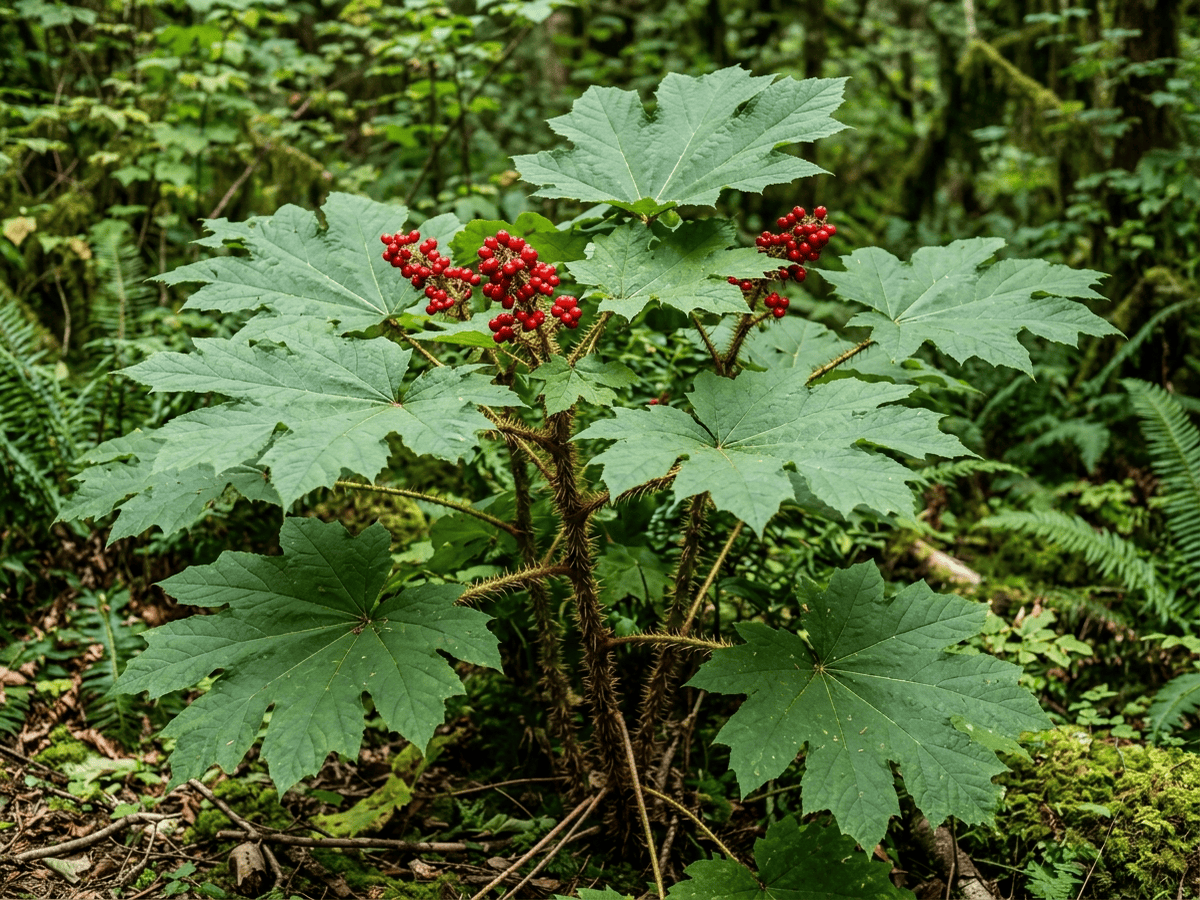
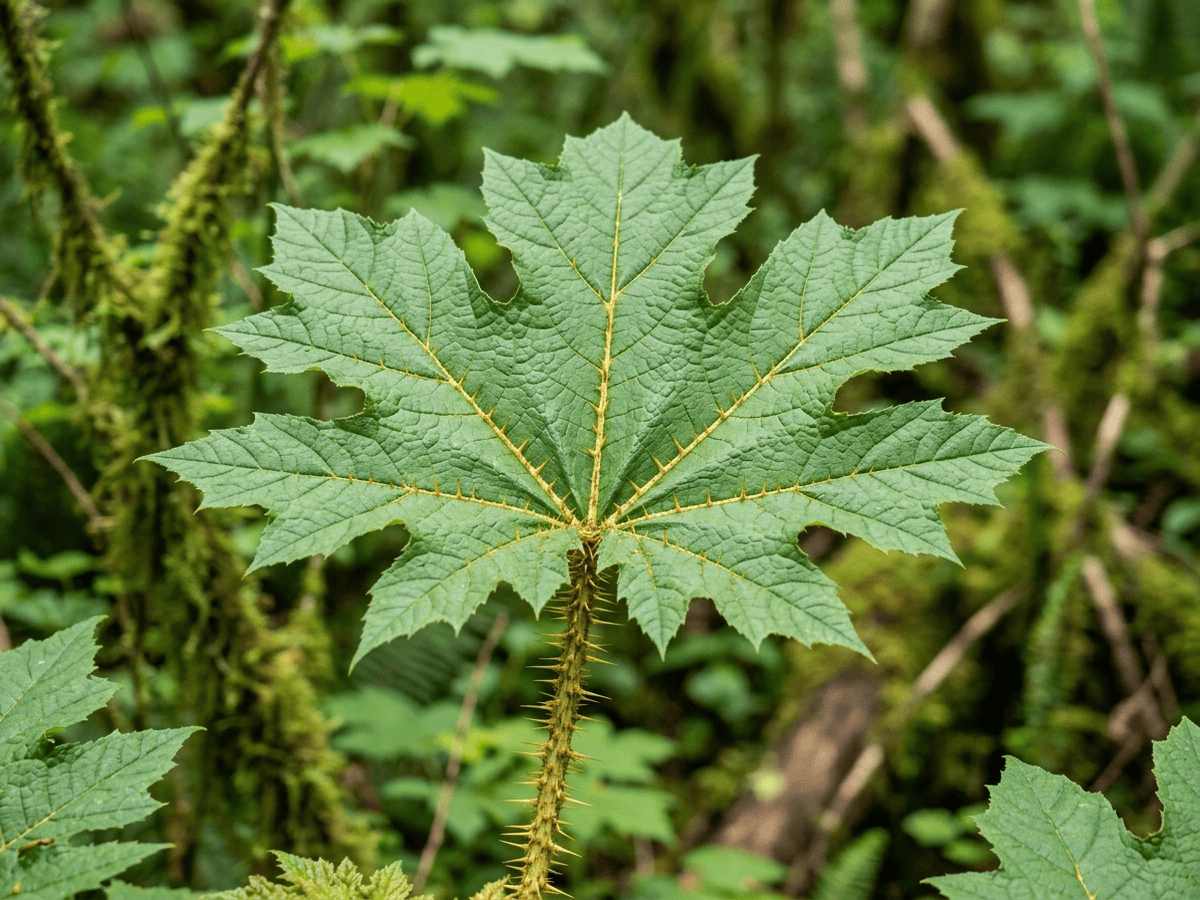
Devil's Club is a striking and formidable understory shrub of Pacific Northwest old-growth forests, ranging from Alaska south to Oregon and inland to the northern Rockies. Growing 3 to 10 feet tall with massive maple-like leaves up to 14 inches across, its stems and undersides of leaves are covered in sharp, brittle yellow spines that easily break off in skin. Despite its fearsome armor, the plant is profoundly sacred and medicinally important to many Pacific Northwest Indigenous peoples.
- Medicinal
- Native
- Wildlife-friendly
How to care for Devil's Club
Watering
- Springevery 5 days
- Summerevery 4 days
- Fallevery 10 days
- Winterevery 14 days
Soil · Moisture-retentive
- Top dressingSphagnum moss10%
- Main mixPeat + coco coir 1:180%
- DrainagePerlite / gravel10%
Keep it evenly moist — but the drainage layer still matters.
FERTILIZER
This plant needs little to no feeding.
At a Glance
- NativeNorth America
- Height3–10 ft (0.9–3 m)
- Spread4–8 ft (1.2–2.4 m)
- Flower colorWhite, Green
- Foliage colorGreen, Yellow
- Fruit colorRed
- SoilLoamy, Moisture-retentive, Acidic
- LocationsYard
Bloom time
BLOOM CYCLE
Peak bloom
Jun–Aug
Whitish flower clusters in summer, often hidden
Fragrance
LIGHT FRAGRANCE
Ginseng-like resinous scent when bruised.
Toxicity
Humans Slight · Pets Slight
triterpene saponins
Slight
- Stem
- Leaf
- Contact
EXPOSURE Touching stems and leaves.
EFFECT Thorns cause painful mechanical injury and can introduce infection.
NOTE Thorns cause mechanical injury; berries are not eaten; bark used in traditional medicine.
Slight
- Stem
- Leaf
- Contact
EXPOSURE Touching stems and leaves.
EFFECT Thorns can cause physical injury and berries mildly toxic.
NOTE Thorns cause mechanical injury; berries are not eaten; bark used in traditional medicine.
Slight
- Stem
- Leaf
- Contact
EXPOSURE Touching stems and leaves.
EFFECT Thorns can cause physical injury.
NOTE Thorns cause mechanical injury; berries are not eaten; bark used in traditional medicine.
Educational information, not medical or veterinary advice. If exposure is suspected, contact a doctor or veterinarian.
DISTRIBUTION


- Native
- North America
History
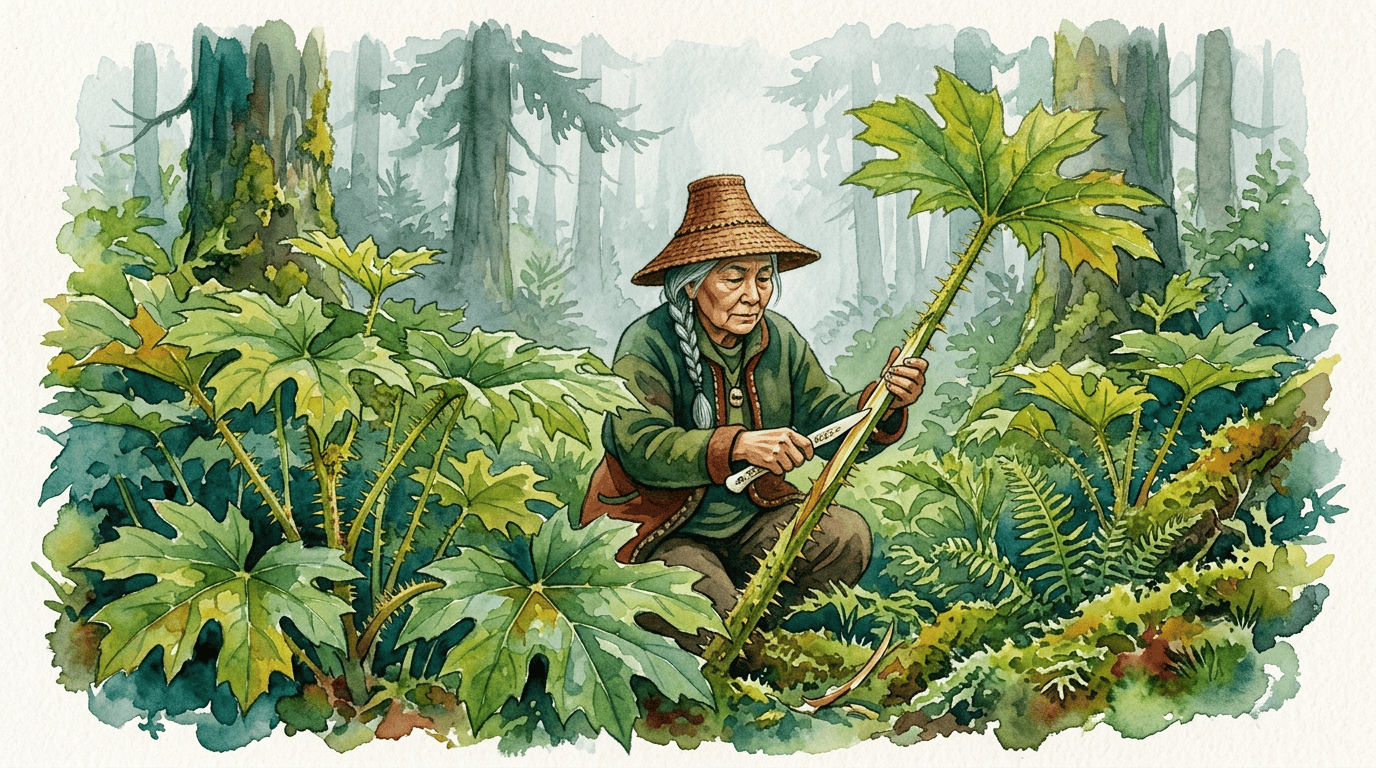
Oplopanax horridus, devil's club, is a deciduous understory shrub of the Araliaceae family native to the Pacific coast of North America from southern Alaska through British Columbia, Washington, Oregon, northern California, and disjunct populations in the Great Lakes. It thrives in moist, shaded old-growth rainforest. Scottish-American botanist Thomas Nuttall described the species in 1840.
Devil's club is among the most culturally important plants for Indigenous peoples of the Pacific Northwest including the Tlingit, Haida, Heiltsuk, Nuxalk, and Salish, who use the inner bark in traditional medicine for respiratory illness, diabetes, and spiritual protection; it is also carved into ceremonial objects. Researchers continue studying antimicrobial and hypoglycemic compounds in the bark.
The large palmate leaves and dense yellow spines make it instantly recognizable. One of the most important medicinal and ceremonial plants of Pacific Northwest Indigenous peoples including Tlingit, Haida, Tsimshian, and Coast Salish nations.
Symbolism & meaning
What It Symbolizes
Devil's Club carries sacred power in thorned form. Revered by many Pacific Northwest Indigenous peoples, it is approached with respect rather than casual curiosity. The plant's meaning is protection with consequence: large leaves, fierce spines, and a presence that makes the understory feel guarded.
- Sacred power — deeply revered medicinal plant of Pacific Northwest peoples
- Wild forest — iconic understory of Northwest old-growth
Where the Name Comes From
'Oplopanax' is Greek for 'armed panax,' referencing its spines and ginseng family relatives; 'horridus' means bristly or rough.
Uses & Fun Facts
- Devil's club bark used in Pacific Coast Indigenous medicine
- Sacred protective plant for many Northwest First Nations
- Red berries feed bears and forest songbirds
- Huge maple-shaped leaves on spiny rainforest stems
Related plants
Plants with similar care
Frequently asked questions
How often should I water Devil's Club?
In summer, water about every 4 days; in winter, about every 14 days. Adjust for heat, pot size and drainage.
How much light does Devil's Club need?
Full shade: <2 hrs direct. Watch the leaves — scorching or stretching means the light needs adjusting.
Is Devil's Club toxic to cats or dogs?
Pets Slight (Dogs Slight · Cats Slight) Educational information, not medical or veterinary advice. If exposure is suspected, contact a doctor or veterinarian.
Is Devil's Club easy to grow?
It is considered challenging and rewards experienced growers.
When does Devil's Club bloom?
It typically blooms Jun–Aug in the Northern Hemisphere.
YardMate
Identify any plant in seconds
Snap a photo — YardMate names the plant, diagnoses problems, and reminds you when to water.
Download on the App Store