 YardMate
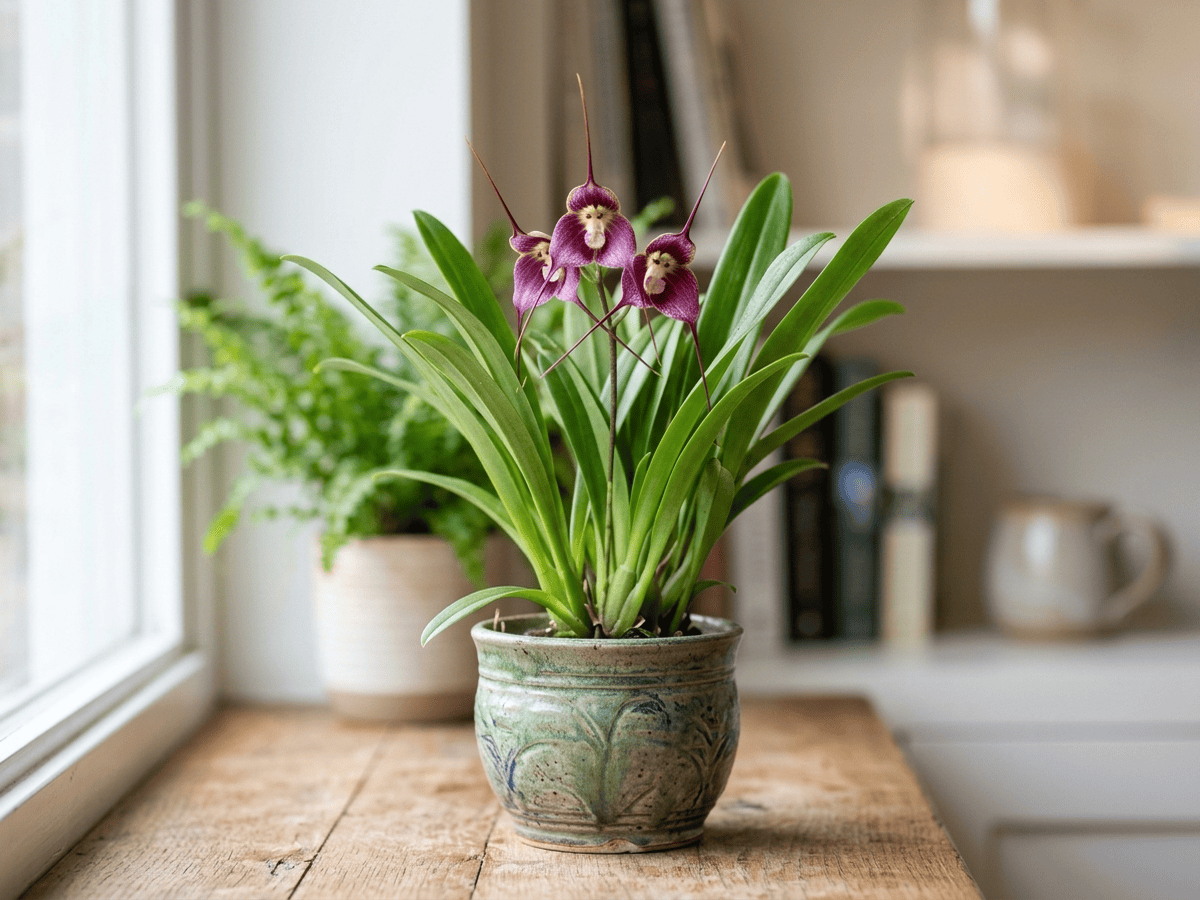
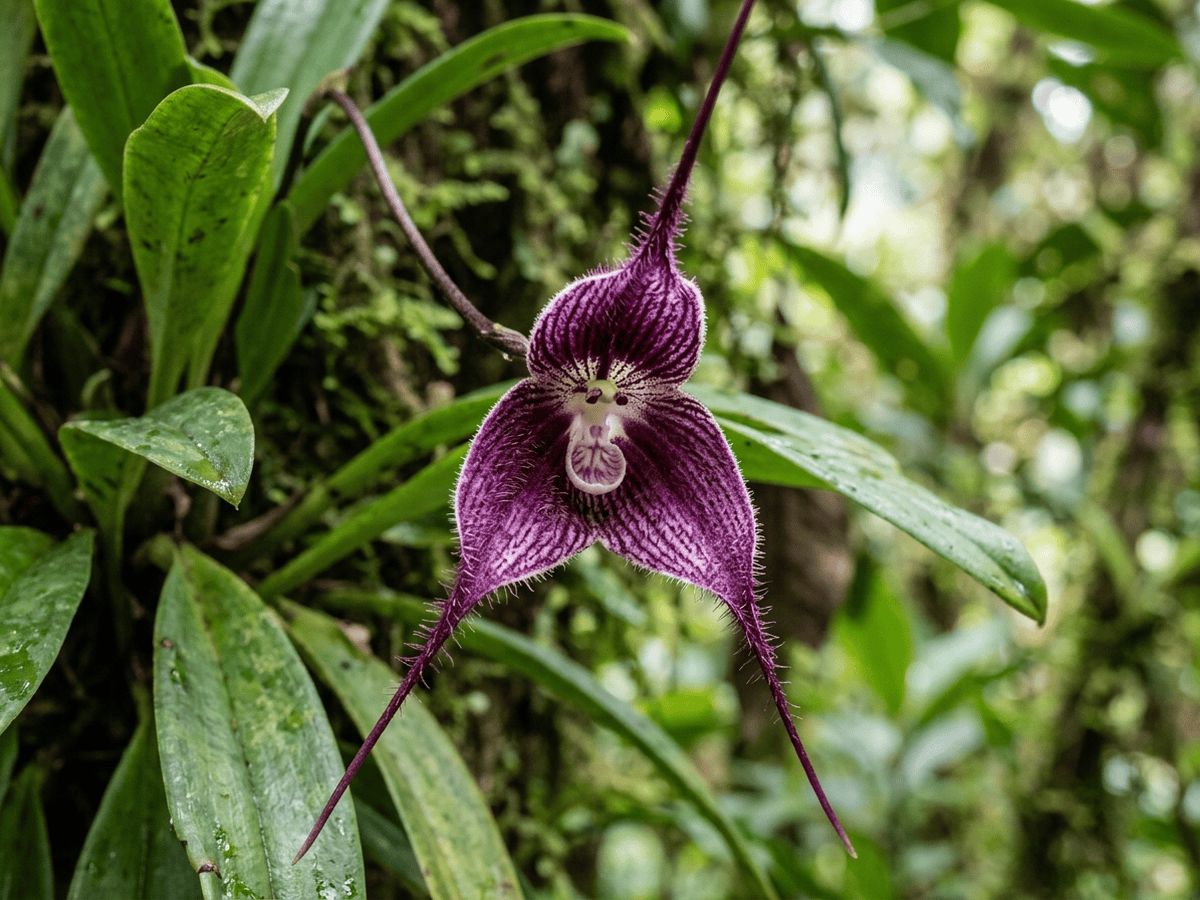
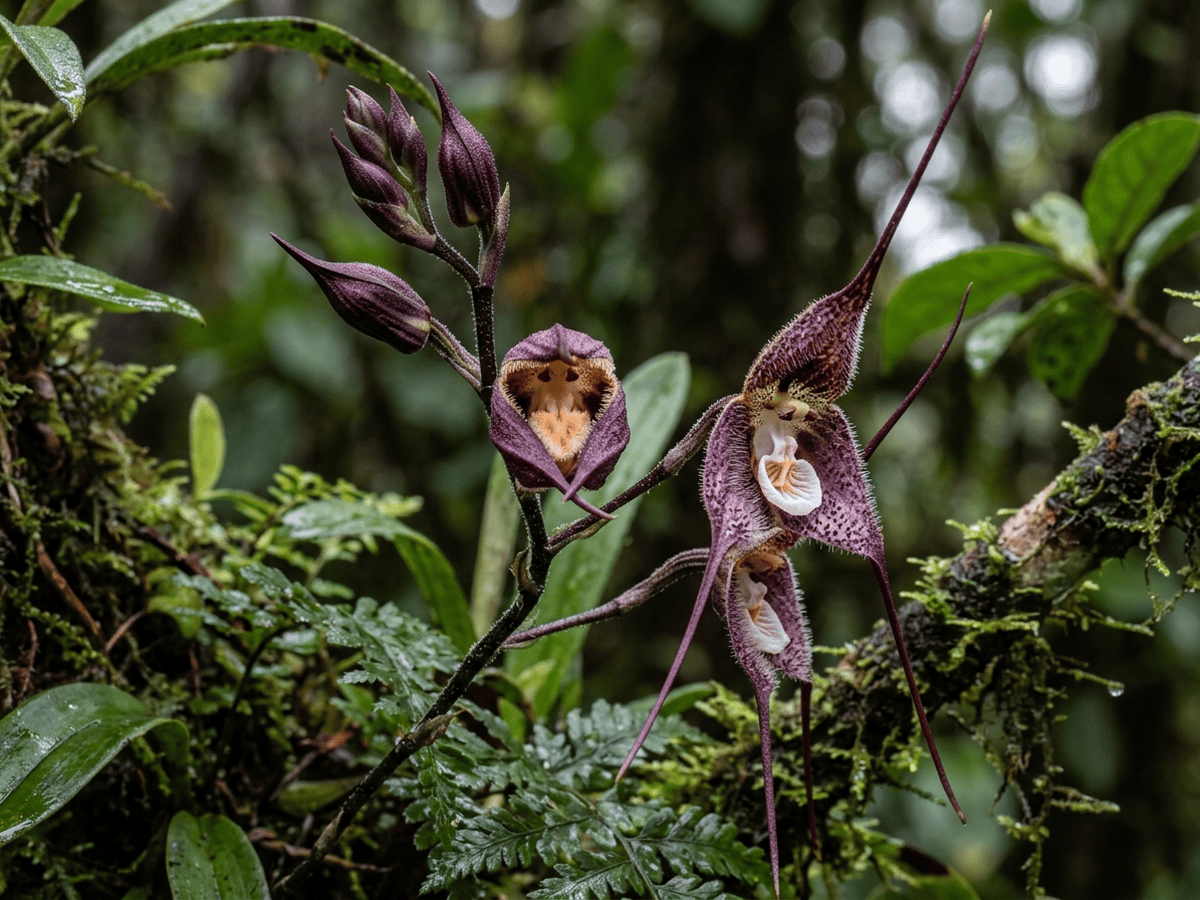

Van Houtte's Dracula Orchid
Dracula houtteana
Hard · Experienced growersAbout Van Houtte's Dracula Orchid
Dracula houtteana is a cool-growing epiphytic orchid native to the Andean cloud forests of Ecuador and Peru. It produces distinctive pendulous flowers with long, trailing tail-like spurs and a lip shaped precisely like a mushroom cap—a deception evolved to lure fungus gnats for pollination. The deep purple-marked blooms hang on arching spikes from May through June. Named for Belgian horticulturist Louis Van Houtte, this prized specimen orchid requires cool, humid conditions.
- Fragrant
- Cold-hardy
- Shade-tolerant
- Compact
How to care for Van Houtte's Dracula Orchid
Watering
- Springevery 7 days
- Summerevery 5 days
- Fallevery 10 days
- Winterevery 15 days
Soil · Airy & open
- Single layerOrchid bark + charcoal100%
No soil at all — orchid roots need air moving around them.
FERTILIZER
Balanced Feed 14-14-14
An even feed covers all three needs at once, keeping leaves, roots and blooms moving together with nothing pushed out of balance.
- Nitrogen · Leaves
- Phosphorus · Roots + Blooms
- Potassium · Strength
- Springevery 15 days
- Summerevery 30 days
At a Glance
- NativeSouth America
- Height1–2 ft (0.3–0.6 m)
- Spread2–3 ft (0.6–0.9 m)
- Flower colorPurple
- Foliage colorGreen
- SoilMoist, Well-drained, Sandy
- LocationsIndoor · Yard
Bloom time
BLOOM CYCLE
Peak bloom
May–Jun
The blooming period is short, and the flowers are unique and charming.
Fragrance
MODERATE FRAGRANCE
Flowers emit a musty, fungal-like scent to attract fungus gnat pollinators
Toxicity
No toxicity has been reported for this plant. Still, it is wise to keep pets from chewing on any houseplant.
Educational information, not medical or veterinary advice. If exposure is suspected, contact a doctor or veterinarian.
DISTRIBUTION


- Native
- South America
History
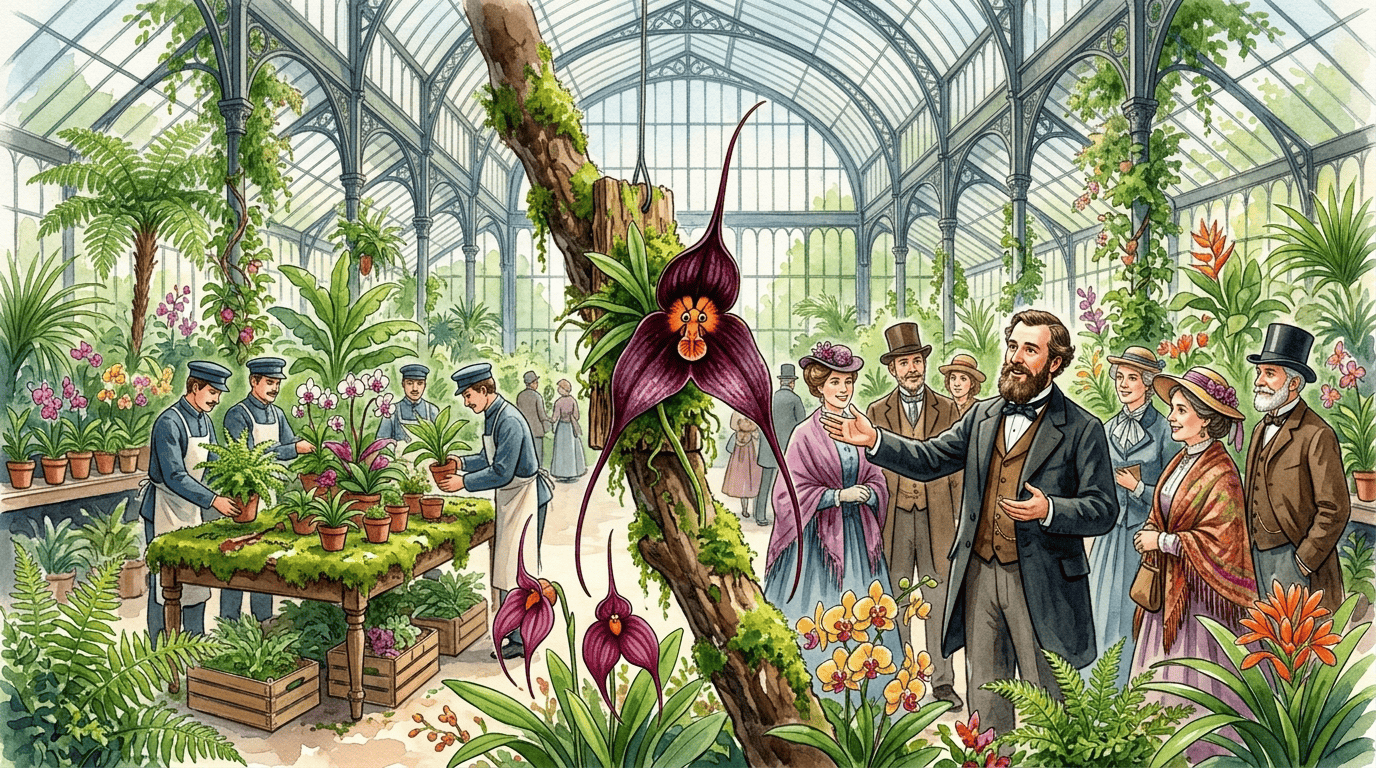
The genus Dracula was established by American botanist Carlyle Luer in 1978, when he segregated it from the closely related genus Masdevallia. The name Dracula, from Latin for 'little dragon,' refers to the long, fang-like spurs extending from each flower—an appearance that suggested the mythological creature to the imaginative Luer.
Dracula houtteana takes its species name from Louis Van Houtte (1810–1876), the celebrated Belgian horticulturist whose Ghent nursery was among Europe's most influential. Van Houtte introduced hundreds of exotic plants to Western gardens and published the landmark journal Flore des Serres et des Jardins de l'Europe. Naming this orchid in his honor acknowledges 19th-century nursery culture's vital role in bringing cloud forest plants to broader knowledge.
All Dracula species are native to Andean cloud forests in Colombia, Ecuador, and Peru—habitats of perpetual cool mist, high humidity, and moderate temperatures at 1,500–2,500 meters elevation. The orchids grow as epiphytes on mossy branches in permanent shade.
The most extraordinary feature of Dracula flowers is their pollination strategy. The lip is shaped precisely like the cap of a small mushroom, and the flower emits a fungal scent to attract fungus gnats (Bradysia spp.). The gnats enter seeking a mushroom to deposit their eggs, inadvertently transferring pollen between flowers—one of the most remarkable cases of floral mimicry in the plant kingdom.
Symbolism & meaning
What It Symbolizes
The Dracula orchid offers no nectar—it deceives. Its mushroom-shaped lip and fungal scent create an elaborate illusion, tricking gnats into entering its flower in search of a place to lay their eggs. This extraordinary strategy, refined over millions of years, reminds us that in nature, beauty and deception are often inseparable—and the most spectacular forms may conceal the most cunning plans.
- Mystery — Lives in perpetual mountain mist, producing flowers that mimic fungi—a specialist of hidden, extraordinary places
- Deception — The mushroom-shaped lip tricks gnats through mimicry, symbolizing nature's use of illusion to achieve its purposes
Where the Name Comes From
The genus name Dracula comes from Latin for 'little dragon,' coined by botanist Carlyle Luer for the flower's long fang-like spurs. The species epithet houtteana honors Louis Van Houtte (1810–1876), Belgian horticulturist and orchid enthusiast whose Ghent nursery was among the most influential of the 19th century.
Uses & Fun Facts
- Extraordinary pendulous flowers with mushroom-shaped lips prized by specialist orchid collectors
- Unique fungus-mimicking flowers attract fungus gnats through scent and shape deception
Related plants
More Dracula plants

Plants with similar care
Frequently asked questions
How often should I water Van Houtte's Dracula Orchid?
In summer, water about every 5 days; in winter, about every 15 days. Adjust for heat, pot size and drainage.
How much light does Van Houtte's Dracula Orchid need?
Full shade: <2 hrs direct. Watch the leaves — scorching or stretching means the light needs adjusting.
Is Van Houtte's Dracula Orchid toxic to cats or dogs?
No toxicity has been reported for this plant. Still, it is wise to keep pets from chewing on any houseplant. Educational information, not medical or veterinary advice. If exposure is suspected, contact a doctor or veterinarian.
Is Van Houtte's Dracula Orchid easy to grow?
It is considered challenging and rewards experienced growers.
Can Van Houtte's Dracula Orchid be grown indoors?
Yes, it adapts well to indoor growing given the right light.
When does Van Houtte's Dracula Orchid bloom?
It typically blooms May–Jun in the Northern Hemisphere.
YardMate
Identify any plant in seconds
Snap a photo — YardMate names the plant, diagnoses problems, and reminds you when to water.
Download on the App Store