 YardMate
Pink Sand Verbena
Abronia umbellata
Hard · Experienced growersAbout Pink Sand Verbena
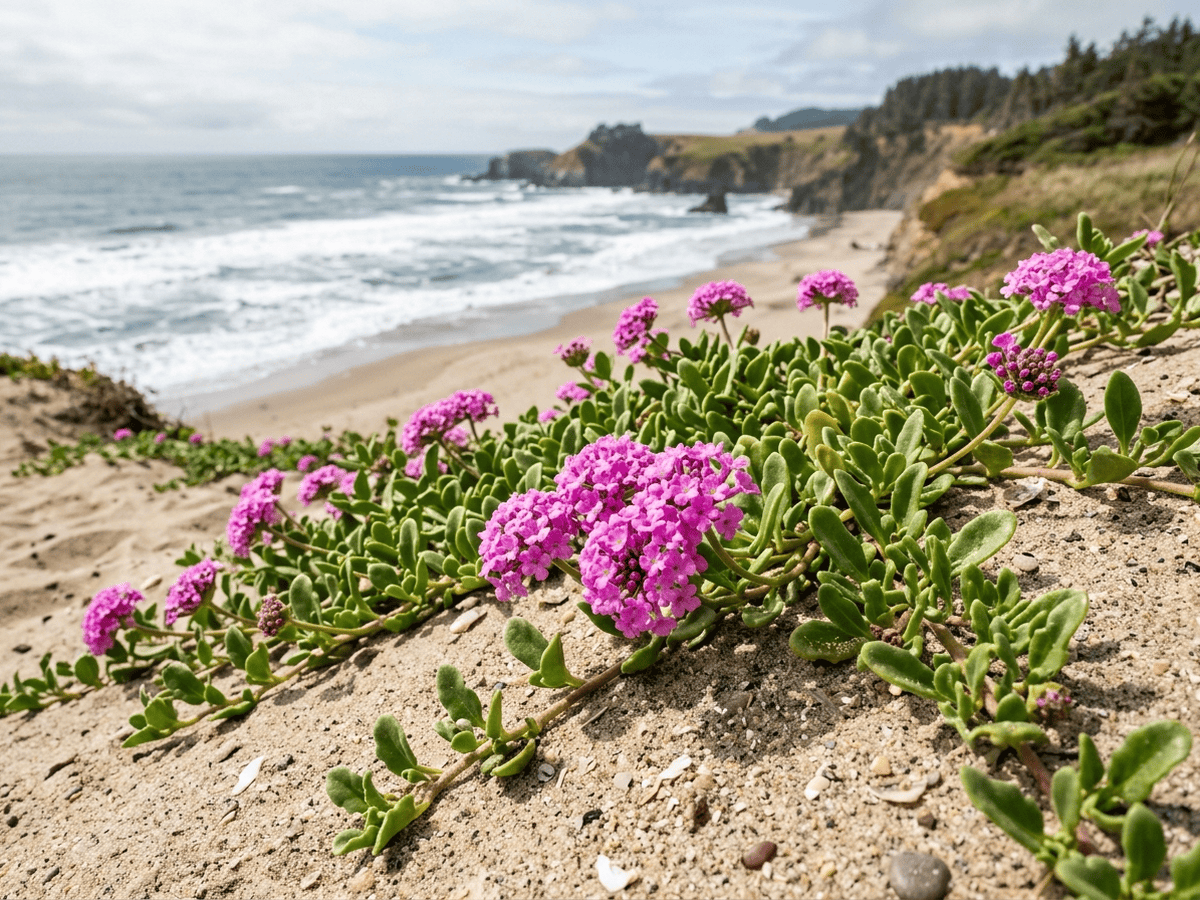
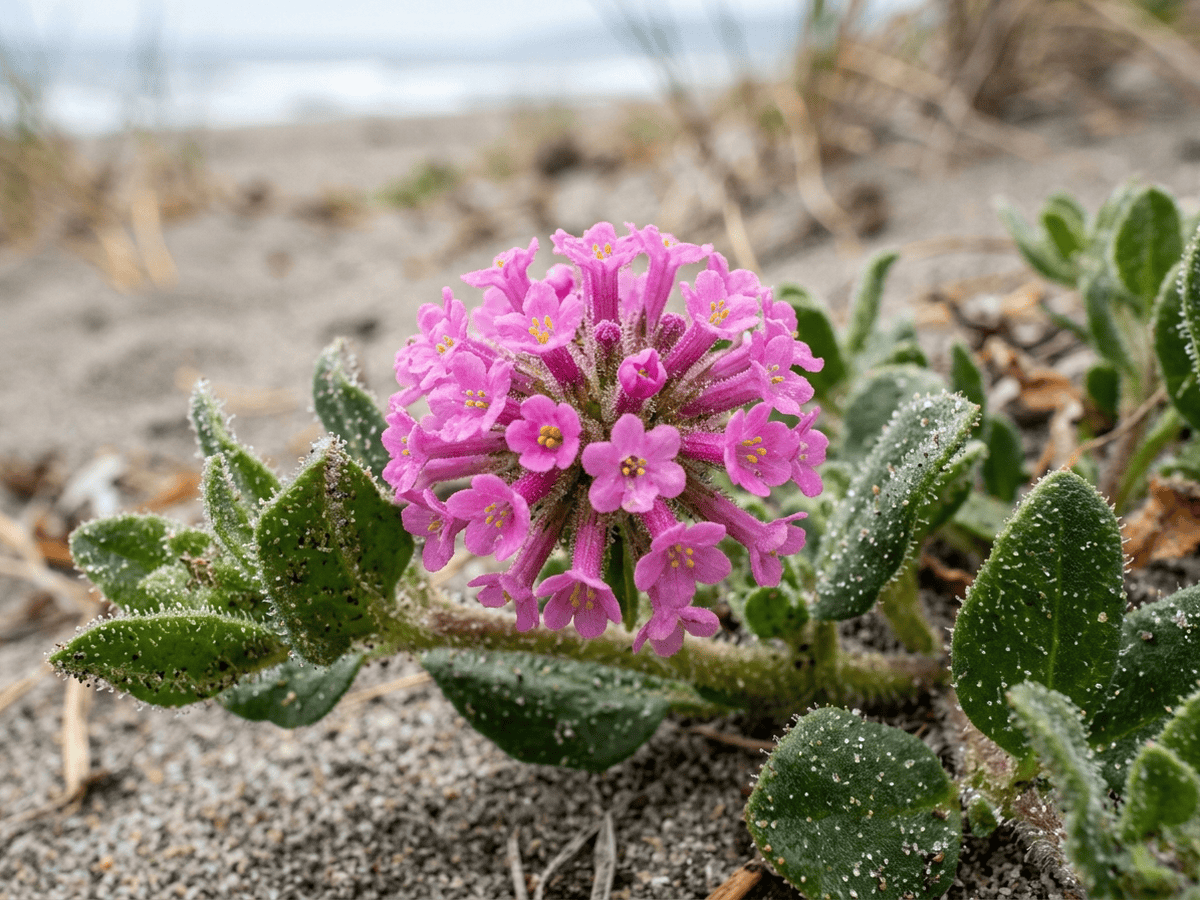
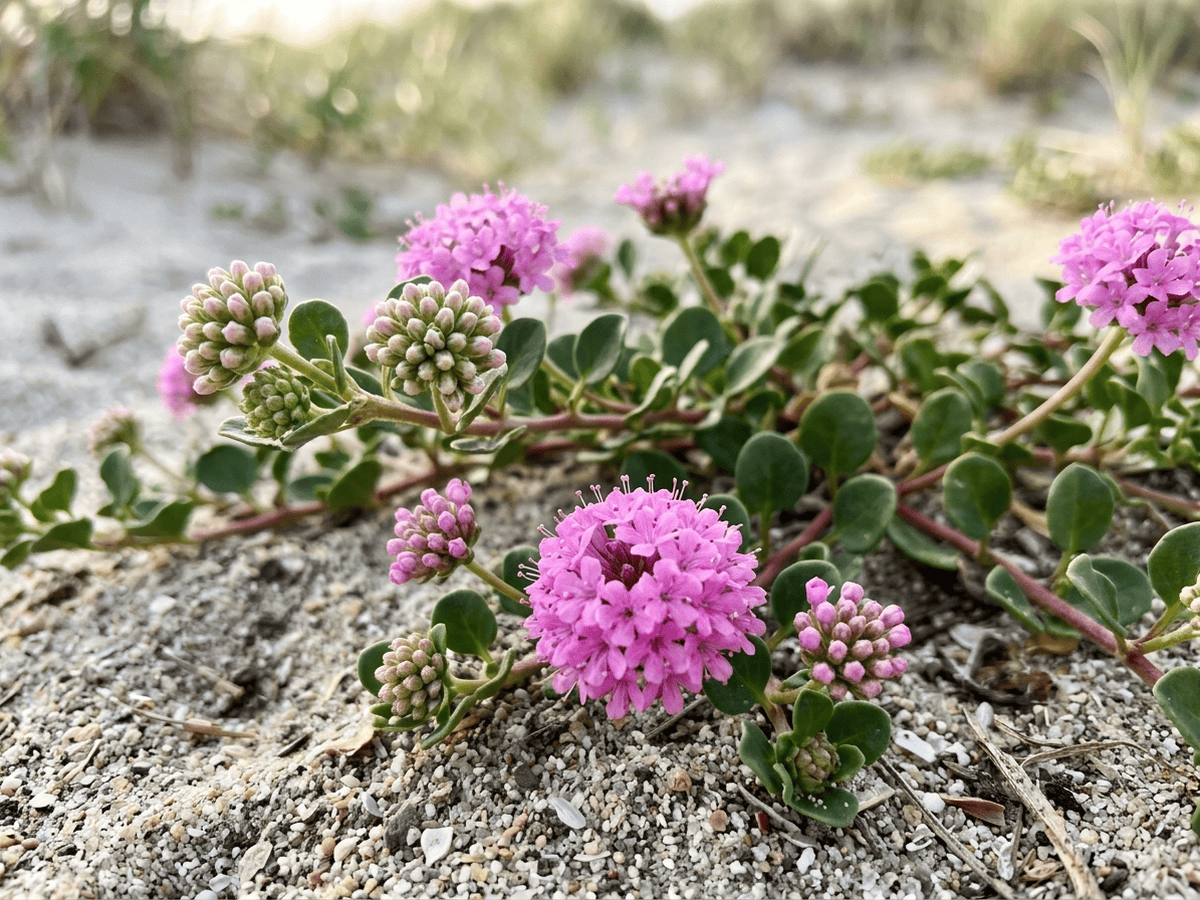
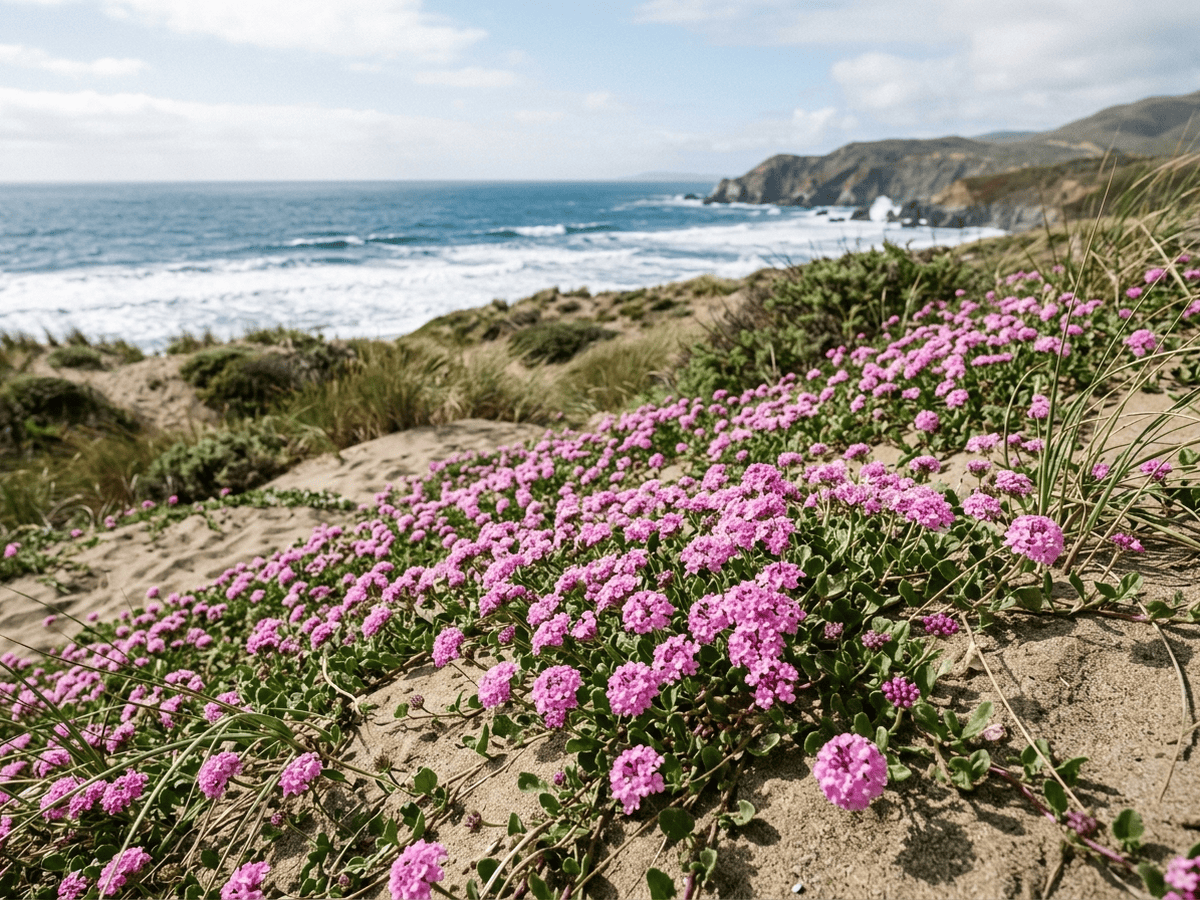
Abronia umbellata, the Pink Sand Verbena, is a fragrant trailing perennial native to Pacific Coast beach dunes and coastal bluffs from British Columbia to Baja California. Low-spreading stems covered in glandular sticky hairs creep across open sand, bearing rounded clusters of small but intensely sweet-scented pink flowers through summer and into autumn. A coastal sand specialist, it stabilizes dune surfaces with its sprawling root system while adding vivid pink color to habitats of otherwise sparse, windswept vegetation.
- Fragrant
- Drought-tolerant
- Spreading
- Long-blooming
How to care for Pink Sand Verbena
Watering
- Springevery 7 days
- Summerevery 5 days
- Fallevery 30 days
- Winterevery 30 days
Soil · Rich & well-draining
- Top dressingCompost10%
- Main mixPotting soil + compost 3:180%
- DrainageGravel10%
Top up the compost layer each season.
FERTILIZER
- Springevery 30 days
- Summerevery 30 days
At a Glance
- NativeNorth America
- Height1–1.5 ft (0.3–0.5 m)
- Spread2–3 ft (0.6–0.9 m)
- Flower colorPink
- Foliage colorGreen
- Fruit colorBrown
- SoilSandy, Well-drained
- LocationsYard · Balcony
Bloom time
BLOOM CYCLE
Peak bloom
Jun–Sep
It produces clusters of pink flowers from late spring to early fall.
Fragrance
MODERATE FRAGRANCE
Sweet honeysuckle-like fragrance, strongest in the evening; a distinctive pleasure of Pacific Coast beaches.
Toxicity
No toxicity has been reported for this plant. Still, it is wise to keep pets from chewing on any houseplant.
Educational information, not medical or veterinary advice. If exposure is suspected, contact a doctor or veterinarian.
DISTRIBUTION

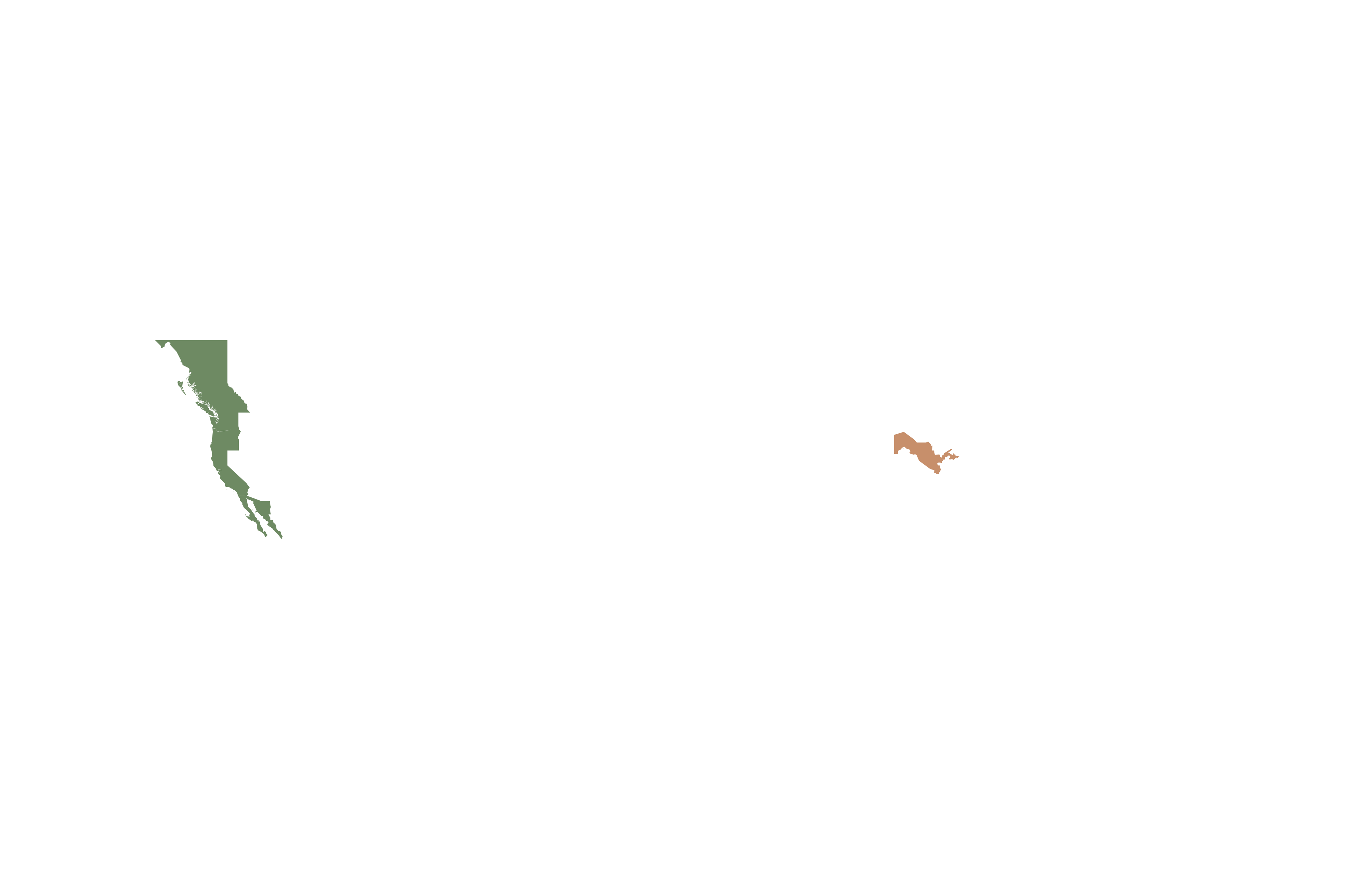
- Native
- Introduced
- North America
History
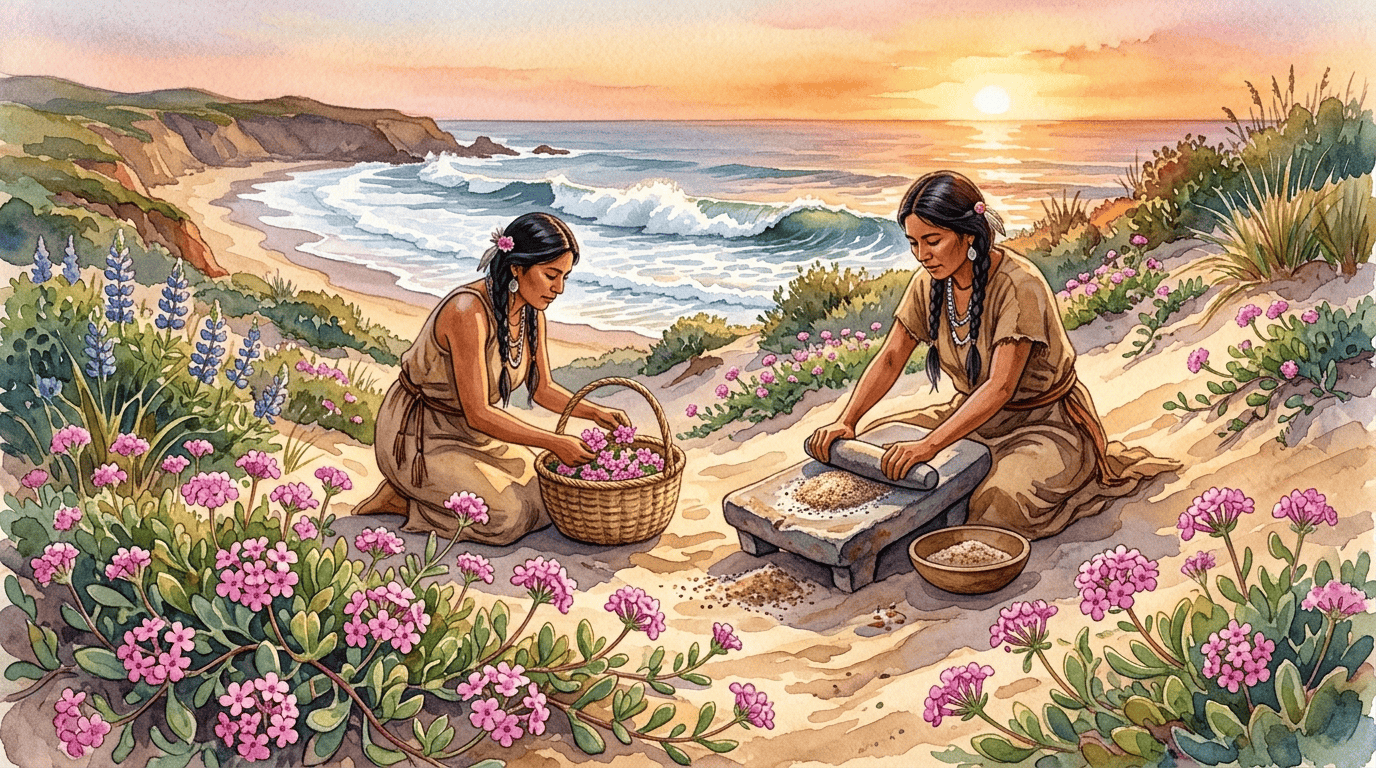
Abronia umbellata evolved as a specialist of Pacific Coast coastal dune systems, one of the most unstable and challenging plant habitats in North America. Its trailing stems and sticky, glandular leaves help the plant grip loose sand and capture windblown particles, gradually stabilizing dune surfaces in a process ecologists call primary dune succession. Its deep roots anchor it against coastal storms and salt spray that would kill most plants.
For the Chumash people of the Santa Barbara coast, the Ohlone of the San Francisco Bay Area, and other coastal California nations, the flowers of Abronia and related species were consumed fresh as a sweet treat, and the seeds were ground into a flour or meal. Coastal dune plants generally were important food sources for indigenous groups who spent time on beaches and estuaries.
By the late 19th century, as California's coastal development accelerated, Abronia umbellata began declining across large portions of its range. The construction of coastal roads, seawalls, homes, and parking lots destroyed dune habitats directly, while the introduction of European beach grasses (especially Ammophila arenaria, deliberately planted for dune stabilization) displaced native dune plants on a massive scale. Pink Sand Verbena is now endangered or rare in parts of its former range in central and northern California.
In the 21st century, coastal habitat restoration programs in California, Oregon, and Washington have identified Abronia umbellata as a priority species. Ecologists remove invasive beach grass and replant native dune flora including sand verbena to restore coastal dune function and biodiversity. The plant's sweet evening fragrance and vivid pink color make it a beloved indicator of healthy coastal ecosystems.
Symbolism & meaning
What It Symbolizes
The Pink Sand Verbena grows where nothing seems able to hold on—loose coastal sand, salt air, constant wind, zero soil stability. Its roots grip the dune; its trailing stems spread; its sticky leaves gather windblown particles and slowly build ground. Where this plant thrives, the dune stabilizes. Where it was lost to beach development, the dune eroded. Restoring it is not just gardening—it is rebuilding a foundation.
- perseverance — Anchored in shifting sand against salt wind and crashing waves, the Pink Sand Verbena finds its home precisely where most plants cannot survive.
- healing — A species in decline restored by human care—planted back into the dunes it once carpeted, a symbol of ecological repair.
Where the Name Comes From
The genus name Abronia comes from the Greek 'habros' (graceful, delicate), describing the elegant appearance of the flowers. The species epithet umbellata refers to the umbel-like clusters in which the flowers are arranged, from Latin 'umbella' (a little shadow, parasol)—describing the rounded flower cluster shape.
Uses & Fun Facts
- Trailing fragrant ground cover for coastal and dry sunny gardens; pink flower clusters and sprawling habit add color to sandy, difficult spots
- Flowers eaten fresh as a sweet-tasting snack by California indigenous coastal peoples; seeds ground into meal
- Important nectar source for native coastal pollinators; dune-stabilizing root system supports coastal habitat restoration
Related plants
Plants with similar care
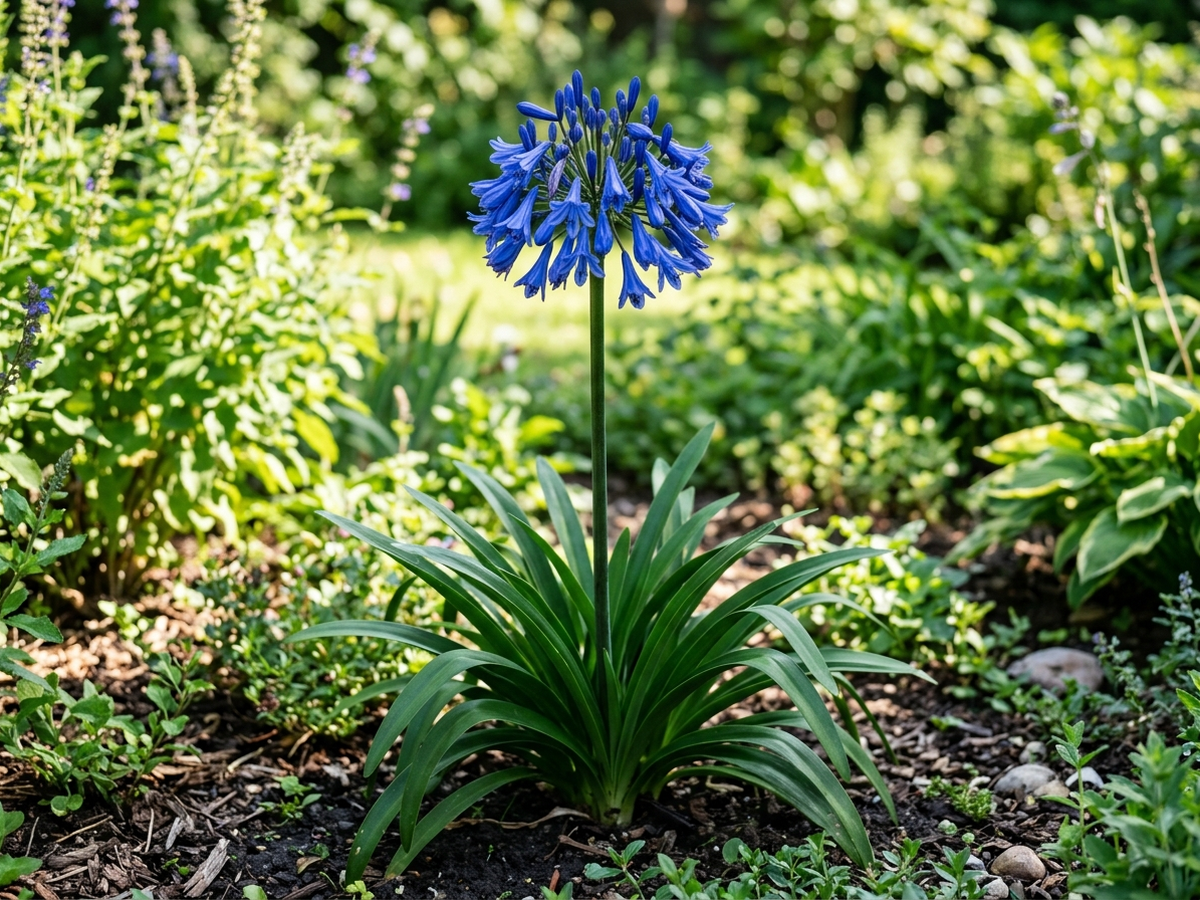 Drooping AgapanthusAgapanthus inapertus
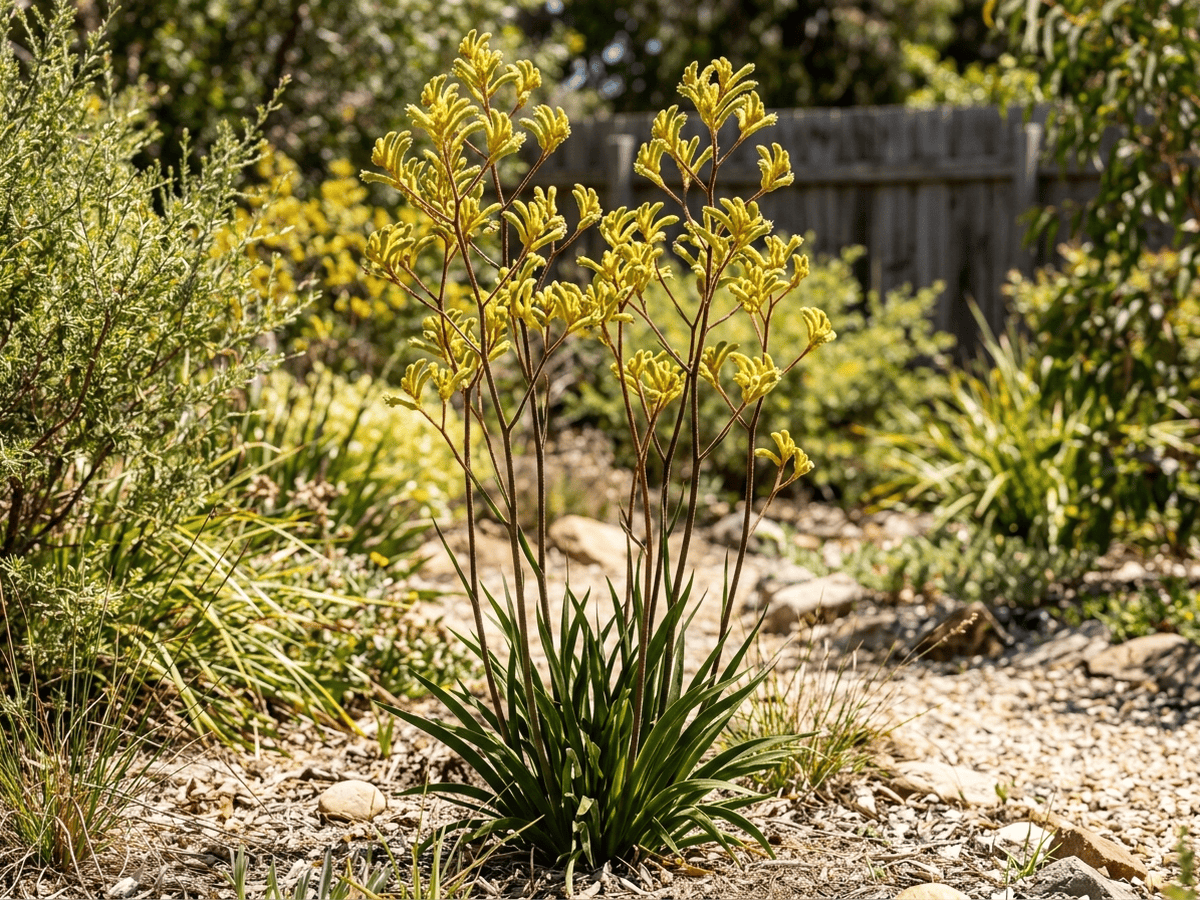 Tall Kangaroo PawAnigozanthos flavidus
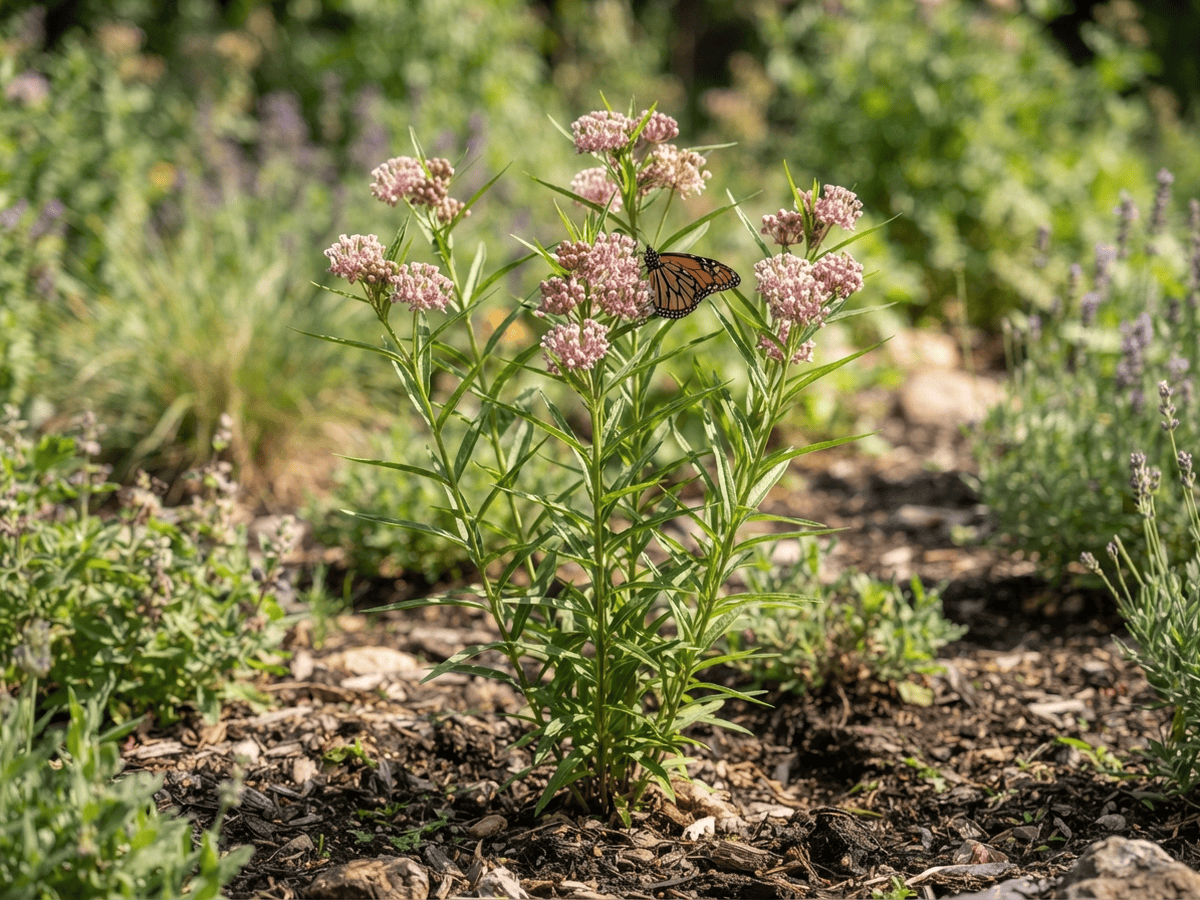 Narrowleaf MilkweedAsclepias fascicularis
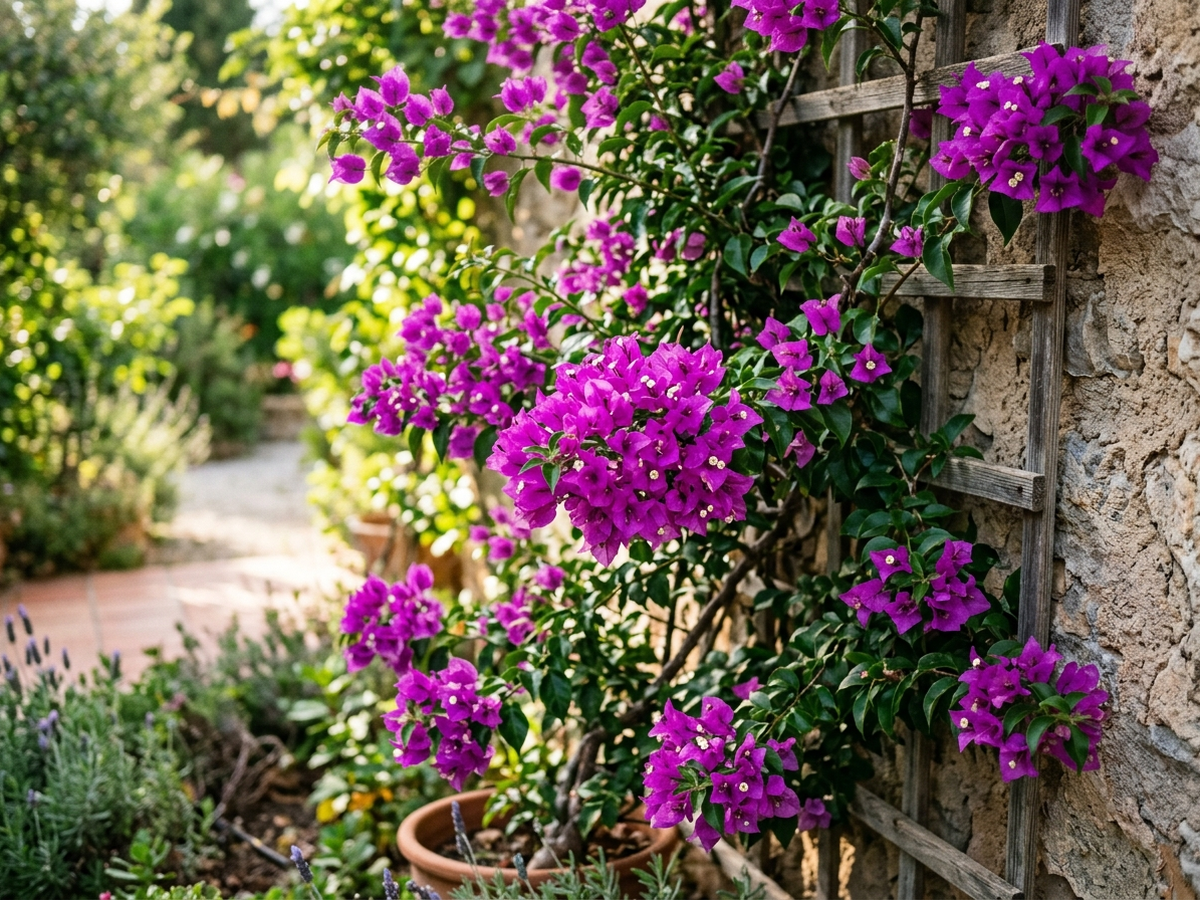 Scarlet BougainvilleaBougainvillea × buttiana
Frequently asked questions
How often should I water Pink Sand Verbena?
In summer, water about every 5 days; in winter, about every 30 days. Adjust for heat, pot size and drainage.
How much light does Pink Sand Verbena need?
Full sun: 6+ hrs direct. Watch the leaves — scorching or stretching means the light needs adjusting.
Is Pink Sand Verbena toxic to cats or dogs?
No toxicity has been reported for this plant. Still, it is wise to keep pets from chewing on any houseplant. Educational information, not medical or veterinary advice. If exposure is suspected, contact a doctor or veterinarian.
Is Pink Sand Verbena easy to grow?
It is considered challenging and rewards experienced growers.
When does Pink Sand Verbena bloom?
It typically blooms Jun–Sep in the Northern Hemisphere.
YardMate
Identify any plant in seconds
Snap a photo — YardMate names the plant, diagnoses problems, and reminds you when to water.
Download on the App Store