 YardMate


Japanese Barberry
Berberis thunbergii
Easy · Beginner friendlyAbout Japanese Barberry
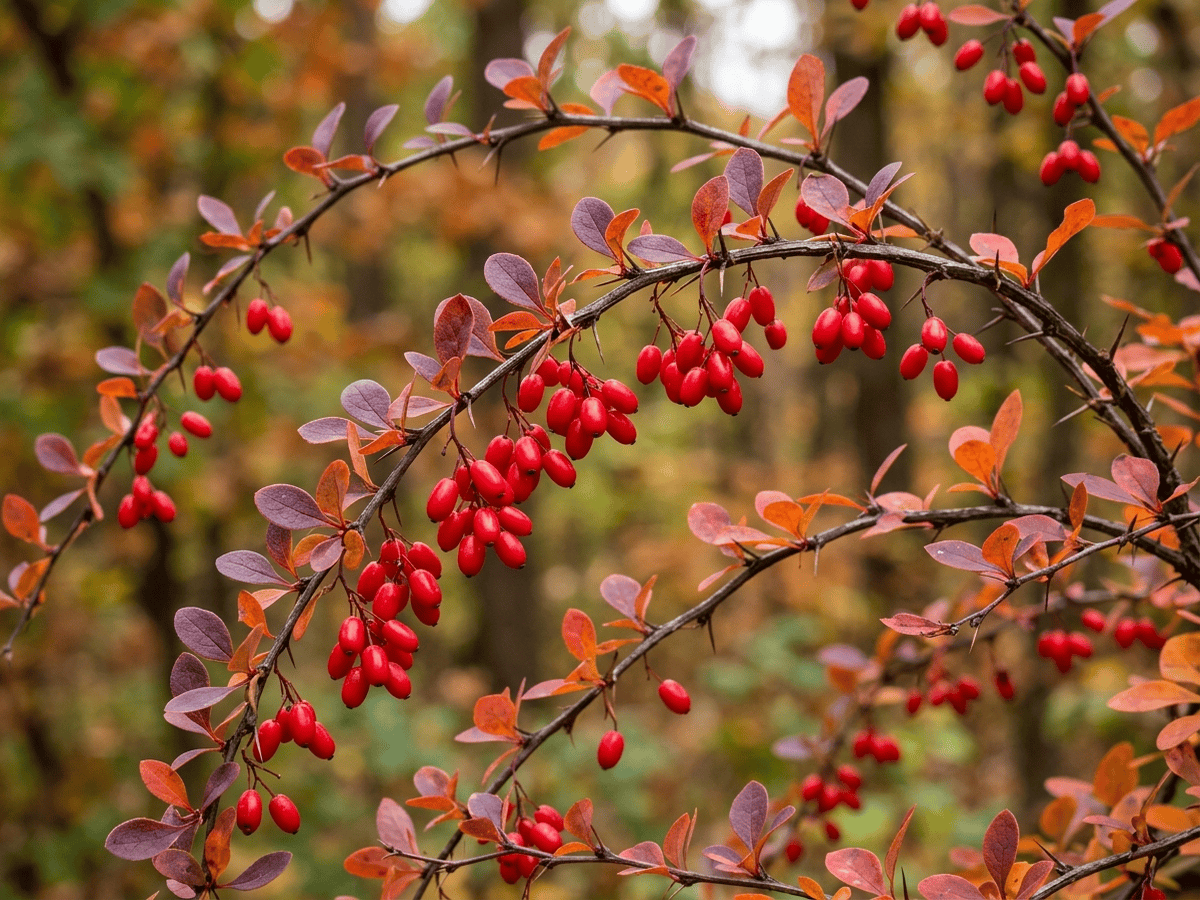
Japanese Barberry is a Japanese deciduous shrub introduced to the US in 1875 and now one of the top invasive shrubs in eastern and midwestern forests. Growing 3 to 8 feet tall with small oval leaves and sharp single spines at each node, it produces small yellow flowers in spring and red berries in fall. Notably harbors blacklegged ticks that transmit Lyme disease, compounding its ecological harm. Listed invasive or noxious in many northeastern states.
- Shade-tolerant
How to care for Japanese Barberry
Watering
- Springevery 14 days
- Summerevery 10 days
- Fallevery 14 days
- Winterevery 30 days
Soil · Well-draining
- Top dressingPine bark mulch10%
- Main mixPotting soil + perlite 2:170%
- DrainageLECA / gravel20%
Never skip the drainage layer — standing water is the top cause of root rot.
FERTILIZER
- Springevery 45 days
At a Glance
- NativeEast Asia
- Height3–6 ft (0.9–1.8 m)
- Spread4–7 ft (1.2–2.1 m)
- Flower colorYellow
- Foliage colorGreen, Red, Purple, Yellow
- Fruit colorRed
- SoilLoamy, Well-drained
- LocationsYard
Bloom time
BLOOM CYCLE
Peak bloom
Mar–May
Small yellow flowers spring
Fragrance
LIGHT FRAGRANCE
The flowers have a light sweet scent.
Toxicity
Humans Slight · Pets Slight
berberine
Slight
- Stem
- Root
- Contact
- Ingestion
EXPOSURE Touching stems and roots. Eating stems and roots.
EFFECT Thorn pricks and mild digestive upset.
NOTE Bark and root contain berberine; thorns cause mechanical injury.
Slight
- Root
- Bark
- Ingestion
EXPOSURE Eating roots and bark.
EFFECT Mild digestive upset.
NOTE Bark and root contain berberine; thorns cause mechanical injury.
Slight
- Root
- Bark
- Ingestion
EXPOSURE Eating roots and bark.
EFFECT Mild digestive upset.
NOTE Bark and root contain berberine; thorns cause mechanical injury.
Educational information, not medical or veterinary advice. If exposure is suspected, contact a doctor or veterinarian.
DISTRIBUTION

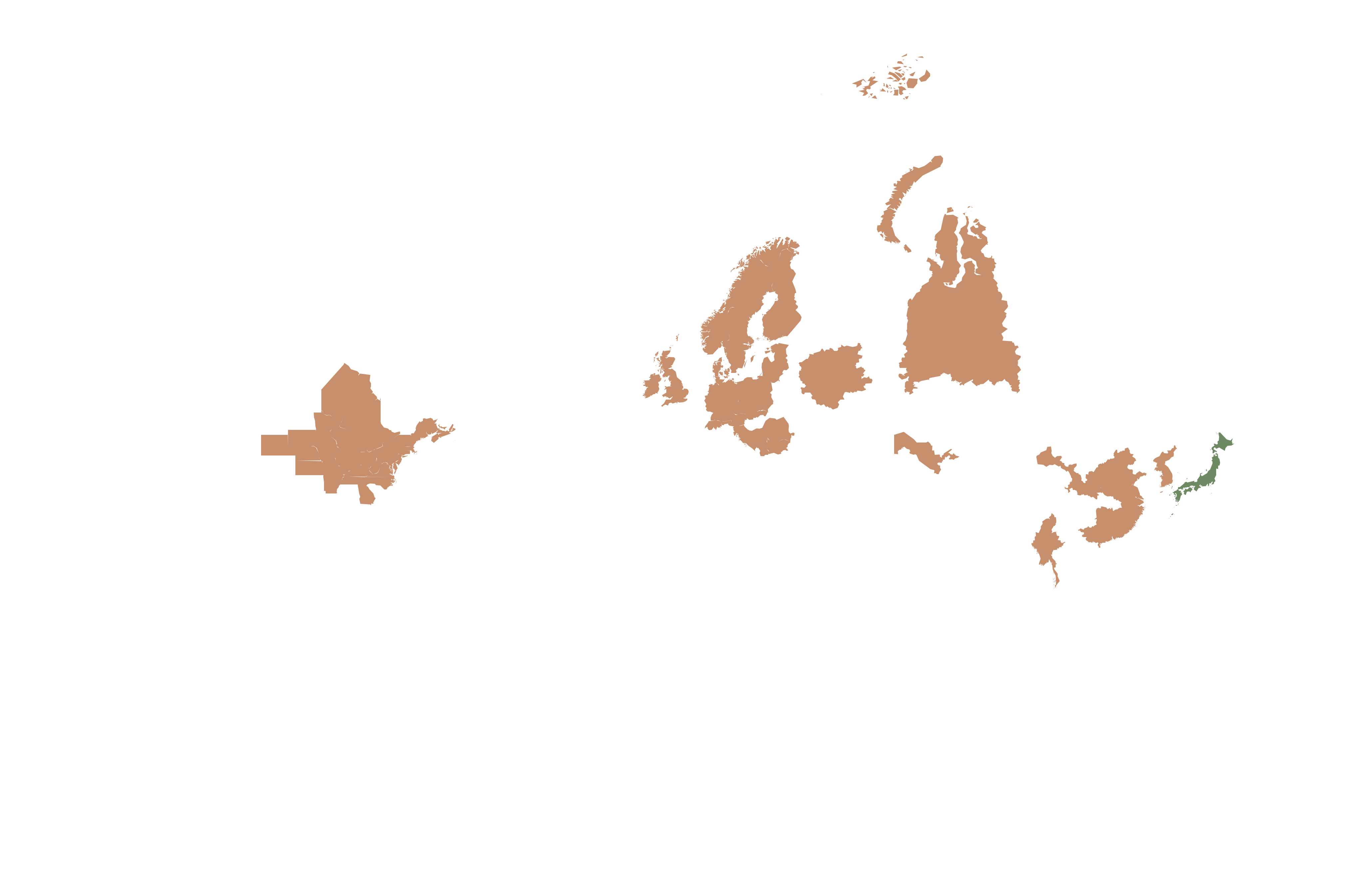
- Native
- Introduced
- East Asia
History
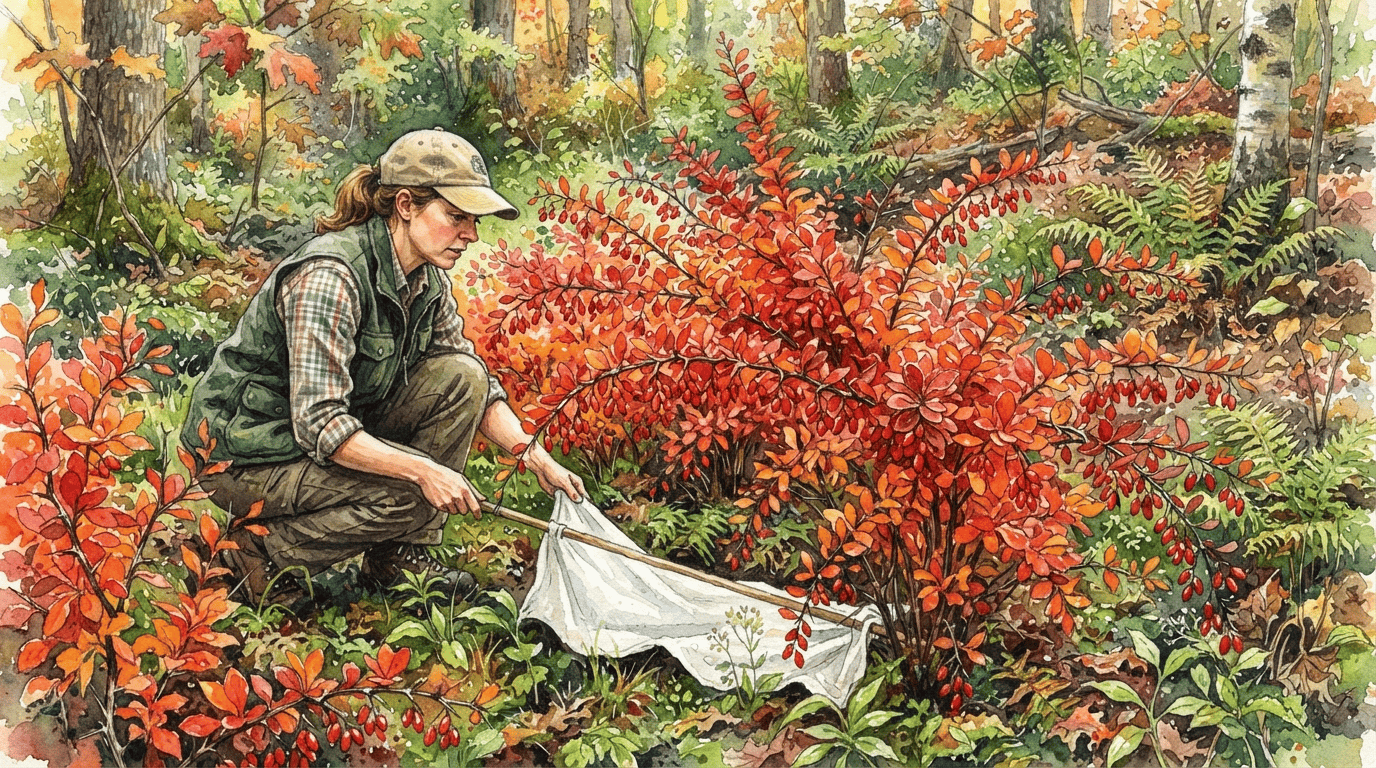
Berberis thunbergii, Japanese barberry, is a small spiny deciduous shrub native to Japan and eastern Asia. Charles Sprague Sargent of the Arnold Arboretum introduced seeds to the United States in 1875, promoting the species as a disease-resistant alternative to European common barberry, host of the devastating wheat stem rust. Japanese barberry became one of the most widely planted ornamental shrubs of the twentieth century, prized for its compact form, small thorns, and brilliant red autumn leaves and berries.
Birds spread the abundant fruits into forests, where dense thickets now dominate eastern US understories. Research in the 2010s showed that barberry thickets maintain high humidity that favours blacklegged ticks, raising local Lyme disease risk.
Several northeastern states now prohibit or restrict sale. Native to Japan, Japanese Barberry was introduced to the US in 1875 as an ornamental hedge and has since become one of the most invasive shrubs across eastern North American forests. Research since 2000 has shown it dramatically elevates populations of Lyme-disease-carrying blacklegged ticks, leading to sales bans in New York, Pennsylvania, Minnesota, Massachusetts, and other states.
Symbolism & meaning
What It Symbolizes
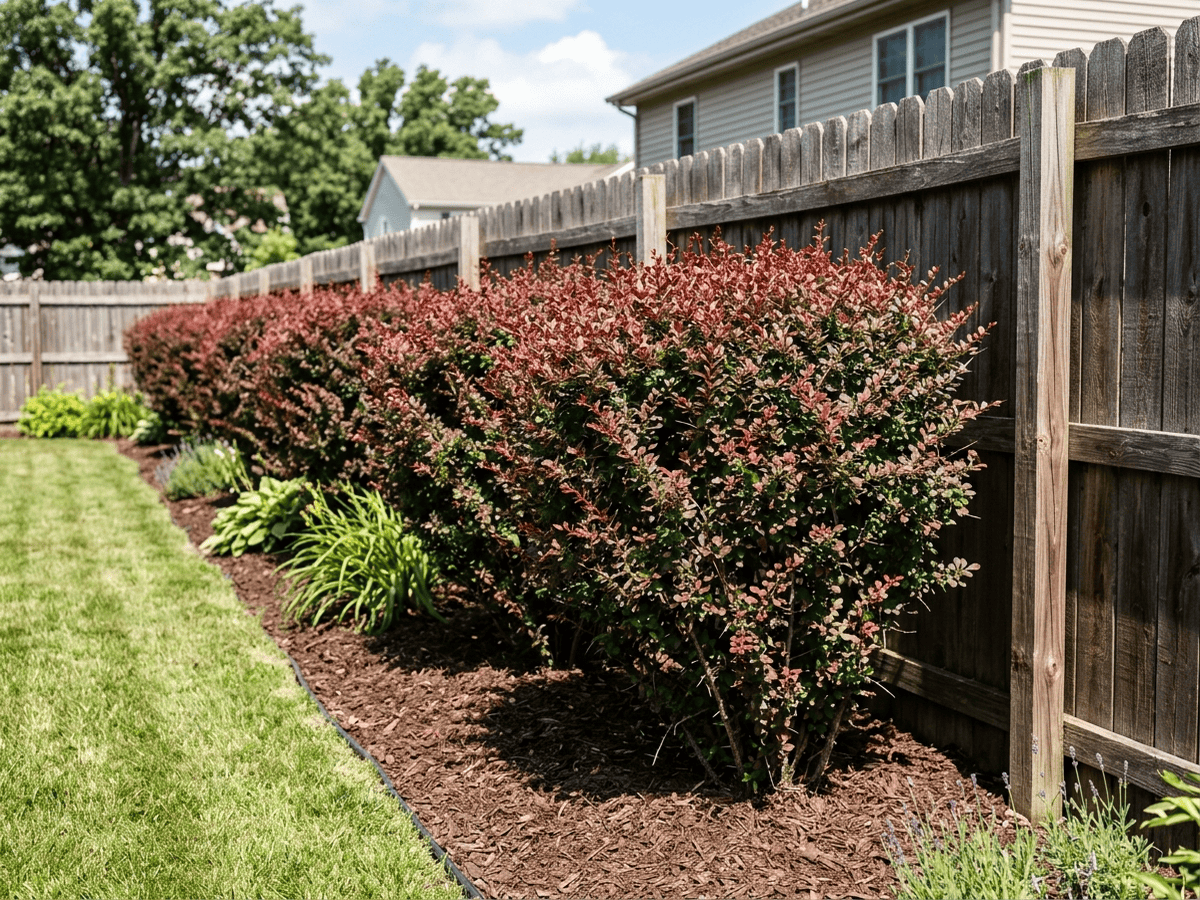
Japanese Barberry wears beauty as a warning, its neat burgundy hedges harboring ticks and seeding into native woods until states began to ban it outright. What the nursery trade once celebrated as the ideal foundation shrub has become a cautionary tale in hidden danger. In its tidy form, ecological awareness has rewritten the meaning of an ornamental favorite.
- Hidden danger — ornamental shrub that harbors Lyme ticks
- Banned beauty — banned in multiple US states
Where the Name Comes From
The name Japanese Barberry points to Japan. 'Berberis' from Arabic 'berberys' the old name for the plant; 'thunbergii' honors Carl Peter Thunberg (1743-1828), Swedish botanist who collected in Japan.
Related plants
Plants with similar care
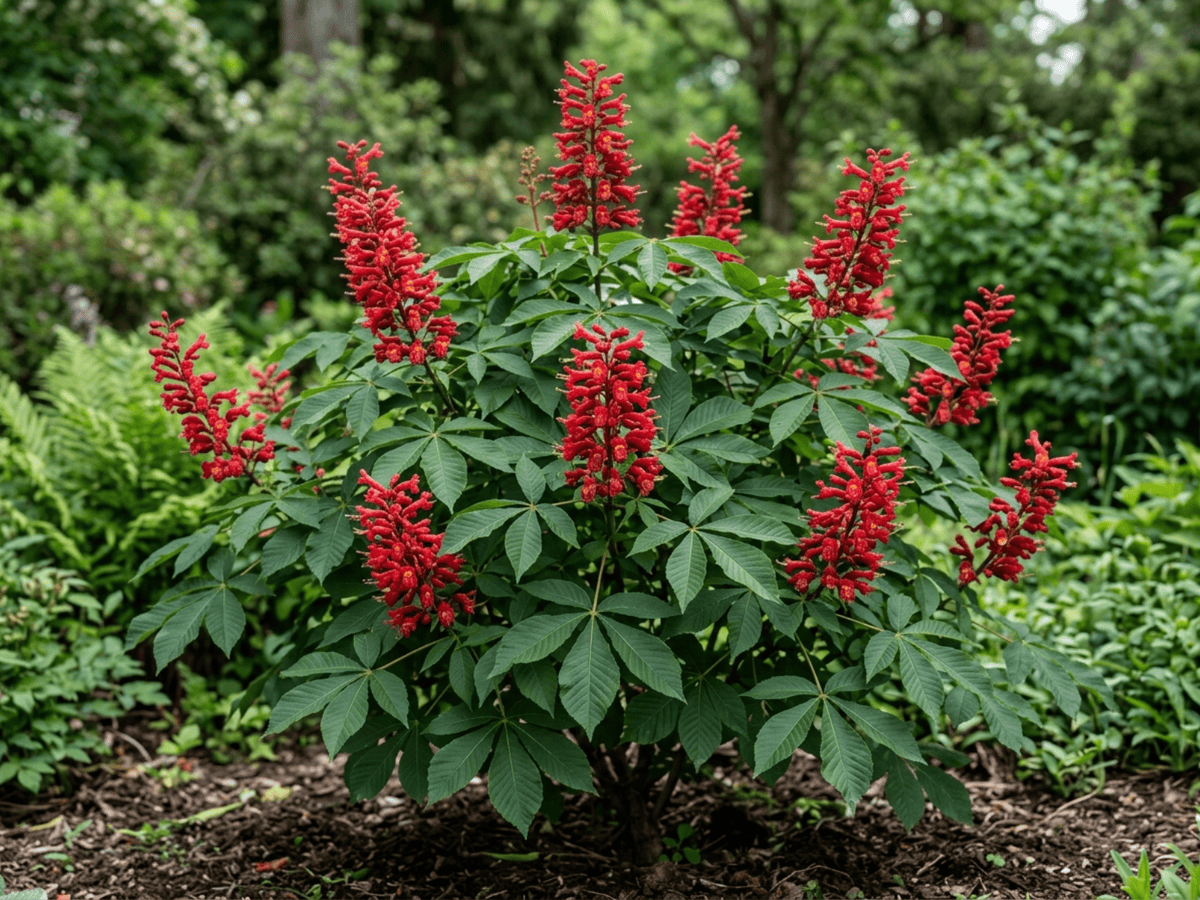 Red BuckeyeAesculus pavia
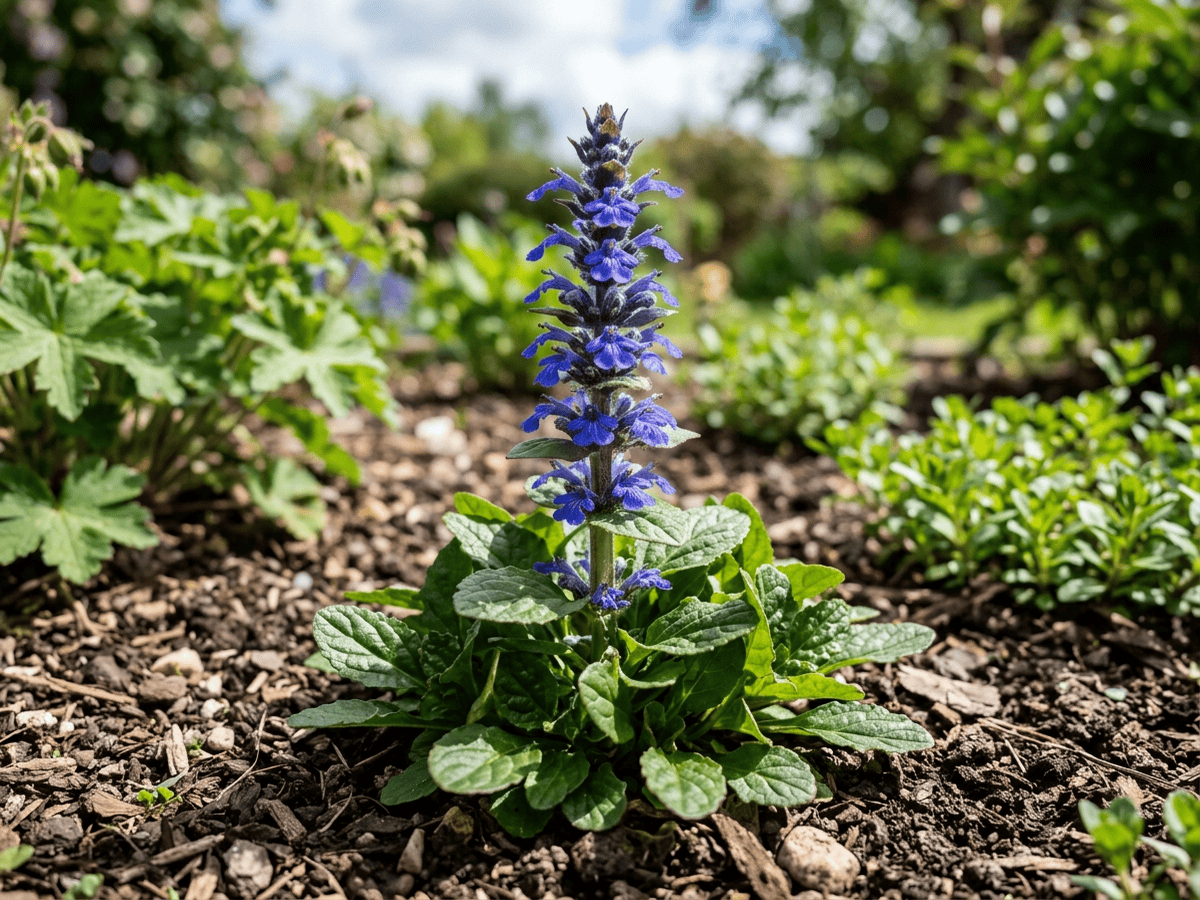 Blue BugleAjuga genevensis
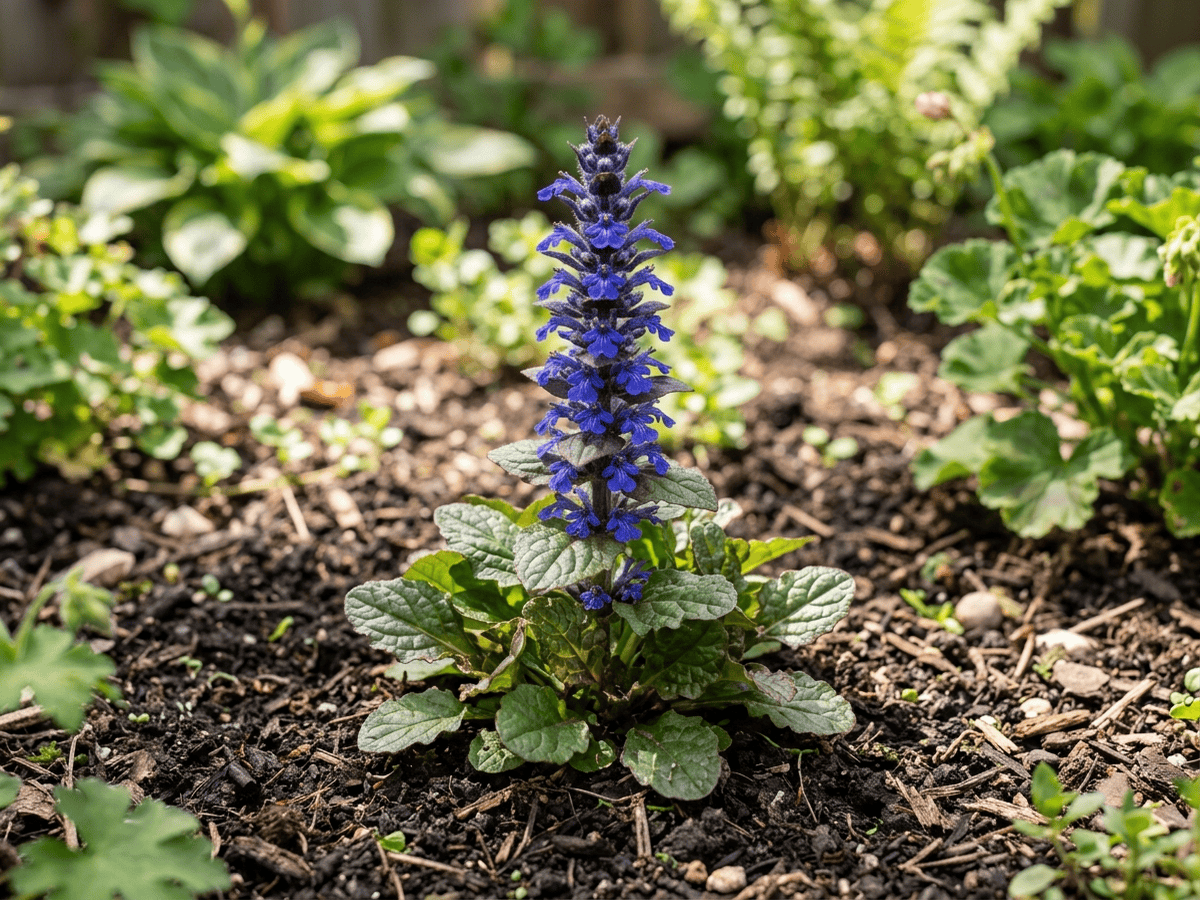 Pyramidal BugleAjuga pyramidalis
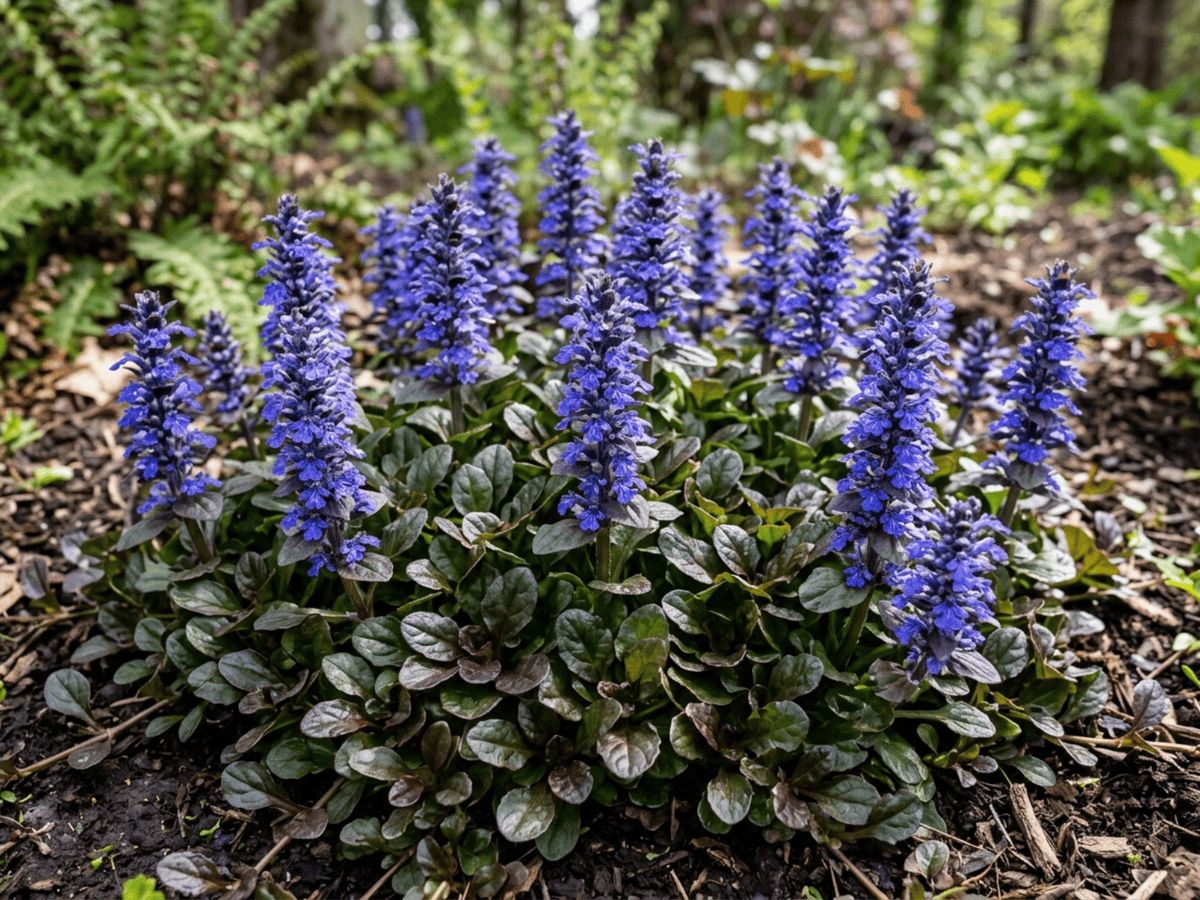 Carpet BugleAjuga reptans
Frequently asked questions
How often should I water Japanese Barberry?
In summer, water about every 10 days; in winter, about every 30 days. Adjust for heat, pot size and drainage.
How much light does Japanese Barberry need?
Part shade: 2–4 hrs direct. Watch the leaves — scorching or stretching means the light needs adjusting.
Is Japanese Barberry toxic to cats or dogs?
Pets Slight (Dogs Slight · Cats Slight) Educational information, not medical or veterinary advice. If exposure is suspected, contact a doctor or veterinarian.
Is Japanese Barberry easy to grow?
Yes — it is considered an easy, beginner-friendly plant.
When does Japanese Barberry bloom?
It typically blooms Mar–May in the Northern Hemisphere.
YardMate
Identify any plant in seconds
Snap a photo — YardMate names the plant, diagnoses problems, and reminds you when to water.
Download on the App Store