 YardMate
Red Buckeye
Aesculus pavia
Easy · Beginner friendlyAbout Red Buckeye
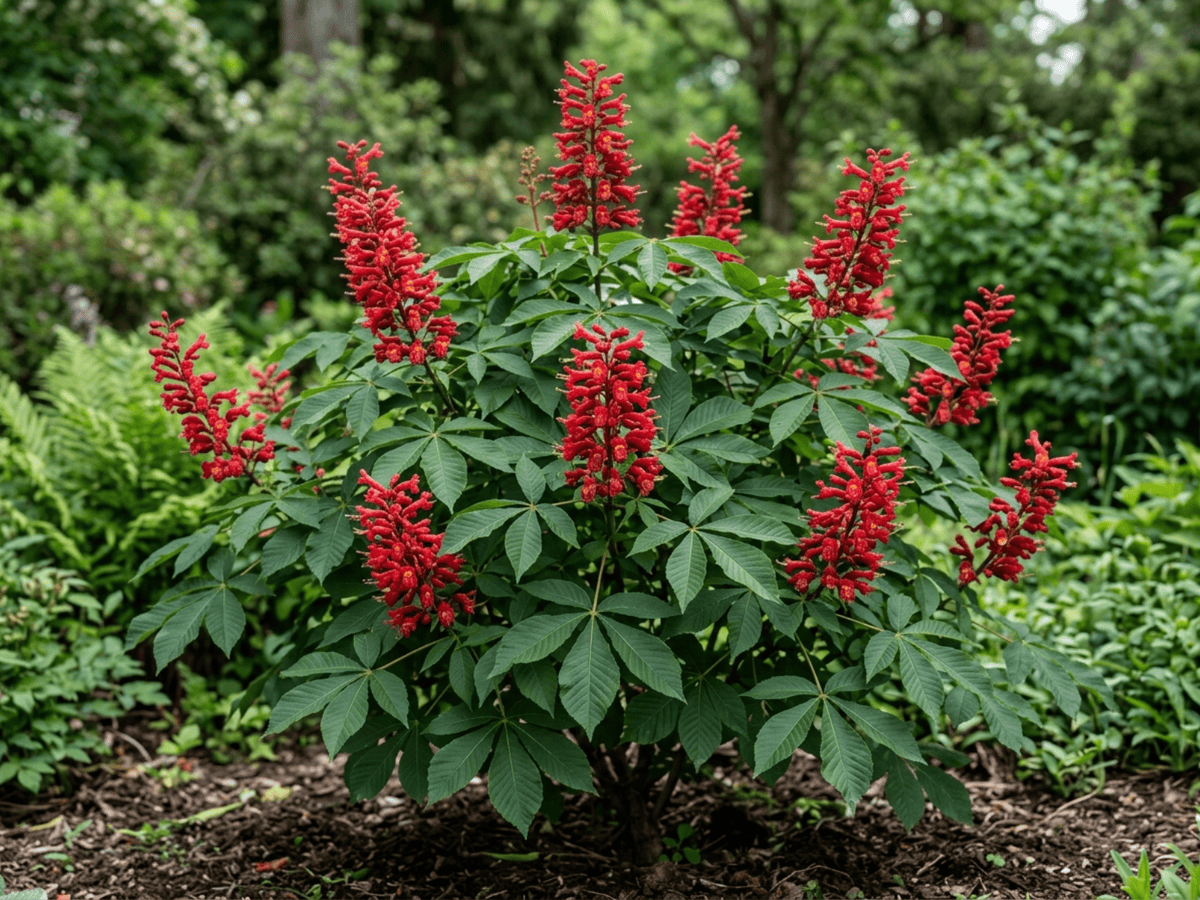
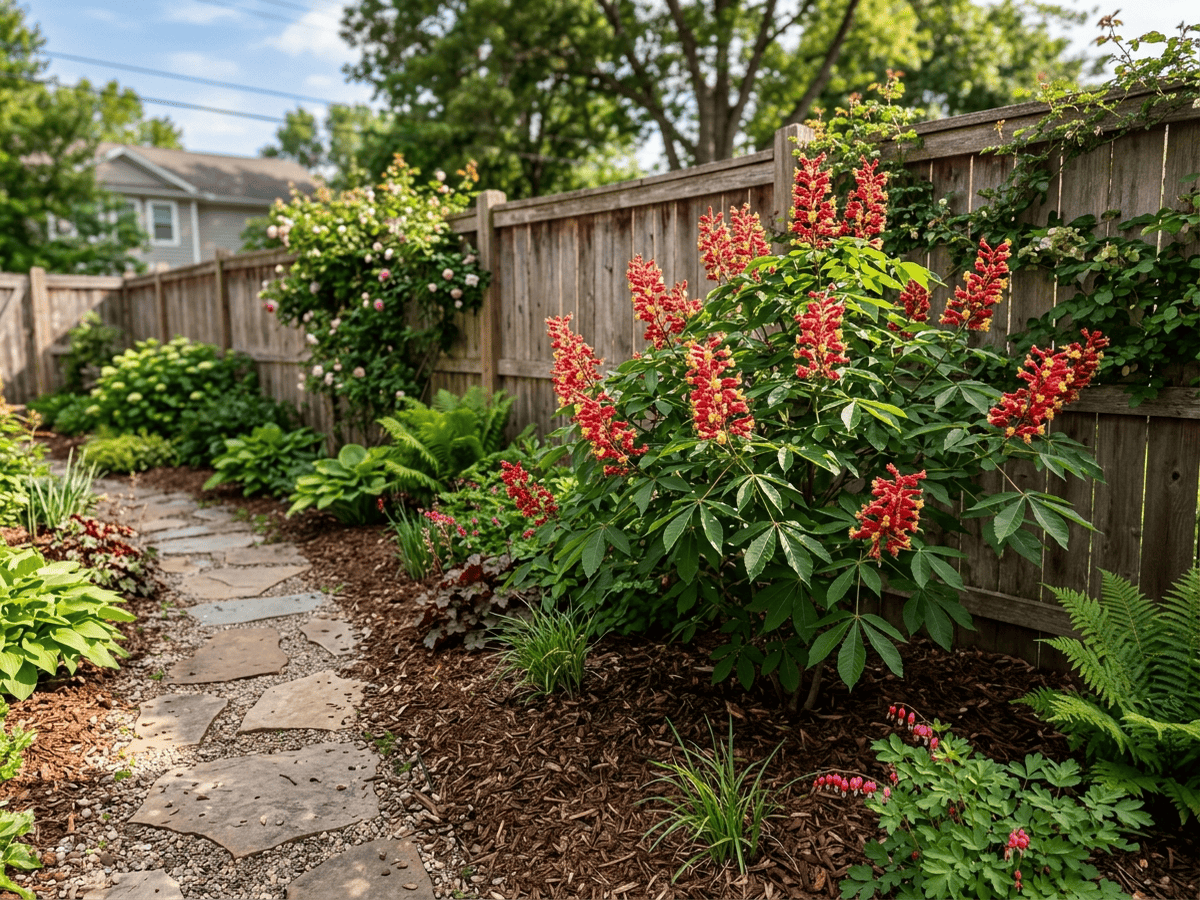
Red Buckeye is a small native American tree or large shrub of the Southeastern US, reaching 15-25 feet tall and producing stunning upright panicles of brilliant red tubular flowers in spring—perfectly timed to feed returning ruby-throated hummingbirds. A superb garden specimen for hummingbird gardens and understory plantings. Hardy in USDA zones 4-8 and a signature native plant for Southern American heritage gardens.
- Native
- Pollinator-friendly
How to care for Red Buckeye
Watering
- Springevery 7 days
- Summerevery 5 days
- Fallevery 10 days
- Winterpause watering
Soil · Well-draining
- Top dressingPine bark mulch10%
- Main mixPotting soil + perlite 2:170%
- DrainageLECA / gravel20%
Never skip the drainage layer — standing water is the top cause of root rot.
FERTILIZER
Balanced Feed 14-14-14
An even feed covers all three needs at once, keeping leaves, roots and blooms moving together with nothing pushed out of balance.
- Nitrogen · Leaves
- Phosphorus · Roots + Blooms
- Potassium · Strength
- Springevery 60 days
- Summerevery 60 days
At a Glance
- NativeNorth America
- Height12–20 ft (3.7–6.1 m)
- Spread15–25 ft (4.6–7.6 m)
- Flower colorRed, Pink
- Foliage colorGreen
- Fruit colorBrown
- SoilWell-drained, Loamy, Moisture-retentive
- LocationsYard
Bloom time
BLOOM CYCLE
Peak bloom
Apr–May
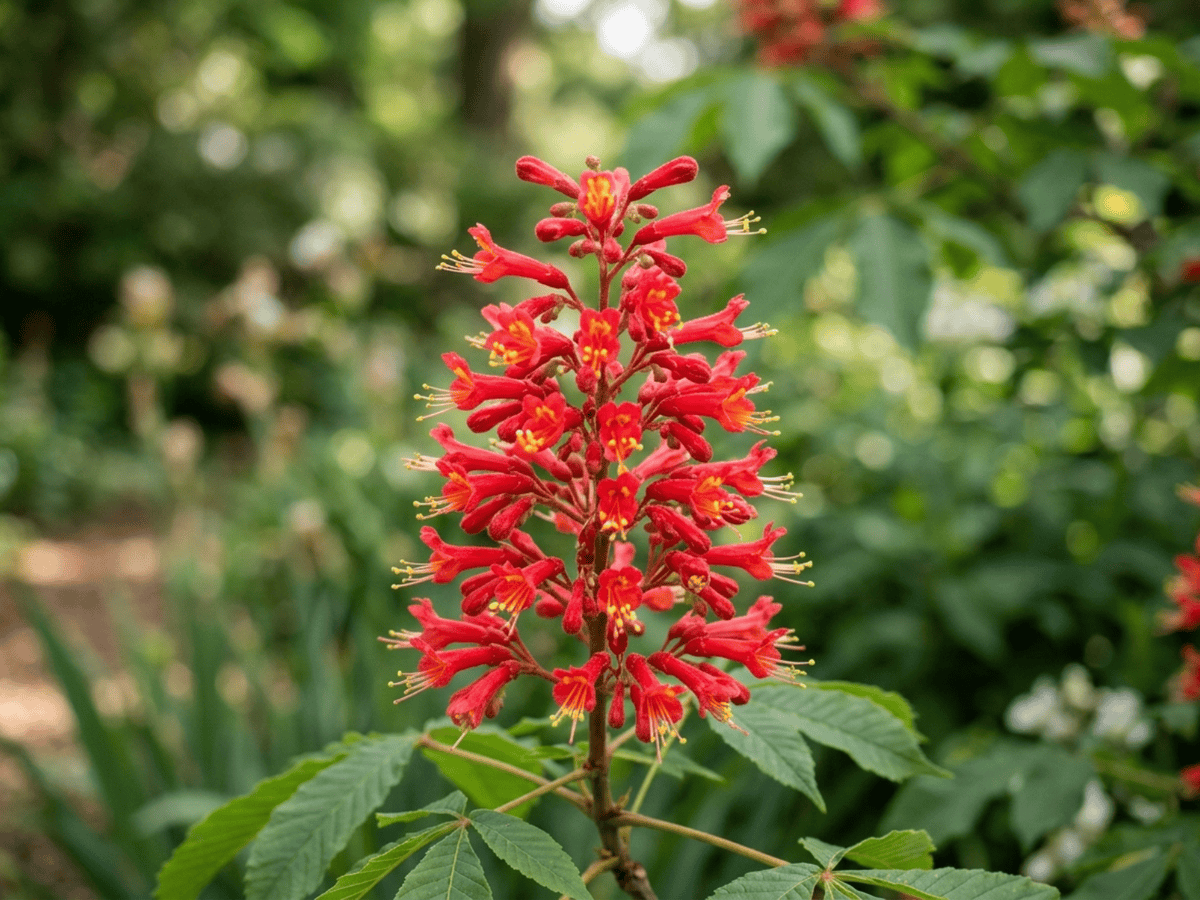
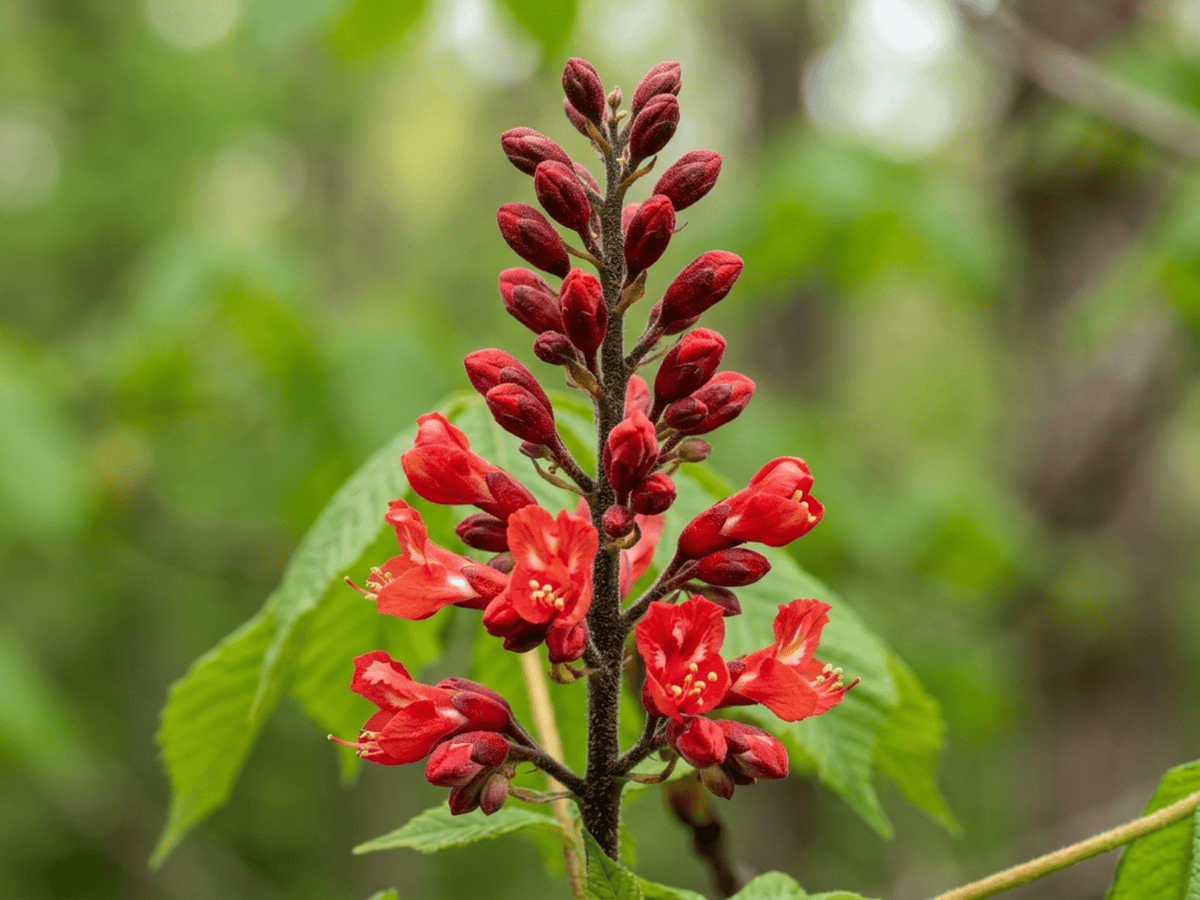
Brilliant red tubular panicles April to May
Fragrance
LIGHT FRAGRANCE
The flowers have a mild scent.
Toxicity
Humans Moderate · Pets Moderate
aesculin, aescin, and saponins
Moderate
- Seed
- Leaf
- Shoot
- Ingestion
EXPOSURE Eating seeds, leaves, and shoot.
EFFECT Nausea, vomiting, and weakness.
NOTE Documented concern for humans: Nausea, vomiting, and weakness.
Moderate
- All
- Ingestion
EXPOSURE Eating any part of the plant.
EFFECT Vomiting, diarrhea, and tremors.
NOTE ASPCA lists Aesculus as toxic to pets.
Moderate
- All
- Ingestion
EXPOSURE Eating any part of the plant.
EFFECT Vomiting, diarrhea, and tremors.
NOTE ASPCA lists Aesculus as toxic to pets.
Educational information, not medical or veterinary advice. If exposure is suspected, contact a doctor or veterinarian.
DISTRIBUTION


- Native
- Introduced
- North America
History

Aesculus pavia grows wild across the southeastern United States from Virginia to Florida and west to Texas. Linnaeus described it in 1753, naming it pavia for Peter Paaw (latinized Pavius), a 17th-century Dutch botanist. It typically forms a small 15-20 foot tree or large shrub, well-scaled to residential gardens unlike the larger A. glabra or A. octandra.
The brilliant red 6-10 inch upright panicles in April-May align perfectly with the spring migration of ruby-throated hummingbirds moving north from Central America, making it one of the most important nectar plants for these birds. Yellow-flowered forms (var. flavescens) and pink forms occur. It tolerates significant shade unlike most buckeyes.
The foliage drops early by midsummer—a natural adaptation to heat—leaving plants bare until the following spring. The timing of its red tubular flowers perfectly matches the northward migration of ruby-throated hummingbirds—a spectacular natural partnership. Widely planted in Southern heritage gardens and native plant landscapes.
Symbolism & meaning
What It Symbolizes
The Red Buckeye burns with Passion in its earliest spring, lifting fiery panicles just as ruby-throated hummingbirds return north. That timing is no accident — it carries a heritage of Southern woods, a generations-old pact between flower and bird. To plant one is to honor a living calendar older than any garden.
- Passion — fiery red spring blooms
- Heritage — Southern native with hummingbird legacy
Where the Name Comes From
The name Red Buckeye describes glossy seeds that resemble a deer's eye. 'Pavia' honors Peter Paaw (Pavius, 1564–1617), Dutch botanist.
Uses & Fun Facts
- Red tubular blossoms feed migrating ruby-throated hummingbirds
- Native understory tree with showy spring flower panicles
- Provides early-season nectar and woodland habitat
Related plants
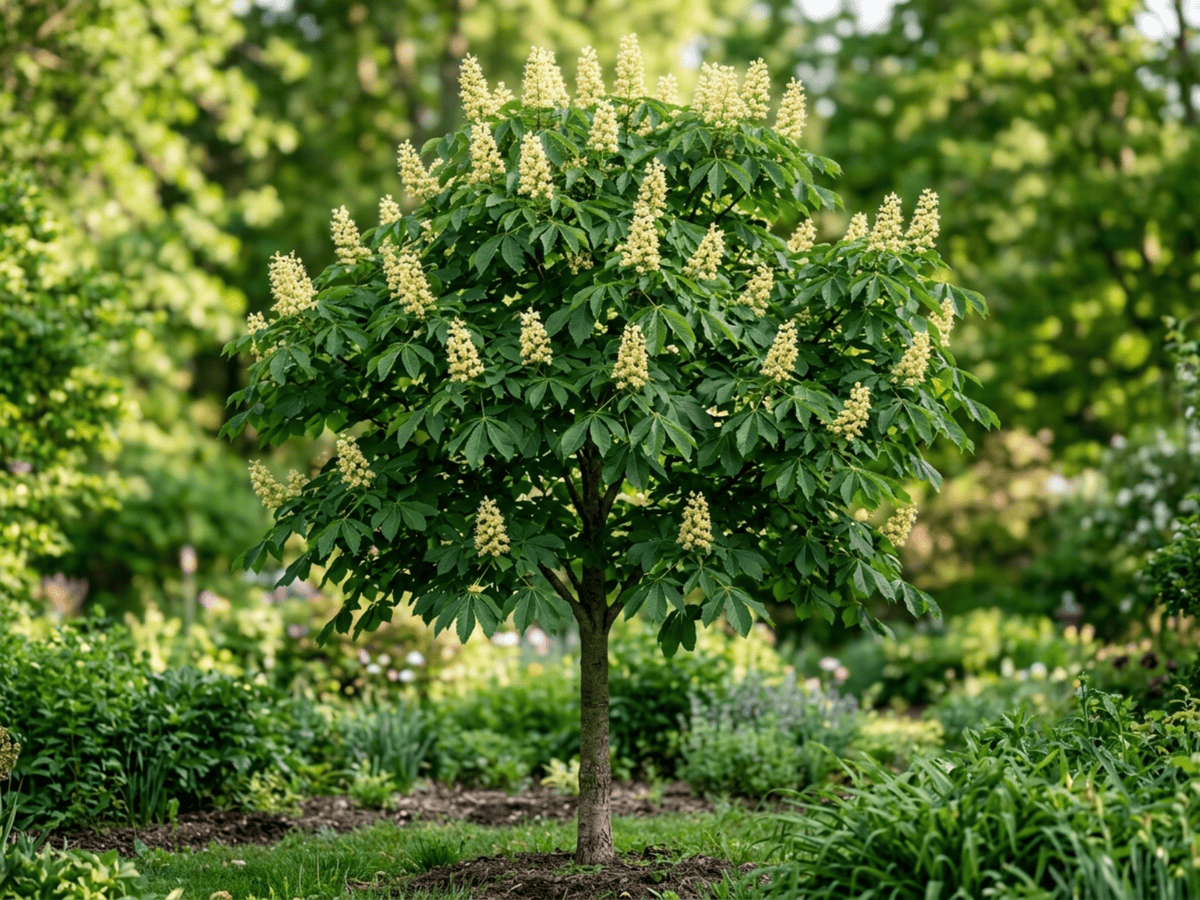
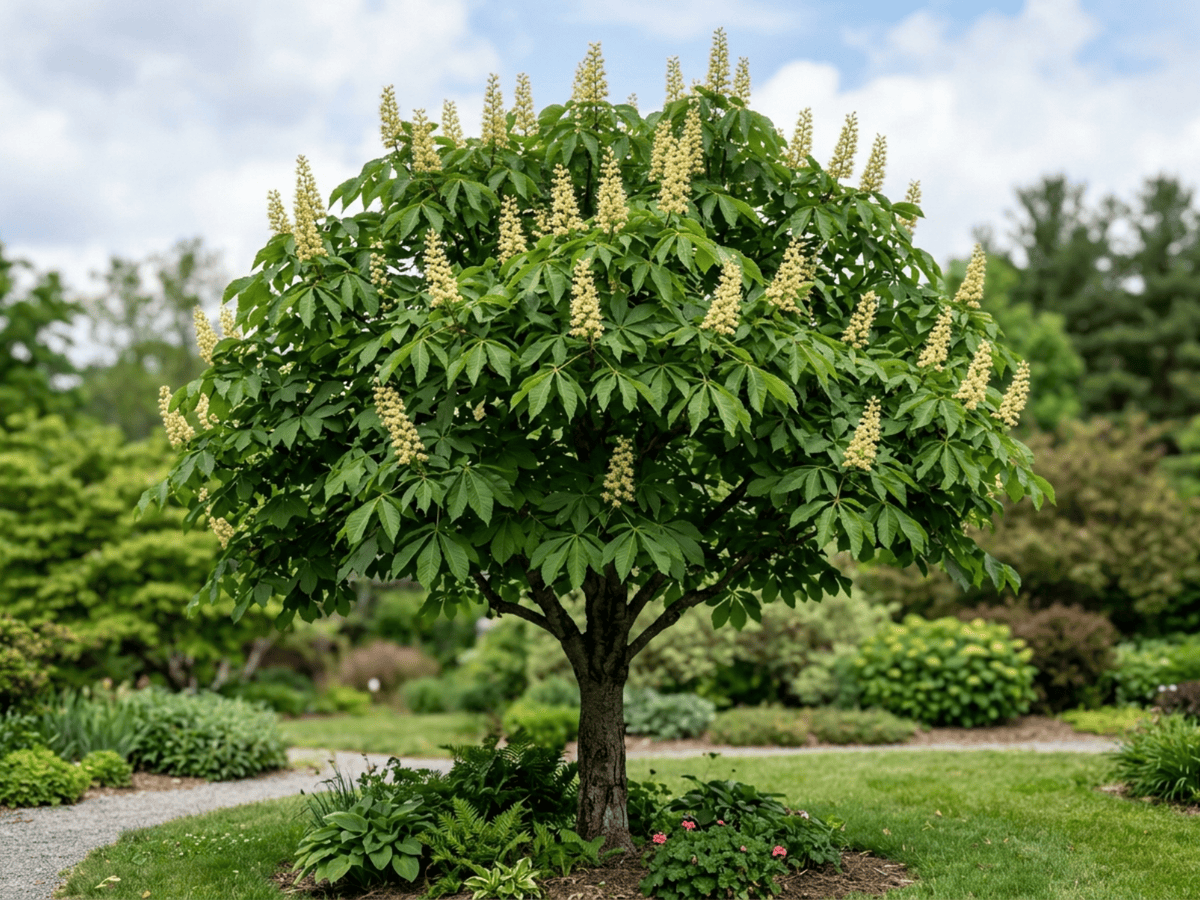
More Aesculus plants
Plants with similar care
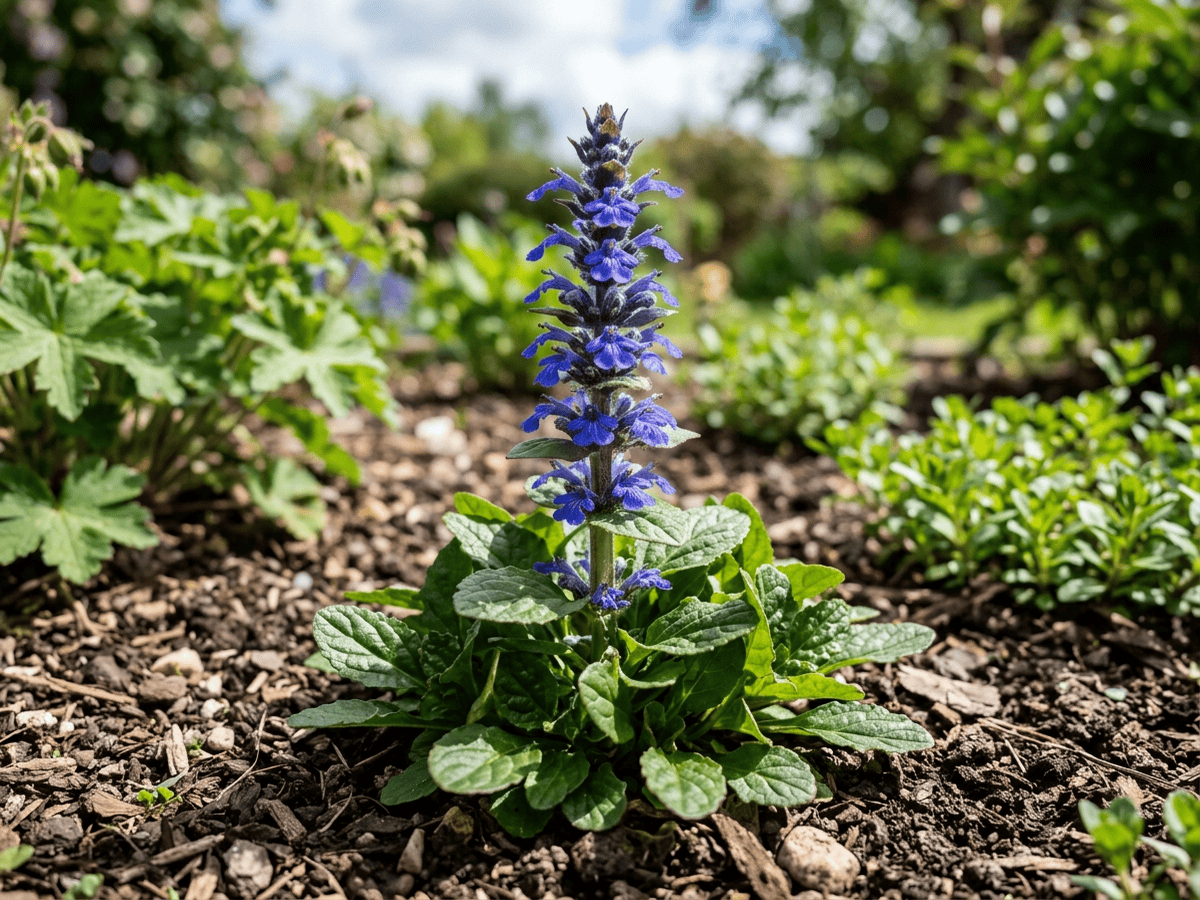 Blue BugleAjuga genevensis
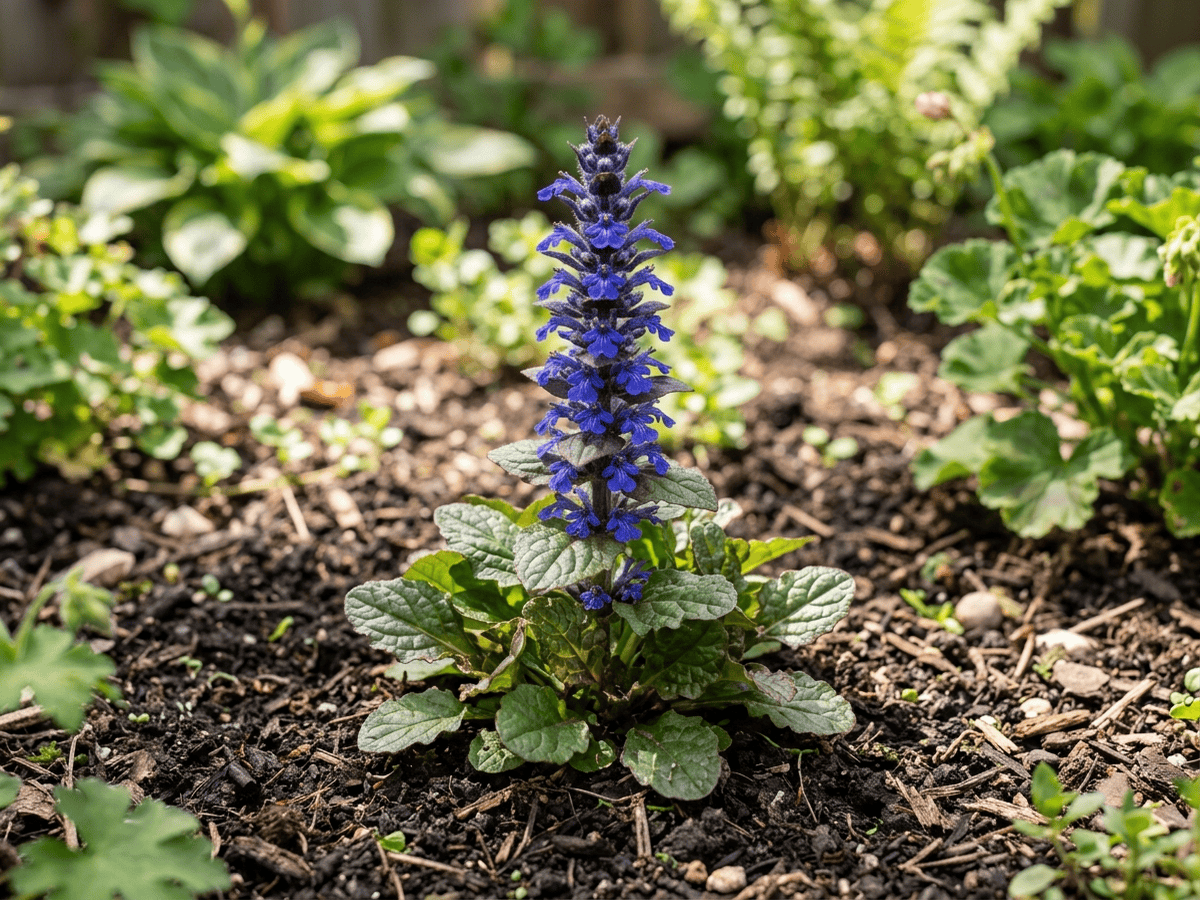 Pyramidal BugleAjuga pyramidalis
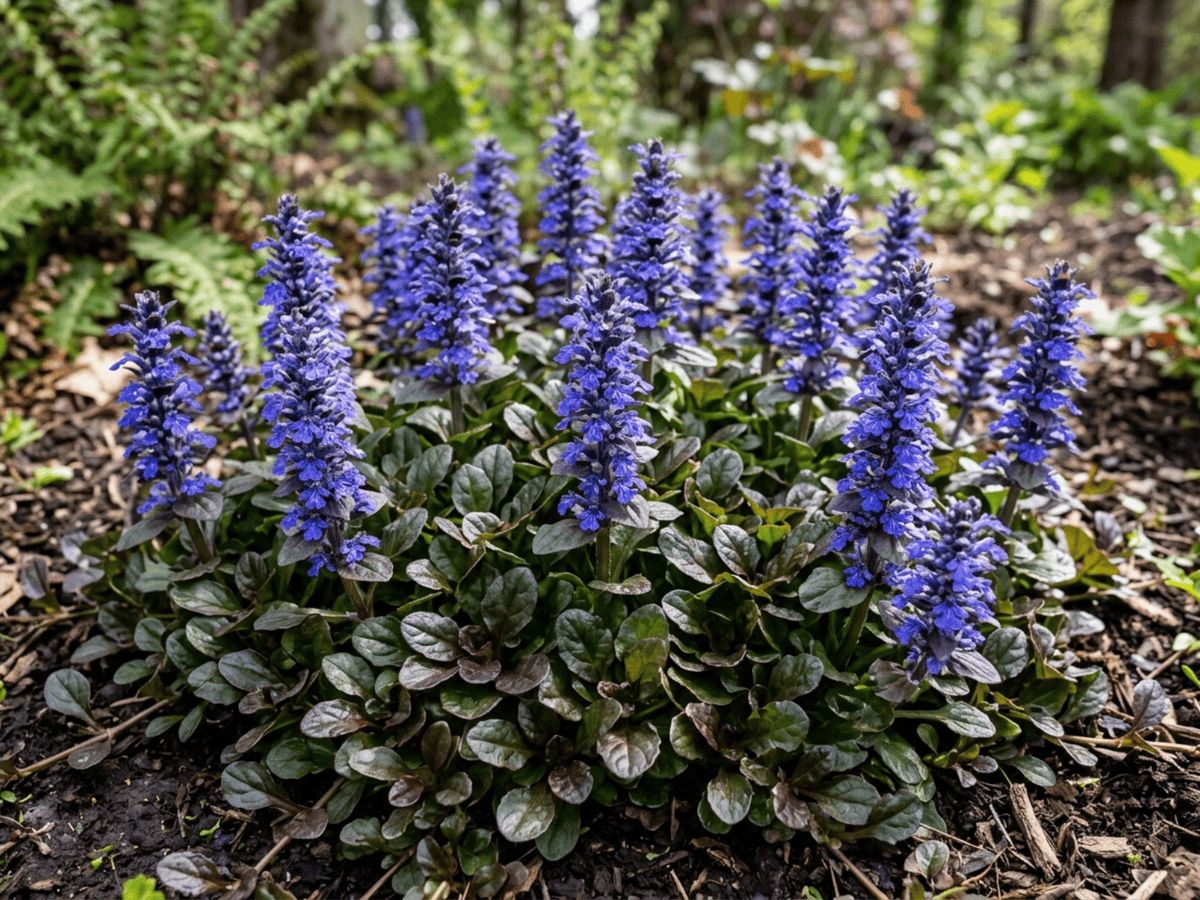 Carpet BugleAjuga reptans
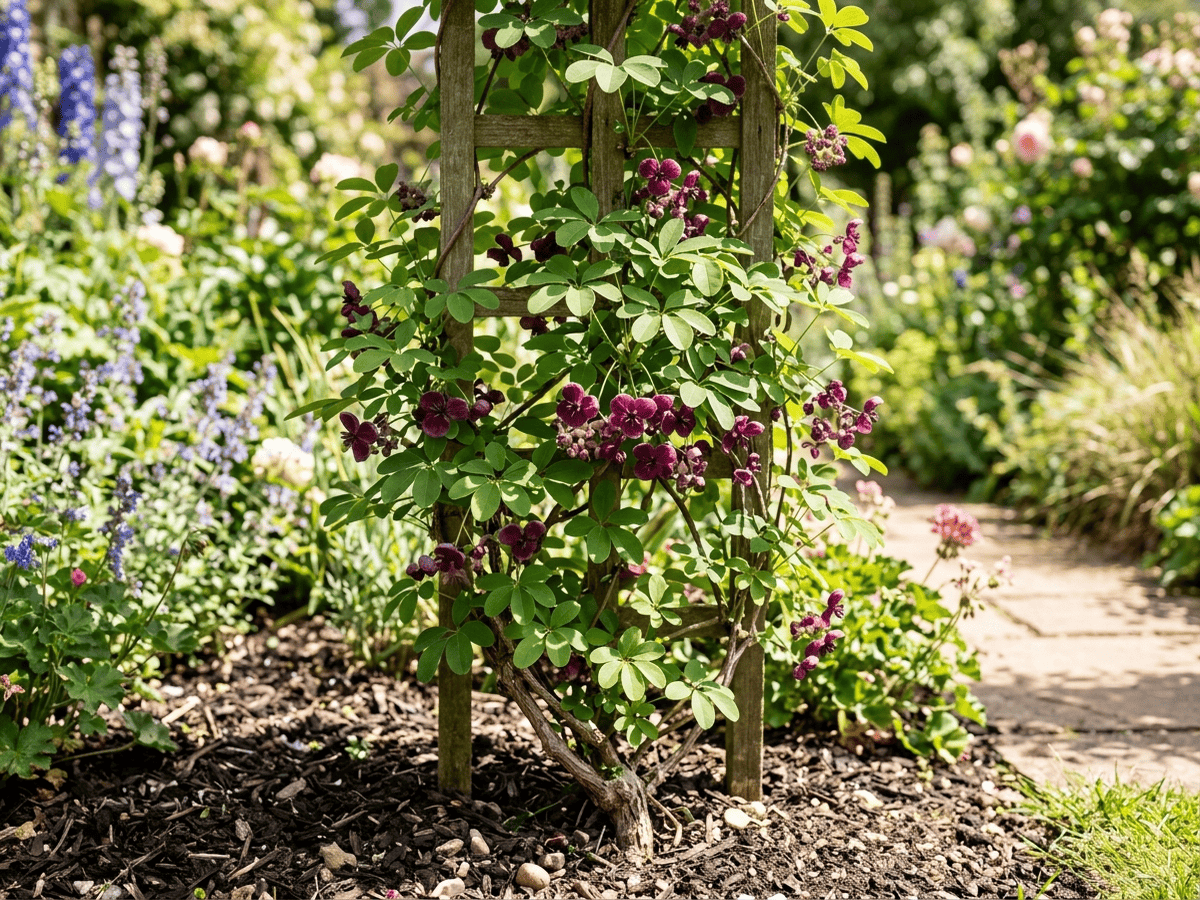 Five-Leaf AkebiaAkebia quinata
Frequently asked questions
How often should I water Red Buckeye?
Water about every 7 days during the growing season, and always let excess water drain away.
How much light does Red Buckeye need?
Part shade: 2–4 hrs direct. Watch the leaves — scorching or stretching means the light needs adjusting.
Is Red Buckeye toxic to cats or dogs?
Pets Moderate (Dogs Moderate · Cats Moderate) Educational information, not medical or veterinary advice. If exposure is suspected, contact a doctor or veterinarian.
Is Red Buckeye easy to grow?
Yes — it is considered an easy, beginner-friendly plant.
When does Red Buckeye bloom?
It typically blooms Apr–May in the Northern Hemisphere.
YardMate
Identify any plant in seconds
Snap a photo — YardMate names the plant, diagnoses problems, and reminds you when to water.
Download on the App Store