 YardMate


Happy Dragon Orchid
Dracula felix
Hard · Experienced growersAbout Happy Dragon Orchid
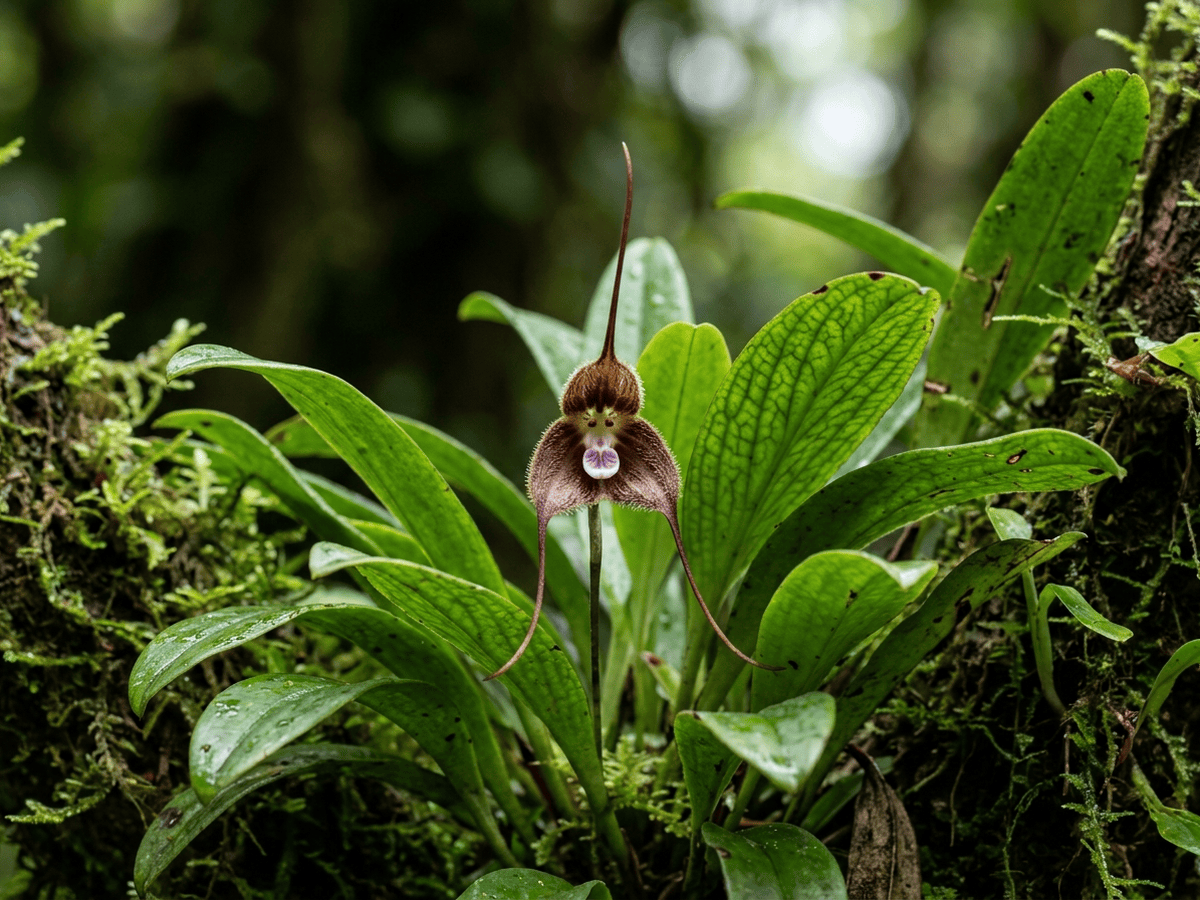
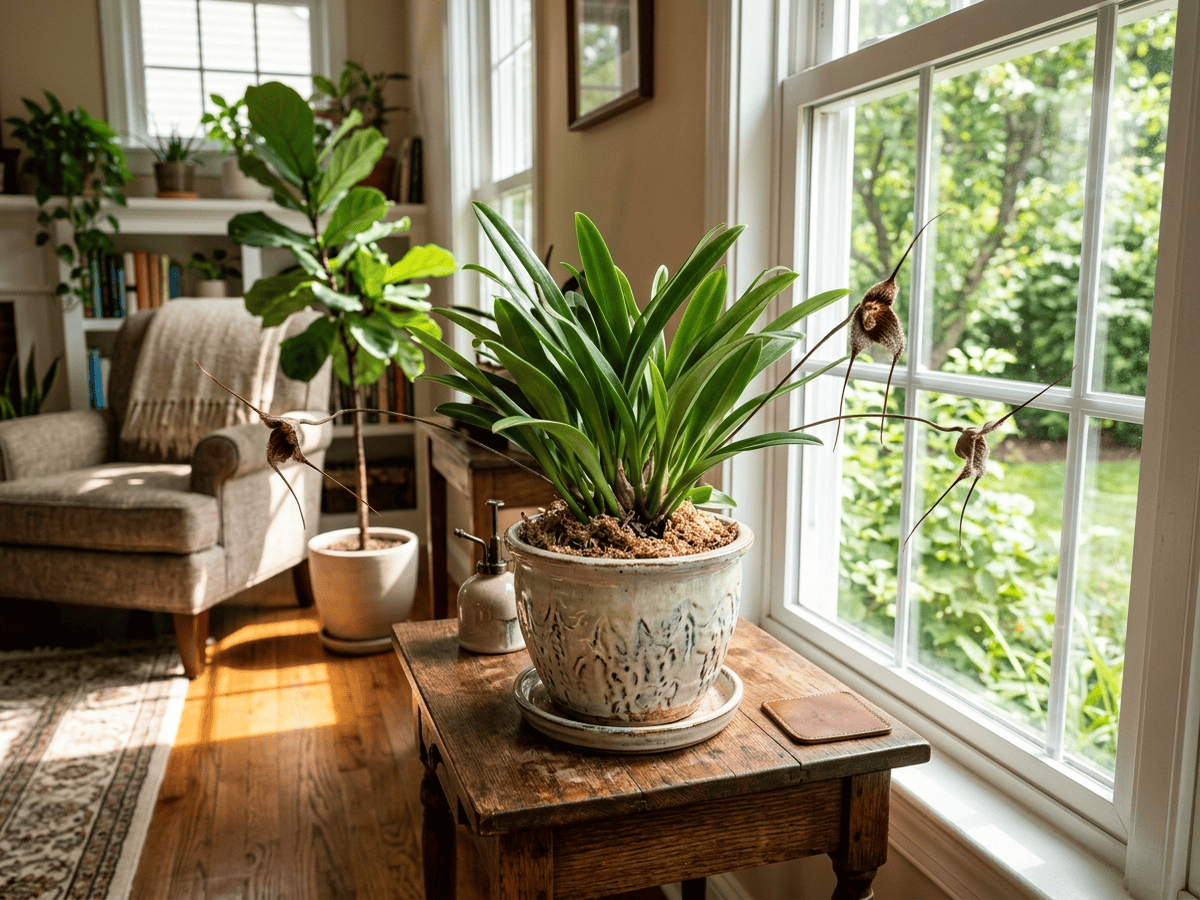
Dracula felix is a miniature cloud-forest orchid from Ecuador, growing as an epiphyte at 1,500–2,500 m elevation. Its genus name means "little dragon" in Latin, while "felix" means "happy"—together capturing the cheerfully bizarre character of its blooms. Pendant flower spikes hang downward through the potting medium, each bearing three dramatically elongated sepals that taper to thread-like tails, conjuring a ghostly face admired by collectors worldwide. A faint fungal scent lures pollinating fungus gnats. Success depends on cool temperatures, high humidity, and constant air movement.
- Shade-tolerant
- Slow-growing
- Container-friendly
- Pollinator-friendly
- Compact
- Evergreen
How to care for Happy Dragon Orchid
Watering
- Springevery 7 days
- Summerevery 7 days
- Fallevery 15 days
- Winterevery 30 days
Soil · Airy & open
- Single layerOrchid bark + charcoal100%
No soil at all — orchid roots need air moving around them.
FERTILIZER
Bloom Booster 10-52-10
A phosphorus-forward feed fuels abundant blooms, with just enough nitrogen and potassium to keep foliage and roots steady.
- Nitrogen · Leaves
- Phosphorus · Roots + Blooms
- Potassium · Strength
- Springevery 30 days
- Summerevery 30 days
At a Glance
- NativeSouth America
- Height1–1.5 ft (0.3–0.5 m)
- Spread1–1.5 ft (0.3–0.5 m)
- Foliage colorGreen
- SoilMoist, Well-drained
- LocationsIndoor
Fragrance
LIGHT FRAGRANCE
faint musty, fungal scent evolved to attract fungus gnat pollinators
Toxicity
No toxicity has been reported for this plant. Still, it is wise to keep pets from chewing on any houseplant.
Educational information, not medical or veterinary advice. If exposure is suspected, contact a doctor or veterinarian.
DISTRIBUTION


- Native
- South America
History

In 1978, American botanist Carlyle Augustus Luer established the genus Dracula by segregating a cluster of species from the related genus Masdevallia. The name—Latin for "little dragon"—was chosen for the startling, fanged appearance of the flowers, with their long pointed tails extending from each sepal like a creature's limbs. While the name evokes Count Dracula of vampire lore, Luer's primary inspiration was the Latin draco (dragon), honoring these otherworldly blooms.
Dracula felix was collected from the cloud forests of Ecuador, where it grows as an epiphyte in cool, mist-shrouded canopy at 1,500–2,500 meters. The species epithet felix—Latin for "happy" or "lucky"—reflects its relatively forgiving cultivation needs compared to other Dracula species. This cheerful name belies the flower's theatrical nature: pendant scapes hang downward through the potting medium so blooms dangle below foliage level, mimicking how they grow beneath moss-covered branches in the wild, accessible to their pollinator—the fungus gnat.
The Dracula genus became a sensation in orchid circles during the 1980s and 1990s, when collectors discovered the flowers' uncanny resemblance to small monkey faces, an illusion formed by the fleshy lip surrounded by arching sepals. This "monkey face" quality made Dracula species legendary in orchid newsletters and hobbyist networks. Dracula felix, valued for its adaptability among cool-growers, became one of the genus's most beloved introductions.
Symbolism & meaning
What It Symbolizes
Among orchid enthusiasts, Dracula felix embodies the paradox of joyful strangeness—a plant whose grinning, face-like blooms emerge from shadow. Its very name pairs darkness (Dracula) with light (felix), reflecting how the orchid world's most theatrical flowers often reward devoted care with repeat blooms throughout the year.
- mystery — The haunting face-like flowers and shadowy cloud-forest habitat associate Dracula felix with the allure of the unknown and the beautifully strange.
- happiness — Its species name felix—Latin for "happy"—reminds growers that even the most eccentric beauty can bring unexpected joy.
Where the Name Comes From
The genus name Dracula derives from the Latin diminutive of draco, meaning "little dragon," coined by botanist Carlyle Luer in 1978 for the flower's dramatically elongated, fang-like sepals. The species epithet felix is Latin for "happy" or "fortunate," reflecting this orchid's relatively accessible growing requirements among cool-growing orchids.
Uses & Fun Facts
- Prized as a collector's orchid for its dramatic dragon-faced pendant blooms and haunting face-like silhouette
- Attracts fungus gnats through a subtle fungal scent, supporting specialized woodland pollinator communities
Related plants
More Dracula plants
Plants with similar care
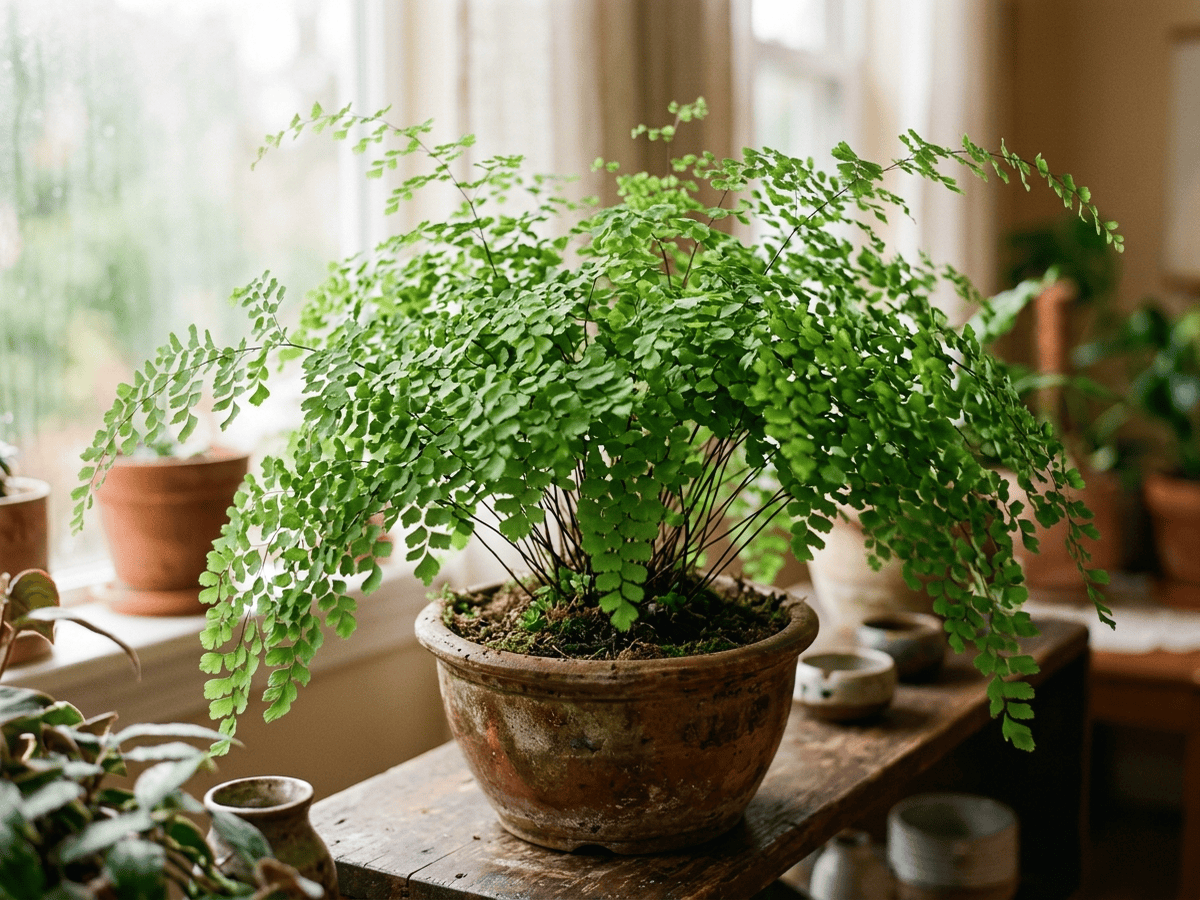 Delta Maidenhair FernAdiantum raddianum
 African Mask PlantAlocasia amazonica
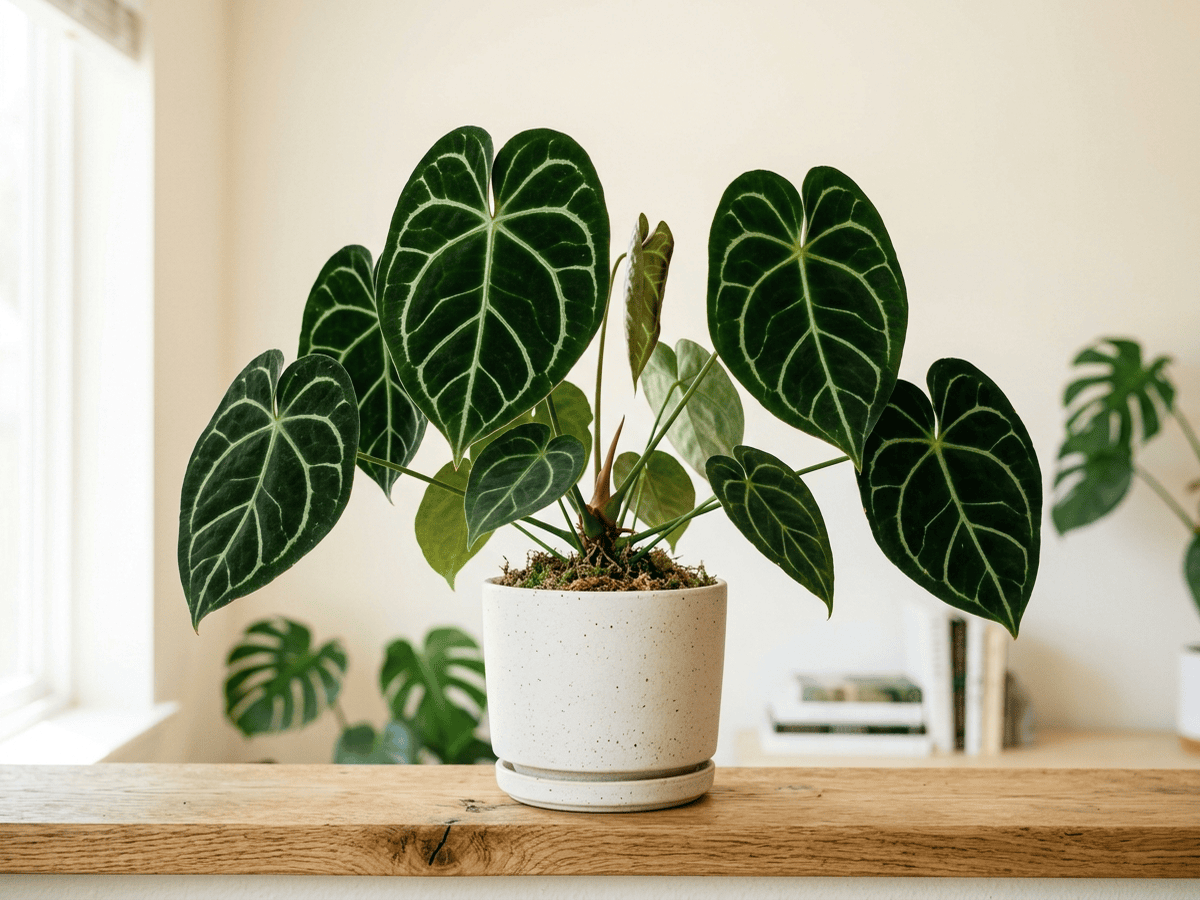 Anthurium clarinerviumAnthurium clarinervium
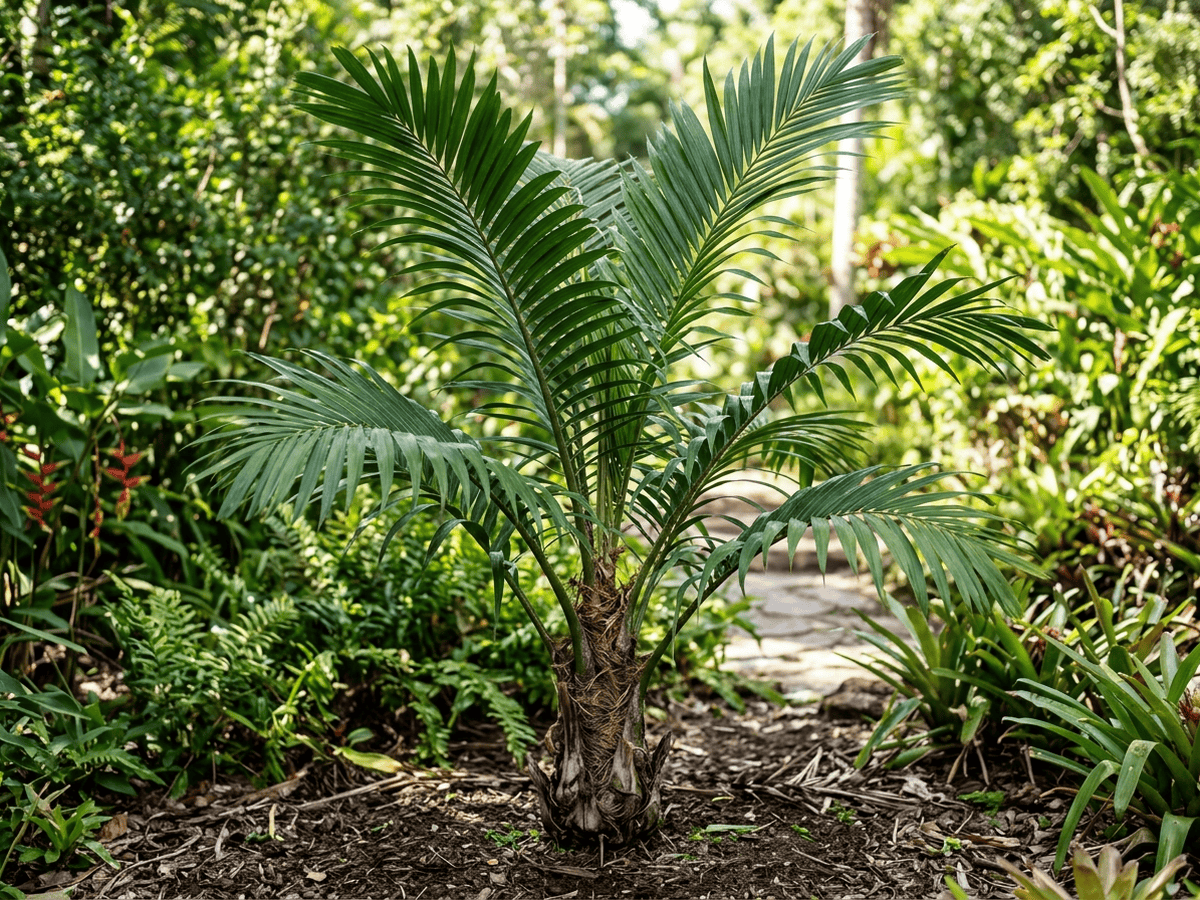 Formosa PalmArenga engleri
Frequently asked questions
How often should I water Happy Dragon Orchid?
In summer, water about every 7 days; in winter, about every 30 days. Adjust for heat, pot size and drainage.
How much light does Happy Dragon Orchid need?
Part shade: 2–4 hrs direct. Watch the leaves — scorching or stretching means the light needs adjusting.
Is Happy Dragon Orchid toxic to cats or dogs?
No toxicity has been reported for this plant. Still, it is wise to keep pets from chewing on any houseplant. Educational information, not medical or veterinary advice. If exposure is suspected, contact a doctor or veterinarian.
Is Happy Dragon Orchid easy to grow?
It is considered challenging and rewards experienced growers.
Can Happy Dragon Orchid be grown indoors?
Yes, it adapts well to indoor growing given the right light.
YardMate
Identify any plant in seconds
Snap a photo — YardMate names the plant, diagnoses problems, and reminds you when to water.
Download on the App Store