 YardMate


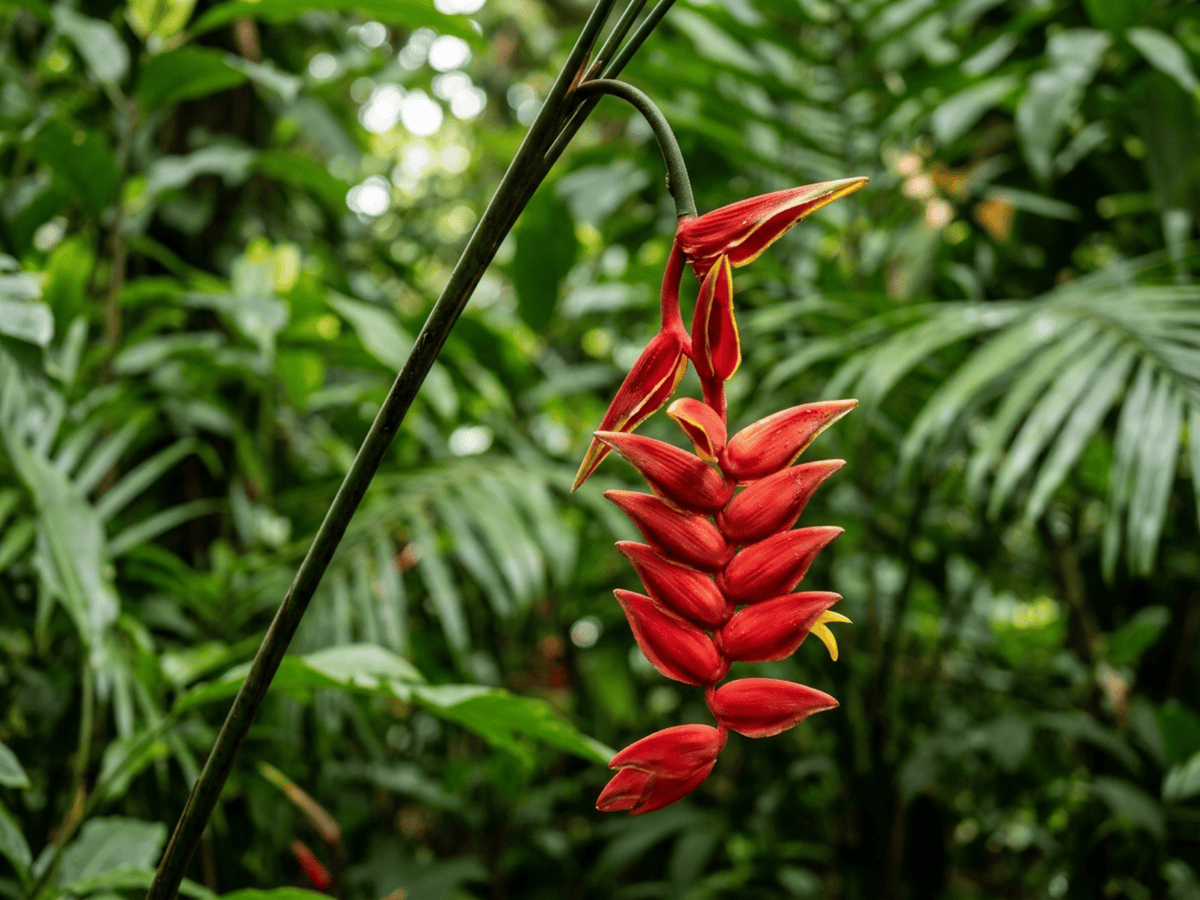

Hanging Lobster Claw Heliconia
Heliconia rostrata
Hard · Experienced growersAbout Hanging Lobster Claw Heliconia
Heliconia rostrata, the hanging lobster claw, is a spectacular tropical perennial native to the rainforests of Peru, Bolivia, Colombia, and Ecuador. It produces large, banana-like leaves on stems reaching 1–5 meters tall, but its true glory is the pendulous inflorescence — a dramatic chain of bright red, waxy bracts tipped with yellow-green, hanging downward like a string of lobster claws. Each bract cups a small amount of water, creating miniature pools that support tiny ecosystems of insects and microorganisms. The actual flowers are small, tubular, and hidden within the bracts, pollinated by hummingbirds that have co-evolved with the plant. It requires warm, humid conditions year-round with temperatures consistently above 15 degrees Celsius, making it a greenhouse or conservatory plant in temperate regions. It is the national flower of Bolivia and is widely cultivated in tropical gardens and the cut-flower industry.
- Tropical
- Pollinator-friendly
How to care for Hanging Lobster Claw Heliconia
Watering
- Springevery 2 days
- Summerevery 2 days
- Fallevery 3 days
- Winterevery 7 days
Soil · Moisture-retentive
- Top dressingSphagnum moss10%
- Main mixPeat + coco coir 1:180%
- DrainagePerlite / gravel10%
Keep it evenly moist — but the drainage layer still matters.
FERTILIZER
Bloom Booster 10-52-10
A phosphorus-forward feed fuels abundant blooms, with just enough nitrogen and potassium to keep foliage and roots steady.
- Nitrogen · Leaves
- Phosphorus · Roots + Blooms
- Potassium · Strength
- Springevery 30 days
- Summerevery 30 days
- Fallevery 30 days
At a Glance
- NativeSouth America
- Height8–15 ft (2.4–4.6 m)
- Spread5–10 ft (1.5–3 m)
- Flower colorRed, Yellow, Orange
- Foliage colorGreen
- SoilMoisture-retentive, Rich, Loamy
- LocationsYard · Indoor
Bloom time
BLOOM CYCLE
Peak bloom
Jun–Aug
Pendulous red-and-yellow lobster claw inflorescences appear in summer on mature plants; needs warmth and humidity
Fragrance
NO FRAGRANCE
No notable fragrance.
Toxicity
No toxicity has been reported for this plant. Still, it is wise to keep pets from chewing on any houseplant.
Educational information, not medical or veterinary advice. If exposure is suspected, contact a doctor or veterinarian.
DISTRIBUTION

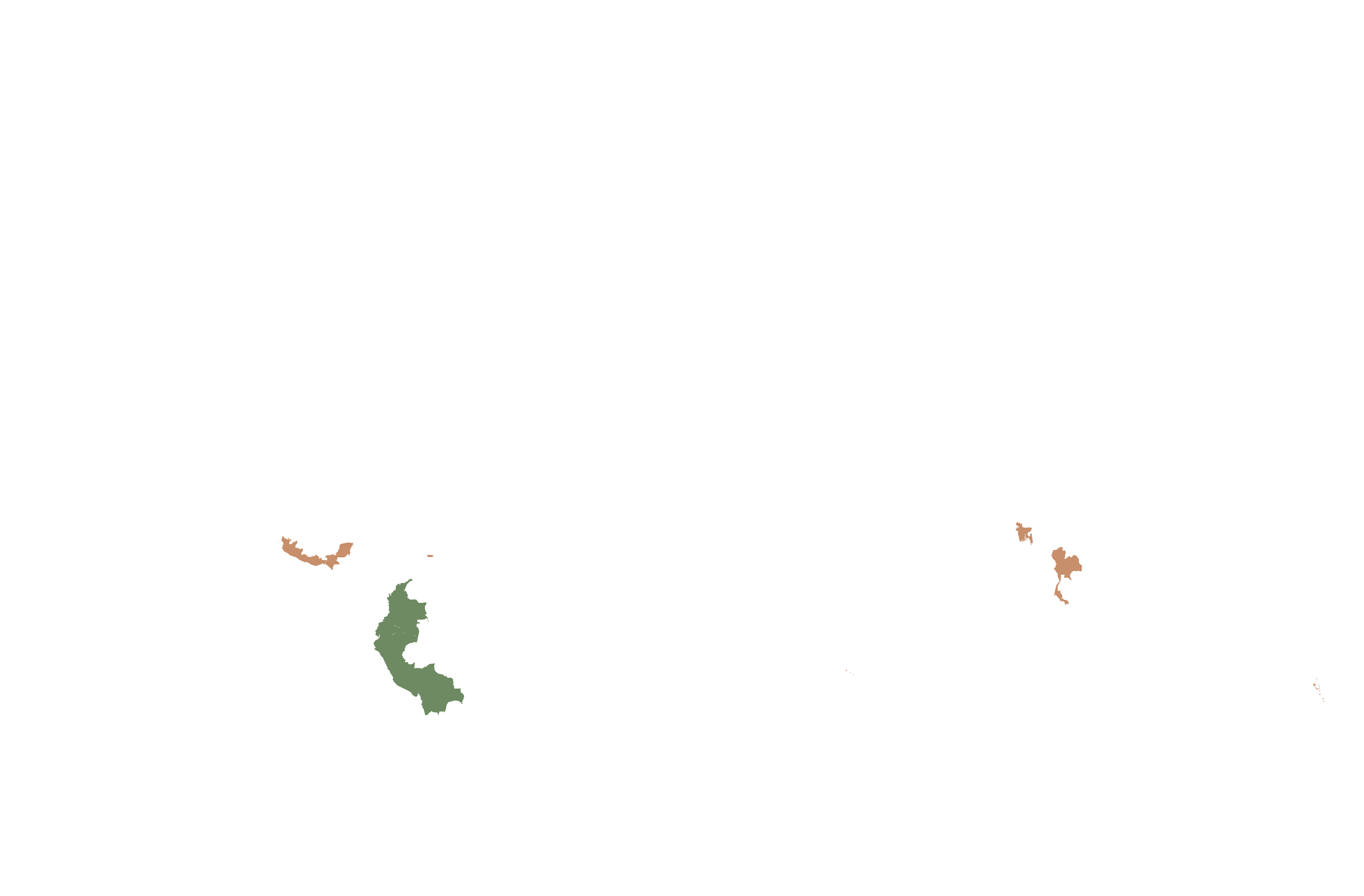
- Native
- Introduced
- South America
History
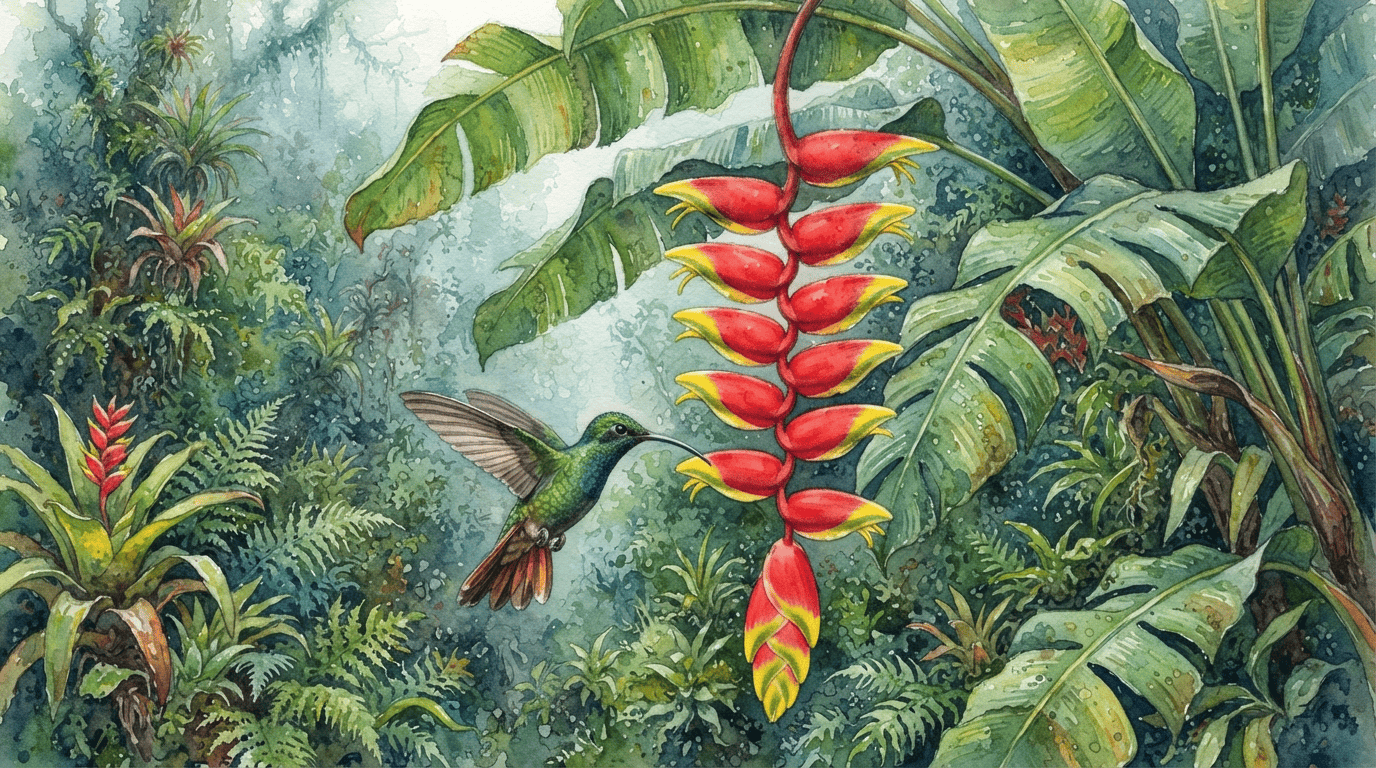
Heliconia rostrata is native to tropical South America — the eastern Andean foothills and Amazon basin margins of Peru, Ecuador, Colombia, Venezuela, and Bolivia. Unlike most heliconias, which have upright inflorescences, H. rostrata produces a dramatic pendant (hanging) inflorescence up to 60-120 cm long, consisting of alternating boat-shaped bracts in vivid scarlet-red with yellow tips, suggesting a row of hanging lobster claws or a string of exotic fish. The plant itself grows 3-4 meters tall with large banana-like leaves. It is the national flower of Bolivia, where it grows in the Yungas region of the eastern Andes.
Through the late 20th and early 21st centuries, Heliconia rostrata and its cousins (especially the upright H. bihai, H. caribaea, H. wagneriana, and H. psittacorum) became iconic tropical cut flowers, grown industrially in Hawaii, Costa Rica, Ecuador, and Thailand for international florist export. They appear heavily in contemporary tropical resort design — pools surrounded by heliconia are a signature look of Hawaiian, Caribbean, and Asian resort landscaping. Pollinated in the wild by large hummingbirds, particularly the green hermit (Phaethornis guy) and rufous-breasted hermit (Glaucis hirsutus), which have bill shapes matching the flower morphology.
Heliconia rostrata was named after Mount Helicon in Greece, the legendary home of the Muses in Greek mythology — an appropriate reference for such an artistically dramatic plant. The species plays a crucial ecological role as a hummingbird plant — its curved, tubular flowers are perfectly shaped for hummingbird bills, and in return, the birds are its exclusive pollinators. The hanging inflorescence of H. rostrata is considered the most beautiful of all heliconias and can last up to two weeks as a cut flower.
Symbolism & meaning
What It Symbolizes
The Hanging Lobster Claw expresses Passion — vivid red bracts edged in yellow, dropping in long jeweled chains from tropical stems. Its genus name honors Mount Helicon, the Muses' mountain, linking it to Creativity and the artistic fire of Greek myth. A flower that looks ornate enough to belong in poetry rather than soil.
- Passion — Vivid red bracts and exotic form embody intense emotion and tropical ardor
- Creativity — Named for the Muses' mountain, it represents artistic inspiration and beauty
Where the Name Comes From
Heliconia from Mount Helicon in Greece, home of the Muses. Rostrata is Latin for 'beaked,' describing the pointed bract tips.
Uses & Fun Facts
- Pendulous lobster-claw bracts hang from banana-like clumps
- Tubular flowers attract tropical hummingbird species
- Exotic stems prized in tropical floral arrangements
Related plants
Plants with similar care
 Bear's BreechesAcanthus mollis
 Delta Maidenhair FernAdiantum raddianum
 African Mask PlantAlocasia amazonica
 Spiral AloeAloe polyphylla
Frequently asked questions
How often should I water Hanging Lobster Claw Heliconia?
In summer, water about every 2 days; in winter, about every 7 days. Adjust for heat, pot size and drainage.
How much light does Hanging Lobster Claw Heliconia need?
Part shade: 2–4 hrs direct. Watch the leaves — scorching or stretching means the light needs adjusting.
Is Hanging Lobster Claw Heliconia toxic to cats or dogs?
No toxicity has been reported for this plant. Still, it is wise to keep pets from chewing on any houseplant. Educational information, not medical or veterinary advice. If exposure is suspected, contact a doctor or veterinarian.
Is Hanging Lobster Claw Heliconia easy to grow?
It is considered challenging and rewards experienced growers.
Can Hanging Lobster Claw Heliconia be grown indoors?
Yes, it adapts well to indoor growing given the right light.
When does Hanging Lobster Claw Heliconia bloom?
It typically blooms Jun–Aug in the Northern Hemisphere.
YardMate
Identify any plant in seconds
Snap a photo — YardMate names the plant, diagnoses problems, and reminds you when to water.
Download on the App Store