 YardMate

Jackal Food
Hydnora africana
Hard · Experienced growersAbout Jackal Food
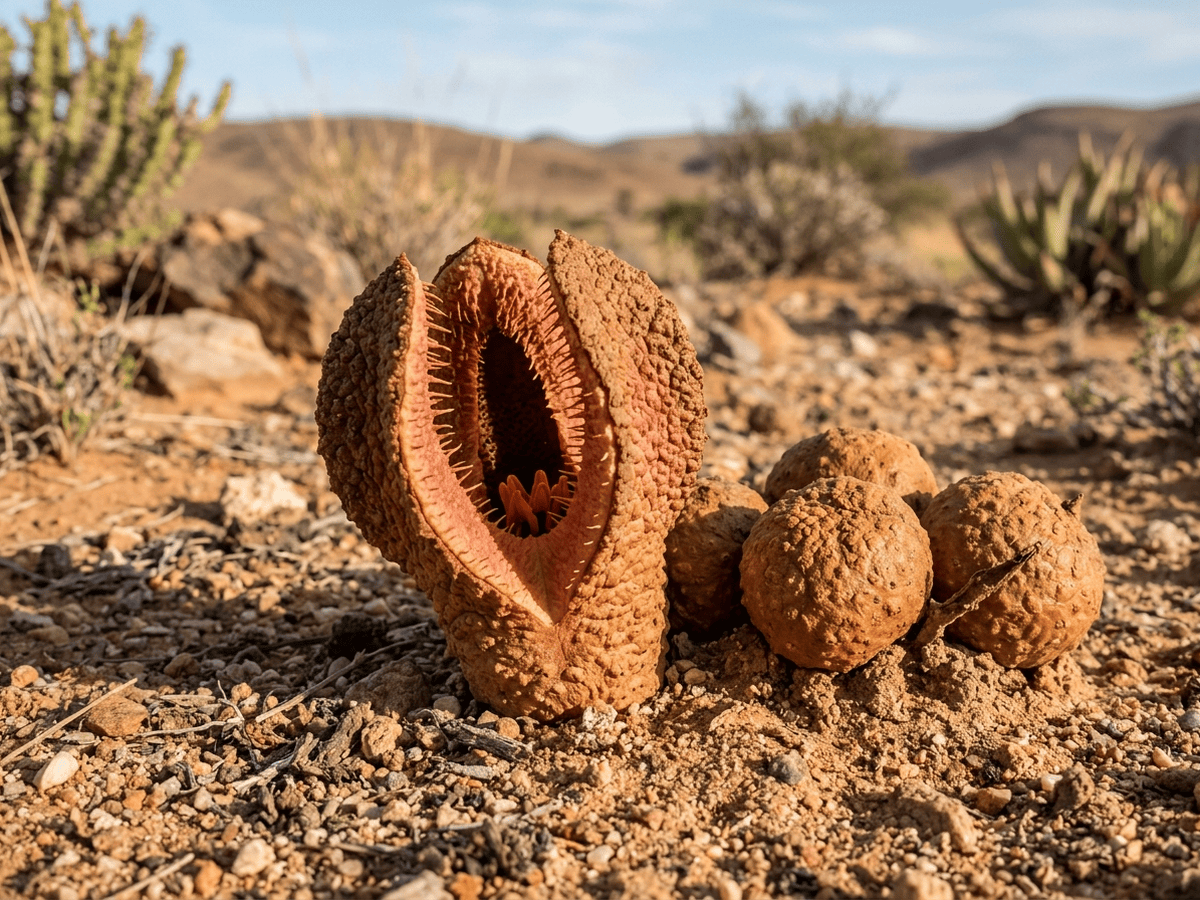
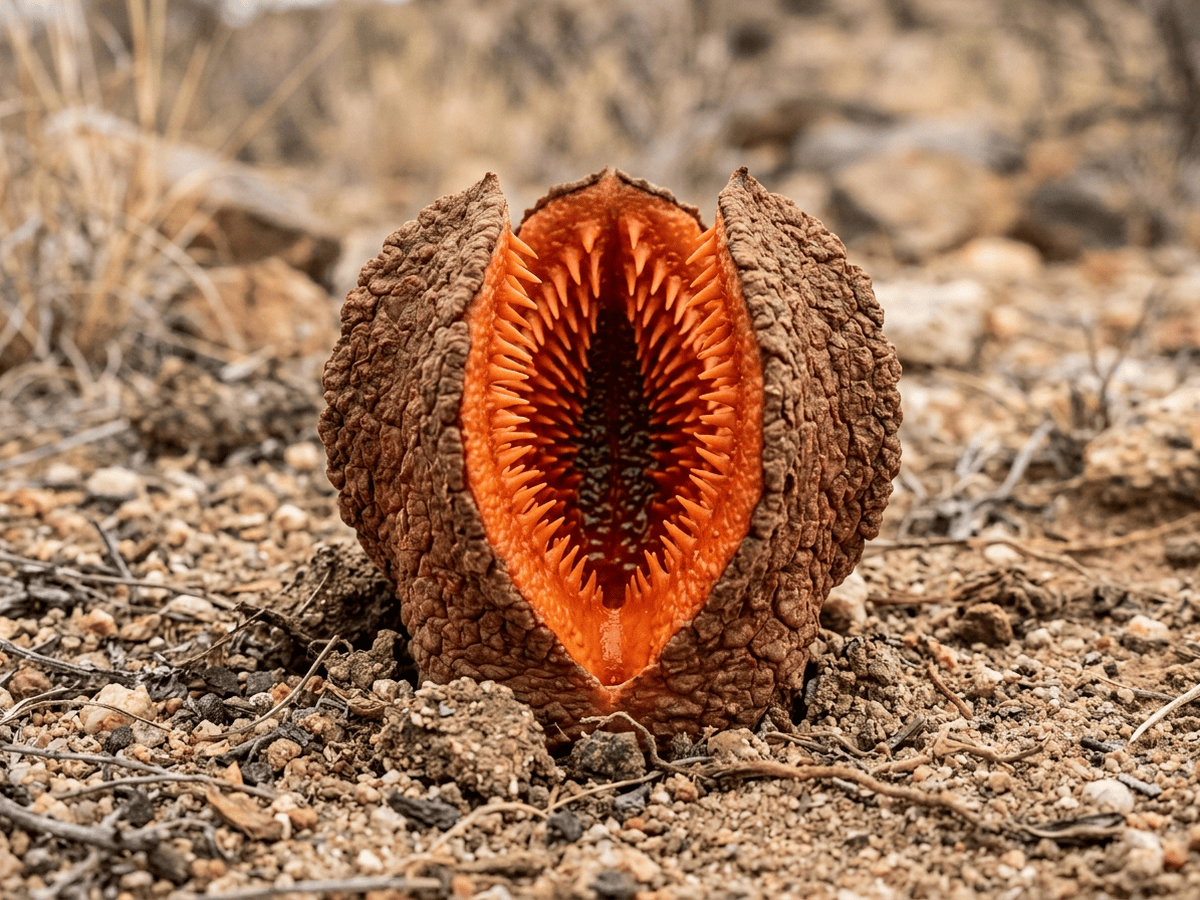
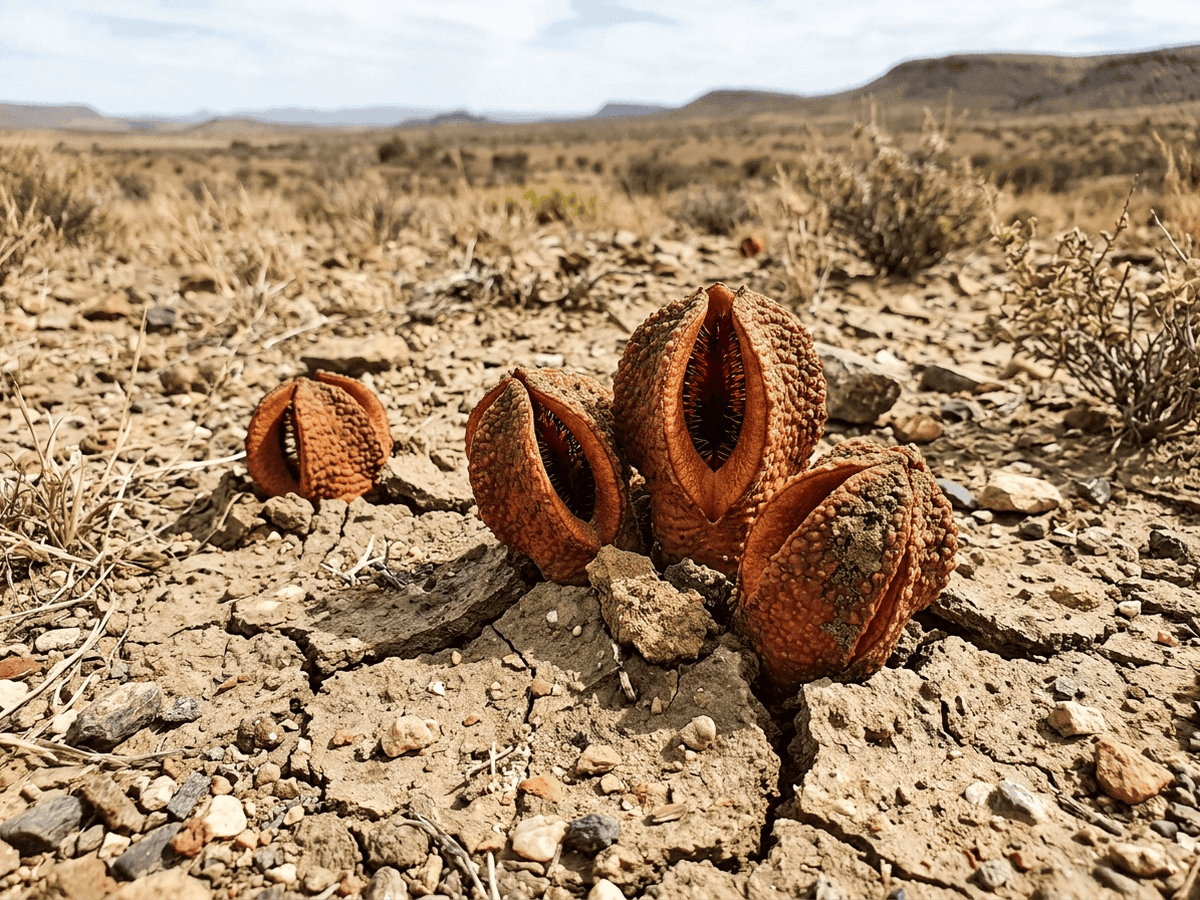
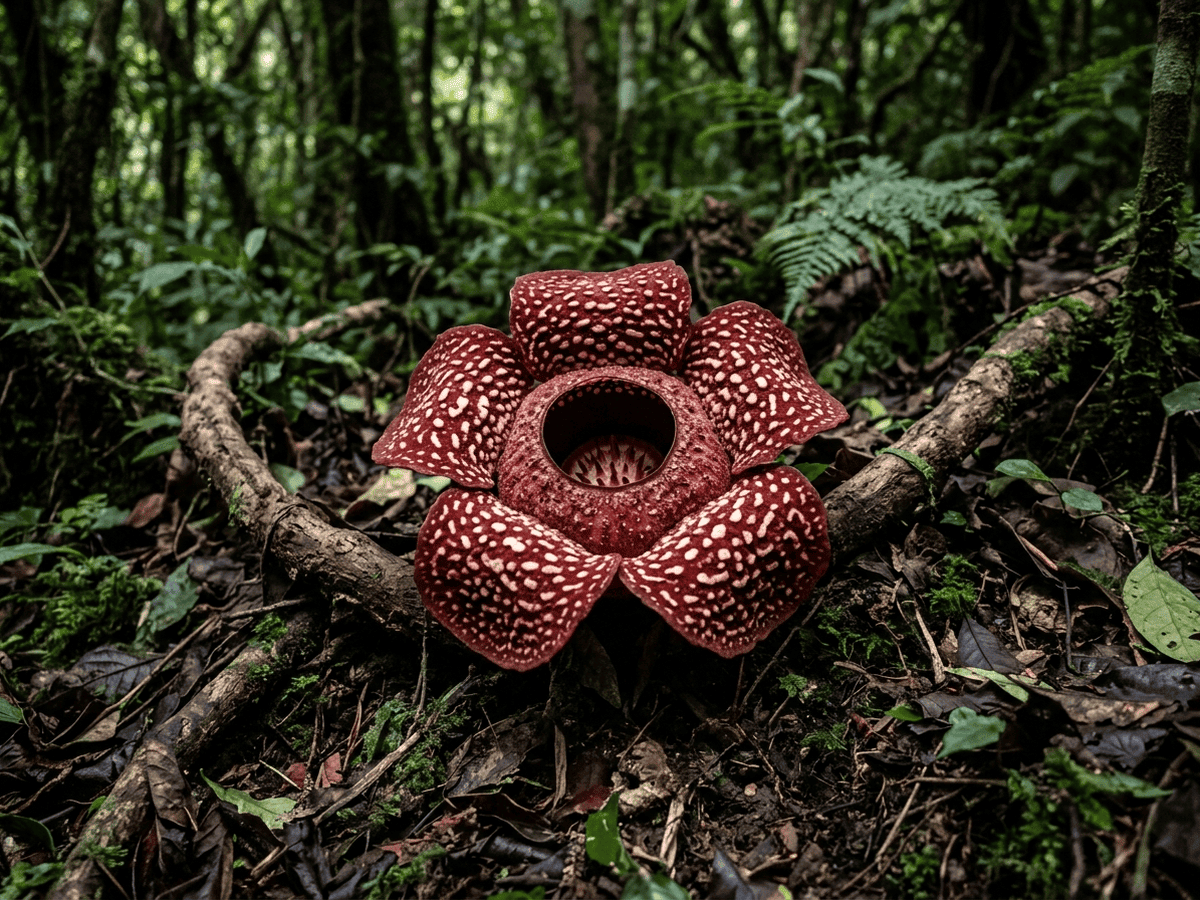
Hydnora africana, known as Jackal Food or African Ground Flower, is one of Earth's most extraordinary plants—a holoparasite with no leaves, roots, or chlorophyll. Living entirely underground parasitizing Euphorbia roots, it reveals itself only when its bulbous, fleshy flower erupts from the soil. The orange-and-brown bloom, shaped like an alien mouth with lobed lips, temporarily traps beetles for pollination. Its potato-like edible fruits are relished by jackals and indigenous peoples alike.
- Drought-tolerant
- Edible
- Compact
How to care for Jackal Food
Watering
- Springevery 15 days
- Summerevery 7 days
- Fallevery 10 days
- Winterevery 14 days
Soil · Rich & well-draining
- Top dressingCompost10%
- Main mixPotting soil + compost 3:180%
- DrainageGravel10%
Top up the compost layer each season.
FERTILIZER
This plant needs little to no feeding.
At a Glance
- NativeSouth Africa
- Height0.1–0.3 m
- Spread0.3–0.5 m
- SoilMoist, Acidic
- LocationsYard · Indoor
Fragrance
MODERATE FRAGRANCE
Flowers emit a fleshy, sweet-rotten scent to attract beetle pollinators
Toxicity
No toxicity has been reported for this plant. Still, it is wise to keep pets from chewing on any houseplant.
Educational information, not medical or veterinary advice. If exposure is suspected, contact a doctor or veterinarian.
DISTRIBUTION


- Native
- South Africa
History
Hydnora africana is among the most botanically unusual plants on Earth. A holoparasite—deriving all its nutrition from its host—it has evolved to lose leaves, roots, and chlorophyll entirely. All that remains is an underground tangle of rhizome-like stems that coil around the roots of Euphorbia species and other Euphorbiaceae.
When conditions allow—particularly after rainfall in the arid South African karoo—a single fleshy flower emerges from the soil surface. The bloom is striking: a brown-orange, lobed structure resembling a fungus or sea anemone, equipped with orange-tipped teeth. The interior generates warmth through thermogenesis to attract beetles, which are temporarily trapped and pollinated before the loosening lobes release them.
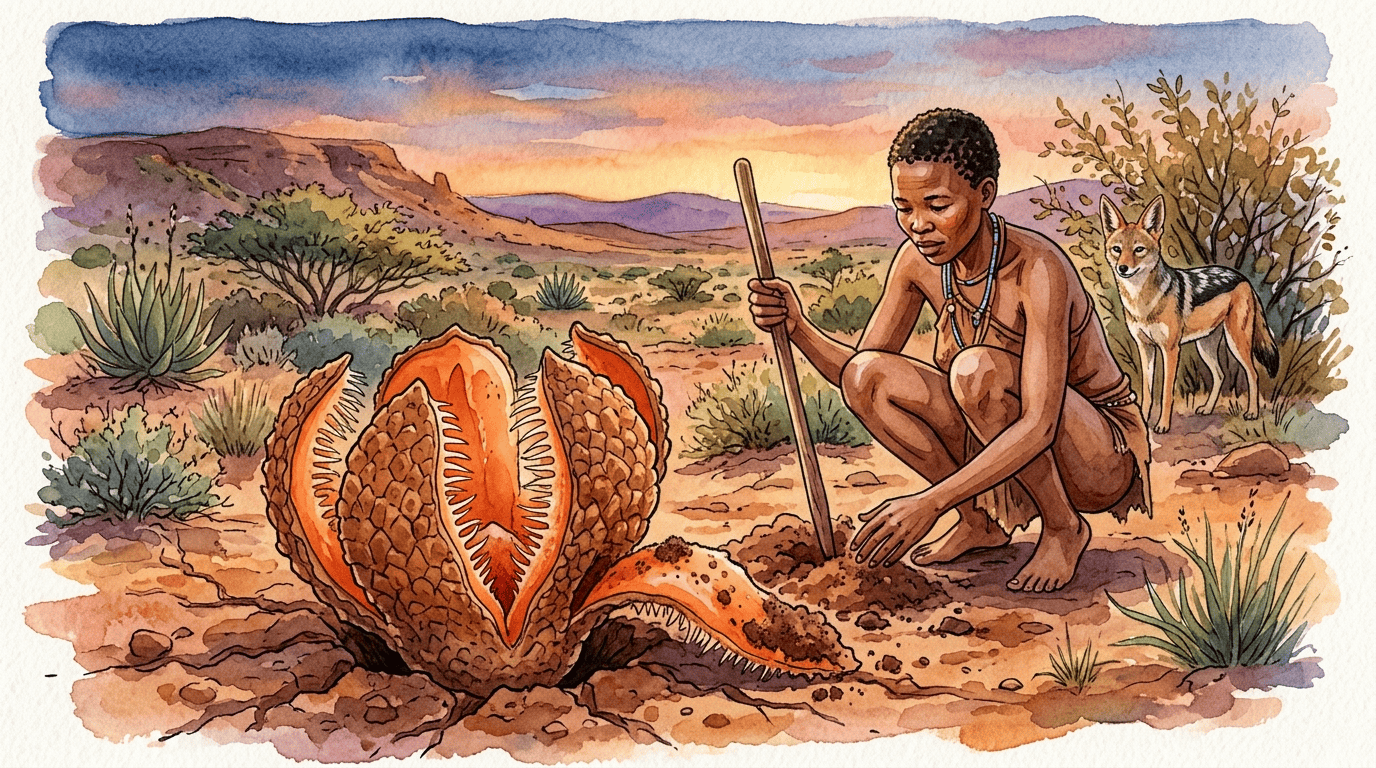
The common name Jakkalskos (Afrikaans for 'jackal food') reflects the long practice of jackals and other animals digging up the fruit. The edible berries—resembling small potatoes and tasting somewhat like chestnuts—have been a food source for San and Khoikhoi people for generations, eaten raw, roasted, or dried. The root is also used medicinally in traditional southern African medicine, particularly as an astringent for tanning hides and treating diarrhea.
First formally described by Swedish naturalist Carl Peter Thunberg in 1775, Hydnora africana had long been known to indigenous peoples. Its bizarre appearance, underground lifestyle, and parasitic habit have made it a perpetual subject of fascination in botanical illustration and plant science.
Symbolism & meaning
What It Symbolizes
Hydnora africana blooms from bare desert soil with no leaves, no stems, no green—just a strange fleshy mouth pushing through the earth. To the San people it was food from the underground, nourishment from impossible places. To modern science it represents the far edge of evolution's possibilities: a plant that has surrendered everything that makes a plant recognizable, trading independence for the radical simplicity of total dependence.
- Mystery — Lives entirely hidden underground, visible only through its extraordinary flower—a symbol of hidden depths
- Survival — Has abandoned photosynthesis entirely, reducing itself to an extreme parasitic adaptation to survive
Where the Name Comes From
The genus name Hydnora is likely derived from the Greek hydnon (truffle), referring to the plant's subterranean growth habit and truffle-like underground existence. The species epithet africana indicates its southern African origin.
Uses & Fun Facts
- Potato-like fruits eaten raw, roasted, or dried by indigenous southern African peoples
- Astringent roots used in traditional medicine for tanning hides and treating diarrhea
- Fruits eaten by jackals and other desert wildlife, spreading seeds across arid habitats
Related plants
Plants with similar care
Frequently asked questions
How often should I water Jackal Food?
In summer, water about every 7 days; in winter, about every 14 days. Adjust for heat, pot size and drainage.
How much light does Jackal Food need?
Indirect: Filtered light. Watch the leaves — scorching or stretching means the light needs adjusting.
Is Jackal Food toxic to cats or dogs?
No toxicity has been reported for this plant. Still, it is wise to keep pets from chewing on any houseplant. Educational information, not medical or veterinary advice. If exposure is suspected, contact a doctor or veterinarian.
Is Jackal Food easy to grow?
It is considered challenging and rewards experienced growers.
Can Jackal Food be grown indoors?
Yes, it adapts well to indoor growing given the right light.
YardMate
Identify any plant in seconds
Snap a photo — YardMate names the plant, diagnoses problems, and reminds you when to water.
Download on the App Store