 YardMate


Rose Grape
Medinilla magnifica
Hard · Experienced growersAbout Rose Grape
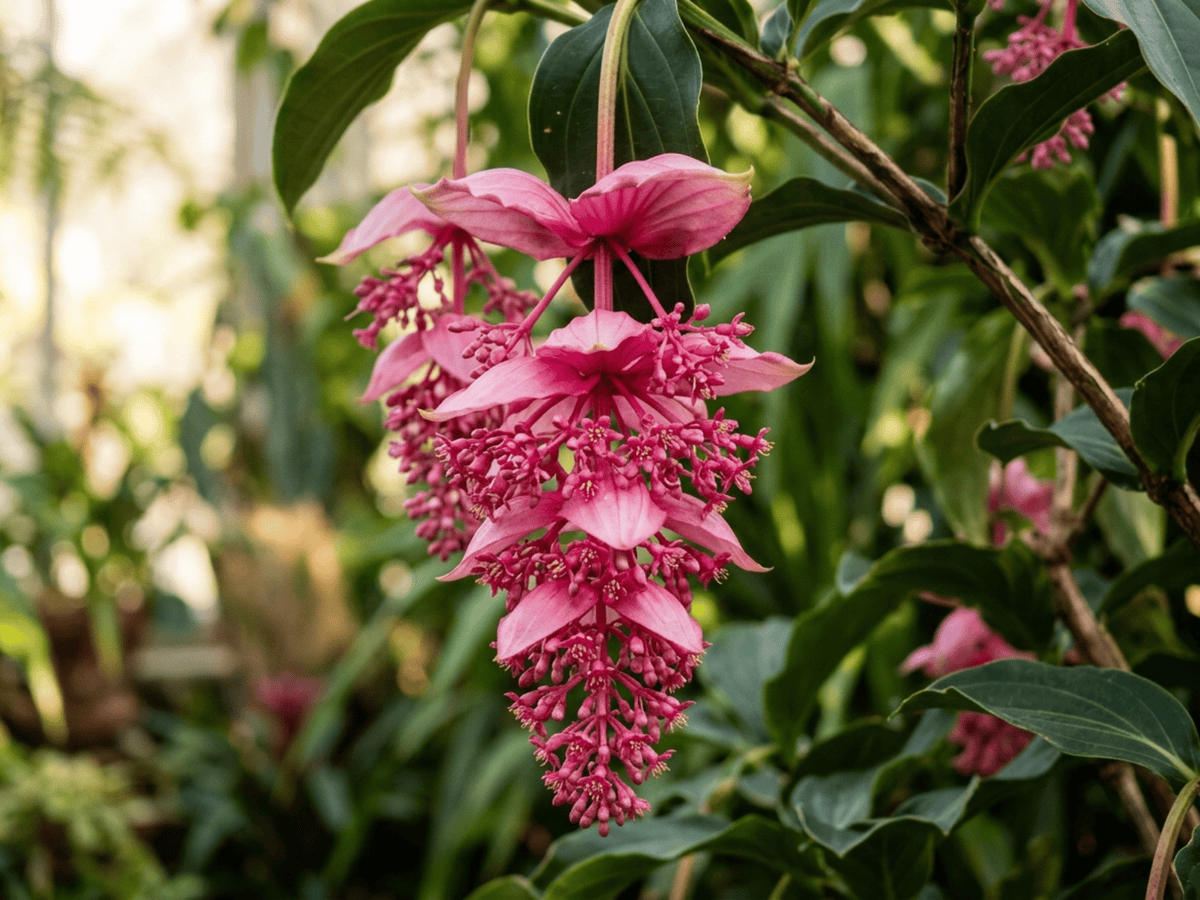
Medinilla magnifica, the rose grape or Philippine orchid, is one of the most spectacular tropical flowering plants in existence. Native to the Philippines where it grows as an epiphyte in the mossy forks of jungle trees, it produces extraordinary pendulous panicles of pink flowers up to 45 cm long, surrounded by large pink bracts that resemble elegant chandeliers. The thick, leathery leaves are prominently veined and clasp the stem at their base. In cultivation it demands high humidity, consistent warmth, and bright indirect light — conditions best replicated in a heated greenhouse or well-humidified conservatory. Flowering is triggered by a brief cool spell (around 15°C for two weeks), mimicking the dry season in its native mountains. Despite its demanding requirements, the reward is one of the most jaw-dropping floral displays in the plant kingdom. Each inflorescence lasts several weeks, and mature specimens can carry multiple panicles simultaneously. It is increasingly popular as a luxury houseplant for collectors willing to meet its humidity needs.
- Tropical
How to care for Rose Grape
Watering
- Springevery 5 days
- Summerevery 4 days
- Fallevery 7 days
- Winterevery 14 days
Soil · Acidic · pH 4.5–6
- Top dressingPine needle mulch10%
- Main mixAcid-lover mix + peat 3:175%
- DrainageGravel15%
Never add lime or wood ash — it cancels out the acidity.
FERTILIZER
Balanced Feed 14-14-14
An even feed covers all three needs at once, keeping leaves, roots and blooms moving together with nothing pushed out of balance.
- Nitrogen · Leaves
- Phosphorus · Roots + Blooms
- Potassium · Strength
- Springevery 30 days
- Summerevery 30 days
- Fallevery 30 days
- Winterevery 60 days
At a Glance
- NativeSoutheast Asia
- Height2–4 ft (0.6–1.2 m)
- Spread2–3 ft (0.6–0.9 m)
- Flower colorPink, Coral
- Foliage colorGreen
- SoilLoamy, Moisture-retentive, Acidic
- LocationsIndoor
Bloom time
BLOOM CYCLE
Peak bloom
Jun–Aug
Spectacular pink chandelier panicles up to 45 cm; needs brief cool period to trigger bloom
Fragrance
NO FRAGRANCE
No notable fragrance.
Toxicity
No toxicity has been reported for this plant. Still, it is wise to keep pets from chewing on any houseplant.
Educational information, not medical or veterinary advice. If exposure is suspected, contact a doctor or veterinarian.
DISTRIBUTION


- Native
- Introduced
- Southeast Asia
History
Medinilla magnifica is native to the mountain forests of the Philippines, particularly Luzon, where it grows as an epiphytic shrub on tree branches at mid-elevation in humid cloud-forest conditions. The genus was named by French botanist Charles-Jacques Gaudin for José de Medinilla y Pineda, governor of the Mariana Islands in the 1820s. The species' spectacular inflorescences — pendent panicles 30-60 cm long of small pink-coral star-shaped flowers, subtended and supported by large pale-pink bracts that create a distinctive "grape cluster" overall appearance — make it one of the most visually striking flowering tropical plants. Its cultural importance in European horticulture is anchored in Belgium, where commercial Belgian tissue-culture and greenhouse producers — particularly in the Ghent region — have been the leading global producers of Medinilla magnifica for the floriculture market since the 20th century.
Belgium honored the species with a postage stamp issue in 2012, and it is sometimes colloquially called "Queen Fabiola's flower" because of its association with the Belgian royal family's gardens. The plant is a fussy houseplant — demanding warmth, high humidity, bright indirect light, and particular care to induce flowering — and is accordingly a statement-piece species in European luxury conservatory and interior horticulture. Medinilla magnifica was discovered in the Philippines and first described in 1850.
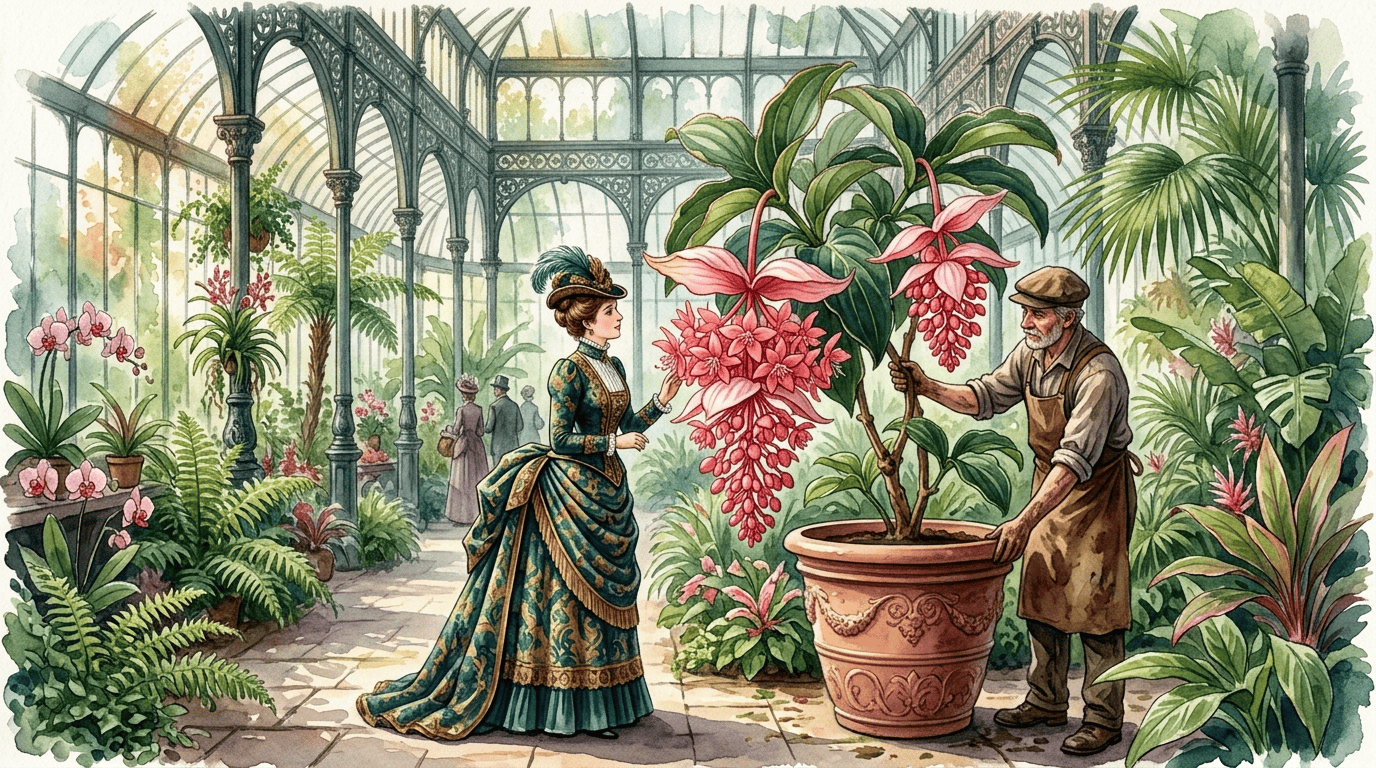
The species quickly became the darling of European conservatories in the Victorian era — wealthy collectors competed to display the most impressive specimens. In its native Philippine forests, it grows on tree branches at elevations of 300–1,500 meters, its roots wrapped in moss and decaying bark. The Philippines has declared several Medinilla species as protected under their national wildlife conservation laws.
Symbolism & meaning
What It Symbolizes
Rose Grape lives up to it species name with magnificence — vast pink chandeliers of bracts and grape-like buds dangling from epiphytic branches in the Philippine cloud forest. As one of the most demanding houseplants in cultivation it also embodies luxury, a refined beauty whose particular taste in humidity and light only the patient can satisfy. It is botany dressed for a state ball.
- Magnificence — The breathtaking chandelier blooms embody grandeur and splendor
- Luxury — A rare and demanding plant that represents refined taste and opulence
Where the Name Comes From
The name Rose Grape describes its rose-like blooms. Medinilla honors José de Medinilla y Pineda, Spanish governor of the Mariana Islands. Magnifica means 'magnificent' in Latin — an apt description of its spectacular blooms.
Uses & Fun Facts
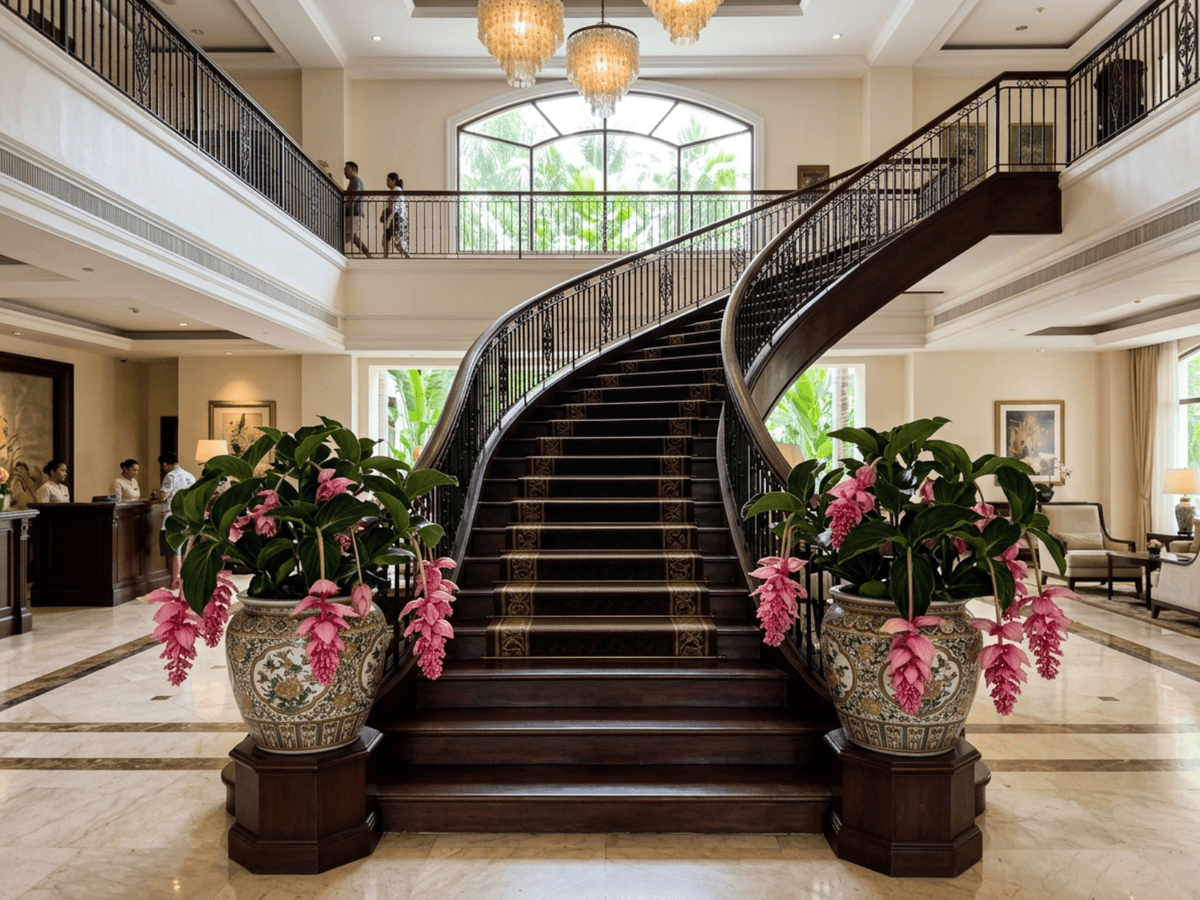
- Luxury greenhouse and conservatory specimen in bright humid spots
- Spectacular pendulous pink flower panicles up to 45 cm
Related plants
Plants with similar care
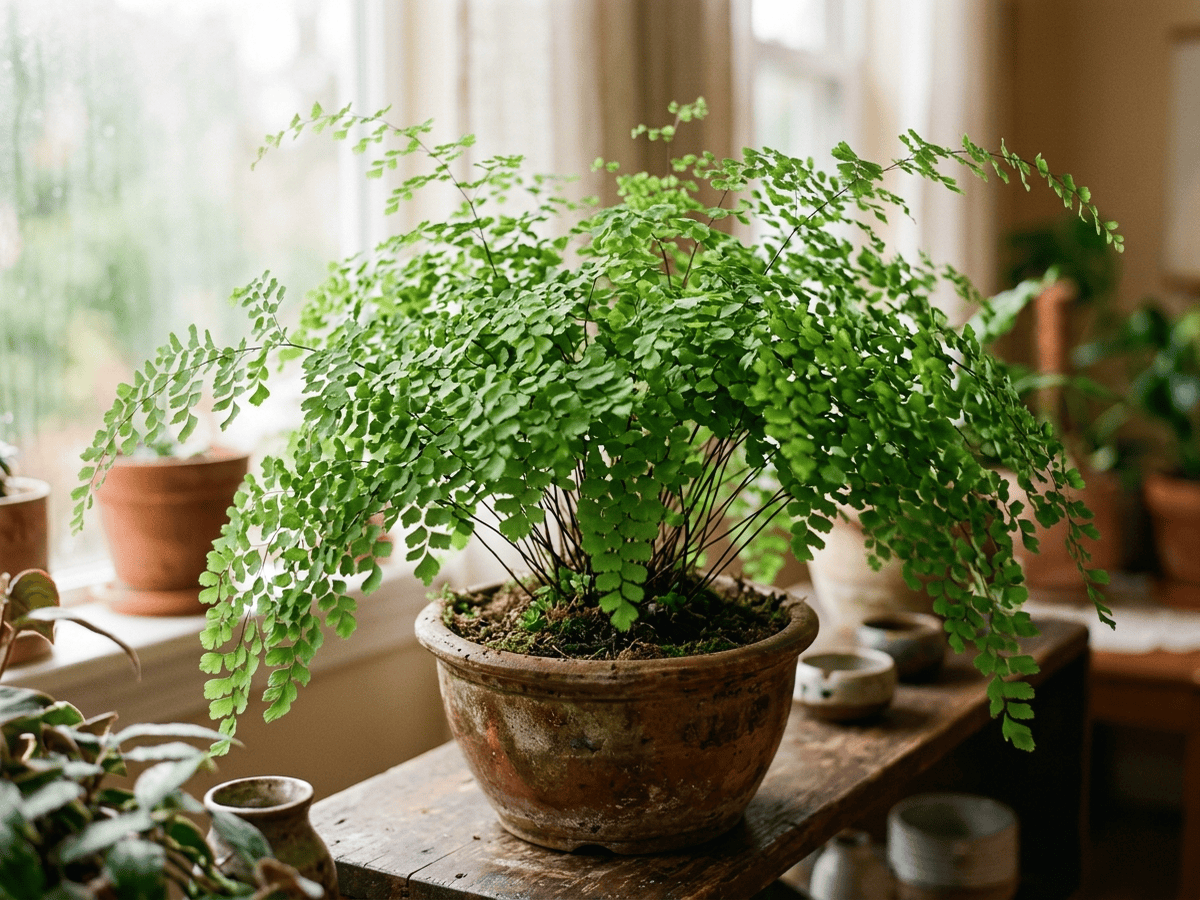 Delta Maidenhair FernAdiantum raddianum
 African Mask PlantAlocasia amazonica
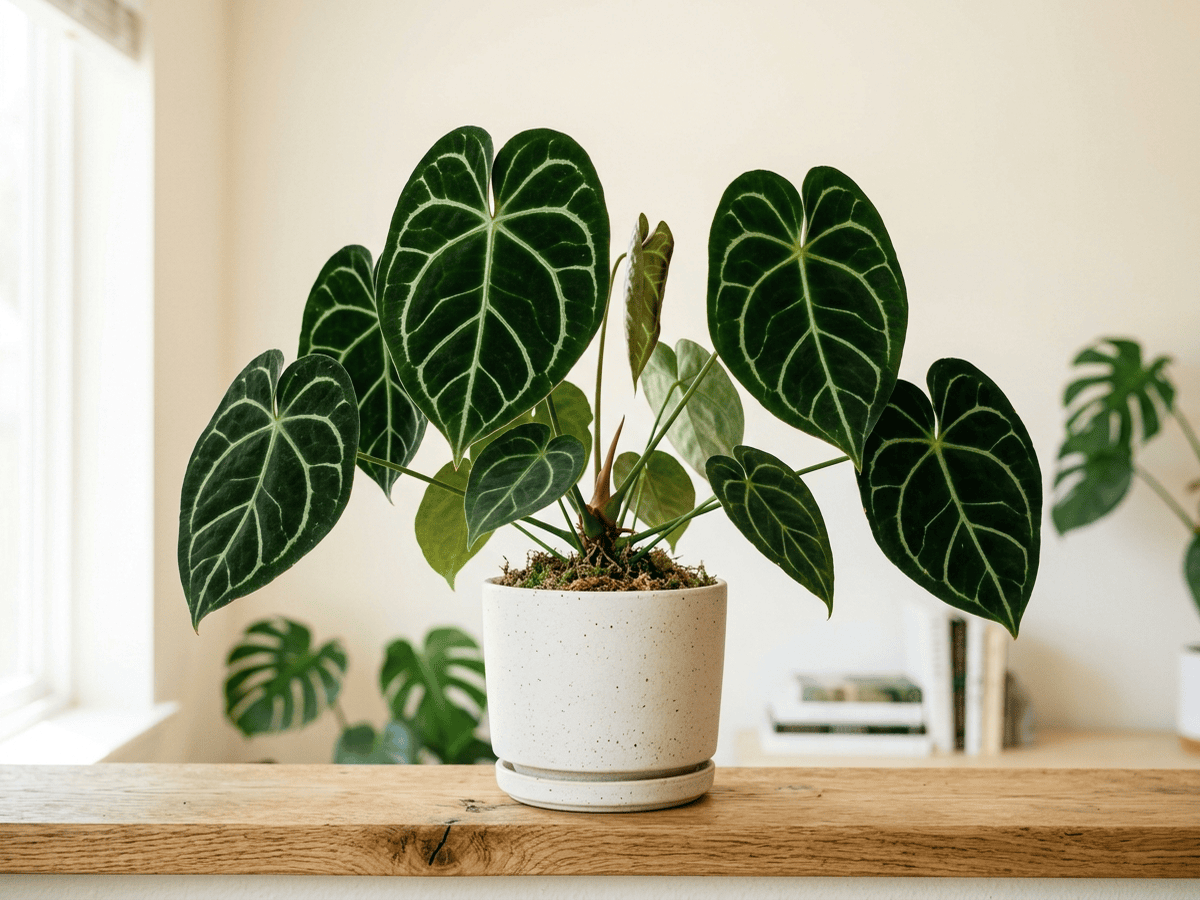 Anthurium clarinerviumAnthurium clarinervium
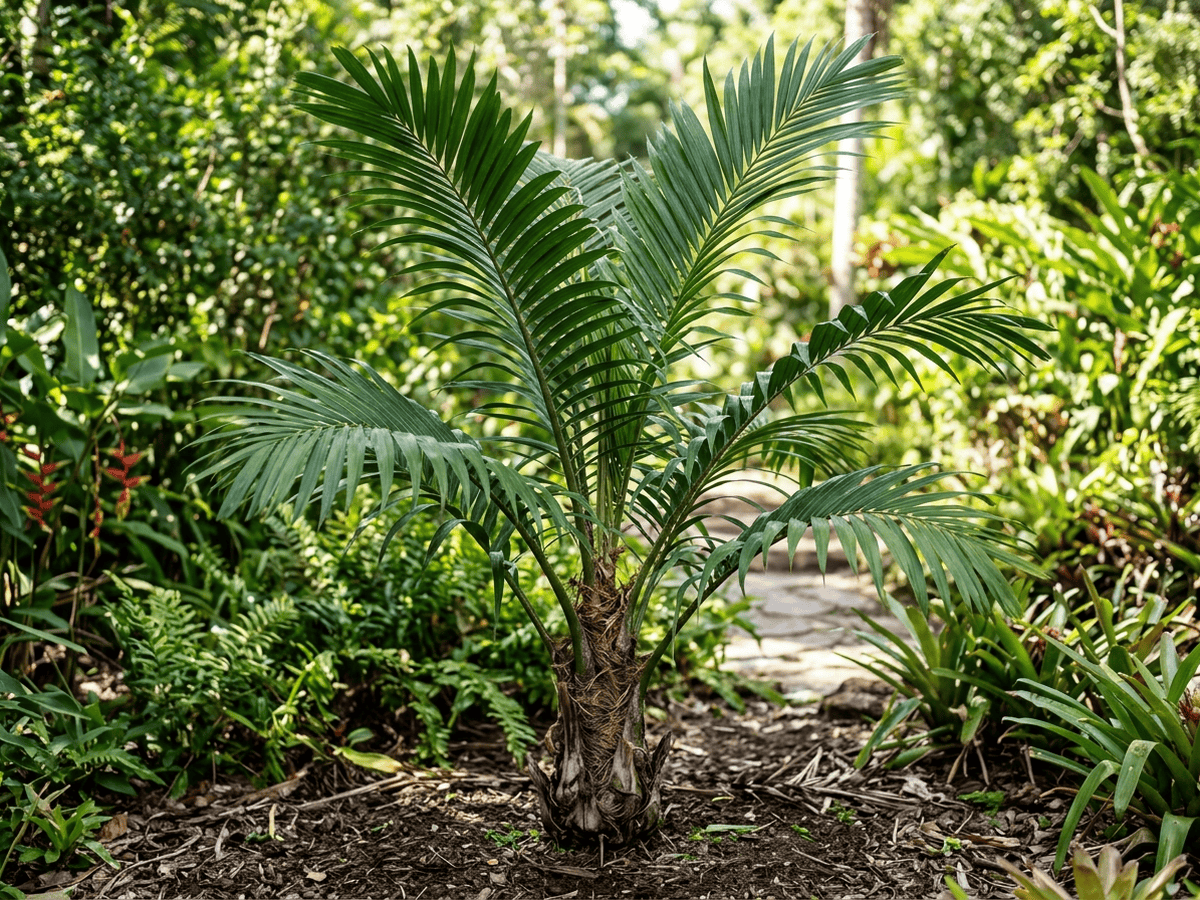 Formosa PalmArenga engleri
Frequently asked questions
How often should I water Rose Grape?
In summer, water about every 4 days; in winter, about every 14 days. Adjust for heat, pot size and drainage.
How much light does Rose Grape need?
Part shade: 2–4 hrs direct. Watch the leaves — scorching or stretching means the light needs adjusting.
Is Rose Grape toxic to cats or dogs?
No toxicity has been reported for this plant. Still, it is wise to keep pets from chewing on any houseplant. Educational information, not medical or veterinary advice. If exposure is suspected, contact a doctor or veterinarian.
Is Rose Grape easy to grow?
It is considered challenging and rewards experienced growers.
Can Rose Grape be grown indoors?
Yes, it adapts well to indoor growing given the right light.
When does Rose Grape bloom?
It typically blooms Jun–Aug in the Northern Hemisphere.
YardMate
Identify any plant in seconds
Snap a photo — YardMate names the plant, diagnoses problems, and reminds you when to water.
Download on the App Store