 YardMate
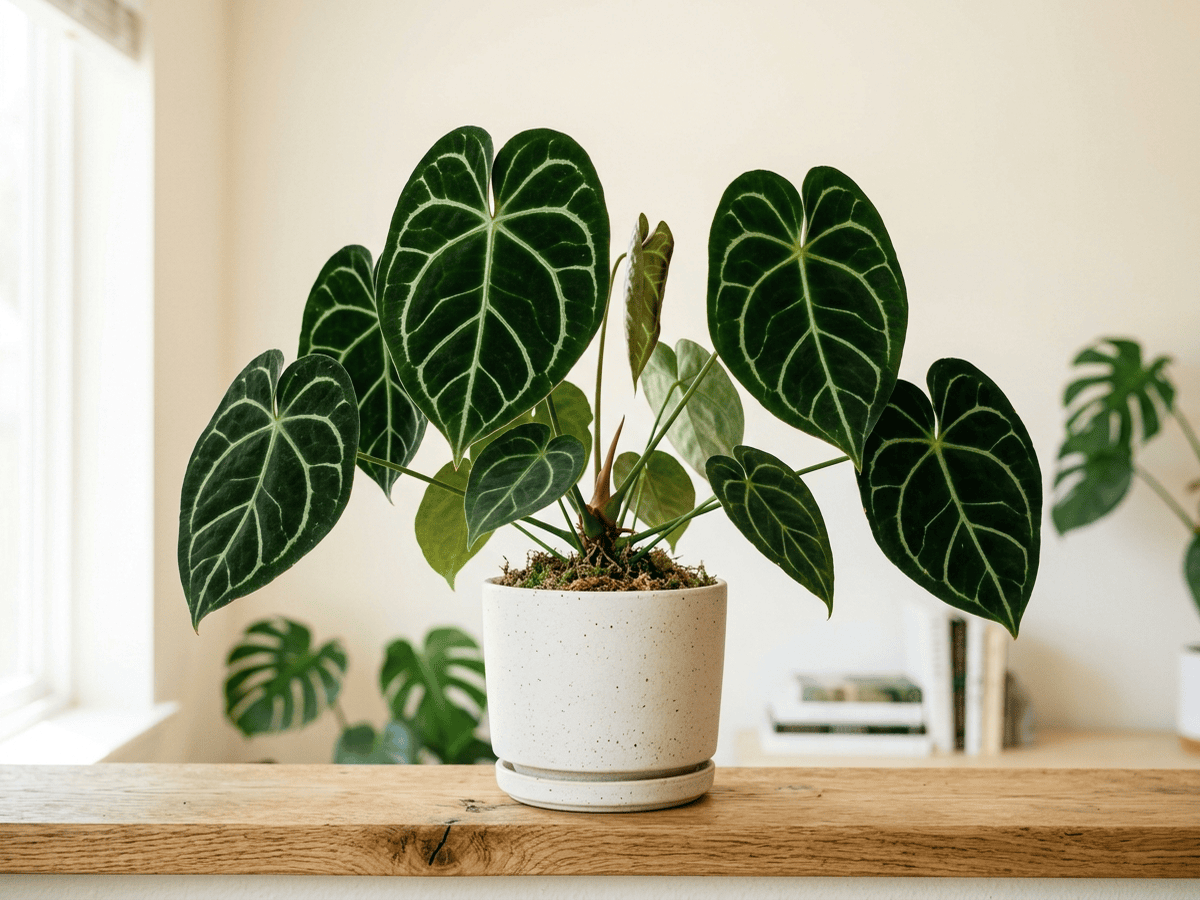


Anthurium clarinervium
Anthurium clarinervium
Hard · Experienced growersAbout Anthurium clarinervium
Anthurium clarinervium is a collector's aroid prized for its velvety, heart-shaped leaves with striking silver-white veining against a deep green background. Native to the limestone karst regions of Chiapas, Mexico, it is an epiphyte in the wild, growing on rocks and tree trunks in humid cloud forests. Unlike A. andraeanum, it is grown exclusively for foliage — the flowers are inconspicuous. It requires chunky, well-draining aroid soil mix, high humidity, and protection from direct sun. Each leaf can grow up to 30 cm across, displaying intricate venation.
- Tropical
- Architectural
- Shade-tolerant
- Container-friendly
How to care for Anthurium clarinervium
Watering
- Springevery 7 days
- Summerevery 5 days
- Fallevery 10 days
- Winterevery 14 days
Soil · Chunky & airy
- Top dressingBark chips10%
- Main mixBark + potting soil + perlite 1:1:170%
- DrainageLECA20%
Chunky pieces hold air pockets open so thick roots don't suffocate.
FERTILIZER
Balanced Feed 14-14-14
An even feed covers all three needs at once, keeping leaves, roots and blooms moving together with nothing pushed out of balance.
- Nitrogen · Leaves
- Phosphorus · Roots + Blooms
- Potassium · Strength
- Springevery 30 days
- Summerevery 30 days
- Fallevery 60 days
At a Glance
- NativeNorth America
- Height1–2 ft (0.3–0.6 m)
- Spread1–2 ft (0.3–0.6 m)
- Flower colorGreen
- Foliage colorGreen, Variegated
- Fruit colorOrange
- SoilLoamy, Well-drained, Rich
- LocationsIndoor
Bloom time
BLOOM CYCLE
Peak bloom
Jan–Dec
Small green spathe; insignificant
Fragrance
NO FRAGRANCE
Not fragrant.
Toxicity
Humans Slight · Pets Slight
insoluble calcium oxalate crystals (raphides)
Slight
- Leaf
- Stem
- Sap
- Contact
- Ingestion
EXPOSURE Touching leaves, stems, and sap. Eating leaves, stems, and sap.
EFFECT Oral burning, lip swelling, drooling and mild skin dermatitis.
NOTE Standard aroid mild toxicity; assessment based on family-wide Anthurium data.
Slight
- Leaf
- Stem
- Ingestion
EXPOSURE Eating leaves and stems.
EFFECT Oral irritation, burning, drooling, vomiting and per genus-wide ASPCA Anthurium listing.
NOTE Standard aroid mild toxicity; assessment based on family-wide Anthurium data.
Slight
- Leaf
- Stem
- Ingestion
EXPOSURE Eating leaves and stems.
EFFECT Oral irritation, burning, drooling, vomiting and per genus-wide ASPCA Anthurium listing.
NOTE Standard aroid mild toxicity; assessment based on family-wide Anthurium data.
Educational information, not medical or veterinary advice. If exposure is suspected, contact a doctor or veterinarian.
DISTRIBUTION


- Native
- North America
History
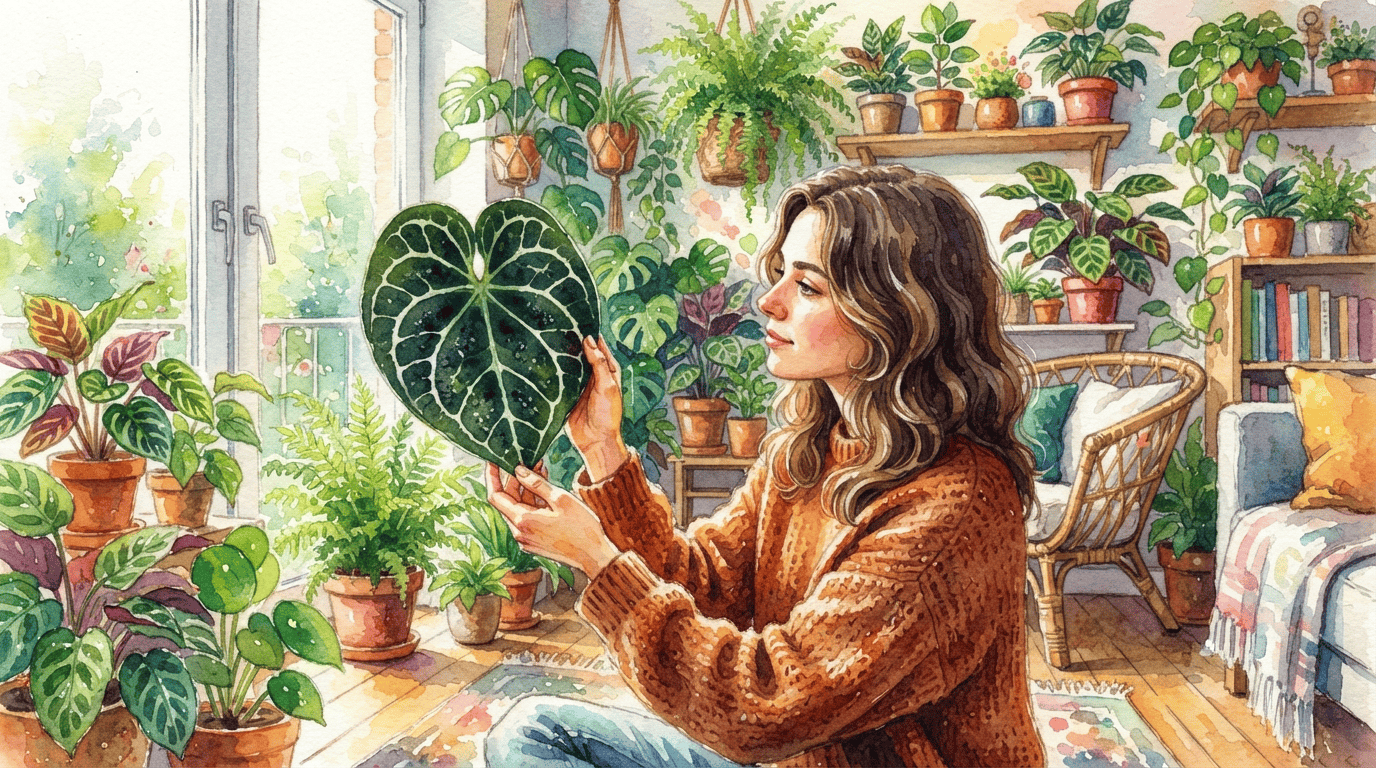
Anthurium clarinervium is narrowly endemic to limestone outcrops and karst forest in the Mexican state of Chiapas, particularly around the Ocozocoautla region, where it grows lithophytically on wet rocks beneath the canopy. Described in 1952, it remained a connoisseur's plant for decades before Instagram-era demand in the late 2010s drove a sharp increase in cultivation and, unfortunately, also in wild poaching. The Mexican government and the IUCN have flagged the species as threatened in the wild, and most plants in international commerce are now tissue-cultured or nursery-grown.
Its defining feature is the dense, bright-white network of veins set against dark velvety green leaves, a pattern whose sharp contrast makes it visually unlike most other aroids. Anthurium clarinervium was first described in 1952 by Thomas Croat from specimens collected in the limestone caves and cliffs of Chiapas, Mexico.
The plant became a social media sensation around 2018, with single specimens selling for hundreds of dollars during the houseplant boom. Its rarity in cultivation and the dramatic leaf venation that photographs beautifully made it one of the defining 'it plants' of the Instagram plant community era.
Symbolism & meaning
What It Symbolizes
Anthurium clarinervium suggests devotion through its dark, heart-shaped leaves laced with pale silver veins, each leaf an intricate map of attention. In the modern register of houseplant symbolism, where care is measured in humidity and patience, its very form reads as a love letter, deep and detailed. To live with this plant is to be reminded that devotion is rarely loud, but it is always written, leaf by leaf, in quiet detail.
- Devotion — Its heart-shaped leaves with intricate detail represent deep, attentive love
Where the Name Comes From
Anthurium from Greek 'anthos' (flower) and 'oura' (tail). Clarinervium means 'clear-veined,' describing the prominent white venation.
Uses & Fun Facts
- Velvet heart-shaped leaves make a tropical statement plant
Related plants
More Anthurium plants
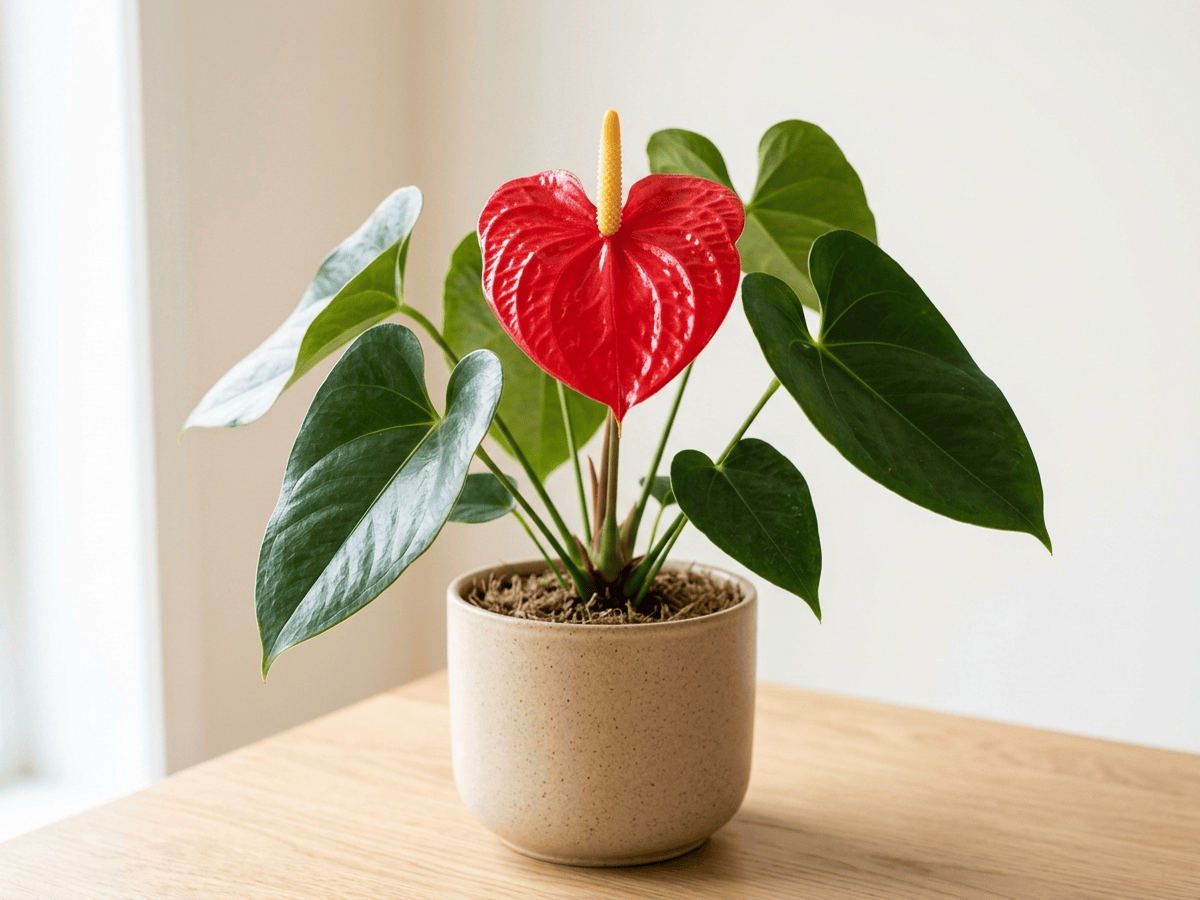 Painter's-PaletteAnthurium andraeanum
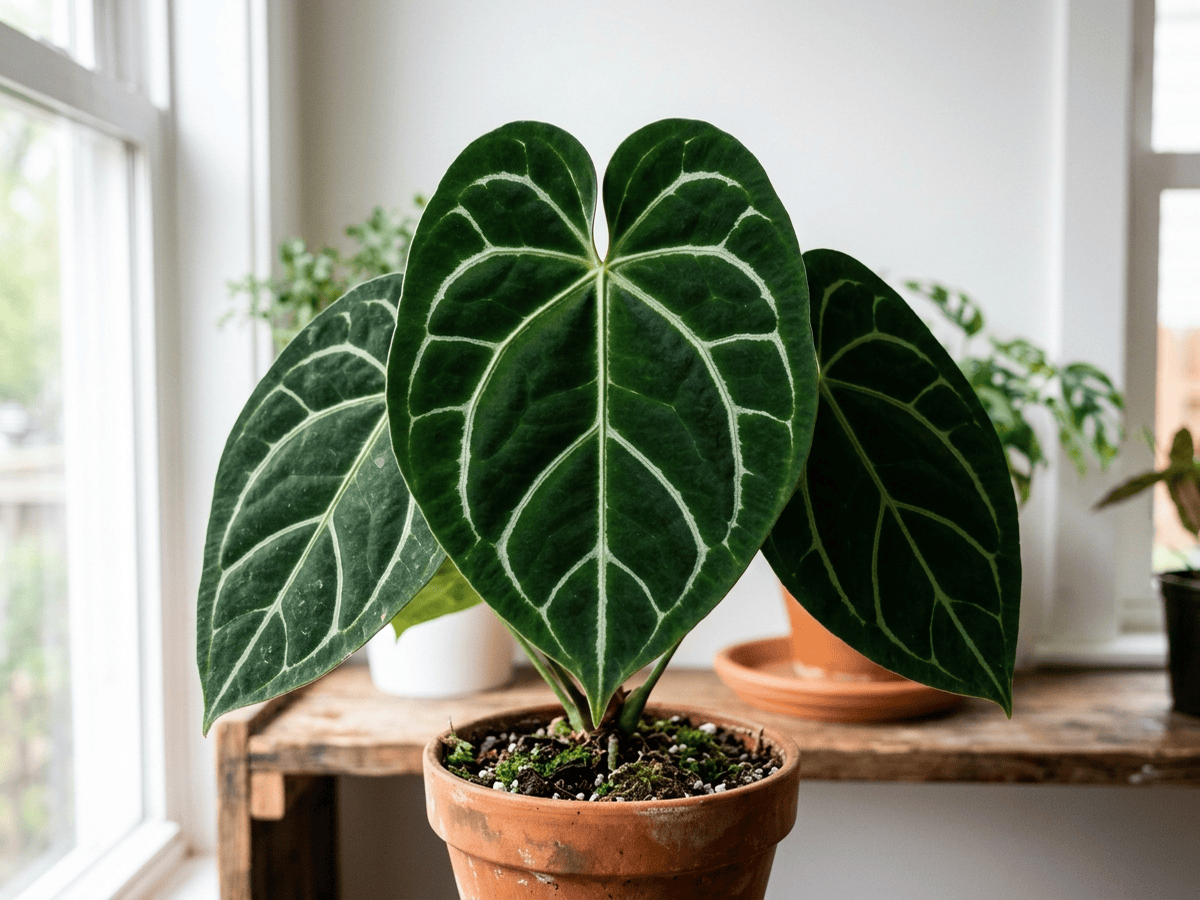 Crystal AnthuriumAnthurium crystallinum
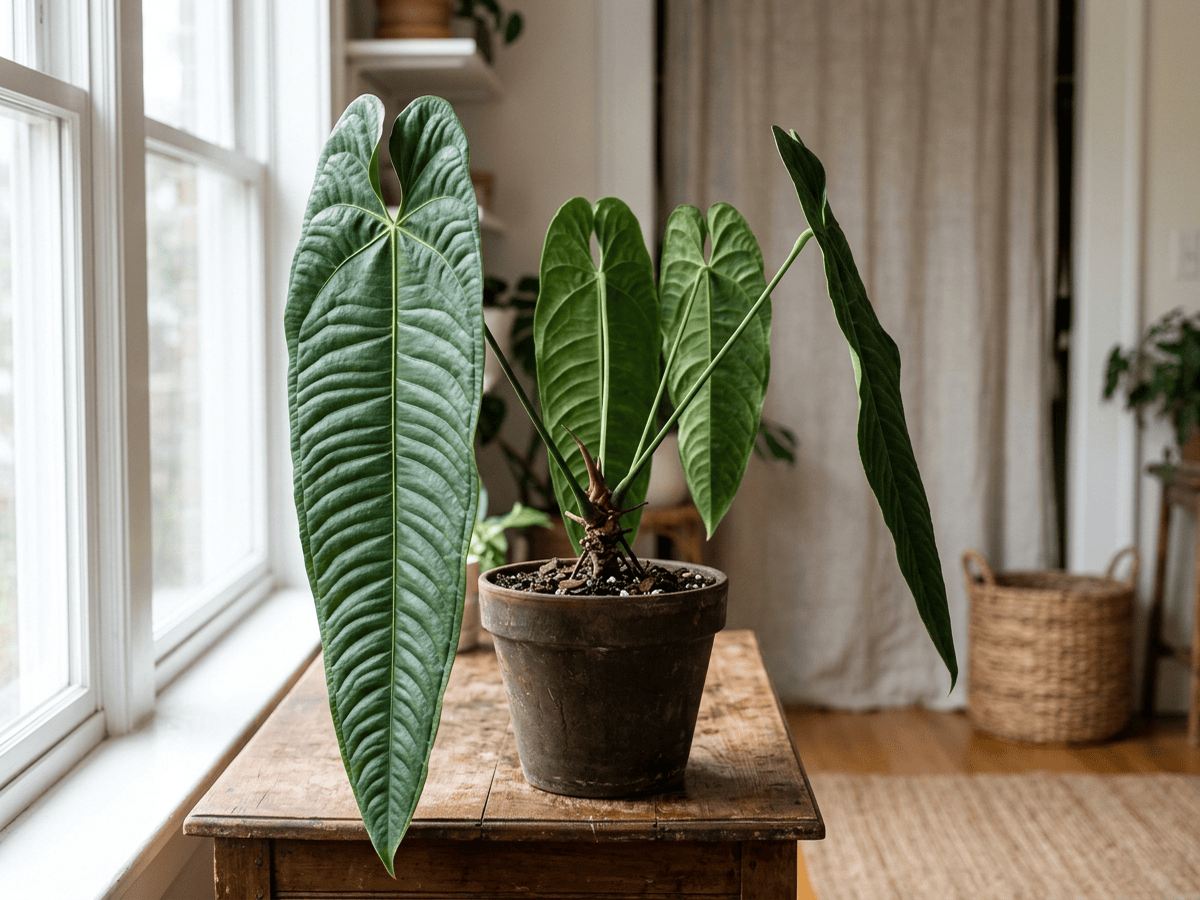 King AnthuriumAnthurium veitchii
Plants with similar care
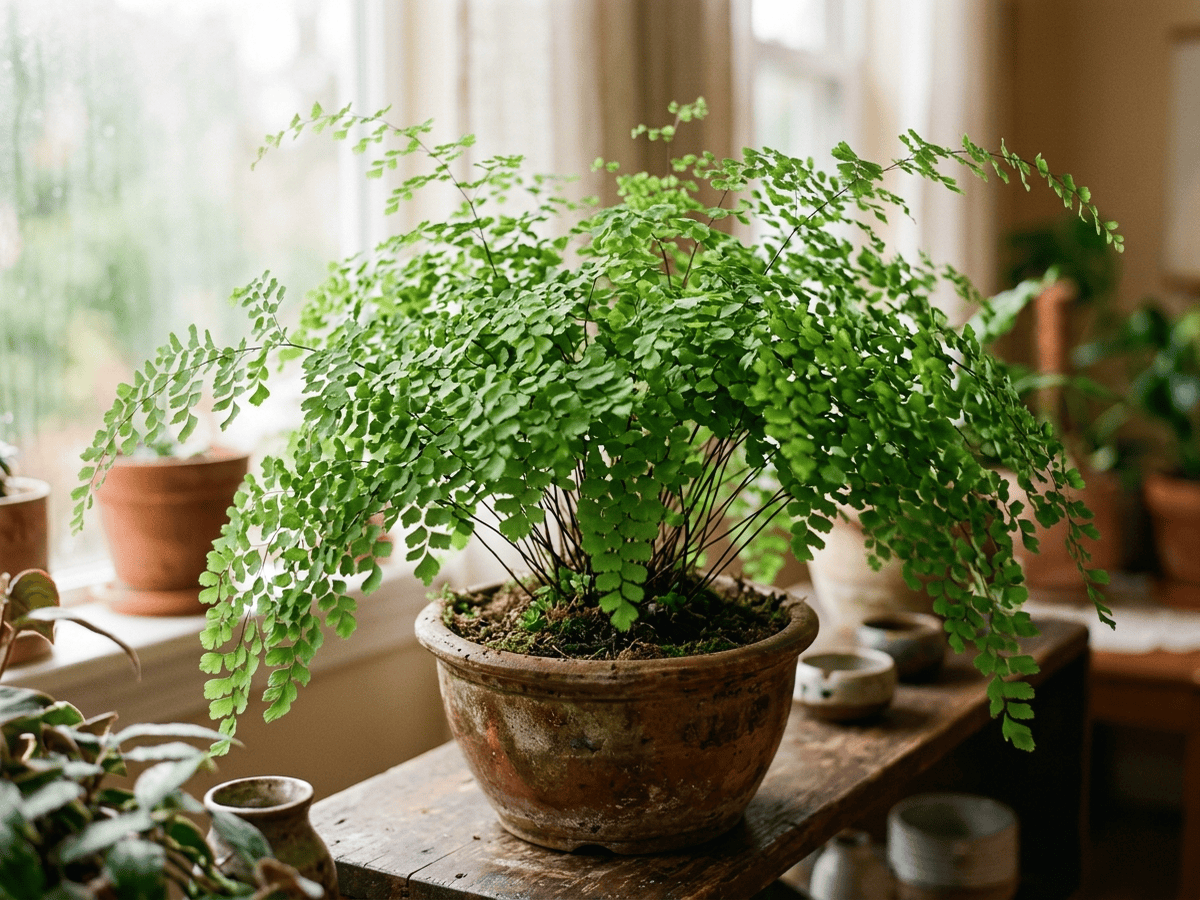 Delta Maidenhair FernAdiantum raddianum
 African Mask PlantAlocasia amazonica
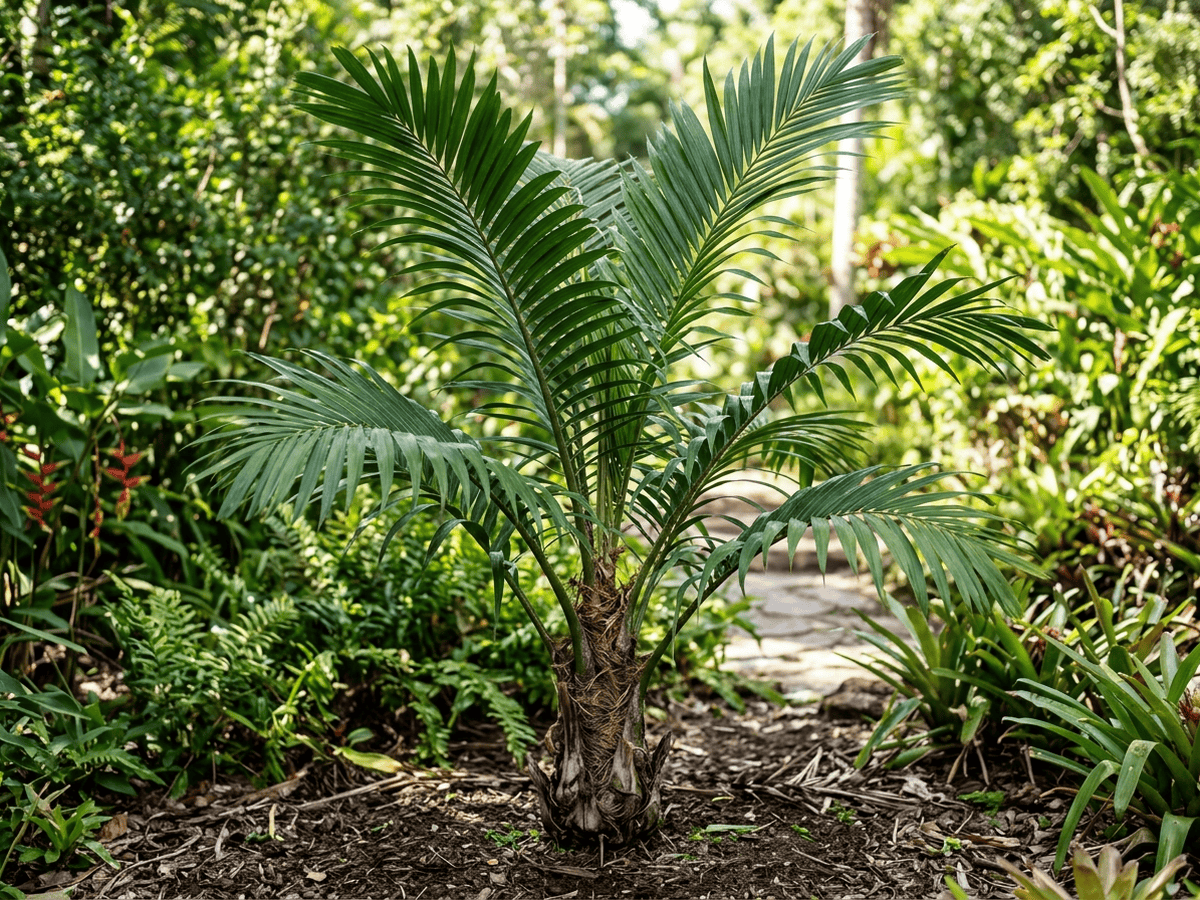 Formosa PalmArenga engleri
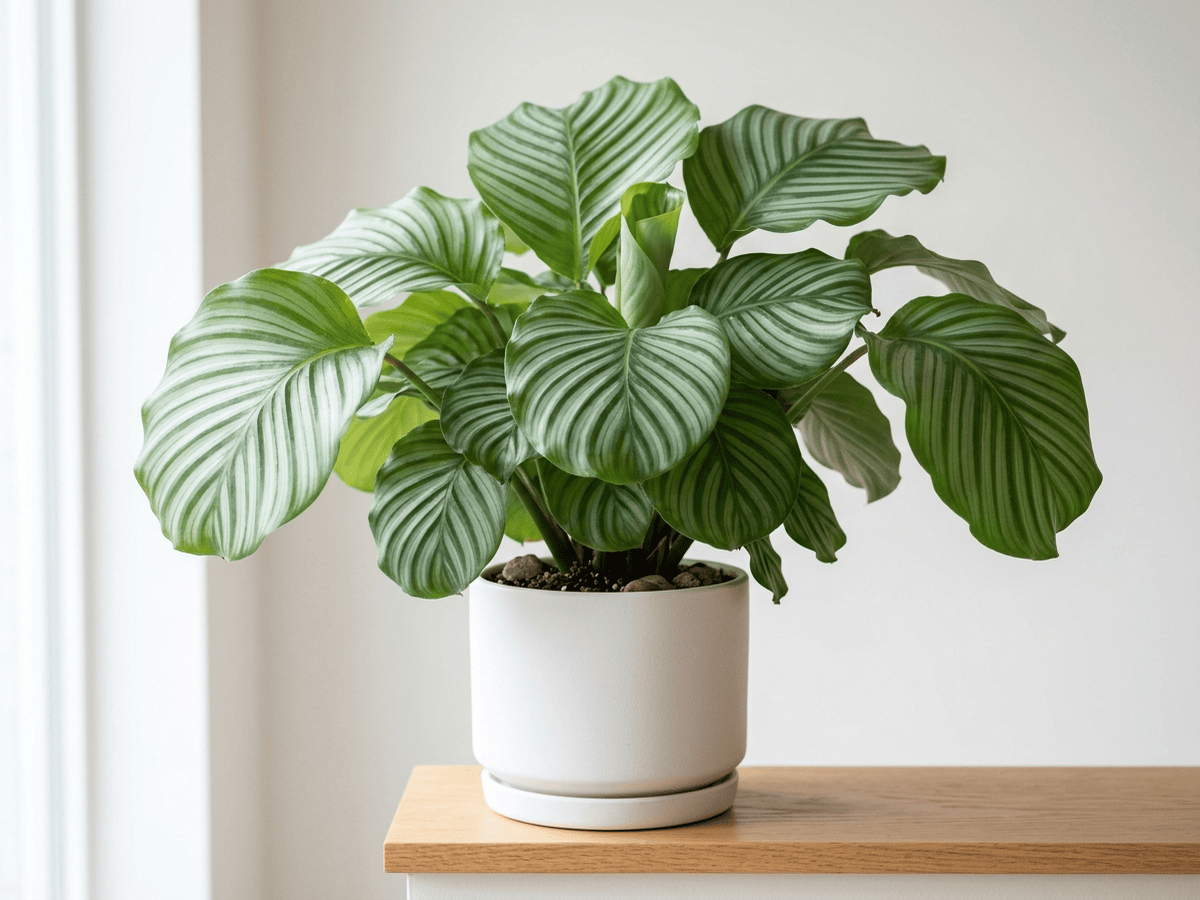 Goeppertia OrbifoliaCalathea orbifolia
Frequently asked questions
How often should I water Anthurium clarinervium?
In summer, water about every 5 days; in winter, about every 14 days. Adjust for heat, pot size and drainage.
How much light does Anthurium clarinervium need?
Part shade: 2–4 hrs direct. Watch the leaves — scorching or stretching means the light needs adjusting.
Is Anthurium clarinervium toxic to cats or dogs?
Pets Slight (Dogs Slight · Cats Slight) Educational information, not medical or veterinary advice. If exposure is suspected, contact a doctor or veterinarian.
Is Anthurium clarinervium easy to grow?
It is considered challenging and rewards experienced growers.
Can Anthurium clarinervium be grown indoors?
Yes, it adapts well to indoor growing given the right light.
When does Anthurium clarinervium bloom?
It typically blooms Jan–Dec in the Northern Hemisphere.
YardMate
Identify any plant in seconds
Snap a photo — YardMate names the plant, diagnoses problems, and reminds you when to water.
Download on the App Store