 YardMate


Red Crown Cactus
Rebutia minuscula
Easy · Beginner friendlyAbout Red Crown Cactus
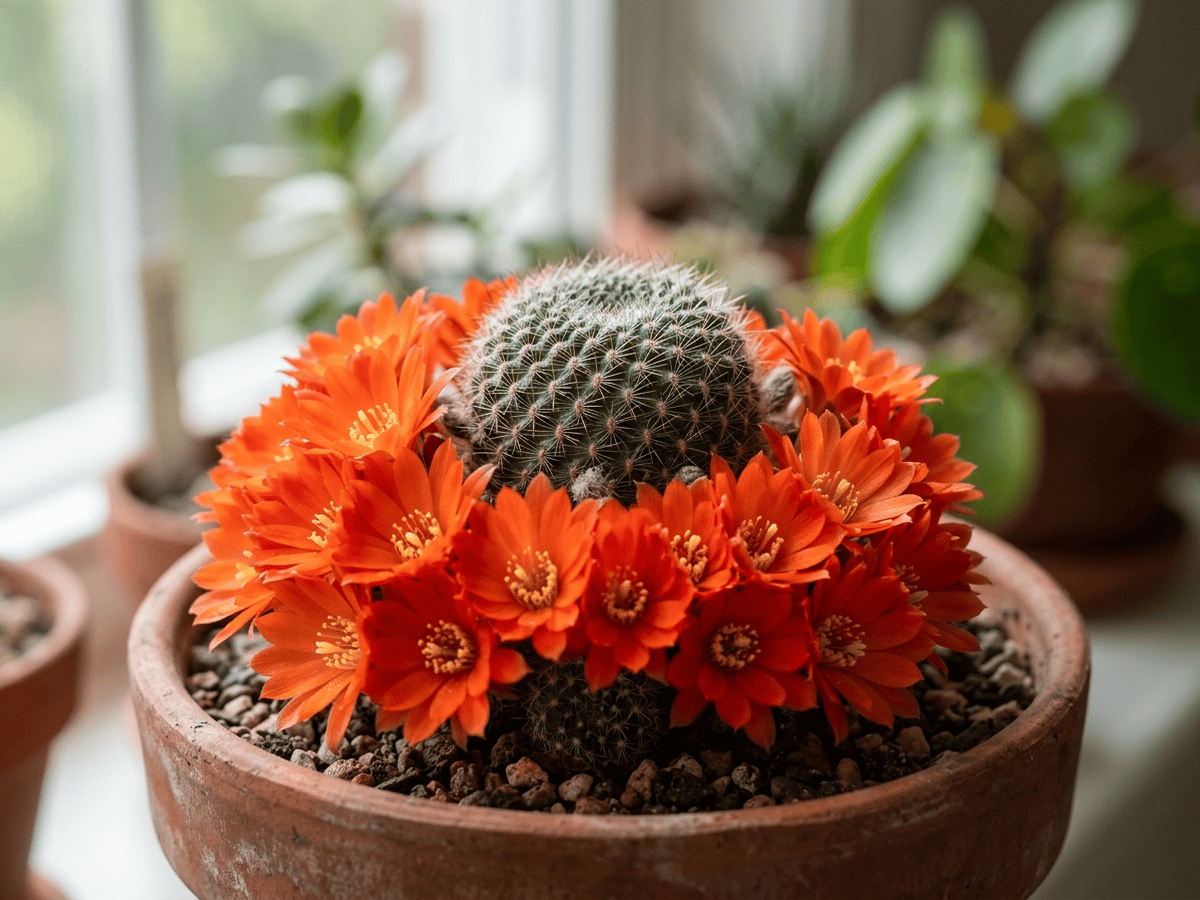
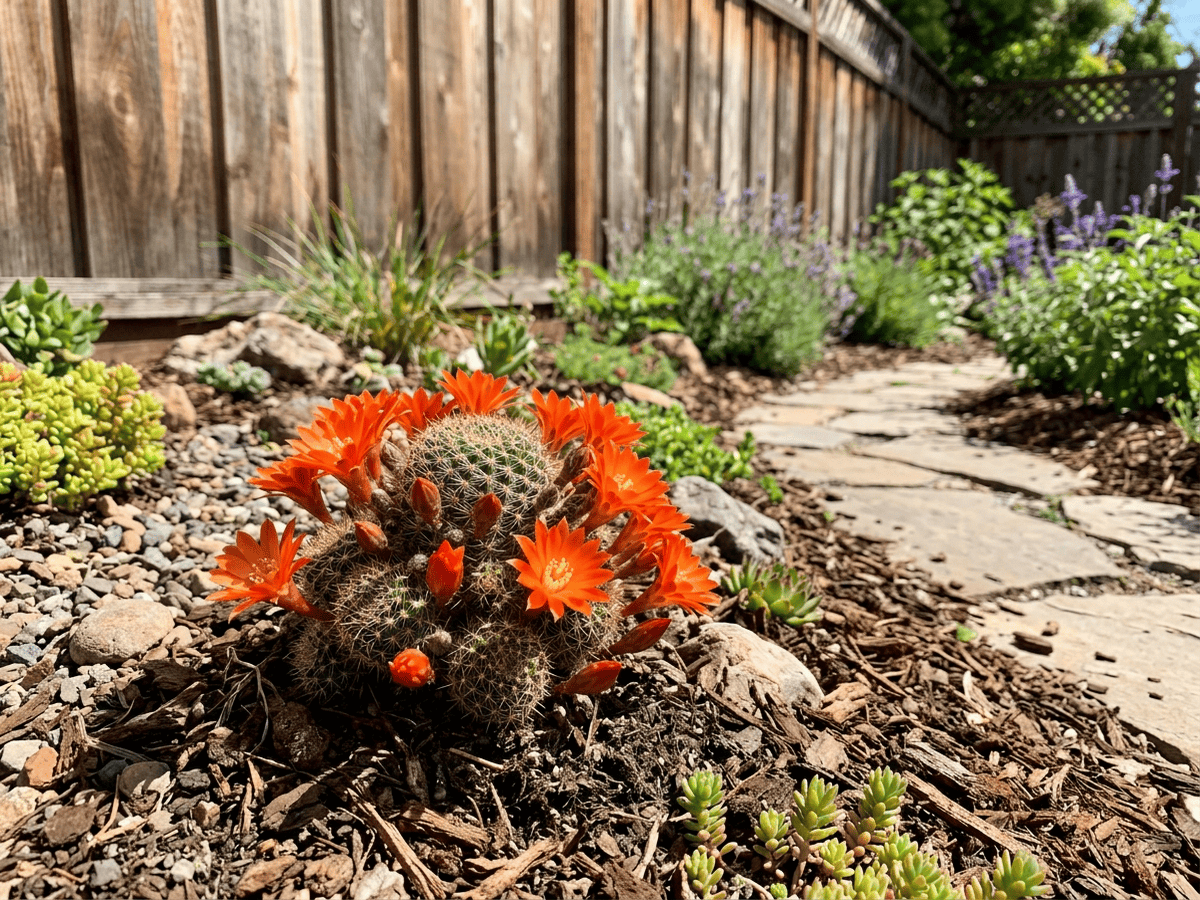
Red Crown Cactus is a tiny clustering cactus from northern Argentina, forming colonies of green flattened-globular heads only 1-2 inches across. Despite its diminutive size, it produces a stunning ring of bright orange-red trumpet-shaped flowers each spring that often hide the plant entirely beneath a wreath of color. Easy to grow and reliably free-flowering even on small windowsills, it is one of the most beloved beginner cacti among American collectors.
- Drought-tolerant
- Evergreen
- Compact
How to care for Red Crown Cactus
Watering
- Springevery 14 days
- Summerevery 14 days
- Fallevery 30 days
- Winterevery 60 days
Soil · Fast-draining
- Main mixSand + pumice + soil 1:1:150%
- DrainagePumice / gravel50%
Keep grit at half the mix or more — this soil is meant to dry out fast.
FERTILIZER
Balanced Feed 14-14-14
An even feed covers all three needs at once, keeping leaves, roots and blooms moving together with nothing pushed out of balance.
- Nitrogen · Leaves
- Phosphorus · Roots + Blooms
- Potassium · Strength
- Springevery 60 days
- Summerevery 60 days
At a Glance
- NativeSouth America
- Height0.2–0.4 ft (0.1–0.1 m)
- Spread0.2–0.4 ft (0.1–0.1 m)
- Flower colorRed, Orange, Yellow
- Foliage colorDark-green
- Fruit colorRed
- SoilSandy, Well-drained
- LocationsIndoor · Balcony
Bloom time
BLOOM CYCLE
Peak bloom
Mar–May
Ring of bright orange-red trumpet flowers in spring
Toxicity
Pets Slight
Unknown toxic principle
Not reported
EXPOSURE No exposure route is reported.
EFFECT No toxic effect is reported.
NOTE No toxicity is reported for humans in this catalog; this is not evidence that the plant is edible or harmless.
Slight
- Stem
- Contact
EXPOSURE Touching stems.
EFFECT Puncture wounds.
NOTE Not chemically toxic; spines pose mechanical injury.
Slight
- Stem
- Contact
EXPOSURE Touching stems.
EFFECT Puncture wounds.
NOTE Not chemically toxic; spines pose mechanical injury.
Educational information, not medical or veterinary advice. If exposure is suspected, contact a doctor or veterinarian.
DISTRIBUTION


- Native
- South America
History

Rebutia minuscula, commonly called red crown cactus, is a tiny globose cactus endemic to the mountains of northwestern Argentina in the provinces of Tucumán and Salta at 1500-2500 meters elevation. German botanist Karl Moritz Schumann described the species in 1895 and established the genus Rebutia to accommodate it, naming it after Pierre Rebut, a 19th-century French cactus dealer. The epithet minuscula means very small, referring to the diminutive flattened globose stems only 3-5 cm tall and 5-7 cm wide that readily offset to form dense clumps 15-20 cm across.
The dark green stems are covered with small spirally-arranged tubercles bearing areoles with 25-30 short white radial spines. In spring the plant produces a dense ring of brilliant red, orange, or rarely yellow funnelform 3-4 cm flowers arising from near the base of the stem—each flower is nearly as large as the stem itself.
The species has been a cornerstone of beginner and windowsill cactus collections since the late 19th century. Native to the high Andes of Tucumán, Argentina at elevations above 3,000 meters. Its tolerance of cooler temperatures and reliable flowering made it a fixture of mid-20th-century European cactus collections that crossed to the United States.
Symbolism & meaning
What It Symbolizes
Red Crown Cactus is cheerfulness disguised as a tiny pincushion — a small Andean cactus that, in early spring, suddenly produces a ring of orange flowers larger than its own body. Its surprise is part of it charm: hardly anyone expects so modest a plant to put on so vivid a show. It is the windowsill astonishment, joy delivered in a three-inch pot.
- Cheerfulness — ring of orange flowers brings joy in early spring
- Surprise — tiny plant produces astonishing displays
Where the Name Comes From
'Rebutia' honors French wine merchant and cactus enthusiast Pierre Rebut; 'minuscula' means very small.
Uses & Fun Facts
- Tiny clustering cactus for sunny windowsill collections
- Spring ring of orange-red trumpets nearly hides the plant
Related plants
Plants with similar care
 Giant TaroAlocasia macrorrhizos
 Concertina PlantCrassula perforata
 Song Of IndiaDracaena reflexa
 Snake PlantDracaena trifasciata
Frequently asked questions
How often should I water Red Crown Cactus?
In summer, water about every 14 days; in winter, about every 60 days. Adjust for heat, pot size and drainage.
How much light does Red Crown Cactus need?
Indirect: Filtered light. Watch the leaves — scorching or stretching means the light needs adjusting.
Is Red Crown Cactus toxic to cats or dogs?
Pets Slight (Dogs Slight · Cats Slight) Educational information, not medical or veterinary advice. If exposure is suspected, contact a doctor or veterinarian.
Is Red Crown Cactus easy to grow?
Yes — it is considered an easy, beginner-friendly plant.
Can Red Crown Cactus be grown indoors?
Yes, it adapts well to indoor growing given the right light.
When does Red Crown Cactus bloom?
It typically blooms Mar–May in the Northern Hemisphere.
YardMate
Identify any plant in seconds
Snap a photo — YardMate names the plant, diagnoses problems, and reminds you when to water.
Download on the App Store