 YardMate


Giant Taro
Alocasia macrorrhizos
Easy · Beginner friendlyAbout Giant Taro
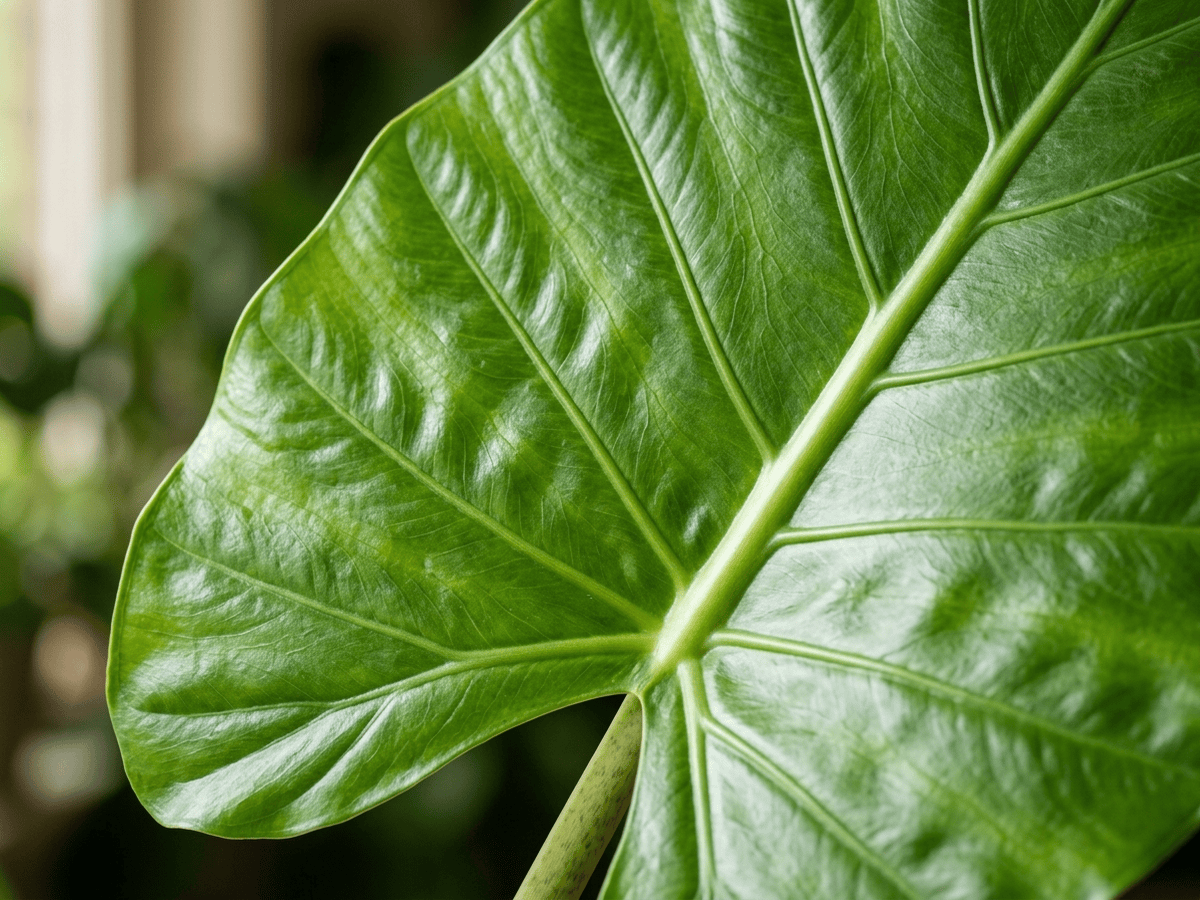
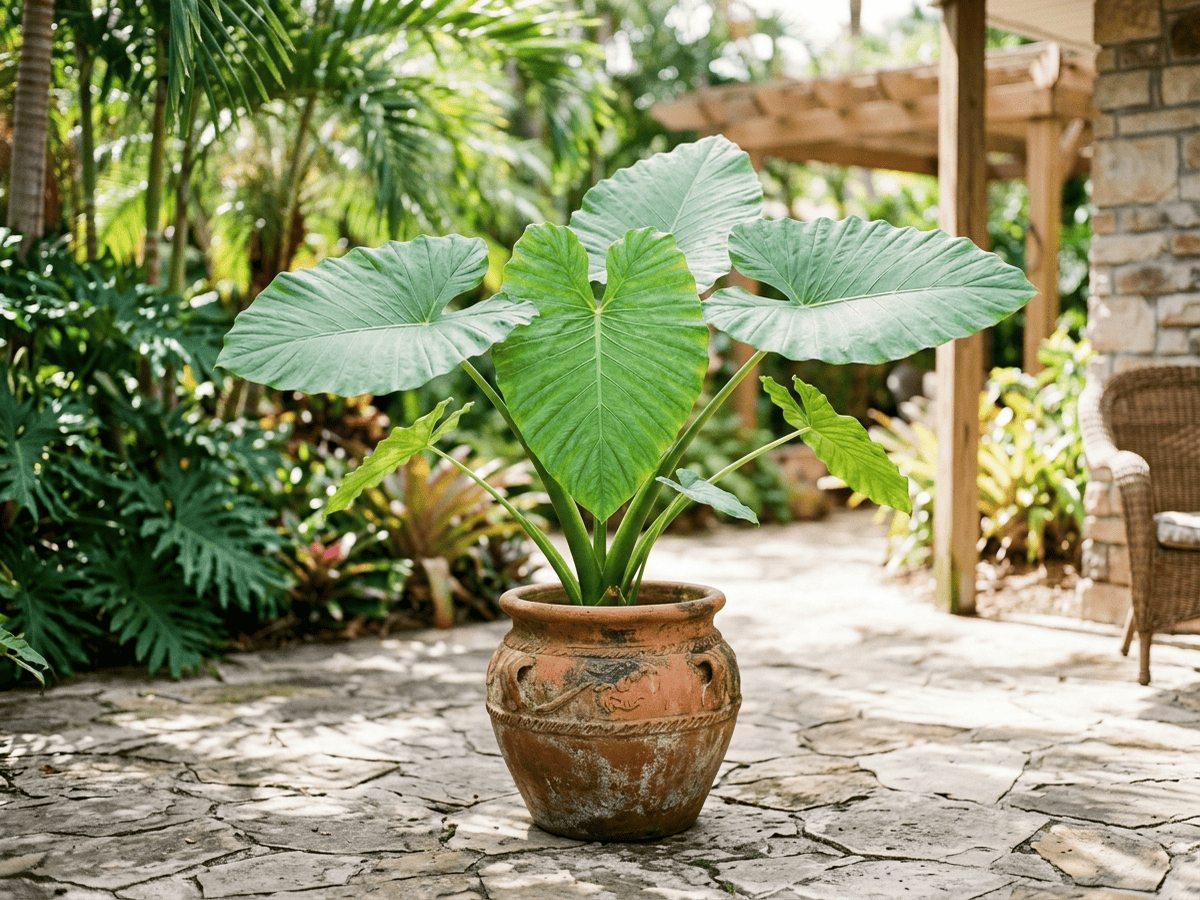
Giant Taro or Elephant Ear is a massive Southeast Asian aroid with enormous upright arrow-shaped glossy green leaves reaching 3-6 feet long on tall sturdy stalks. Mature plants stand 8-15 feet tall in tropical climates, providing dramatic tropical effect in landscapes from Florida and Hawaii to Southern California. Cultivated for thousands of years across the Pacific as a starchy food crop, the corms must be properly cooked to destroy calcium oxalate.
- Edible
- Evergreen
- Architectural
- Tropical
How to care for Giant Taro
Watering
- Springevery 5 days
- Summerevery 5 days
- Fallevery 7 days
- Winterevery 14 days
Soil · Chunky & airy
- Top dressingBark chips10%
- Main mixBark + potting soil + perlite 1:1:170%
- DrainageLECA20%
Chunky pieces hold air pockets open so thick roots don't suffocate.
FERTILIZER
Balanced Feed 14-14-14
An even feed covers all three needs at once, keeping leaves, roots and blooms moving together with nothing pushed out of balance.
- Nitrogen · Leaves
- Phosphorus · Roots + Blooms
- Potassium · Strength
- Springevery 30 days
- Summerevery 30 days
- Fallevery 60 days
At a Glance
- NativeEast Asia, Pacific Islands
- Height6–12 ft (1.8–3.7 m)
- Spread6–10 ft (1.8–3 m)
- Flower colorCream, Green
- Foliage colorGreen
- Fruit colorRed
- SoilMoisture-retentive, Rich, Loamy
- LocationsYard · Indoor
Bloom time
BLOOM CYCLE
Peak bloom
Jun–Aug
Greenish-yellow spathe with spadix
Toxicity
Humans Moderate · Pets Moderate
calcium oxalate raphides
Moderate
- Leaf
- Stem
- Rhizome
- Ingestion
EXPOSURE Eating leaves, stems, and rhizome.
EFFECT Oral burning, swelling, and vomiting (raw).
NOTE Documented concern for humans: Oral burning, swelling, and vomiting (raw).
Moderate
- Leaf
- Stem
- Ingestion
EXPOSURE Eating leaves and stems.
EFFECT Oral irritation and vomiting.
NOTE Raw plant toxic; cooked rhizome is a traditional Pacific staple. ASPCA lists Alocasia as toxic.
Moderate
- Leaf
- Stem
- Ingestion
EXPOSURE Eating leaves and stems.
EFFECT Oral irritation and vomiting.
NOTE Raw plant toxic; cooked rhizome is a traditional Pacific staple. ASPCA lists Alocasia as toxic.
Educational information, not medical or veterinary advice. If exposure is suspected, contact a doctor or veterinarian.
DISTRIBUTION


- Native
- Introduced
- East Asia
- Pacific Islands
History
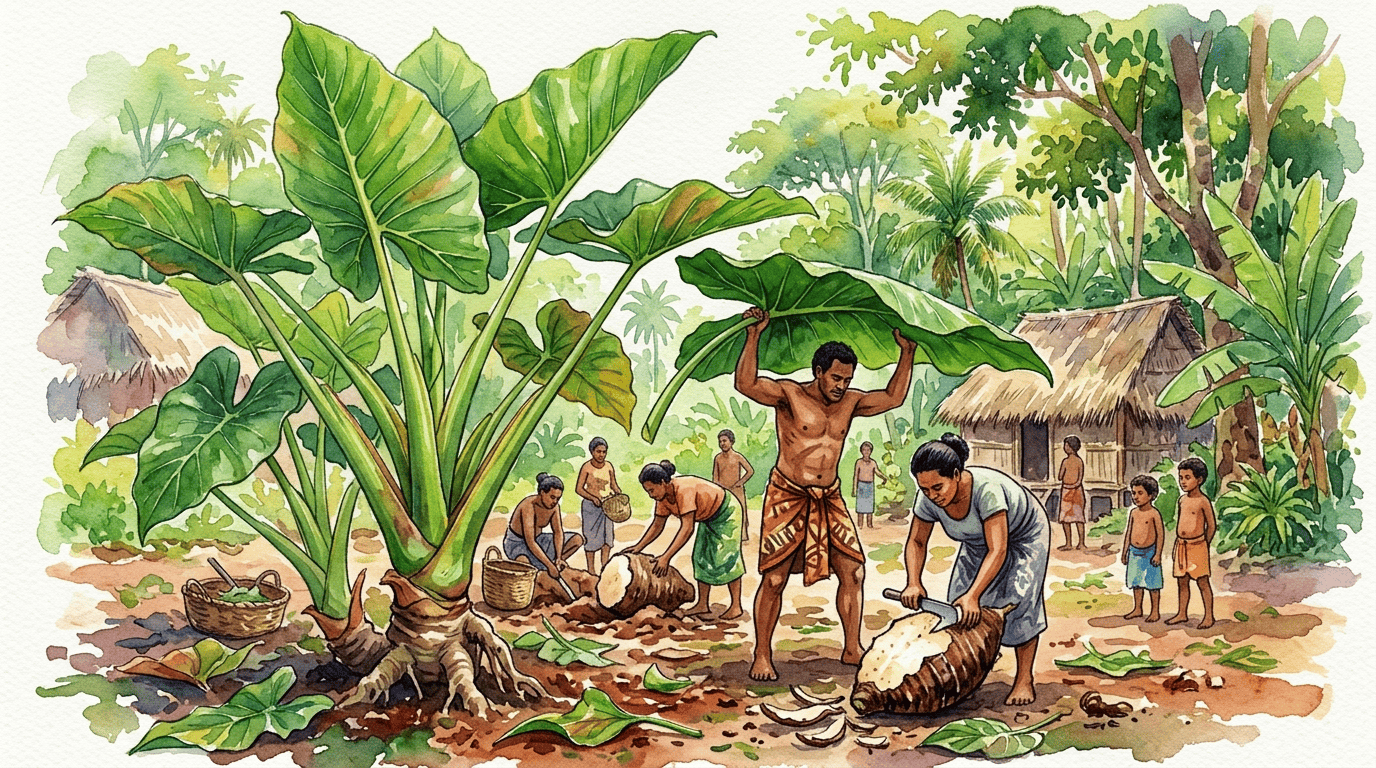
Alocasia macrorrhizos, commonly called giant taro, elephant ear taro, or kape in many Pacific languages, is one of the oldest cultivated aroids, a massive rhizomatous herb in the family Araceae domesticated in Island Southeast Asia (probably the Philippines or eastern Indonesia) during the early Austronesian expansion 5000+ years ago. Carl Linnaeus described it as Arum macrorrhizon in 1753 based on material already widely grown throughout tropical Asia; Scottish botanist George Don transferred it to Alocasia in 1839. The epithet macrorrhizos means large-rooted.
Plants can grow 2-5 meters tall with huge 60-130 cm arrow-shaped upright-pointing glossy green leaves on thick fleshy petioles arising from a tuberous-rhizomatous stem that serves as a starchy food staple across Pacific Island cultures from Polynesia to Madagascar after extensive cooking to neutralize the toxic calcium oxalate. Widely cultivated as a dramatic tropical landscape plant in Hawaii, Florida, and the Caribbean, with variegated 'Splash', 'Borneo Giant', and 'Stingray' cultivars.
Symbolism & meaning
What It Symbolizes
Giant Taro suggests Abundance carried on broad green sails — leaves wide enough to shelter a child, roots starchy enough to feed a village. Its heritage stretches across the Pacific, where countless generations cultivated it as a foundation crop long before written history. Each plant is a quiet monument to humanity's oldest pact with the tropics.
- Abundance — ancient food crop sustaining Pacific cultures
- Heritage — thousands of years of human cultivation
Where the Name Comes From
'Macrorrhizos' from Greek meaning large-rooted, referring to the massive edible corm.
Uses & Fun Facts
- Massive arrow-shaped leaves create tropical foliage statement
- Cooked corms eaten as starch staple in Pacific cuisines
- Dramatic patio specimen in oversized planters
Related plants
More Alocasia plants
 African Mask PlantAlocasia amazonica
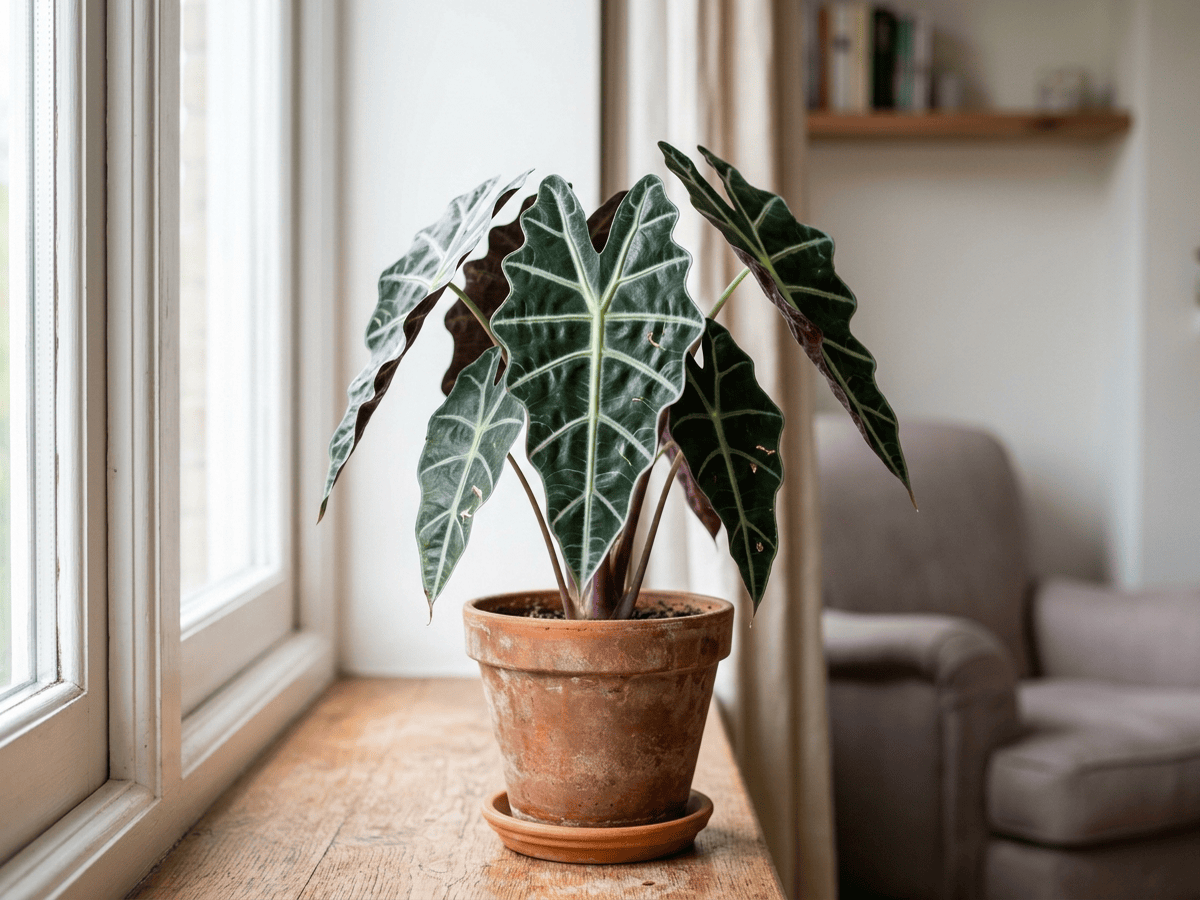 AlocasiaAlocasia polly
 Black Velvet AlocasiaAlocasia reginula
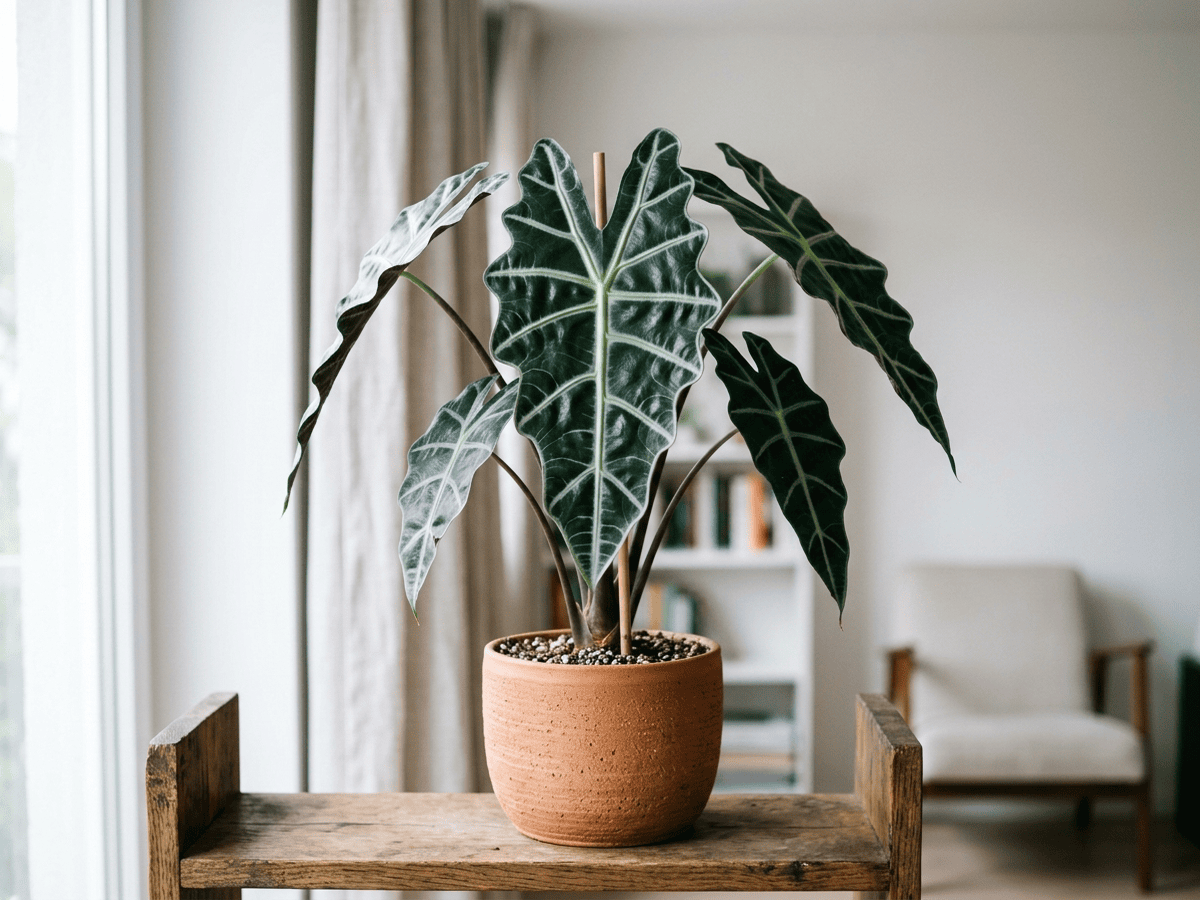 Kris-PlantAlocasia sanderiana
Plants with similar care
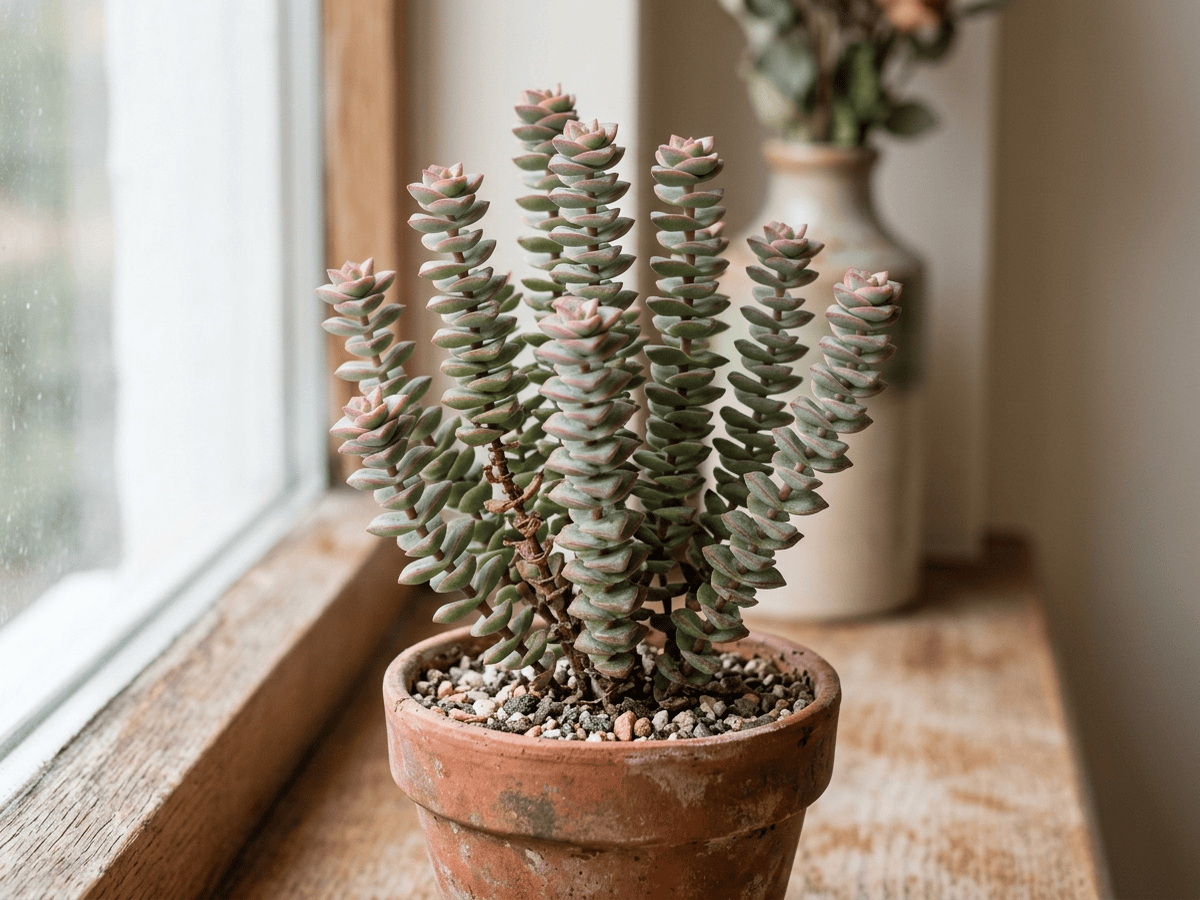 Concertina PlantCrassula perforata
 Song Of IndiaDracaena reflexa
 Snake PlantDracaena trifasciata
 Dragon-TailEpipremnum pinnatum
Frequently asked questions
How often should I water Giant Taro?
In summer, water about every 5 days; in winter, about every 14 days. Adjust for heat, pot size and drainage.
How much light does Giant Taro need?
Indirect: Filtered light. Watch the leaves — scorching or stretching means the light needs adjusting.
Is Giant Taro toxic to cats or dogs?
Pets Moderate (Dogs Moderate · Cats Moderate) Educational information, not medical or veterinary advice. If exposure is suspected, contact a doctor or veterinarian.
Is Giant Taro easy to grow?
Yes — it is considered an easy, beginner-friendly plant.
Can Giant Taro be grown indoors?
Yes, it adapts well to indoor growing given the right light.
When does Giant Taro bloom?
It typically blooms Jun–Aug in the Northern Hemisphere.
YardMate
Identify any plant in seconds
Snap a photo — YardMate names the plant, diagnoses problems, and reminds you when to water.
Download on the App Store