 YardMate

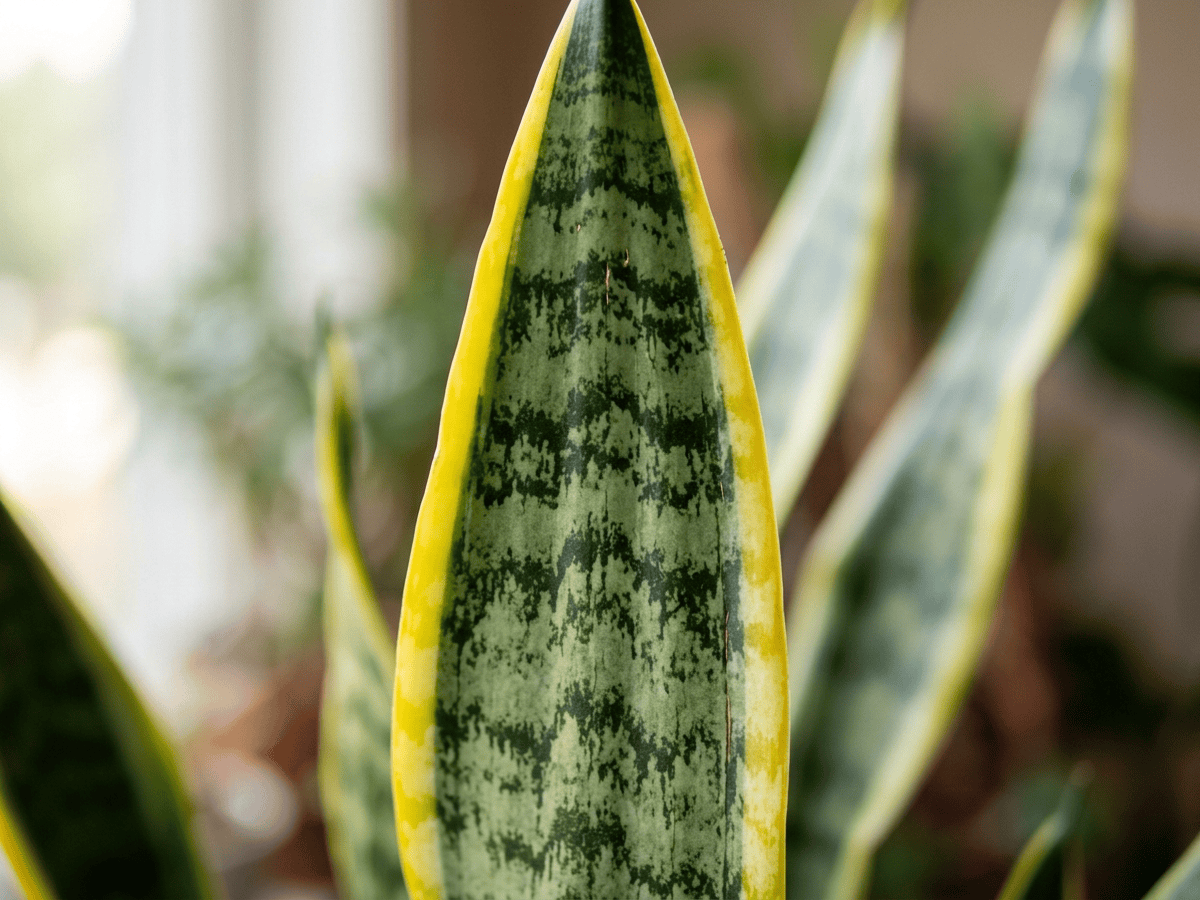


Snake Plant
Dracaena trifasciata
Easy · Beginner friendlyAbout Snake Plant
Snake Plant or Mother-in-Law's Tongue is the classic upright West African succulent with stiff sword-like dark-green leaves marked with pale-green crossbands and often edged in golden yellow. Reaching 2-4 feet tall in tight clumps, it is the most widely grown snake plant variety and one of the toughest houseplants in cultivation. Tolerates extreme neglect, drought, and low light, making it perhaps the most beginner-friendly houseplant in America.
- Air-purifying
- Drought-tolerant
- Evergreen
How to care for Snake Plant
Watering
- Springevery 14 days
- Summerevery 14 days
- Fallevery 21 days
- Winterevery 45 days
Soil · Fast-draining
- Main mixSand + pumice + soil 1:1:150%
- DrainagePumice / gravel50%
Keep grit at half the mix or more — this soil is meant to dry out fast.
FERTILIZER
Foliage Feed 24-8-16
Nitrogen leads so the plant spends its energy on dense green growth. Phosphorus and potassium follow just far enough to keep roots and stems up to speed.
- Nitrogen · Leaves
- Phosphorus · Roots + Blooms
- Potassium · Strength
- Springevery 60 days
- Summerevery 60 days
At a Glance
- NativeAfrica
- Height2–4 ft (0.6–1.2 m)
- Spread1–2 ft (0.3–0.6 m)
- Flower colorWhite, Cream, Green
- Foliage colorDark-green, Variegated
- Fruit colorOrange
- SoilSandy, Well-drained
- LocationsIndoor · Balcony
Bloom time
BLOOM CYCLE
Peak bloom
Jun–Aug
Greenish-white fragrant tubular flowers on tall spike (rare indoors)
Fragrance
MODERATE FRAGRANCE
Strong sweet fragrance at night when rare flowers appear.
Toxicity
Humans Slight · Pets Moderate
saponins
Slight
- Leaf
- Ingestion
EXPOSURE Eating leaves.
EFFECT Oral irritation and nausea.
NOTE Documented concern for humans: Oral irritation and nausea.
Moderate
- Leaf
- Ingestion
EXPOSURE Eating leaves.
EFFECT Vomiting and diarrhea.
NOTE ASPCA lists Sansevieria/Dracaena trifasciata as toxic to pets.
Moderate
- Leaf
- Ingestion
EXPOSURE Eating leaves.
EFFECT Vomiting and diarrhea.
NOTE ASPCA lists Sansevieria/Dracaena trifasciata as toxic to pets.
Educational information, not medical or veterinary advice. If exposure is suspected, contact a doctor or veterinarian.
DISTRIBUTION


- Native
- Introduced
- Africa
History

Dracaena trifasciata, universally familiar as the snake plant or mother-in-law's tongue, is an upright evergreen rhizomatous succulent in the asparagus family (Asparagaceae) native to rocky dry tropical West Africa from Nigeria to the Democratic Republic of Congo. Scottish botanist David Prain described it as Sansevieria trifasciata in 1903. Following the 2018 phylogenetic revision of the Dracaenoideae by Takawira-Nyenya, Mucina, and colleagues, the entire genus Sansevieria was subsumed into Dracaena, making the species formally Dracaena trifasciata—though horticultural trade almost universally retains Sansevieria.
Plants produce stiff upright sword-shaped succulent leaves 60-120 cm tall with characteristic pale-green to gray-green cross-banding on dark green. Many cultivars include 'Laurentii' (yellow-edged), 'Moonshine' (pale silver), 'Hahnii' (dwarf bird's nest form), 'Black Coral', and 'Zeylanica'. Extremely tolerant of neglect, low light, and drought—the quintessential beginner houseplant.
Has been associated with indoor air purification claims from NASA's 1989 Clean Air Study. Reclassified from Sansevieria trifasciata to Dracaena trifasciata in 2017 based on genetic evidence. Among the most studied air-purifying plants by NASA, it uniquely converts CO2 to oxygen at night via CAM photosynthesis—making it valued for bedrooms. Toxic to pets.
Symbolism & meaning
What It Symbolizes
The Snake Plant is an emblem of resilience, surviving drought, low light, and benign neglect with stubborn grace. In several cultures, it also can symbolize protection, traditionally associated with warding off negativity from the home. Its upright, sword-like leaves stand like quiet sentinels — a houseplant that watches over the room while asking almost nothing in return.
- Resilience — survives drought, low light, and neglect
- Protection — associated in some cultures with warding off negativity
Where the Name Comes From
The name Snake Plant describes its upright, banded leaves. 'Trifasciata' from Latin meaning three-banded, referring to the leaf markings.
Uses & Fun Facts
- Upright banded sword leaves as sculptural low-light houseplant
- Near-indestructible pot specimen tolerating drought and dim corners
Related plants
More Dracaena plants
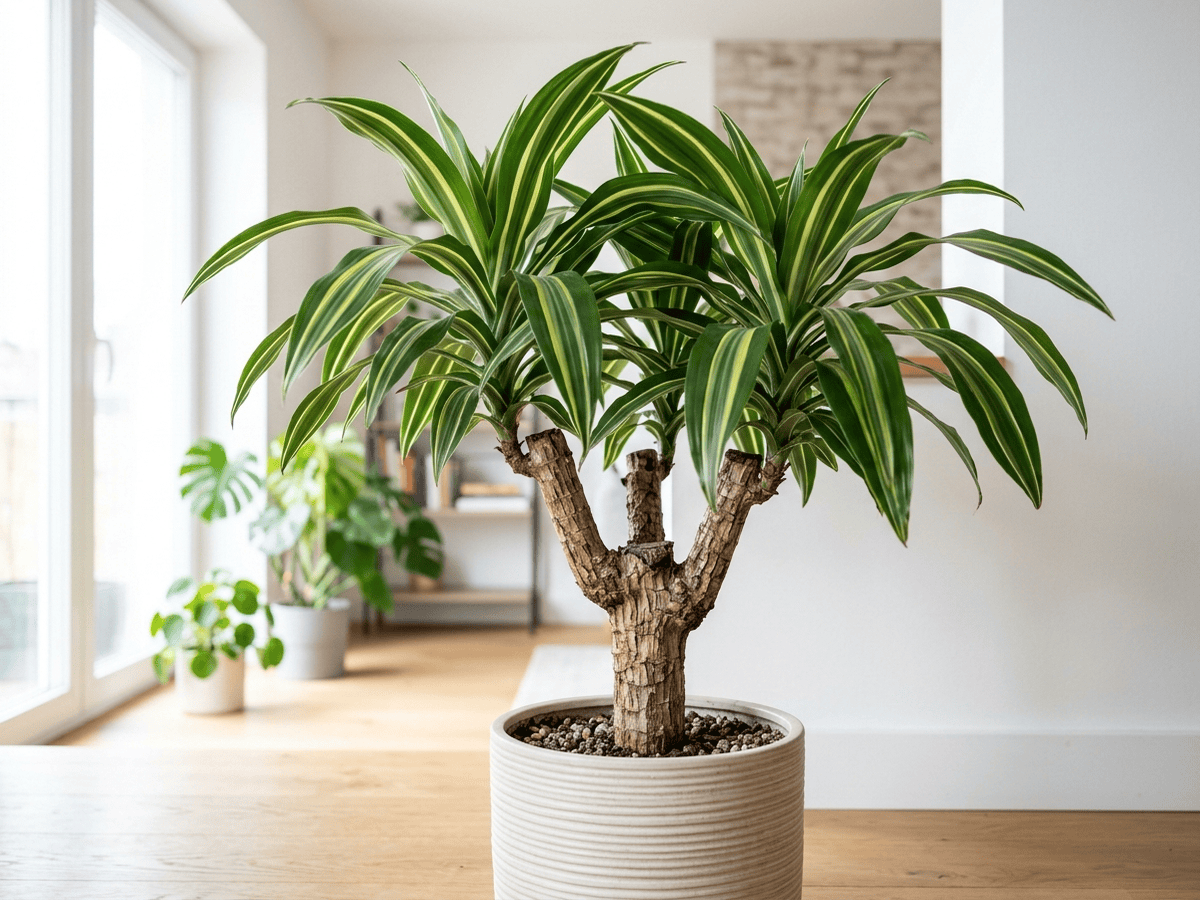 Corn PlantDracaena fragrans
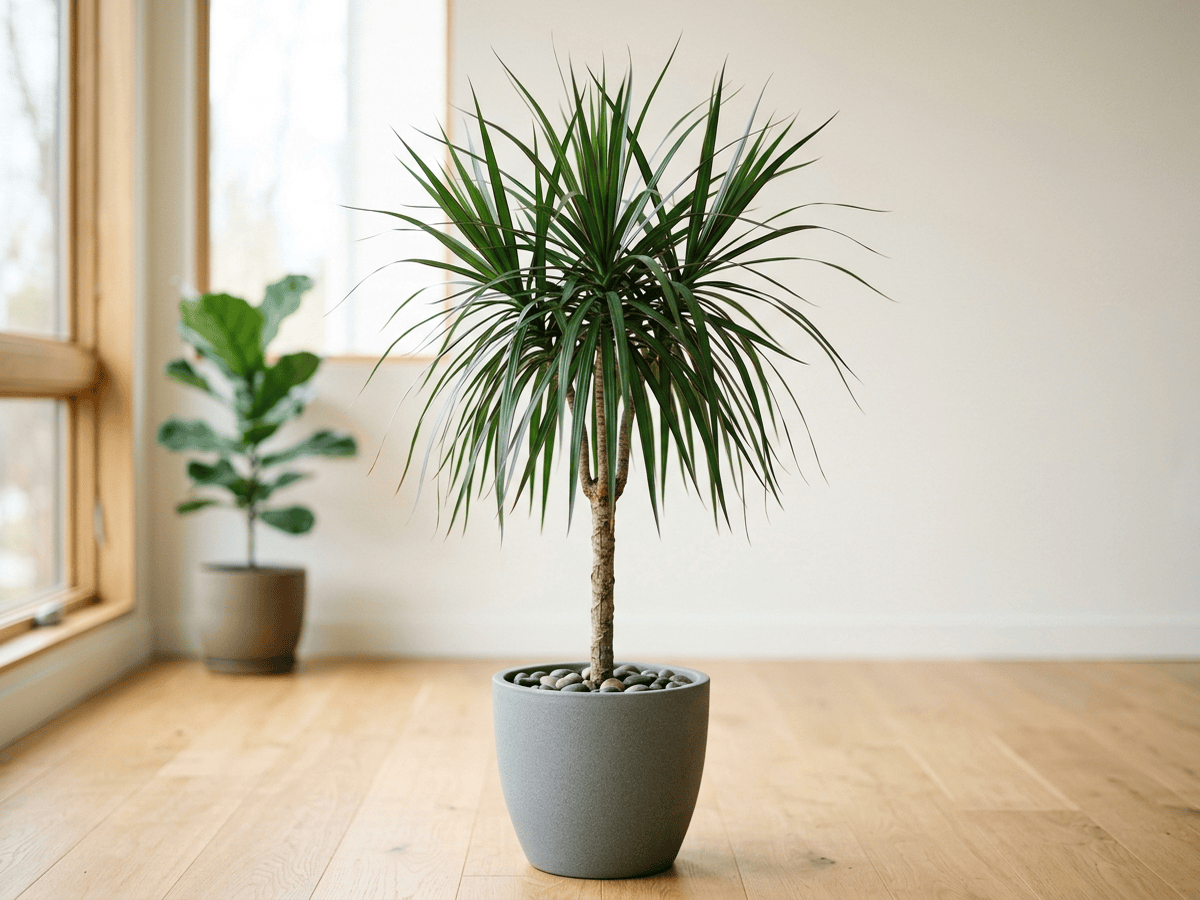 Madagascar Dragon TreeDracaena marginata
 Song Of IndiaDracaena reflexa
 Lucky BambooDracaena sanderiana
Plants with similar care
 Giant TaroAlocasia macrorrhizos
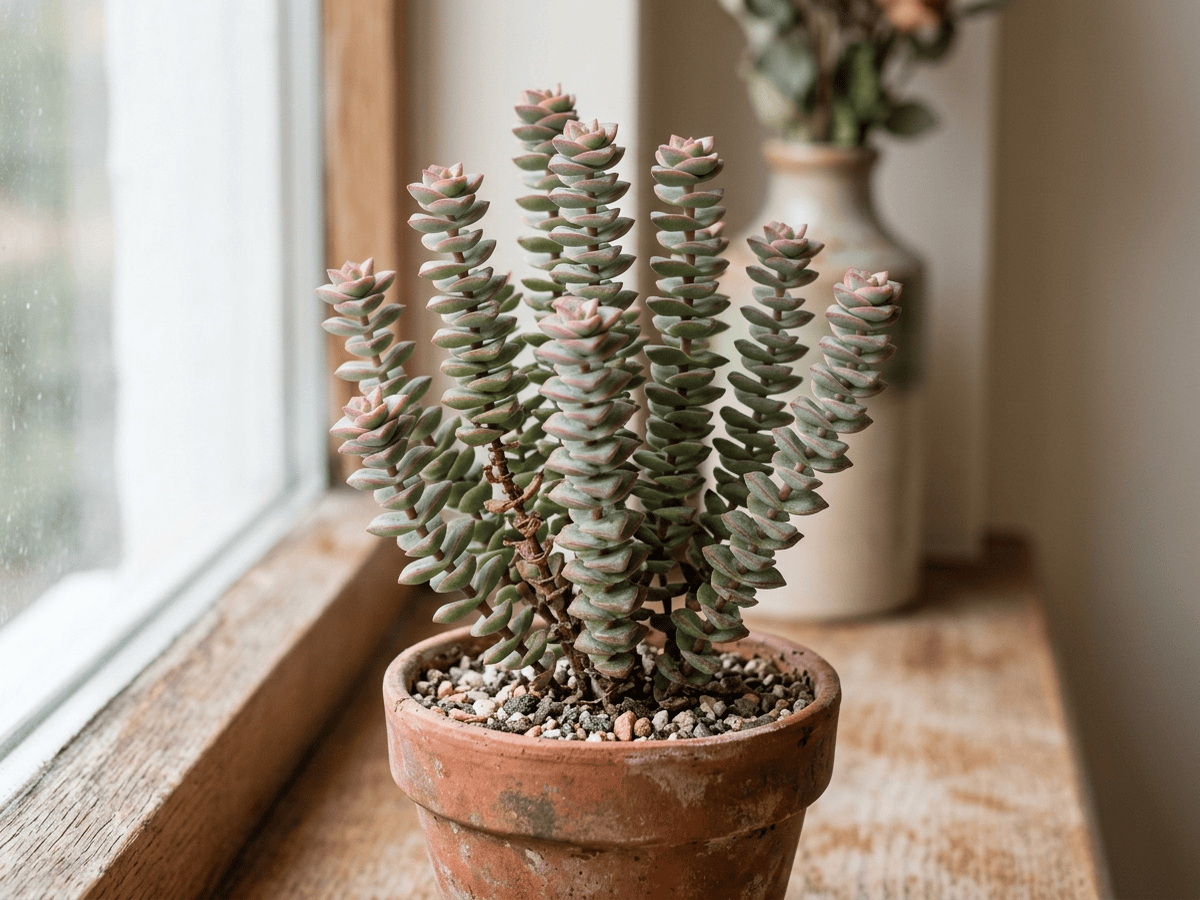 Concertina PlantCrassula perforata
 Dragon-TailEpipremnum pinnatum
 African Milk WeedEuphorbia trigona
Frequently asked questions
How often should I water Snake Plant?
In summer, water about every 14 days; in winter, about every 45 days. Adjust for heat, pot size and drainage.
How much light does Snake Plant need?
Indirect: Filtered light. Watch the leaves — scorching or stretching means the light needs adjusting.
Is Snake Plant toxic to cats or dogs?
Pets Moderate (Dogs Moderate · Cats Moderate) Educational information, not medical or veterinary advice. If exposure is suspected, contact a doctor or veterinarian.
Is Snake Plant easy to grow?
Yes — it is considered an easy, beginner-friendly plant.
Can Snake Plant be grown indoors?
Yes, it adapts well to indoor growing given the right light.
When does Snake Plant bloom?
It typically blooms Jun–Aug in the Northern Hemisphere.
YardMate
Identify any plant in seconds
Snap a photo — YardMate names the plant, diagnoses problems, and reminds you when to water.
Download on the App Store