 YardMate

Concertina Plant
Crassula perforata
Easy · Beginner friendlyAbout Concertina Plant
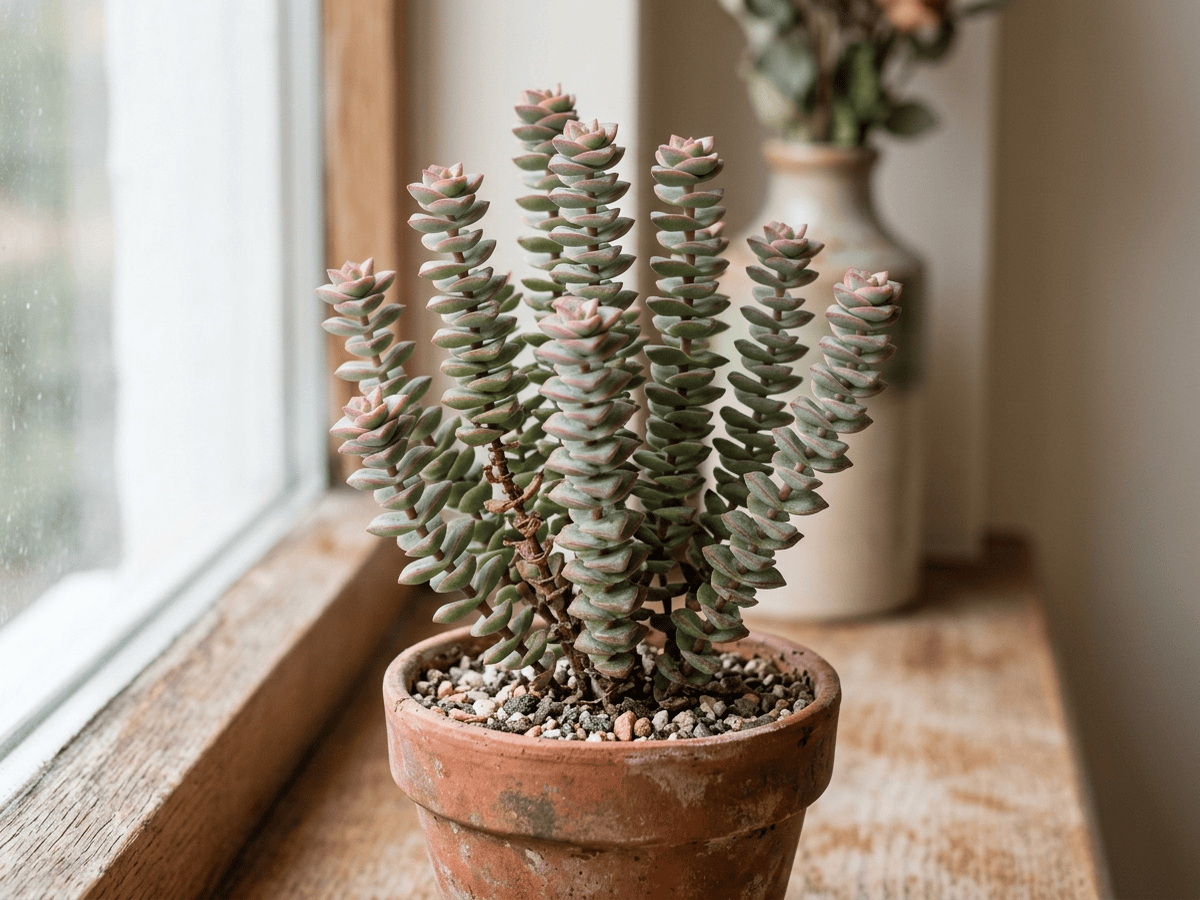
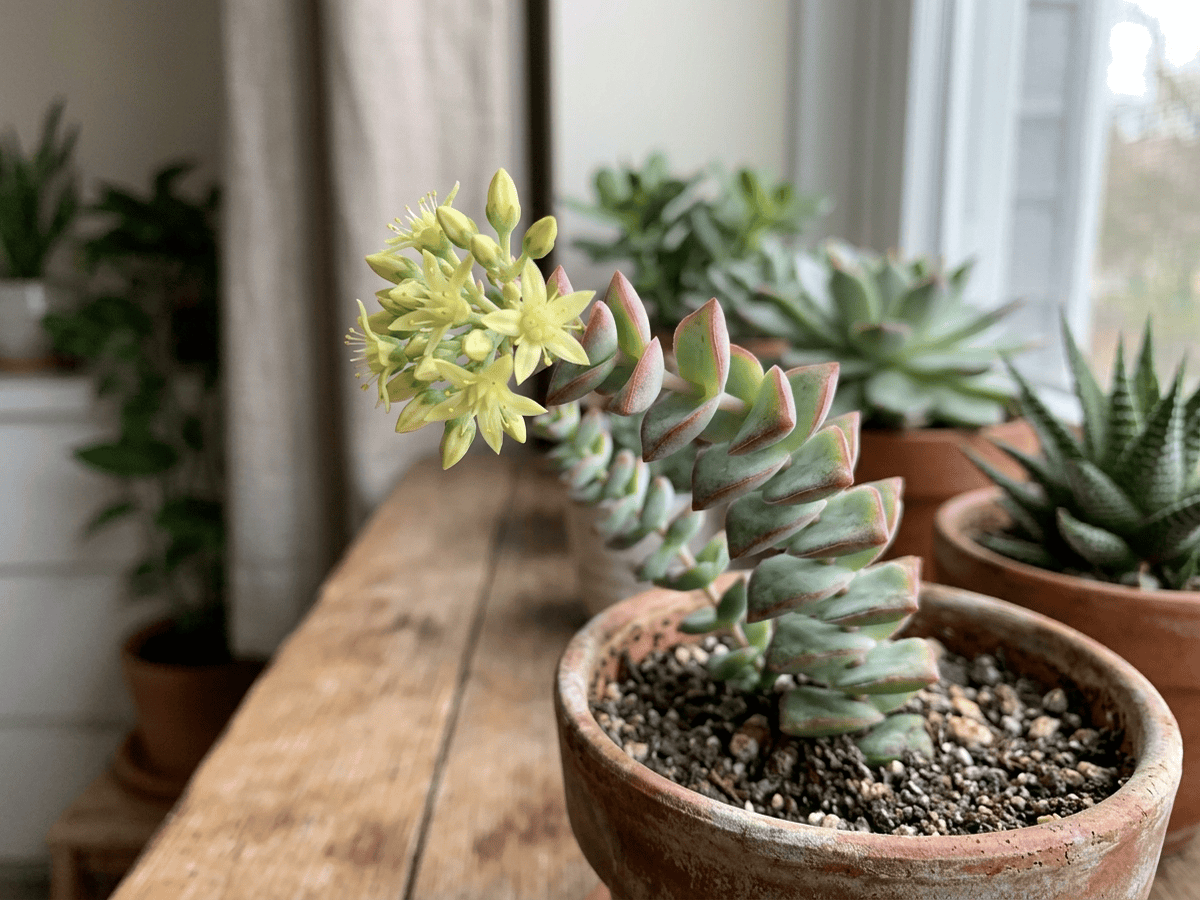
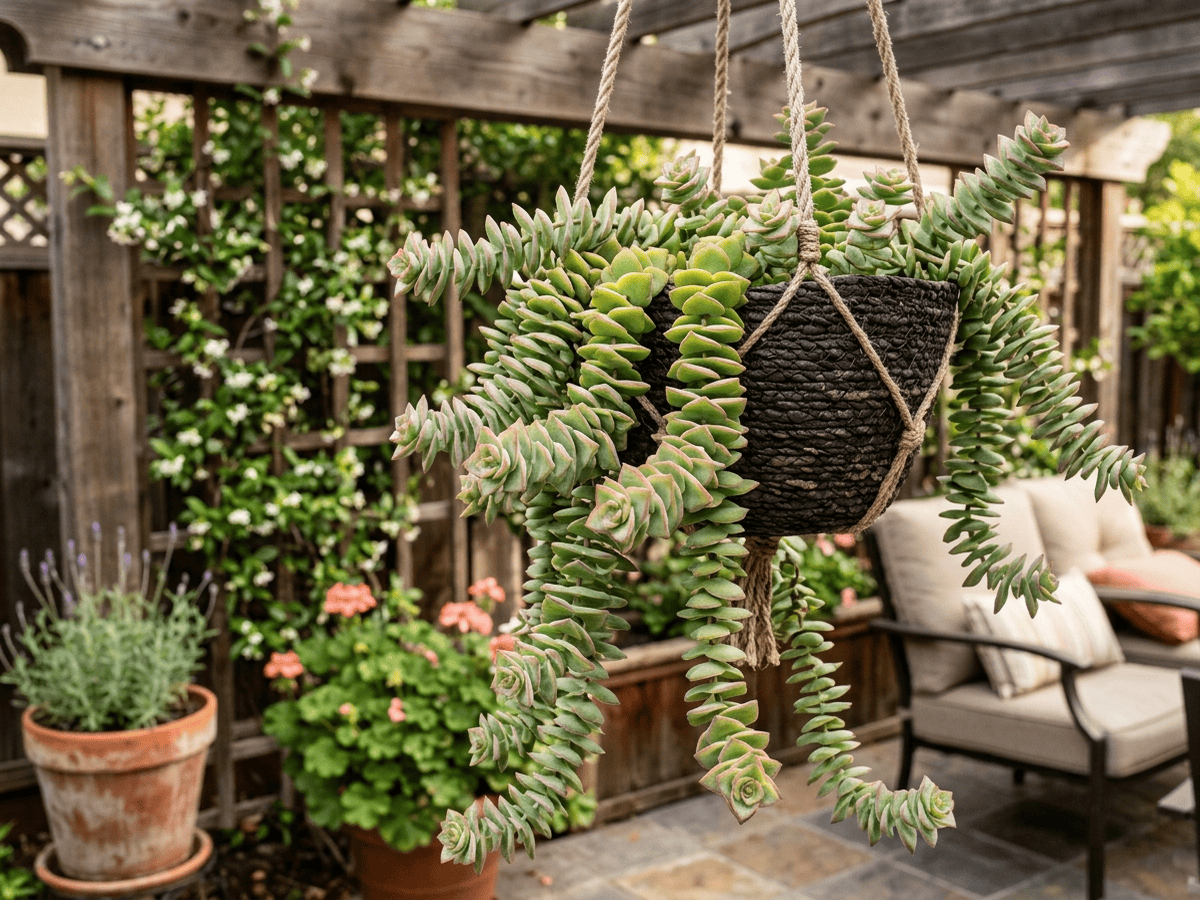
String of Buttons is a South African succulent producing trailing stems threaded through stacks of triangular gray-green leaves edged in pink. Reaching 12-18 inches long, the stems cascade attractively from hanging baskets and elevated containers. Tiny pale yellow star-shaped flowers appear in winter and spring at the stem tips. Drought-tolerant and easy to grow, it is one of the most distinctive trailing succulents for indoor and patio collections.
- Drought-tolerant
- Evergreen
- Trailing
- Container-friendly
How to care for Concertina Plant
Watering
- Springevery 10 days
- Summerevery 14 days
- Fallevery 21 days
- Winterevery 30 days
Soil · Fast-draining
- Main mixSand + pumice + soil 1:1:150%
- DrainagePumice / gravel50%
Keep grit at half the mix or more — this soil is meant to dry out fast.
FERTILIZER
- Springevery 60 days
At a Glance
- NativeAfrica
- Height1–2 ft (0.3–0.6 m)
- Spread1–2 ft (0.3–0.6 m)
- Flower colorWhite, Yellow
- Foliage colorGreen, Variegated
- SoilSandy, Well-drained
- LocationsIndoor · Balcony
Bloom time
BLOOM CYCLE
Peak bloom
Dec–May
Tiny pale yellow star flowers in winter to spring
Toxicity
Humans Slight · Pets Moderate
bufadienolides (possible)
Slight
- Leaf
- Stem
- Ingestion
EXPOSURE Eating leaves and stems.
EFFECT Mild GI upset possible.
NOTE Documented concern for humans: Mild GI upset possible.
Moderate
- Leaf
- Stem
- Ingestion
EXPOSURE Eating leaves and stems.
EFFECT Vomiting, lethargy, and arrhythmia.
NOTE ASPCA/NC State flag Crassula species as toxic to pets; NC State also flags ingestion risk for children/humans. Treat as mild human ingestion hazard and moderate pet hazard.
Moderate
- Leaf
- Stem
- Ingestion
EXPOSURE Eating leaves and stems.
EFFECT Vomiting and lethargy.
NOTE ASPCA/NC State flag Crassula species as toxic to pets; NC State also flags ingestion risk for children/humans. Treat as mild human ingestion hazard and moderate pet hazard.
Educational information, not medical or veterinary advice. If exposure is suspected, contact a doctor or veterinarian.
DISTRIBUTION


- Native
- Africa
History
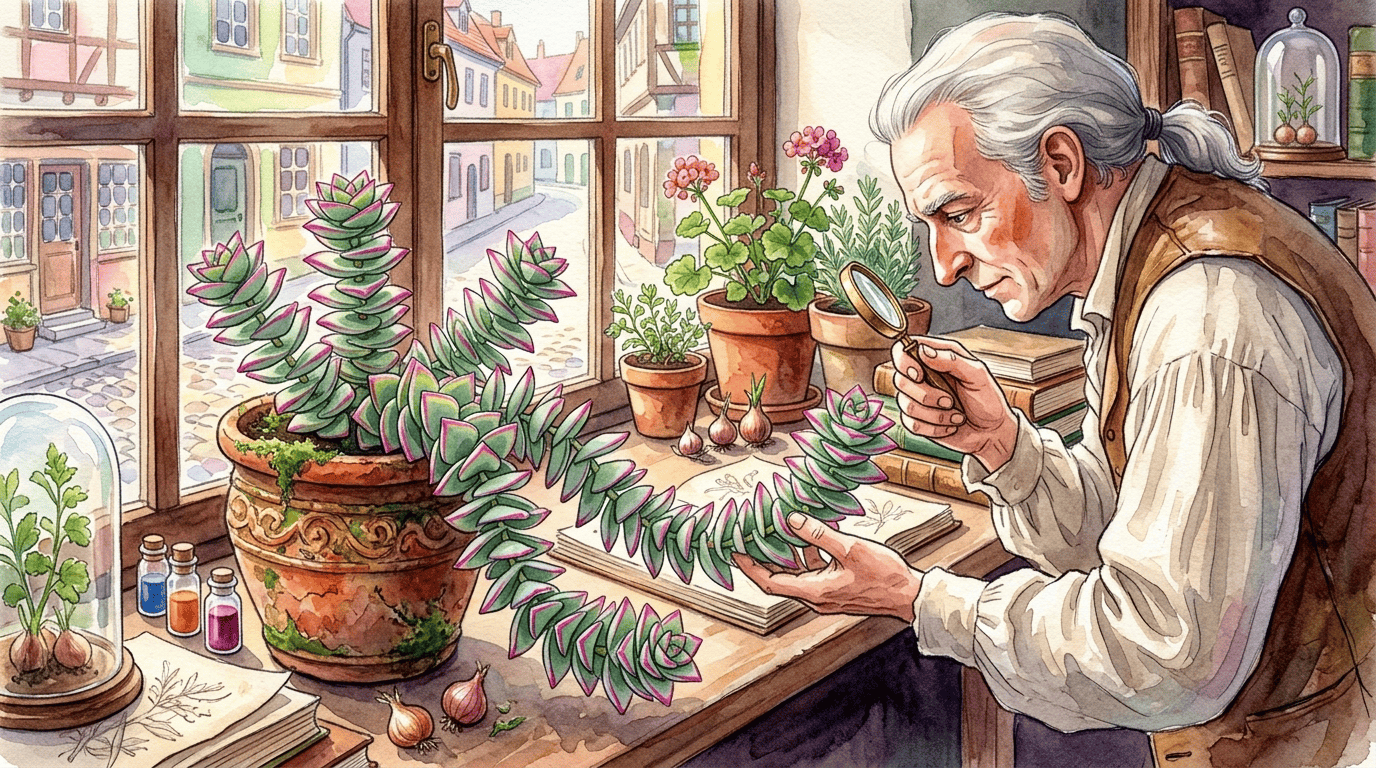
Crassula perforata, commonly called string of buttons or necklace vine, is a succulent shrublet in the stonecrop family (Crassulaceae) native to rocky slopes and cliffs of the Eastern Cape and KwaZulu-Natal of South Africa. Carl Linnaeus the Younger (filius) described the species in 1782 in Supplementum Plantarum. The epithet perforata refers to the distinctive way the fused opposite leaf bases appear to be 'perforated' by the stem.
Plants form sprawling and clambering 30-60 cm stems stacked with closely-spaced pairs of triangular gray-green fleshy leaves, each pair rotated 90 degrees from the one below, giving the stems a pagoda-like or square-chain appearance. Leaves take on pink and red edges in full sun. Tiny star-shaped white to pale yellow flowers appear on terminal clusters in spring.
'Variegata' with longitudinally striped pink, cream and green leaves is one of the most popular variegated succulents in cultivation. Extremely easy from stem cuttings. Linnaeus described it in 1763 from cultivated specimens grown in European hothouses. Long popular as a windowsill succulent, it became internet-famous in the 2010s succulent boom alongside its relatives in the trailing Crassula group.
Symbolism & meaning
What It Symbolizes
The Concertina Plant celebrates connection, its triangular leaves stacked along threading stems like beads strung by an unhurried hand. Persistent under neglect and thriving on the most minimal care, it makes visible the quiet truth that the strongest bonds are often the simplest. To grow this crassula is to keep a small green metaphor close at hand — togetherness sustained through patience rather than effort.
- Connection — stacked leaves linked along threading stems
- Persistence — tolerates neglect and thrives on minimal care
Where the Name Comes From
'Crassula' from Latin 'crassus' (thick), referring to fleshy leaves; 'perforata' means perforated, as the stem appears to pierce each pair of leaves.
Uses & Fun Facts
- Accordion-stacked stems suit dry shelves and succulent collections
- Stacked succulent stems trail neatly from dry pots and shelves
Related plants
More Crassula plants
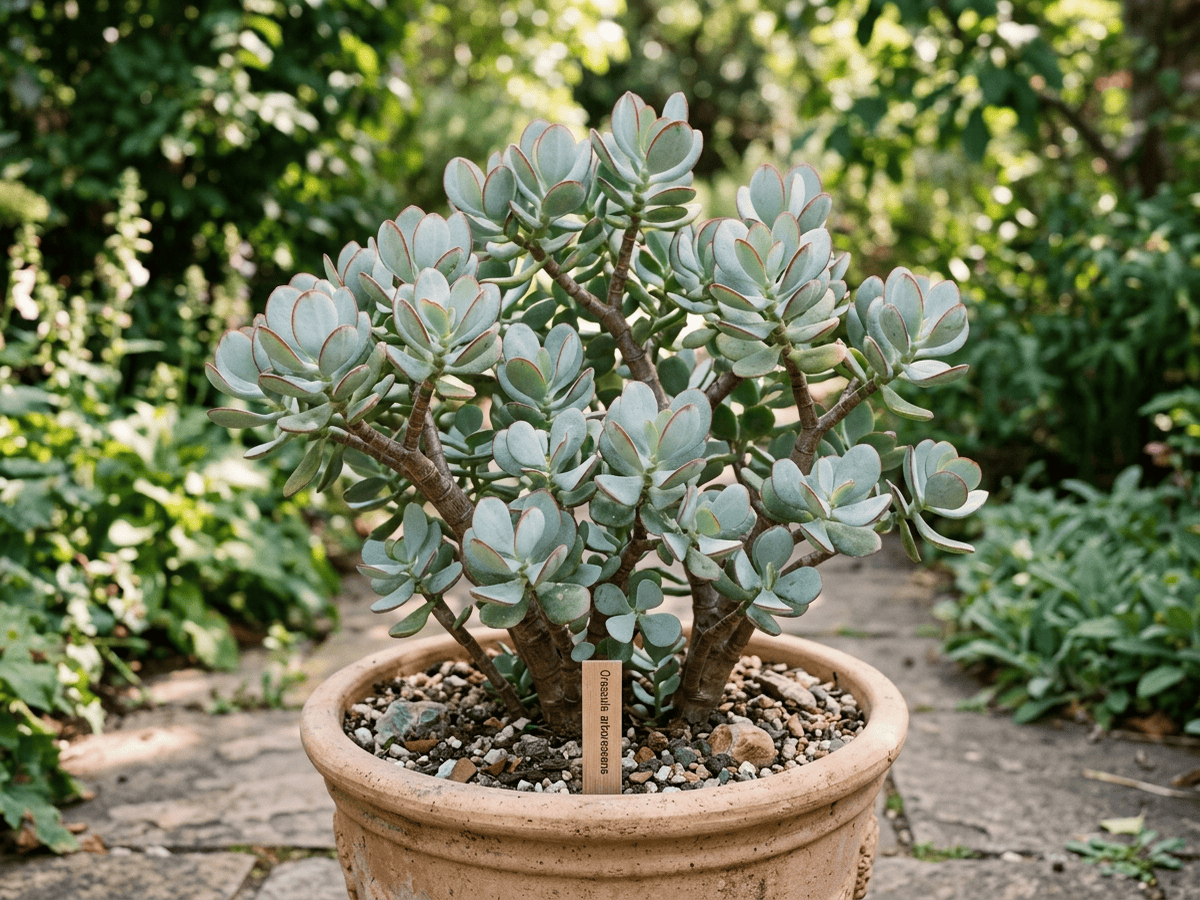 Silver Dollar PlantCrassula arborescens
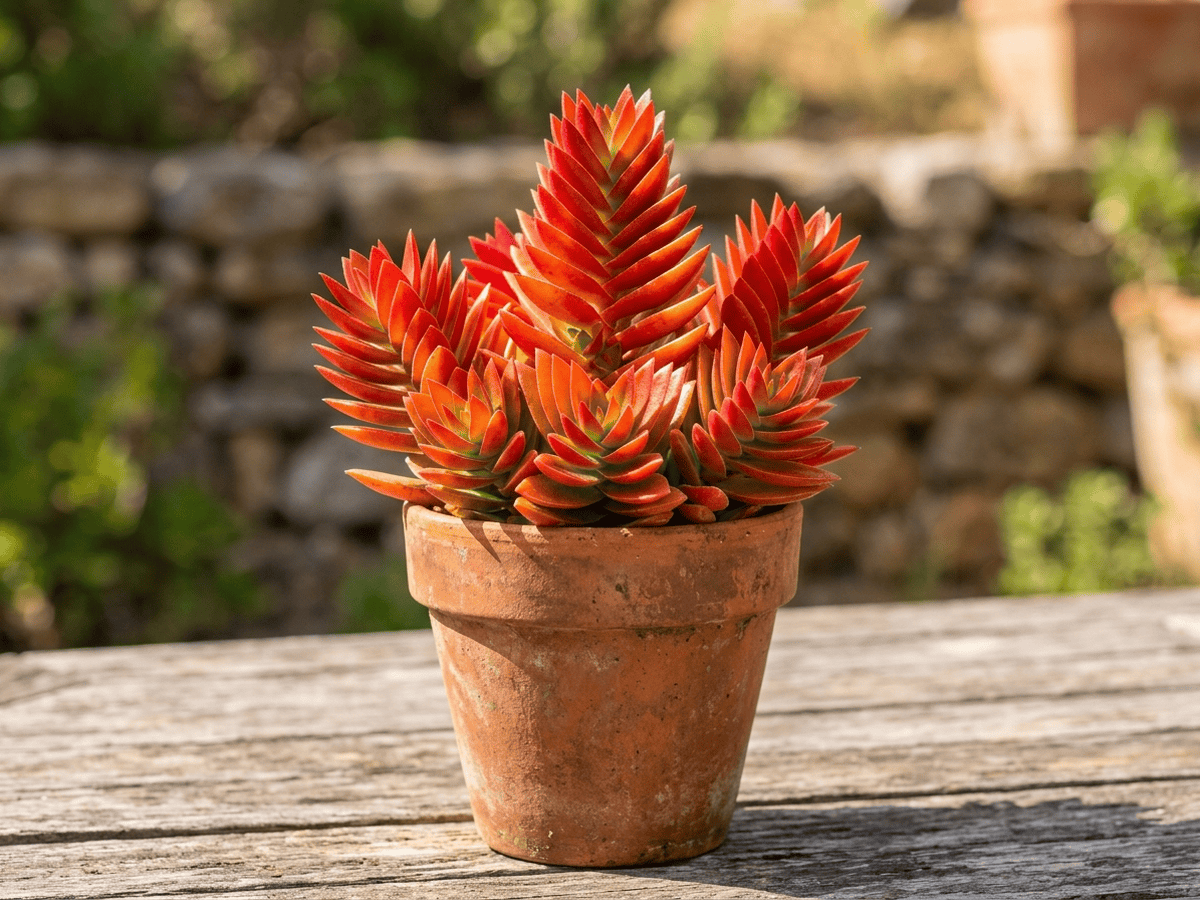 Campfire PlantCrassula capitella
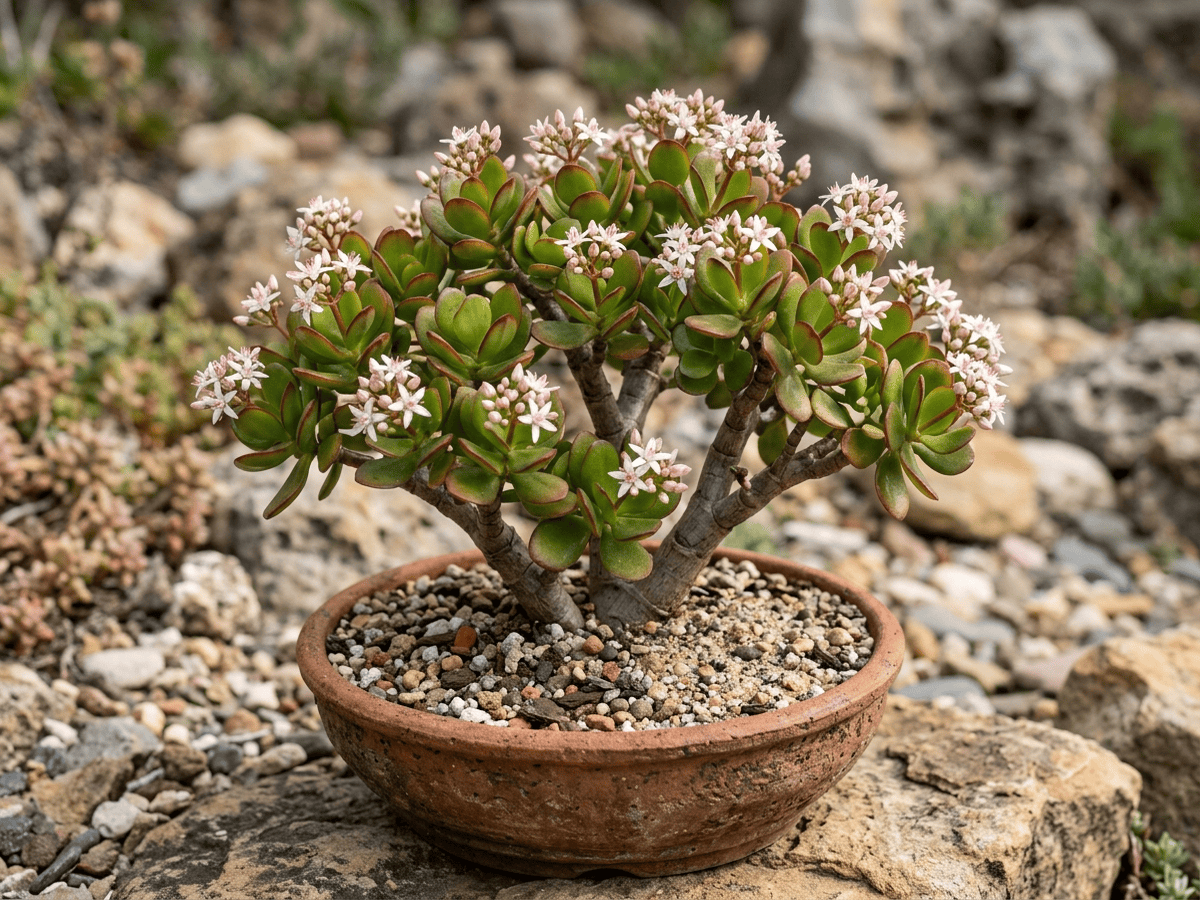 Jade PlantCrassula ovata
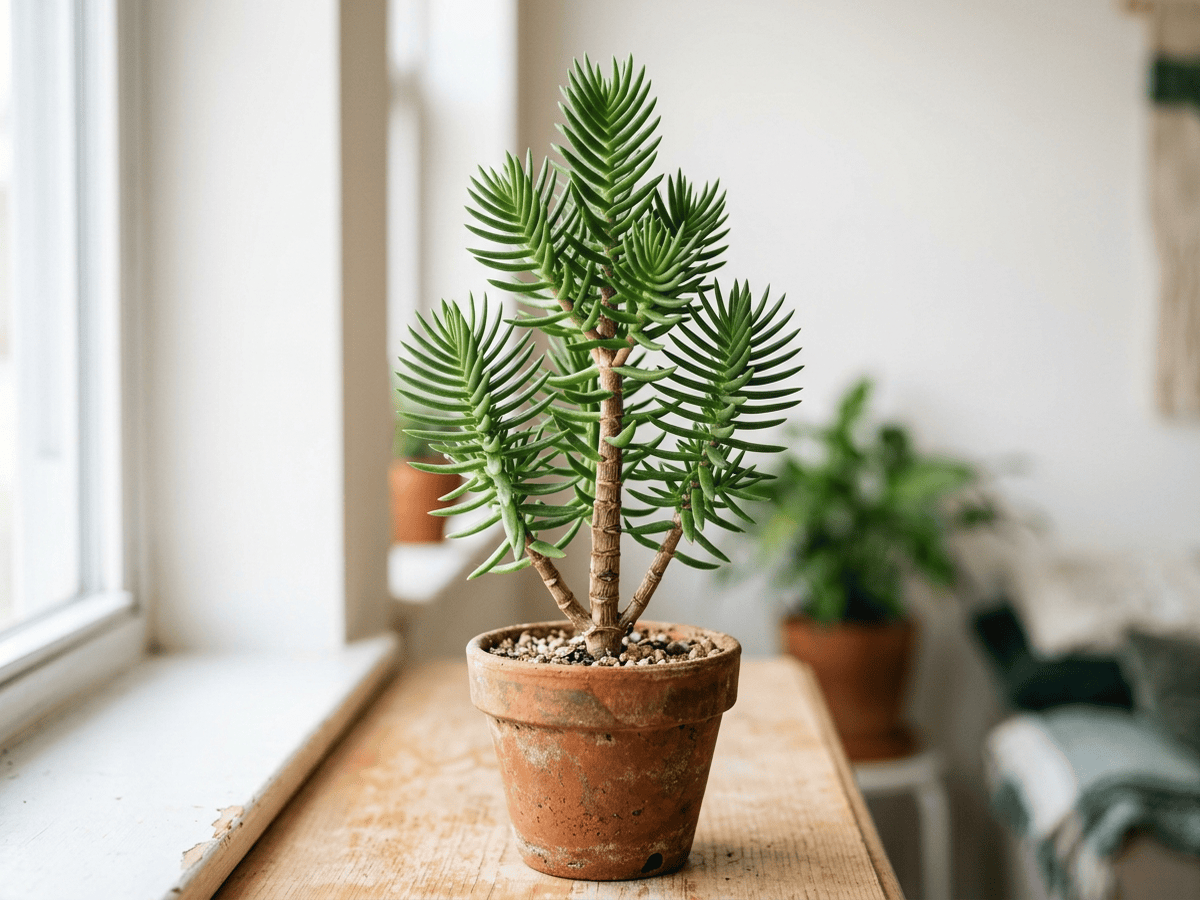 Miniature Pine TreeCrassula tetragona
Plants with similar care
 Giant TaroAlocasia macrorrhizos
 Song Of IndiaDracaena reflexa
 Snake PlantDracaena trifasciata
 Dragon-TailEpipremnum pinnatum
Frequently asked questions
How often should I water Concertina Plant?
In summer, water about every 14 days; in winter, about every 30 days. Adjust for heat, pot size and drainage.
How much light does Concertina Plant need?
Indirect: Filtered light. Watch the leaves — scorching or stretching means the light needs adjusting.
Is Concertina Plant toxic to cats or dogs?
Pets Moderate (Dogs Moderate · Cats Moderate) Educational information, not medical or veterinary advice. If exposure is suspected, contact a doctor or veterinarian.
Is Concertina Plant easy to grow?
Yes — it is considered an easy, beginner-friendly plant.
Can Concertina Plant be grown indoors?
Yes, it adapts well to indoor growing given the right light.
When does Concertina Plant bloom?
It typically blooms Dec–May in the Northern Hemisphere.
YardMate
Identify any plant in seconds
Snap a photo — YardMate names the plant, diagnoses problems, and reminds you when to water.
Download on the App Store