 YardMate


Mini Monstera
Rhaphidophora tetrasperma
Easy · Beginner friendlyAbout Mini Monstera
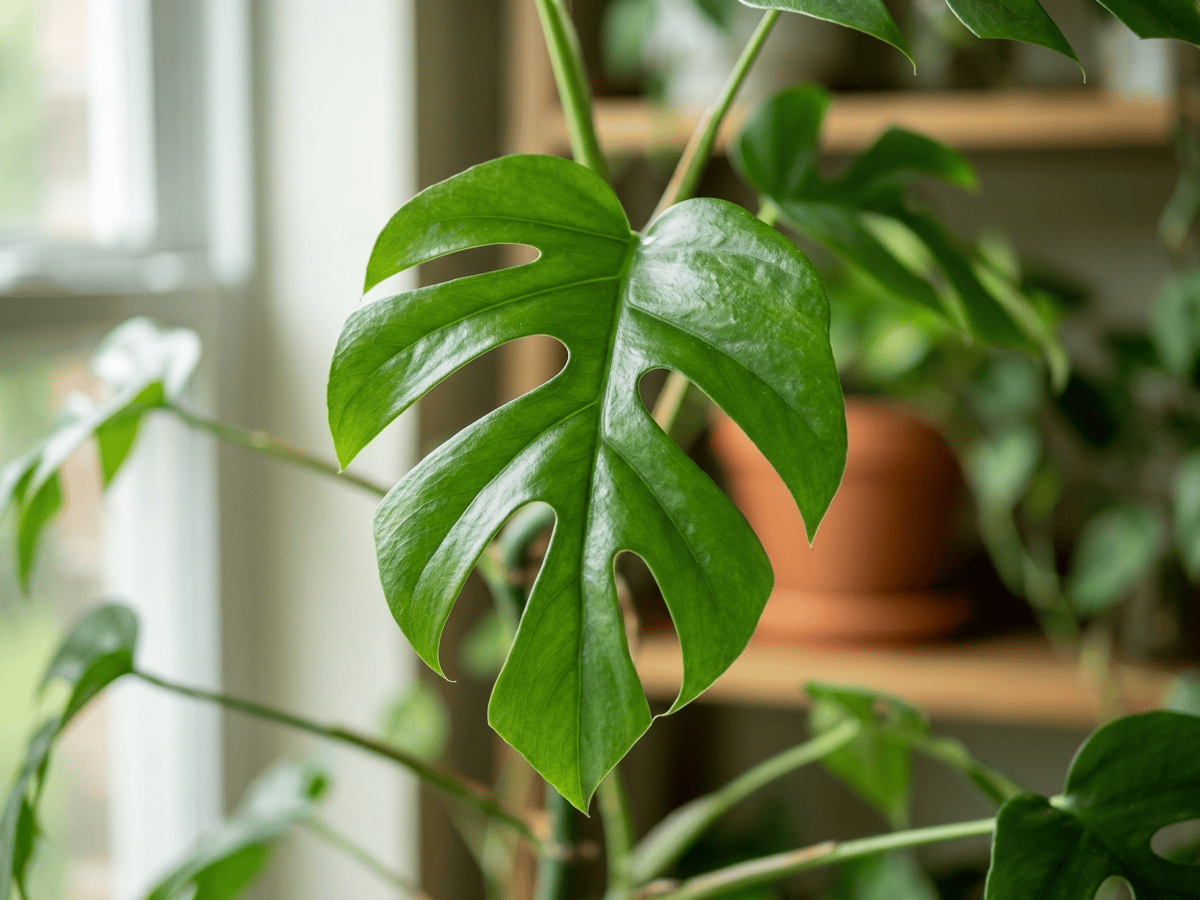
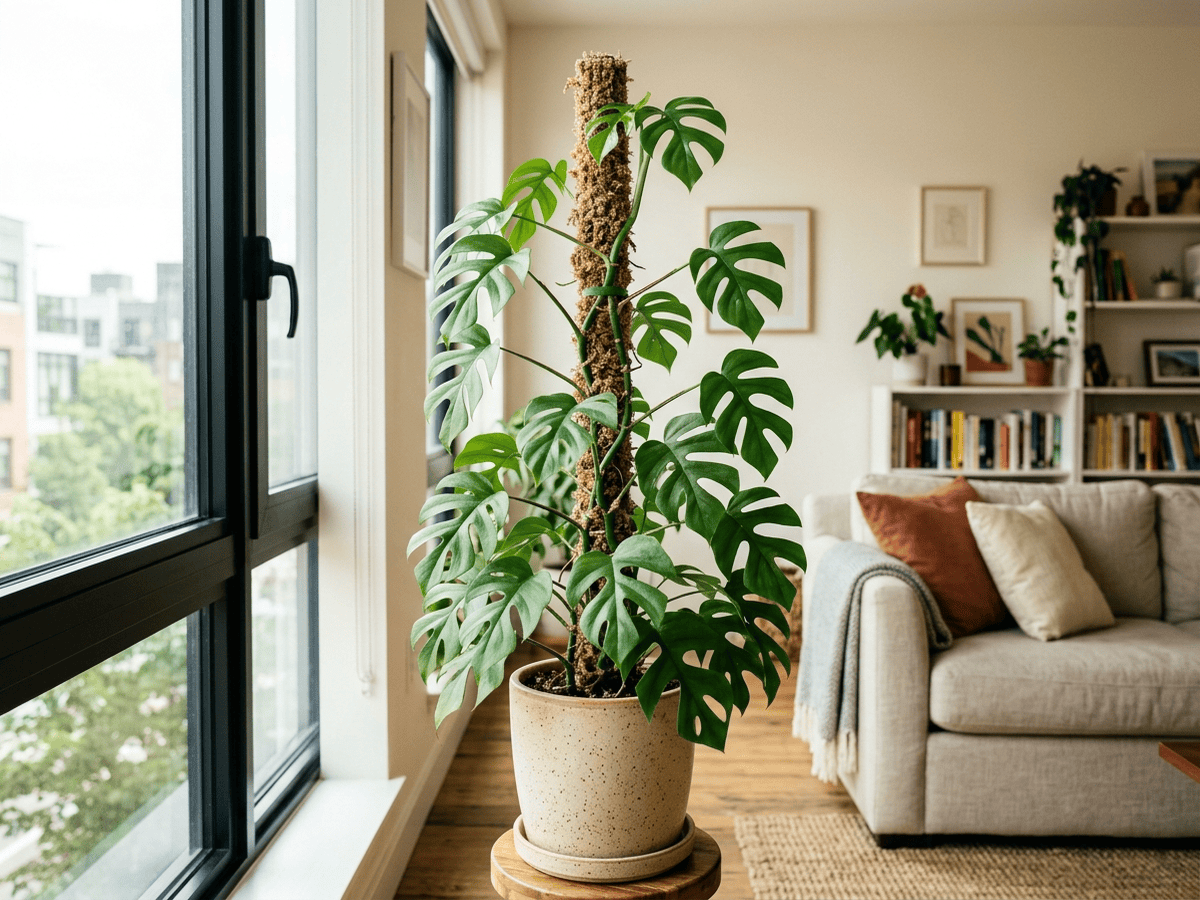
Mini Monstera is a Southeast Asian climbing aroid often mistaken for a miniature Monstera deliciosa, with deeply lobed split green leaves that resemble its larger lookalike. Reaching 6-10 feet on a moss pole, it grows much faster and stays smaller-leaved than true Monstera, making it perfect for compact spaces. Sometimes called 'Ginny Philodendron', it surged to internet fame during the modern American houseplant boom.
- Climbing
- Evergreen
- Fast-growing
How to care for Mini Monstera
Watering
- Springevery 7 days
- Summerevery 7 days
- Fallevery 10 days
- Winterevery 14 days
Soil · Chunky & airy
- Top dressingBark chips10%
- Main mixBark + potting soil + perlite 1:1:170%
- DrainageLECA20%
Chunky pieces hold air pockets open so thick roots don't suffocate.
FERTILIZER
Balanced Feed 14-14-14
An even feed covers all three needs at once, keeping leaves, roots and blooms moving together with nothing pushed out of balance.
- Nitrogen · Leaves
- Phosphorus · Roots + Blooms
- Potassium · Strength
- Springevery 30 days
- Summerevery 30 days
- Fallevery 60 days
At a Glance
- NativeSoutheast Asia
- Height4–8 ft (1.2–2.4 m)
- Spread1–3 ft (0.3–0.9 m)
- Foliage colorDark-green, Variegated
- SoilLoamy, Well-drained, Rich
- LocationsIndoor
Bloom time
BLOOM CYCLE
Aroid flowers (very rare indoors)
Toxicity
Humans Moderate · Pets Moderate
calcium oxalate raphides
Moderate
- Leaf
- Stem
- Ingestion
EXPOSURE Eating leaves and stems.
EFFECT Oral irritation and drooling.
NOTE Documented concern for humans: Oral irritation and drooling.
Moderate
- Leaf
- Stem
- Ingestion
EXPOSURE Eating leaves and stems.
EFFECT Oral irritation and vomiting.
NOTE Rhaphidophora not individually listed by ASPCA but Araceae family contains calcium oxalate—toxic to pets.
Moderate
- Leaf
- Stem
- Ingestion
EXPOSURE Eating leaves and stems.
EFFECT Oral irritation and vomiting.
NOTE Rhaphidophora not individually listed by ASPCA but Araceae family contains calcium oxalate—toxic to pets.
Educational information, not medical or veterinary advice. If exposure is suspected, contact a doctor or veterinarian.
DISTRIBUTION


- Native
- Southeast Asia
History

Rhaphidophora tetrasperma is a climbing aroid in the family Araceae native to a small range in peninsular Malaysia and the Krabi region of southern Thailand. British botanist Joseph Dalton Hooker described it in 1893 in the Flora of British India. The plant is often misidentified and mislabeled in horticultural trade as 'mini monstera', 'monstera minima', 'Philodendron minima', or 'Philodendron Ginny' despite belonging to none of those genera—Rhaphidophora is a separate aroid genus of about 100 species.
The species was a largely obscure botanical-garden plant until it was introduced to the Western houseplant trade in the 2010s and became a viral Instagram-driven houseplant trend roughly 2018-2021 when prices for single cuttings temporarily soared. Plants are vigorous climbers with heart-shaped 15-25 cm dark glossy green leaves that develop distinctive deep fenestrations (holes and slits) reminiscent of a miniature Monstera deliciosa.
Supports climbing on moss poles. Carries typical aroid calcium oxalate toxicity. Skyrocketed to fame in the 2017-2020 houseplant boom in the United States as a Monstera lookalike, becoming one of the defining plants of the era.
Symbolism & meaning
What It Symbolizes
Mini Monstera can symbolize curiosity, a rediscovered horticultural treasure whose Southeast Asian origins were uncertain even to specialists for decades. Another layer is vitality, for the plant grows rapidly indoors, sending up new fenestrated leaves at a pace that rewards even an impatient keeper. In the modern houseplant collection, rhaphidophora is the inquisitive newcomer, a vine whose every leaf seems to be asking what comes next, and growing toward whatever answer it can find.
- Curiosity — rediscovered horticultural treasure
- Vitality — rapid growth and dramatic leaf development
Where the Name Comes From
'Rhaphidophora' from Greek meaning needle-bearer (for raphide crystals); 'tetrasperma' means four-seeded.
Uses & Fun Facts
- Mini-monstera climbs moss poles in bright indoor light
- Trailing split-leaf vine for hanging indoor pots
- Perforated tropical leaves on a fast-growing houseplant
Related plants
Plants with similar care
 Giant TaroAlocasia macrorrhizos
 Concertina PlantCrassula perforata
 Song Of IndiaDracaena reflexa
 Snake PlantDracaena trifasciata
Frequently asked questions
How often should I water Mini Monstera?
In summer, water about every 7 days; in winter, about every 14 days. Adjust for heat, pot size and drainage.
How much light does Mini Monstera need?
Indirect: Filtered light. Watch the leaves — scorching or stretching means the light needs adjusting.
Is Mini Monstera toxic to cats or dogs?
Pets Moderate (Dogs Moderate · Cats Moderate) Educational information, not medical or veterinary advice. If exposure is suspected, contact a doctor or veterinarian.
Is Mini Monstera easy to grow?
Yes — it is considered an easy, beginner-friendly plant.
Can Mini Monstera be grown indoors?
Yes, it adapts well to indoor growing given the right light.
YardMate
Identify any plant in seconds
Snap a photo — YardMate names the plant, diagnoses problems, and reminds you when to water.
Download on the App Store