 YardMate


Jetbead
Rhodotypos scandens
Easy · Beginner friendlyAbout Jetbead
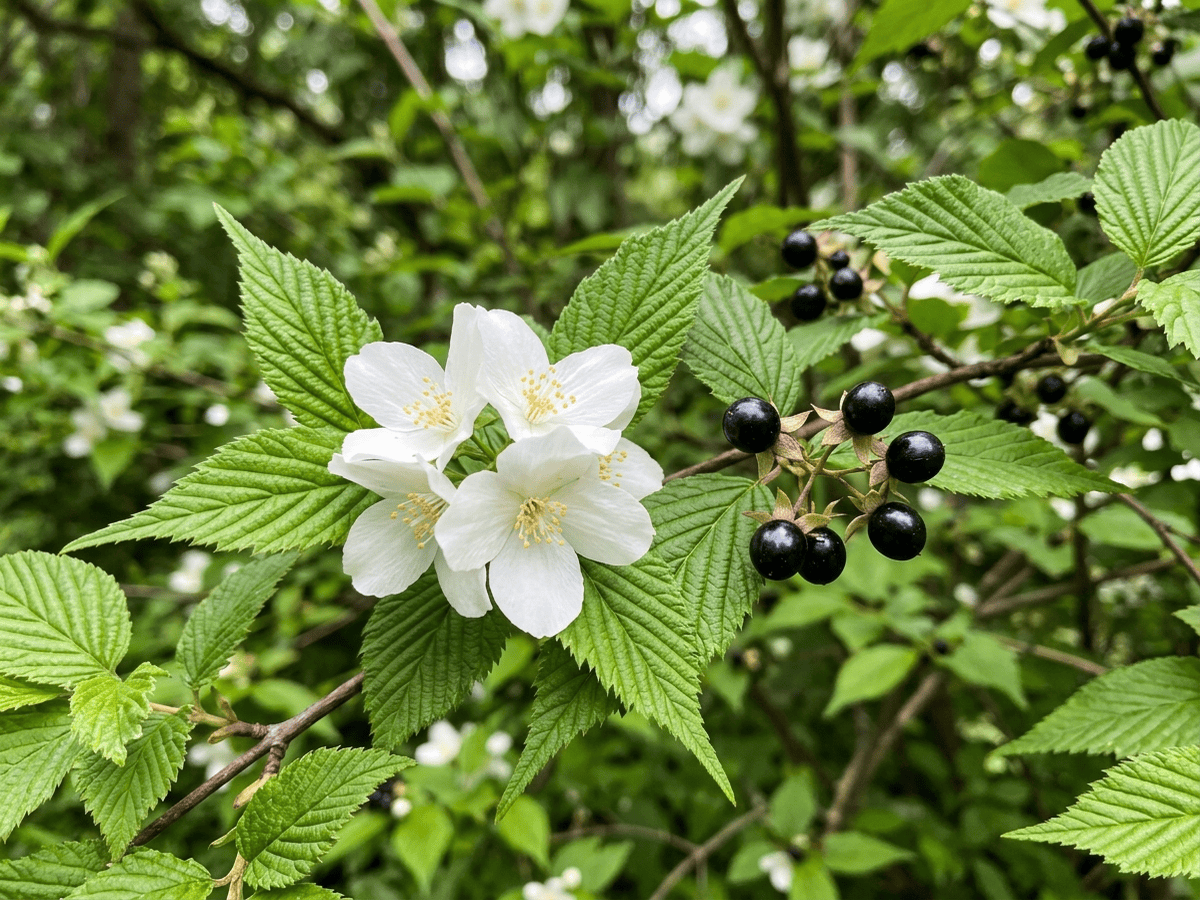
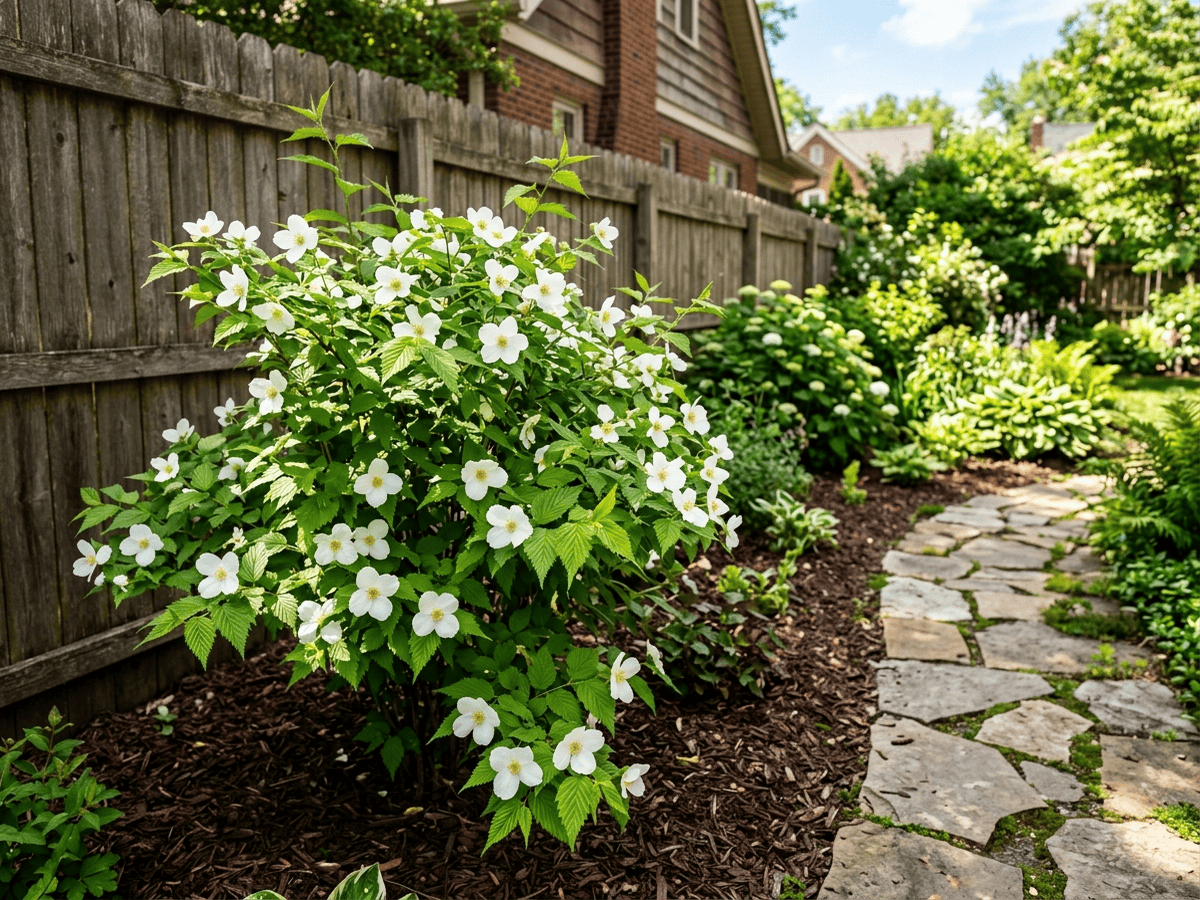
Black Jetbead is a Chinese and Japanese deciduous shrub growing 3 to 6 feet tall with opposite bright-green leaves and distinctive four-petaled pure-white flowers in late spring, followed by clusters of four shiny jet-black berries that persist through winter. An easy adaptable shrub for American shade and partial sun gardens, though some states list it as invasive in the mid-Atlantic region.
- Low-maintenance
- Drought-tolerant
- Shade-tolerant
- Deer-resistant
How to care for Jetbead
Watering
- Springevery 7 days
- Summerevery 5 days
- Fallevery 10 days
- Winterevery 21 days
Soil · Rich & loamy
- Top dressingBark mulch15%
- Main mixRich loam + compost 3:170%
- DrainageGravel15%
Use fully finished compost — fresh compost burns roots.
FERTILIZER
Balanced Feed 14-14-14
An even feed covers all three needs at once, keeping leaves, roots and blooms moving together with nothing pushed out of balance.
- Nitrogen · Leaves
- Phosphorus · Roots + Blooms
- Potassium · Strength
- Springevery 60 days
- Summerevery 90 days
At a Glance
- NativeEast Asia
- Height4–6 ft (1.2–1.8 m)
- Spread4–8 ft (1.2–2.4 m)
- Flower colorWhite
- Foliage colorGreen
- Fruit colorBlack
- SoilLoamy, Well-drained, Neutral
- LocationsYard
Bloom time
BLOOM CYCLE
Peak bloom
Mar–May
Four-petaled pure-white flowers in late spring
Toxicity
Humans Moderate · Pets Moderate
cyanogenic glycosides
Moderate
- Fruit
- Seed
- Ingestion
EXPOSURE Eating fruit and seeds.
EFFECT Nausea, vomiting, and possible cyanide-like effects.
NOTE Fruit contains cyanogenic compounds and should not be eaten by people or pets.
Moderate
- Fruit
- Seed
- Ingestion
EXPOSURE Eating fruit and seeds.
EFFECT Vomiting and weakness.
NOTE Fruit contains cyanogenic compounds and should not be eaten by people or pets.
Moderate
- Fruit
- Seed
- Ingestion
EXPOSURE Eating fruit and seeds.
EFFECT Vomiting and weakness.
NOTE Fruit contains cyanogenic compounds and should not be eaten by people or pets.
Educational information, not medical or veterinary advice. If exposure is suspected, contact a doctor or veterinarian.
DISTRIBUTION

- Native
- Introduced
- East Asia
History

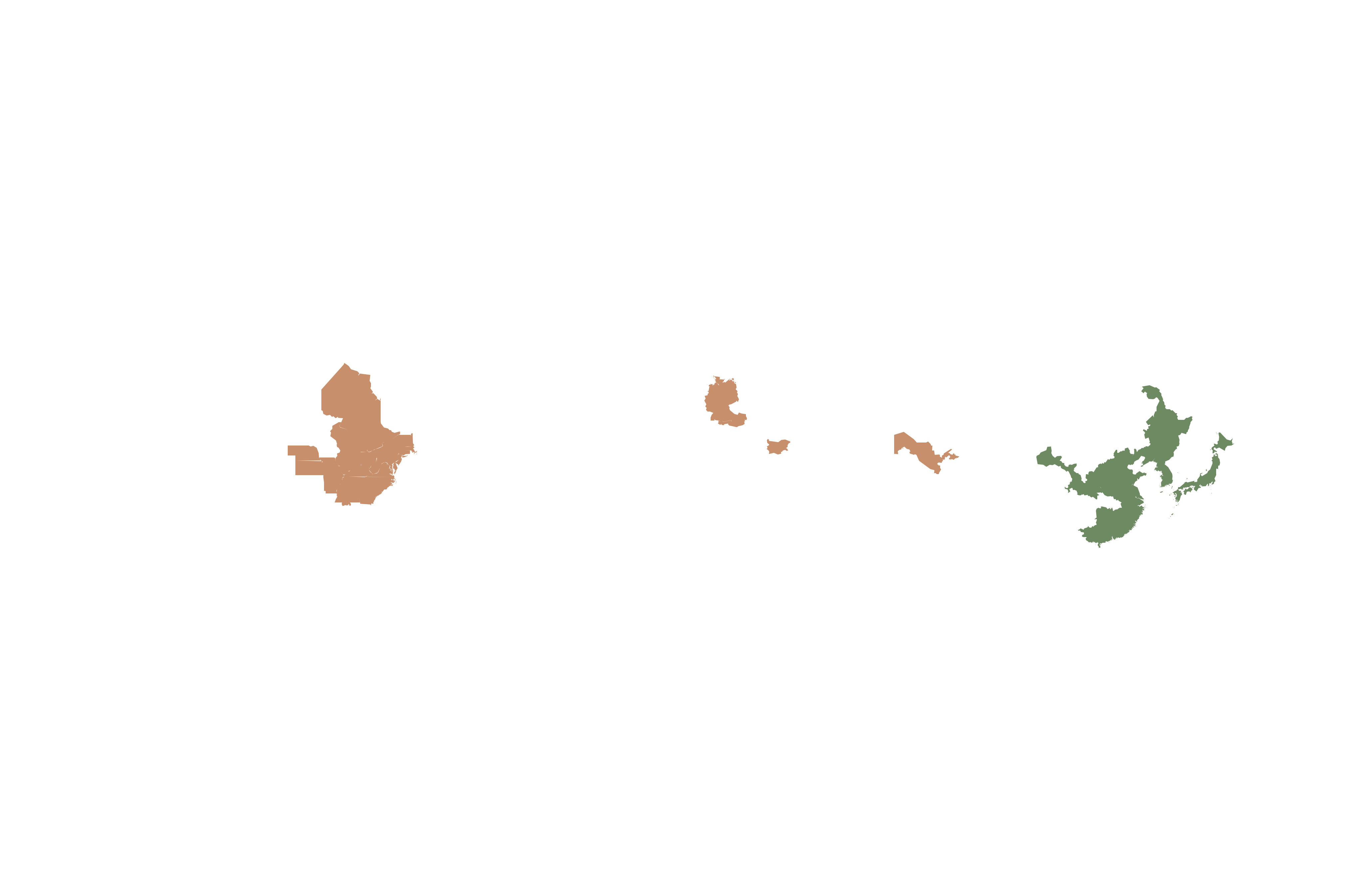
Rhodotypos scandens grows wild in thickets and forest edges of central China, Korea, and Japan. Philipp Franz von Siebold and Joseph Gerhard Zuccarini described it in 1843 from specimens collected in Japan; the genus name combines Greek rhodon (rose) and typos (pattern), referring to the rose-like four-petaled flowers that are unusual in the Rosaceae. It was introduced to Western cultivation in the 1860s and became a popular Victorian shrub for shaded gardens, valued for spring flowers followed by glossy black pea-sized fruits that persist into winter like jet beads.
In the 20th century it escaped cultivation in parts of the US Midwest and Mid-Atlantic, where it is now listed as an invasive species displacing native understory plants. Modern gardeners are encouraged to choose native alternatives.
Once widely planted for its showy four-petaled flowers and persistent black fruits, it has naturalized in some mid-Atlantic forests and is now considered invasive in parts of the Northeast. Still valued in controlled garden settings where native alternatives are not required.
Symbolism & meaning
What It Symbolizes
Jetbead carries quiet contrast: pure white flowers, glossy black berries, and bright green leaves arranged with a graphic clarity rare among flowering shrubs. Its four-petaled symmetry sharpens that meaning, a simple design repeated without fuss. The plant is not loud, but it is precise, a study in balance made from light and dark.
- Quiet contrast — white flowers, black berries, green leaves
- Four's symmetry — unique four-petaled flowers and four-berry clusters
Where the Name Comes From
'Rhodotypos' from Greek 'rhodon-typos' meaning rose-like form; 'scandens' from Latin means climbing or spreading.
Uses & Fun Facts
- White spring flowers and persistent jet-black winter berries
- Adaptable shrub for shaded foundation and woodland edges
Related plants
Plants with similar care
 Red BuckeyeAesculus pavia
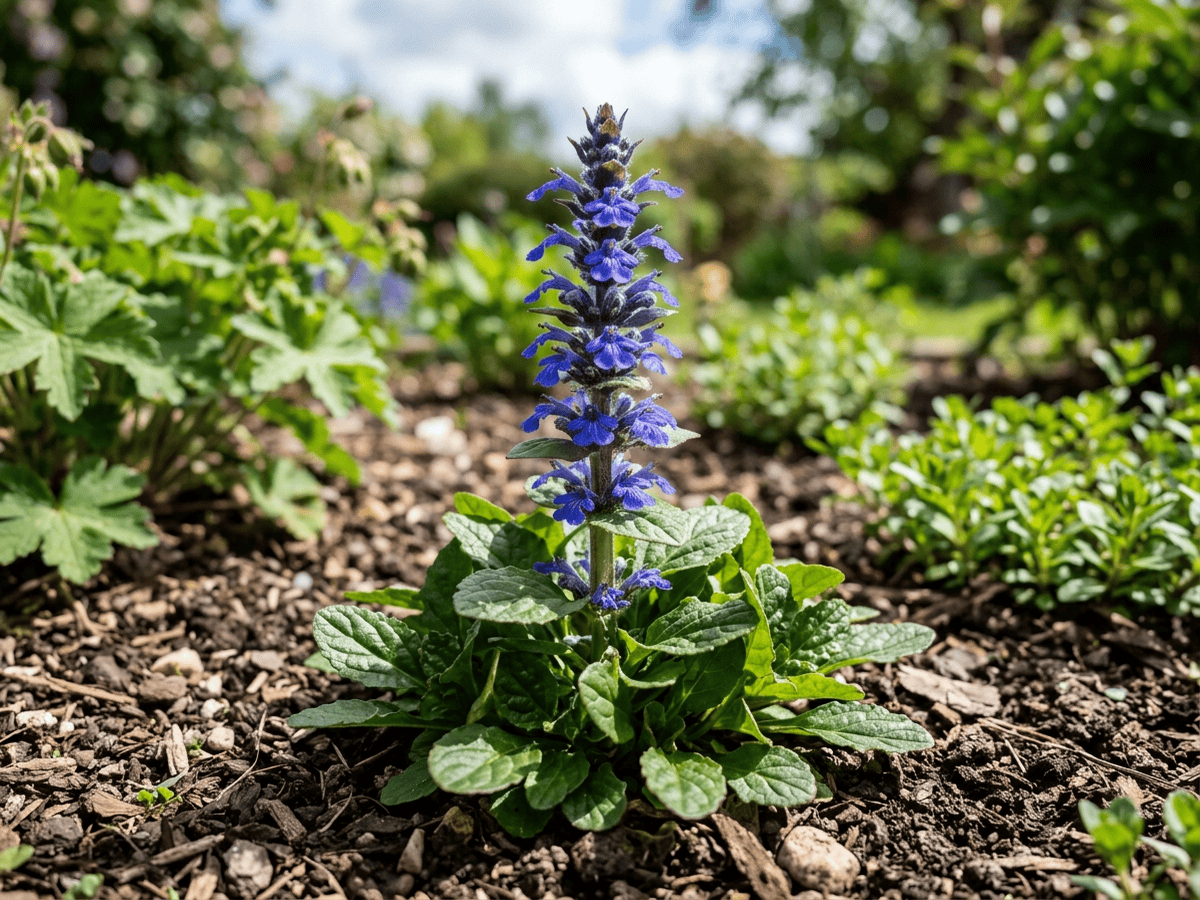 Blue BugleAjuga genevensis
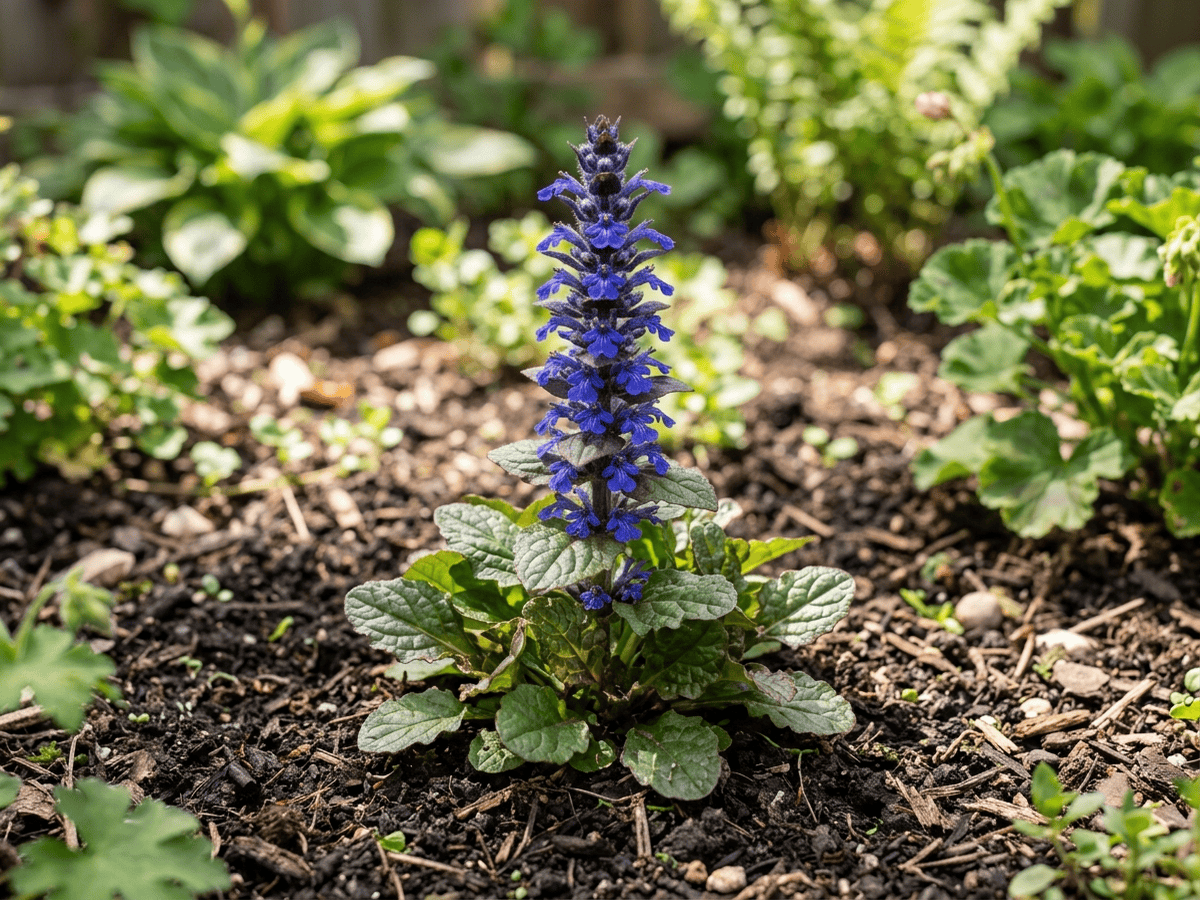 Pyramidal BugleAjuga pyramidalis
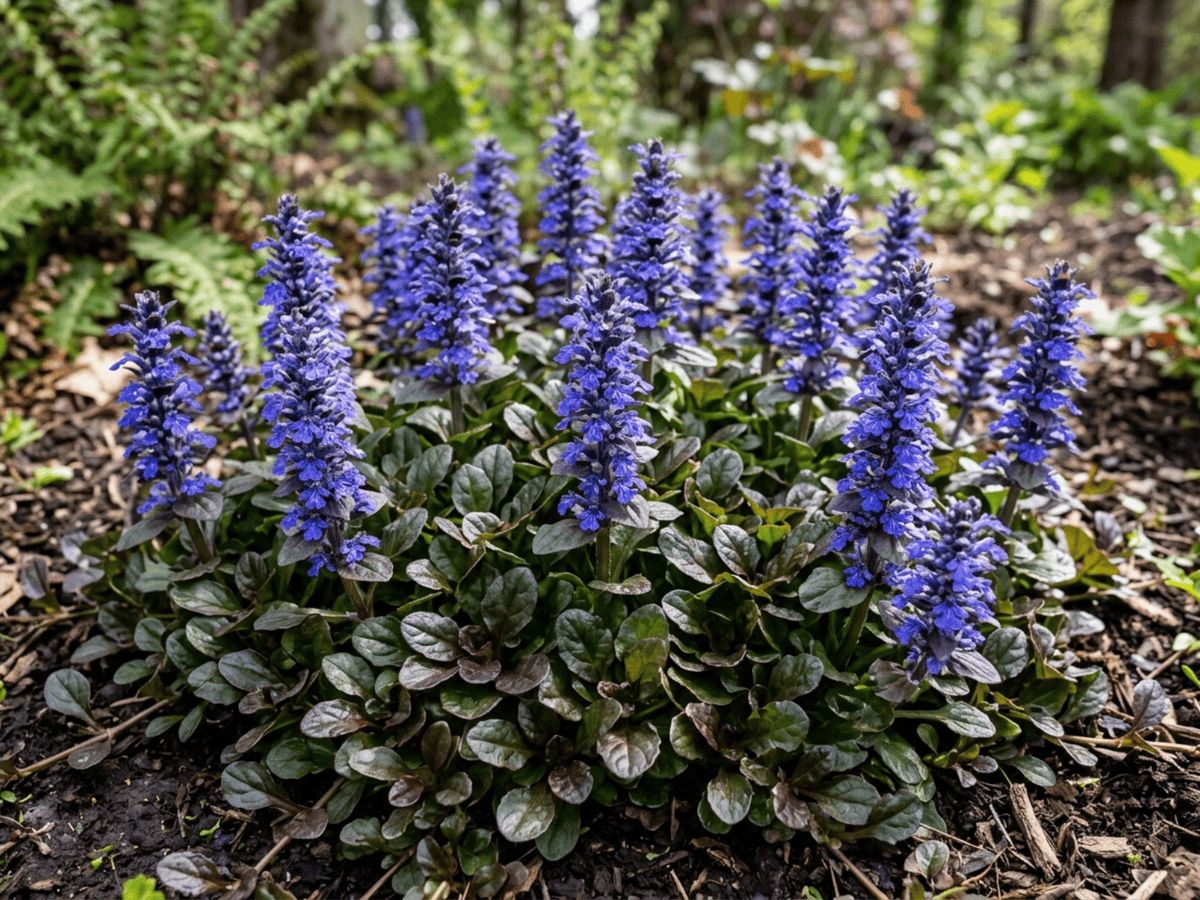 Carpet BugleAjuga reptans
Frequently asked questions
How often should I water Jetbead?
In summer, water about every 5 days; in winter, about every 21 days. Adjust for heat, pot size and drainage.
How much light does Jetbead need?
Part shade: 2–4 hrs direct. Watch the leaves — scorching or stretching means the light needs adjusting.
Is Jetbead toxic to cats or dogs?
Pets Moderate (Dogs Moderate · Cats Moderate) Educational information, not medical or veterinary advice. If exposure is suspected, contact a doctor or veterinarian.
Is Jetbead easy to grow?
Yes — it is considered an easy, beginner-friendly plant.
When does Jetbead bloom?
It typically blooms Mar–May in the Northern Hemisphere.
YardMate
Identify any plant in seconds
Snap a photo — YardMate names the plant, diagnoses problems, and reminds you when to water.
Download on the App Store