 YardMate


Velvetleaf
Abutilon theophrasti
Easy · Beginner friendlyAbout Velvetleaf
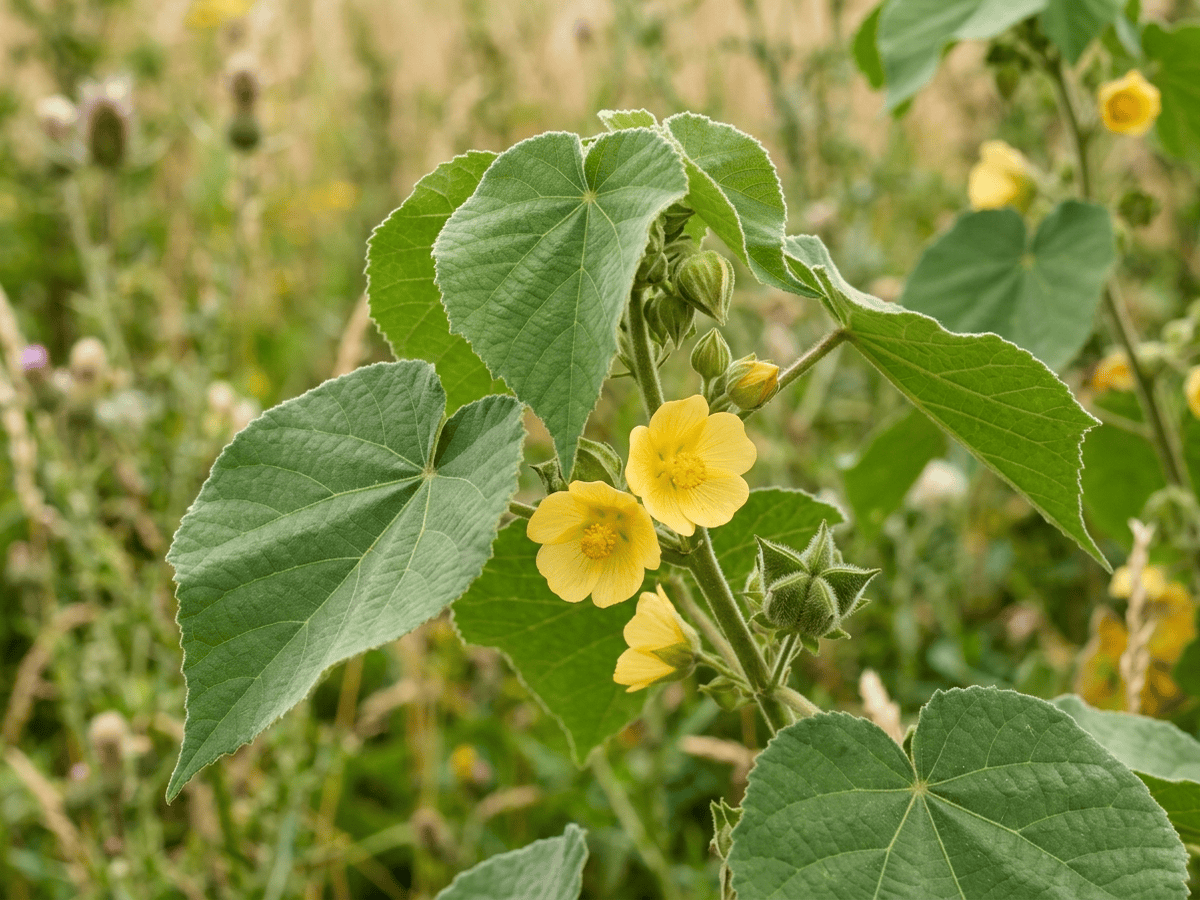
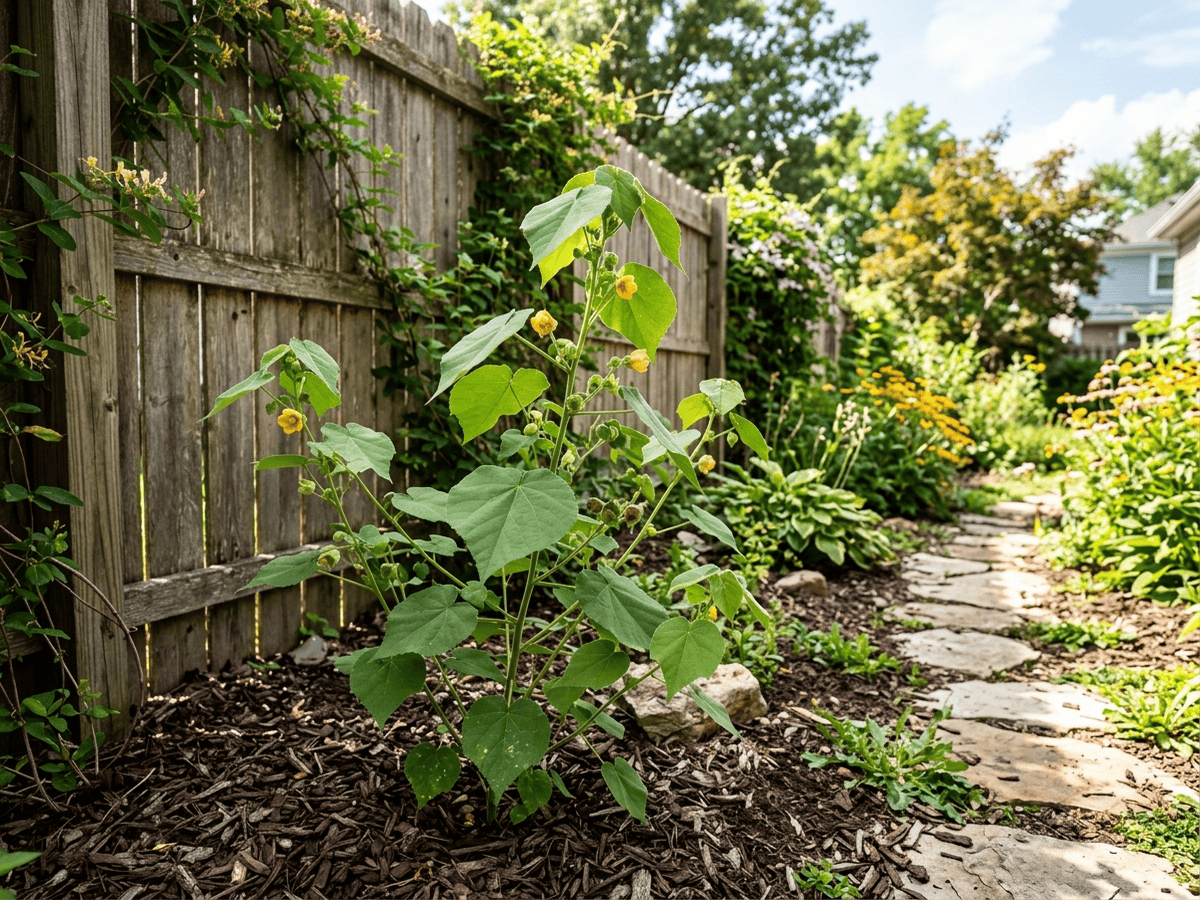
Velvetleaf is an Asian annual weed with large heart-shaped velvety leaves, now one of the most damaging weeds of American corn and soybean fields. Growing 3 to 7 feet tall with soft fuzzy foliage and small yellow-orange flowers, it produces distinctive cup-like seedpods that ripen with up to 10,000 long-lived seeds per plant. Originally introduced as a fiber crop in the 1700s, now a top-ten agricultural pest in the US Midwest.
- Heat-tolerant
- Fast-growing
How to care for Velvetleaf
Watering
- Springevery 14 days
- Summerevery 7 days
- Fallevery 14 days
- Winterpause watering
Soil · Well-draining
- Top dressingPine bark mulch10%
- Main mixPotting soil + perlite 2:170%
- DrainageLECA / gravel20%
Never skip the drainage layer — standing water is the top cause of root rot.
FERTILIZER
This plant needs little to no feeding.
At a Glance
- NativeSouth Asia, East Asia
- Height3–7 ft (0.9–2.1 m)
- Spread2–3 ft (0.6–0.9 m)
- Flower colorYellow, Orange
- Foliage colorGreen
- SoilLoamy, Well-drained
- LocationsYard
Bloom time
BLOOM CYCLE
Peak bloom
Jun–Nov
Yellow-orange cup-shaped flowers summer to fall
Toxicity
No toxicity has been reported for this plant. Still, it is wise to keep pets from chewing on any houseplant.
Educational information, not medical or veterinary advice. If exposure is suspected, contact a doctor or veterinarian.
DISTRIBUTION

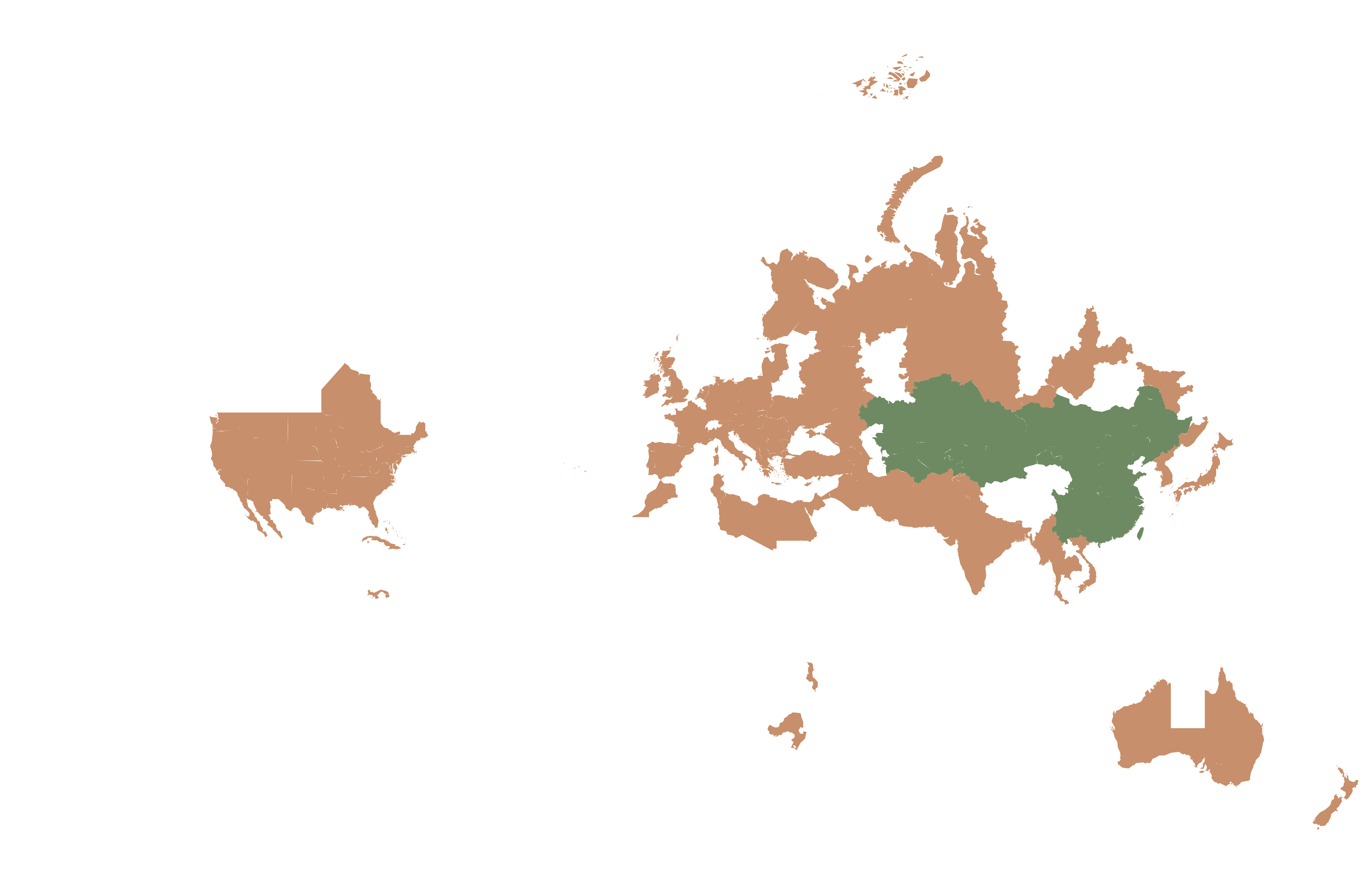
- Native
- Introduced
- South Asia
- East Asia
History

Abutilon theophrasti is native to South and East Asia. Friedrich Medikus described it in 1787 and named the species for Theophrastus, the fourth-century BCE Greek philosopher often called the father of botany.
Chinese farmers cultivated velvetleaf for centuries as a jute-like fiber crop used in ropes, sacks, and paper. European colonists brought it to North America around 1750 as an experimental source of canvas and cordage, but it never competed successfully with flax, hemp, or cotton.
Once abandoned, the plant escaped into agricultural fields. Today it is a serious weed of Midwestern corn and soybean systems, where its broad velvety leaves shade crops and its long-lived seeds can persist in soil for decades.
Symbolism & meaning
What It Symbolizes
Velvetleaf carries the weight of an unwelcome introduction. Brought to America as a promising fiber crop, it slipped its bounds and became one of agriculture's most stubborn weeds, its seeds lying dormant in the soil for half a century before sprouting again. The plant is a quiet ecological warning — that a single failed crop can ripple through fields for generations, long after the people who planted it are gone.
- Failed crop — imported as fiber plant, became noxious weed
- Long-lived seed — seeds stay viable 50 years in soil
Where the Name Comes From
The name Velvetleaf describes its soft, velvety leaves. 'Abutilon' from Arabic 'aubutilun' an old name for the plant; 'theophrasti' honors Greek philosopher Theophrastus (371-287 BCE), the father of botany.
Uses & Fun Facts
- Historic bast fiber crop once grown for cordage and rough textiles
Related plants
Plants with similar care
 Chinese AbeliaAbelia chinensis
 Fragrant AbeliaAbelia mosanensis
 Large-Flowered AbeliaAbelia uniflora
 Glossy AbeliaAbelia x grandiflora
Frequently asked questions
How often should I water Velvetleaf?
Water about every 14 days during the growing season, and always let excess water drain away.
How much light does Velvetleaf need?
Full sun: 6+ hrs direct. Watch the leaves — scorching or stretching means the light needs adjusting.
Is Velvetleaf toxic to cats or dogs?
No toxicity has been reported for this plant. Still, it is wise to keep pets from chewing on any houseplant. Educational information, not medical or veterinary advice. If exposure is suspected, contact a doctor or veterinarian.
Is Velvetleaf easy to grow?
Yes — it is considered an easy, beginner-friendly plant.
When does Velvetleaf bloom?
It typically blooms Jun–Nov in the Northern Hemisphere.
YardMate
Identify any plant in seconds
Snap a photo — YardMate names the plant, diagnoses problems, and reminds you when to water.
Download on the App Store