 YardMate



Bluemink
Ageratum houstonianum
Easy · Beginner friendlyAbout Bluemink
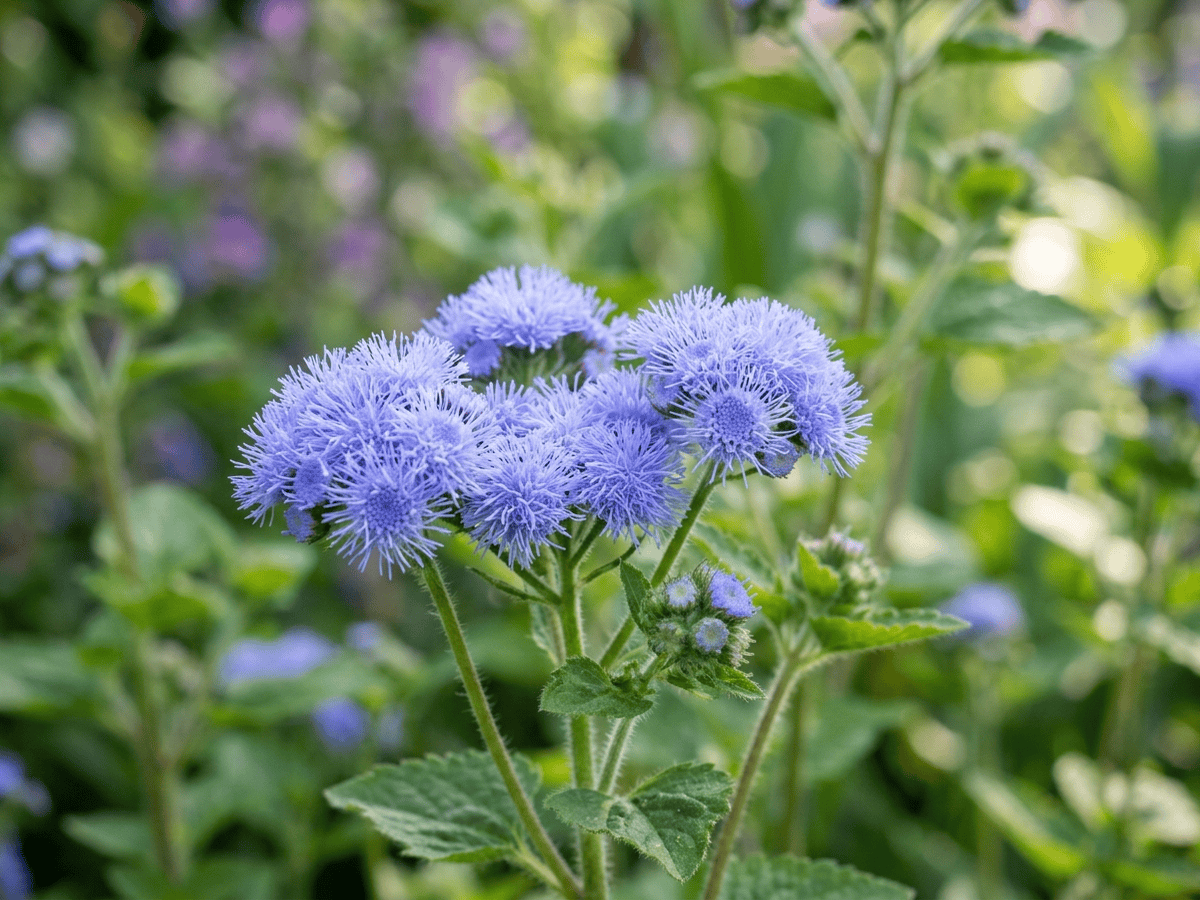
Floss Flower is a Mexican and Central American annual known for its distinctive fluffy blue button flowers, one of the rare true-blue colors in American garden annuals. Growing 6 to 24 inches depending on cultivar, it forms mounded plants topped with clusters of powder-puff flowers in blue, lavender, pink, or white. Popular in mass plantings, edging, and cutting gardens, and still a classic bedding plant at every American garden center.
- Cut-flower
- Deer-resistant
- Container-friendly
- Long-blooming
How to care for Bluemink
Watering
- Springevery 4 days
- Summerevery 3 days
- Fallevery 5 days
- Winterevery 7 days
Soil · Well-draining
- Top dressingPine bark mulch10%
- Main mixPotting soil + perlite 2:170%
- DrainageLECA / gravel20%
Never skip the drainage layer — standing water is the top cause of root rot.
FERTILIZER
Balanced Feed 14-14-14
An even feed covers all three needs at once, keeping leaves, roots and blooms moving together with nothing pushed out of balance.
- Nitrogen · Leaves
- Phosphorus · Roots + Blooms
- Potassium · Strength
- Springevery 21 days
- Summerevery 21 days
At a Glance
- NativeNorth America, Central America
- Height0.5–2 ft (0.2–0.6 m)
- Spread0.5–1 ft (0.2–0.3 m)
- Flower colorBlue, Purple, Pink, White
- Foliage colorGreen
- SoilLoamy, Well-drained
- LocationsYard · Balcony
Bloom time
BLOOM CYCLE
Peak bloom
Jun–Nov
Fluffy blue button clusters June to frost
Fragrance
LIGHT FRAGRANCE
Flowers have a light, soft scent when noticed up close.
Toxicity
Humans Slight · Pets Slight
pyrrolizidine alkaloids
Slight
- Leaf
- Ingestion
EXPOSURE Eating leaves.
EFFECT Pyrrolizidine alkaloids can cause chronic liver damage with repeated ingestion.
NOTE Chronic ingestion toxic to liver; livestock poisoning documented.
Slight
- Leaf
- Ingestion
EXPOSURE Eating leaves.
EFFECT Pyrrolizidine alkaloids can cause hepatotoxicity.
NOTE Chronic ingestion toxic to liver; livestock poisoning documented.
Slight
- Leaf
- Ingestion
EXPOSURE Eating leaves.
EFFECT Pyrrolizidine alkaloids can cause hepatotoxicity.
NOTE Chronic ingestion toxic to liver; livestock poisoning documented.
Educational information, not medical or veterinary advice. If exposure is suspected, contact a doctor or veterinarian.
DISTRIBUTION


- Native
- Introduced
- North America
- Central America
History
Ageratum houstonianum, commonly called flossflower or bluemink, is an herbaceous annual native to Mexico, Belize, Guatemala, and other parts of Central America. Philip Miller named the species in 1768 to honor English physician-botanist William Houstoun, who collected many plants in tropical America in the 1730s. The plant produces clusters of small fluffy powder-blue, lavender, pink, or white flower heads resembling tiny puffs above heart-shaped green leaves.
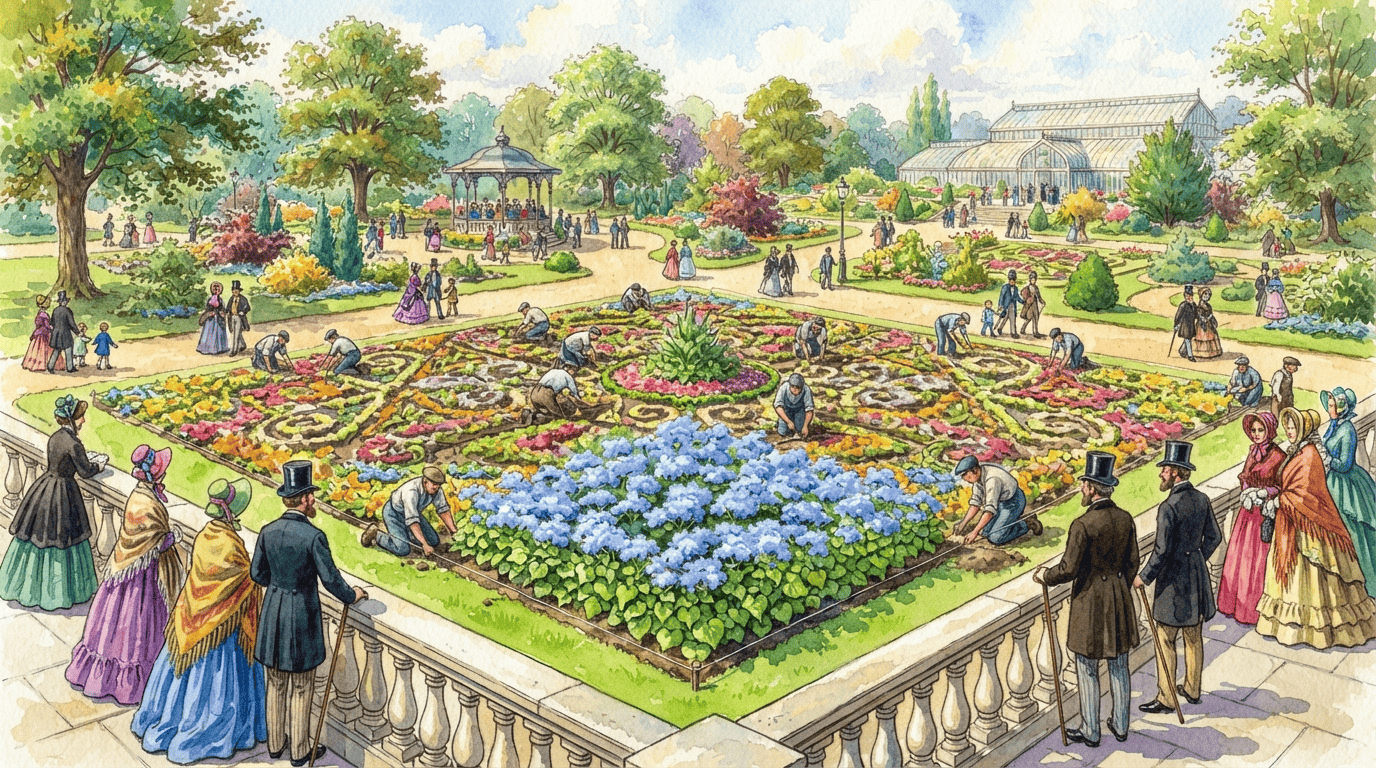
European and North American gardeners embraced flossflower as bedding fill through the Victorian era, and modern cultivars including the compact Hawaii and tall Blue Horizon series remain top-selling blue annuals for shade-tolerant landscape use. The foliage contains pyrrolizidine alkaloids and is mildly toxic if ingested.
Introduced to American gardens by the 1820s from its Mexican homeland, Floss Flower became a Victorian mass-planting staple and remains iconic in American public garden displays. Named for William Houstoun, the 18th-century Scottish botanist who collected it in Veracruz.
Symbolism & meaning
What It Symbolizes
Bluemink whispers of lasting affection in the Victorian sense — the kind of love that does not flare and fade. Its powderpuff flowers stay fresh for weeks on end, holding their soft color long after showier annuals have collapsed. And the color itself is rare currency: a true blue, one of the few in the annual world. A bouquet of bluemink is a quiet promise that the feeling will hold.
- Lasting love — flowers stay fresh for weeks
- True blue — one of few genuine blue annuals
Where the Name Comes From
The common name highlights its blue coloring. 'Ageratum' from Greek 'a-geras' meaning non-aging, for long-lasting flowers; 'houstonianum' honors William Houstoun (1695-1733).
Uses & Fun Facts
- Fluffy blue clusters add long-lasting filler to summer bouquets
- Soft blue flower clusters feed small butterflies and beneficial insects
- Compact mounding form thrives in patio containers and edging
Related plants
Plants with similar care
 Chinese AbeliaAbelia chinensis
 Fragrant AbeliaAbelia mosanensis
 Large-Flowered AbeliaAbelia uniflora
 Glossy AbeliaAbelia x grandiflora
Frequently asked questions
How often should I water Bluemink?
In summer, water about every 3 days; in winter, about every 7 days. Adjust for heat, pot size and drainage.
How much light does Bluemink need?
Full sun: 6+ hrs direct. Watch the leaves — scorching or stretching means the light needs adjusting.
Is Bluemink toxic to cats or dogs?
Pets Slight (Dogs Slight · Cats Slight) Educational information, not medical or veterinary advice. If exposure is suspected, contact a doctor or veterinarian.
Is Bluemink easy to grow?
Yes — it is considered an easy, beginner-friendly plant.
When does Bluemink bloom?
It typically blooms Jun–Nov in the Northern Hemisphere.
YardMate
Identify any plant in seconds
Snap a photo — YardMate names the plant, diagnoses problems, and reminds you when to water.
Download on the App Store