 YardMate


Peruvian Lily
Alstroemeria ligtu
Medium · Some experienceAbout Peruvian Lily
Ligtu Alstroemeria is a tuberous perennial from Chile, bearing loose clusters of elegant lily-shaped flowers in shades of pink, coral, salmon, and cream, often streaked and marked with burgundy. Reaching 24-36 inches tall, it blooms for weeks in late spring and summer. A parent of the famous Ligtu Hybrids, it offers long-lasting cut flowers and is hardy in USDA zones 7-10, thriving along the Pacific coast and milder eastern states.
- Cut-flower
- Pollinator-friendly
How to care for Peruvian Lily
Watering
- Springevery 4 days
- Summerevery 3 days
- Fallevery 5 days
- Winterpause watering
Soil · Well-draining
- Main mixLoam + coarse sand 3:175%
- DrainageGravel25%
Sharp drainage matters most — bulbs rot in wet soil while dormant.
FERTILIZER
Balanced Feed 14-14-14
An even feed covers all three needs at once, keeping leaves, roots and blooms moving together with nothing pushed out of balance.
- Nitrogen · Leaves
- Phosphorus · Roots + Blooms
- Potassium · Strength
- Springevery 30 days
- Summerevery 30 days
At a Glance
- NativeSouth America
- Height2–3 ft (0.6–0.9 m)
- Spread1–2 ft (0.3–0.6 m)
- Flower colorPink, Coral, White, Orange
- Foliage colorGreen
- SoilLoamy, Well-drained
- LocationsYard
Bloom time
BLOOM CYCLE
Peak bloom
May–Jul
Pink, coral, and cream clusters May to July
Toxicity
Humans Slight · Pets Slight
tulipalin A
Slight
- Sap
- Contact
EXPOSURE Touching sap.
EFFECT Contact dermatitis from tulipalin A.
NOTE Sap can cause contact dermatitis in florists; generally low toxicity to pets.
Slight
- All
- Ingestion
EXPOSURE Eating any part of the plant.
EFFECT GI upset.
NOTE Sap can cause contact dermatitis in florists; generally low toxicity to pets.
Slight
- All
- Ingestion
EXPOSURE Eating any part of the plant.
EFFECT GI upset.
NOTE Sap can cause contact dermatitis in florists; generally low toxicity to pets.
Educational information, not medical or veterinary advice. If exposure is suspected, contact a doctor or veterinarian.
DISTRIBUTION


- Native
- South America
History
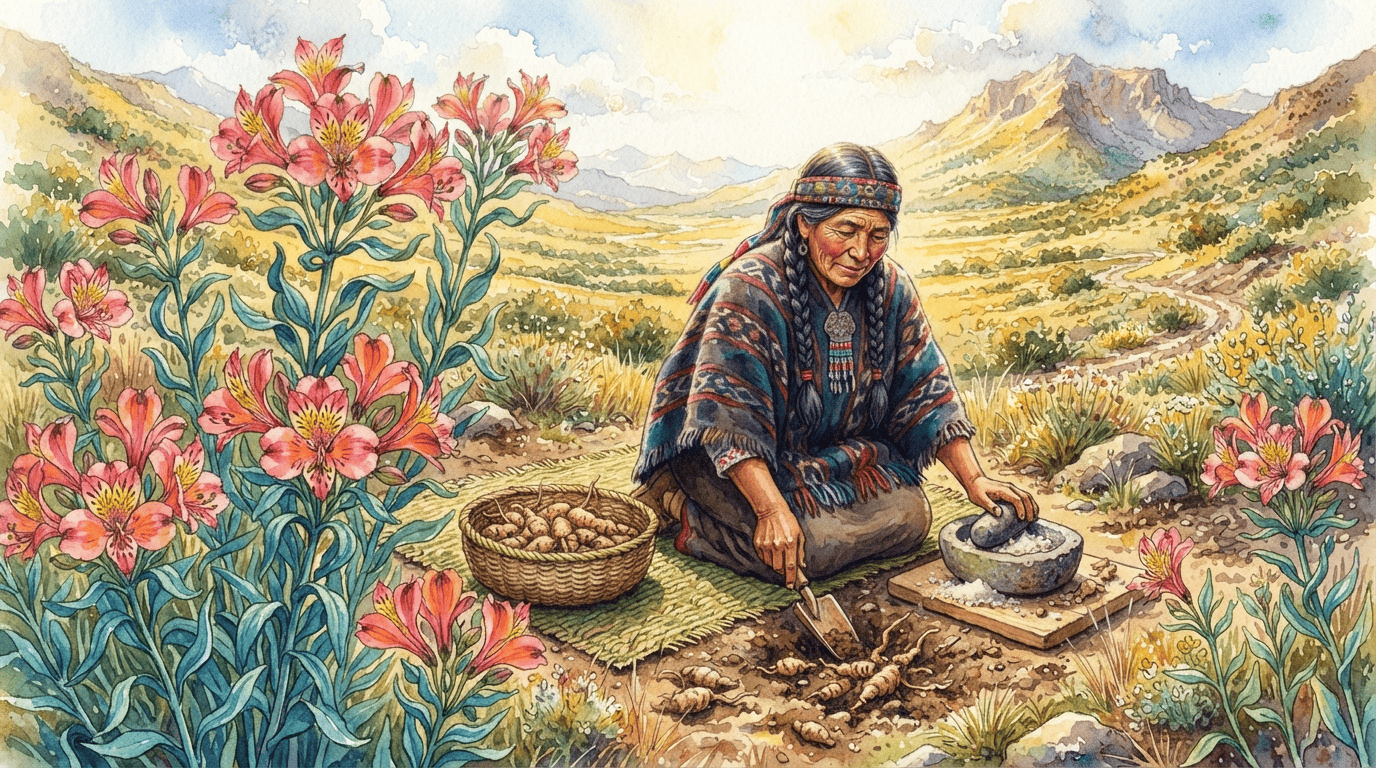
Alstroemeria ligtu grows natively in Chile's central and southern valleys. Indigenous Mapuche people called it ligtu and historically harvested the starchy tuberous roots as a food source, grinding them to produce chuño flour. The genus was named by Linnaeus for Swedish baron Klas von Alström.
The Ligtu hybrids arose in early 20th-century England through crosses with A. haemantha and other Chilean species, largely at the hands of Harold Bowles, E.A. Bowles, and Norah Leigh at Spetchley Park. These hybrids produced a vastly expanded range of salmon, pink, orange, yellow, and cream flower colors and founded the modern Peruvian lily industry, now a major cut-flower crop produced commercially in the Netherlands, Colombia, and California.
First collected by Swedish explorer Peter Löfling in 1754 and later introduced to British horticulture by Lord Aberconway at Bodnant Garden. Many modern hybrid alstroemerias trace back to this species.
Symbolism & meaning
What It Symbolizes
The Peruvian Lily is the classic flower of friendship, its twisting petals woven like the bonds between long-time companions. Paired with devotion — its blooms famous for outlasting most cut flowers in a vase — it evokes affection that endures past the easy days. Few bouquets say 'I'm here' more eloquently than a stem of alstroemeria.
- Friendship — classic meaning for alstroemerias
- Devotion — long-lasting bouquet flower
Where the Name Comes From
The name Peruvian Lily describes its lily-like flowers. Genus honors Swedish botanist Baron Claus von Alstroemer (1736–1794); 'ligtu' is the local Chilean name for the plant.
Uses & Fun Facts
- Lily-like blooms last two weeks in floral arrangements
- Streaked throats guide bees and butterflies to nectar
Related plants
Plants with similar care
 Mexican AbeliaAbelia floribunda
 Fraser FirAbies fraseri
 Paperbark MapleAcer griseum
 Sugar MapleAcer saccharum
Frequently asked questions
How often should I water Peruvian Lily?
Water about every 4 days during the growing season, and always let excess water drain away.
How much light does Peruvian Lily need?
Full sun: 6+ hrs direct. Watch the leaves — scorching or stretching means the light needs adjusting.
Is Peruvian Lily toxic to cats or dogs?
Pets Slight (Dogs Slight · Cats Slight) Educational information, not medical or veterinary advice. If exposure is suspected, contact a doctor or veterinarian.
Is Peruvian Lily easy to grow?
It is moderately demanding: a good choice once you have a little experience.
When does Peruvian Lily bloom?
It typically blooms May–Jul in the Northern Hemisphere.
YardMate
Identify any plant in seconds
Snap a photo — YardMate names the plant, diagnoses problems, and reminds you when to water.
Download on the App Store