 YardMate


Sand Rose
Anacampseros rufescens
Easy · Beginner friendlyAbout Sand Rose
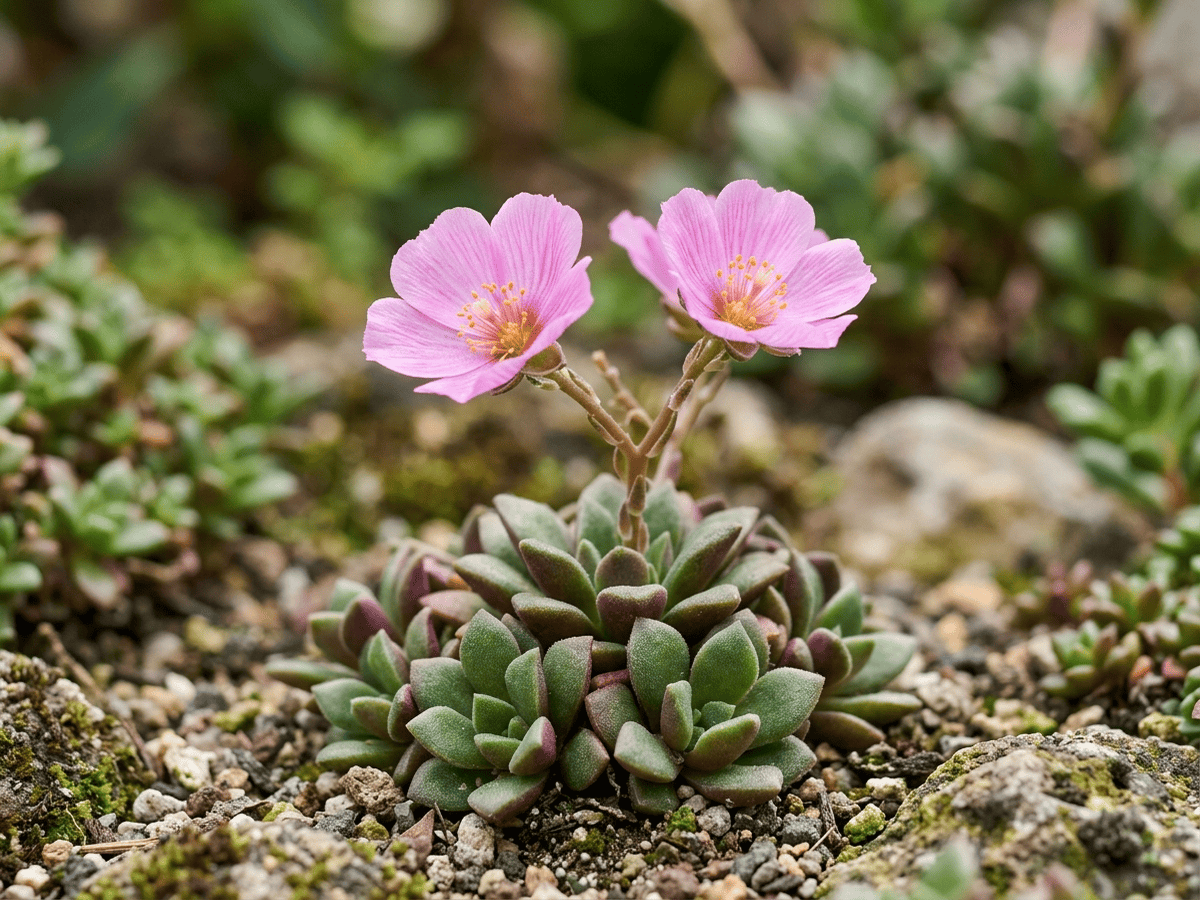
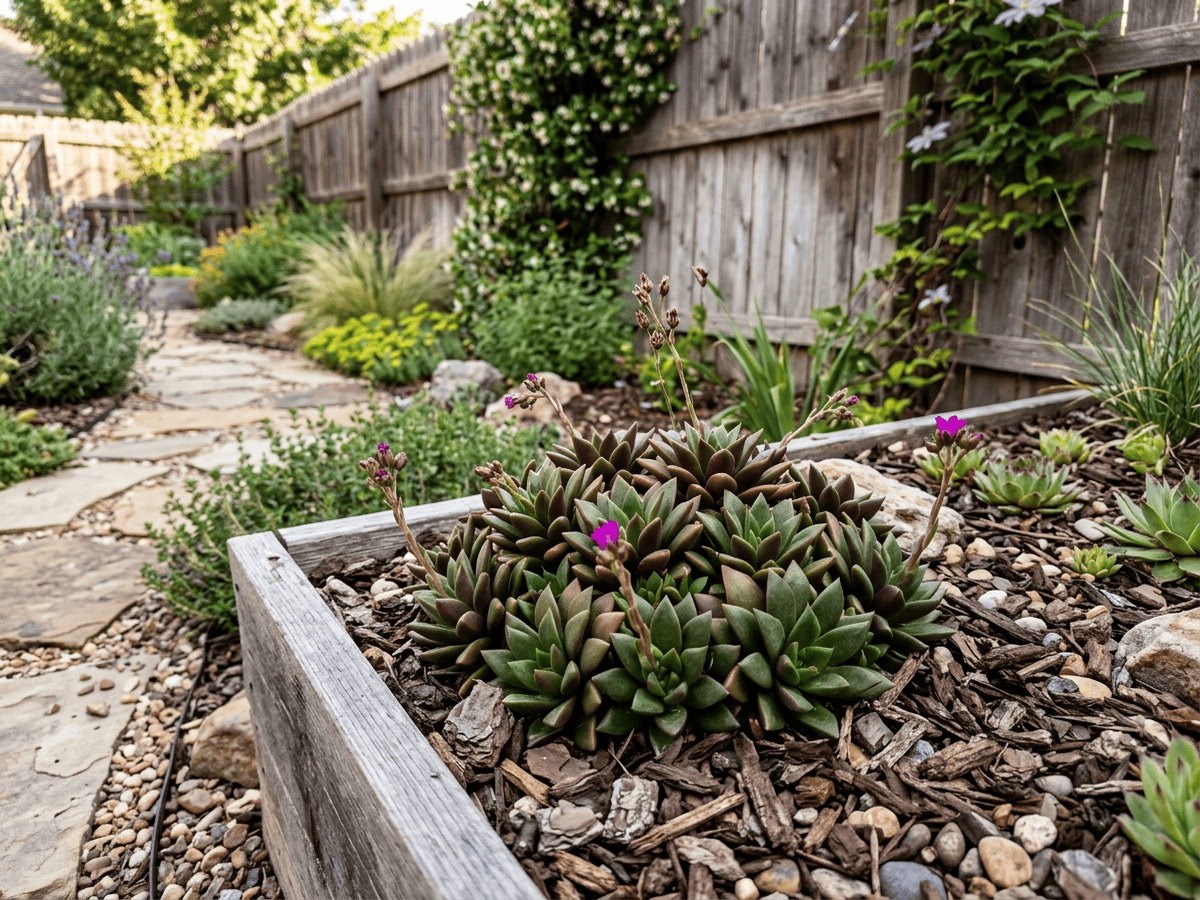
Sand Rose is a diminutive South African succulent that has captured the hearts of succulent collectors with its jewel-like rosettes of plump, overlapping leaves. The fleshy leaves range from olive-green to deep purple-red depending on sun exposure, and their undersides are coated in fine white hairs that help trap moisture from morning dew. In full sun, the entire plant blushes to a rich burgundy-rose color that inspired its common name. Each rosette stays under three inches wide, but the plant spreads by offsets and trailing stems to form charming miniature ground-cover mats. Bright pink flowers open on slender stalks in summer, but only for a few hours on sunny afternoons, making them easy to miss. The genus is notable for its unusual seed dispersal — papery appendages on the seeds catch the wind like tiny parachutes. It is perfect for succulent arrangements, fairy gardens, and small containers, requiring minimal care beyond well-drained soil and occasional watering.
- Drought-tolerant
- Compact
How to care for Sand Rose
Watering
- Springevery 10 days
- Summerevery 7 days
- Fallevery 14 days
- Winterevery 30 days
Soil · Fast-draining
- Main mixSand + pumice + soil 1:1:150%
- DrainagePumice / gravel50%
Keep grit at half the mix or more — this soil is meant to dry out fast.
FERTILIZER
Cactus & Succulent Feed 2-7-7
Hold the nitrogen back and growth stays compact instead of soft and stretched. Phosphorus and potassium carry the roots and the flowering.
- Nitrogen · Leaves
- Phosphorus · Roots + Blooms
- Potassium · Strength
- Springevery 30 days
- Summerevery 45 days
- Fallevery 60 days
At a Glance
- NativeAfrica
- Height0.3–0.5 ft (0.1–0.2 m)
- Spread0.5–1 ft (0.2–0.3 m)
- Flower colorPink, Purple
- Foliage colorGreen, Purple, Red
- SoilSandy, Well-drained
- LocationsIndoor · Yard
Bloom time
BLOOM CYCLE
Peak bloom
Jun–Aug
Bright pink flowers open only for a few hours on sunny summer afternoons
Fragrance
NO FRAGRANCE
No notable fragrance.
Toxicity
Humans Safe · Pets Safe
None reported
Safe
EXPOSURE No exposure route is reported.
EFFECT No significant toxicity.
NOTE Listed as non-toxic for humans; avoid eating ornamental plants unless confirmed edible.
Safe
EXPOSURE No exposure route is reported.
EFFECT Not listed as toxic.
NOTE Listed as non-toxic for dogs; avoid eating ornamental plants unless confirmed edible.
Safe
EXPOSURE No exposure route is reported.
EFFECT Not listed as toxic.
NOTE Listed as non-toxic for cats; avoid eating ornamental plants unless confirmed edible.
Educational information, not medical or veterinary advice. If exposure is suspected, contact a doctor or veterinarian.
DISTRIBUTION


- Native
- Africa
History
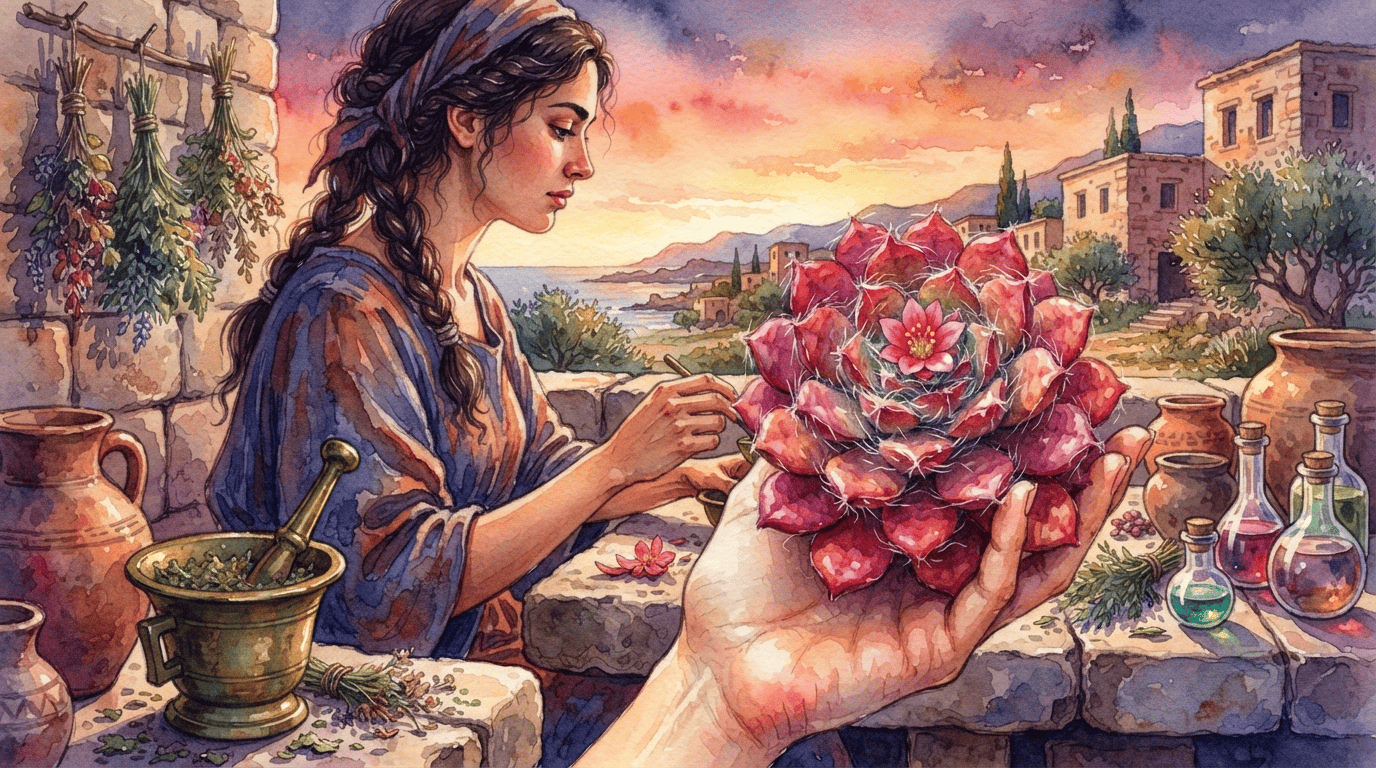
Anacampseros rufescens is native to the dry grasslands and rocky outcrops of South Africa's Eastern Cape. The genus name comes from Greek "ana" (back) + "kampto" (to bend) + "eros" (love), reflecting an ancient belief that plants in this group could restore lost love. The species name "rufescens" means reddening, referring to the reddish-purple coloration leaves develop under sun stress.
The plant is small — mature rosettes rarely exceed 7 centimeters — with white silky hairs extending between the leaves. It flowers with bright pink or rose flowers that open only briefly on sunny afternoons before producing characteristic papery seed capsules. Easy to propagate from seed, cuttings, or leaves, it has become a popular miniature succulent in windowsill and terrarium collections worldwide.
The genus Anacampseros was named by Carl Linnaeus in 1753, drawing on an ancient Greek word meaning 'plant that restores lost love' — the name was originally applied to an unrelated Mediterranean herb used in love potions. Anacampseros rufescens was described by Alwin Berger in 1908 from specimens collected in the Eastern Cape of South Africa. The genus contains about 35 species, all southern African, and has gained enormous popularity since the global succulent craze of the 2010s. Its color-changing leaves — shifting from green to purple to rose depending on light stress — made it a social media favorite, frequently featured in succulent arrangement tutorials.
Symbolism & meaning
What It Symbolizes
Anacampseros rufescens carries Devotion in its very name — the ancient Greek anakampseros meant 'restorer of love,' a charm once carried by parted lovers. Its leaves enact a quiet Transformation, shifting from forest green to dusky rose as sunlight deepens. To watch it change is to see faithfulness rendered as color, a love that grows richer rather than fading.
- Devotion — its ancient name means 'restorer of love,' linking it to faithful devotion
- Transformation — color shifts from green to rose symbolize beautiful change and growth
Where the Name Comes From
'Anacampseros' from Greek 'anakampto' (to bend back) and 'eros' (love), an ancient name meaning 'plant that restores love.' 'Rufescens' means 'becoming reddish' in Latin, describing the leaves' sun-stress coloring.
Uses & Fun Facts
- Tiny rosette succulent ideal for dish gardens
- Bronze-purple leaves form clumping ornamental mounds
Related plants
Plants with similar care
 Chinese AbeliaAbelia chinensis
 Fragrant AbeliaAbelia mosanensis
 Large-Flowered AbeliaAbelia uniflora
 Glossy AbeliaAbelia x grandiflora
Frequently asked questions
How often should I water Sand Rose?
In summer, water about every 7 days; in winter, about every 30 days. Adjust for heat, pot size and drainage.
How much light does Sand Rose need?
Full sun: 6+ hrs direct. Watch the leaves — scorching or stretching means the light needs adjusting.
Is Sand Rose toxic to cats or dogs?
Pets Safe (Dogs Safe · Cats Safe) Educational information, not medical or veterinary advice. If exposure is suspected, contact a doctor or veterinarian.
Is Sand Rose easy to grow?
Yes — it is considered an easy, beginner-friendly plant.
Can Sand Rose be grown indoors?
Yes, it adapts well to indoor growing given the right light.
When does Sand Rose bloom?
It typically blooms Jun–Aug in the Northern Hemisphere.
YardMate
Identify any plant in seconds
Snap a photo — YardMate names the plant, diagnoses problems, and reminds you when to water.
Download on the App Store