 YardMate


Flame Acanthus
Anisacanthus quadrifidus
Easy · Beginner friendlyAbout Flame Acanthus
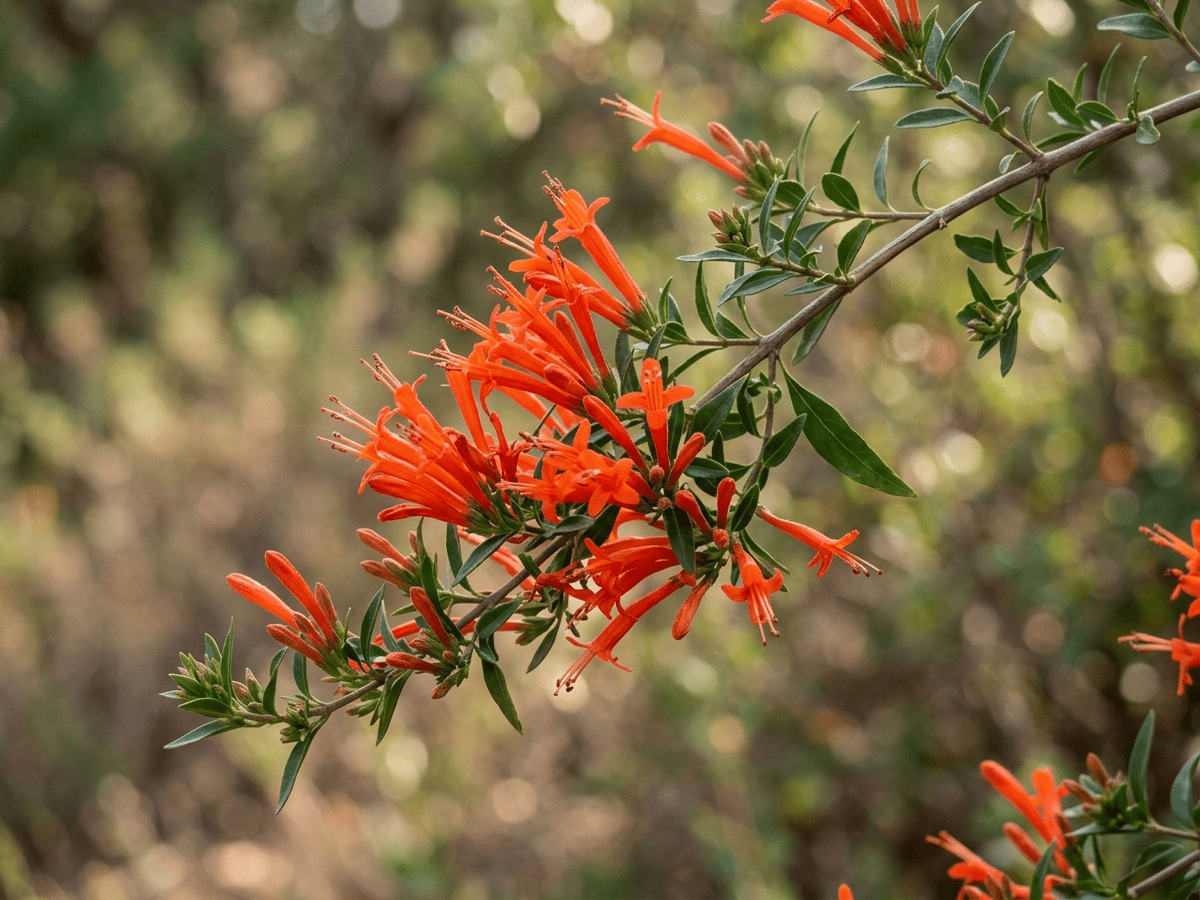
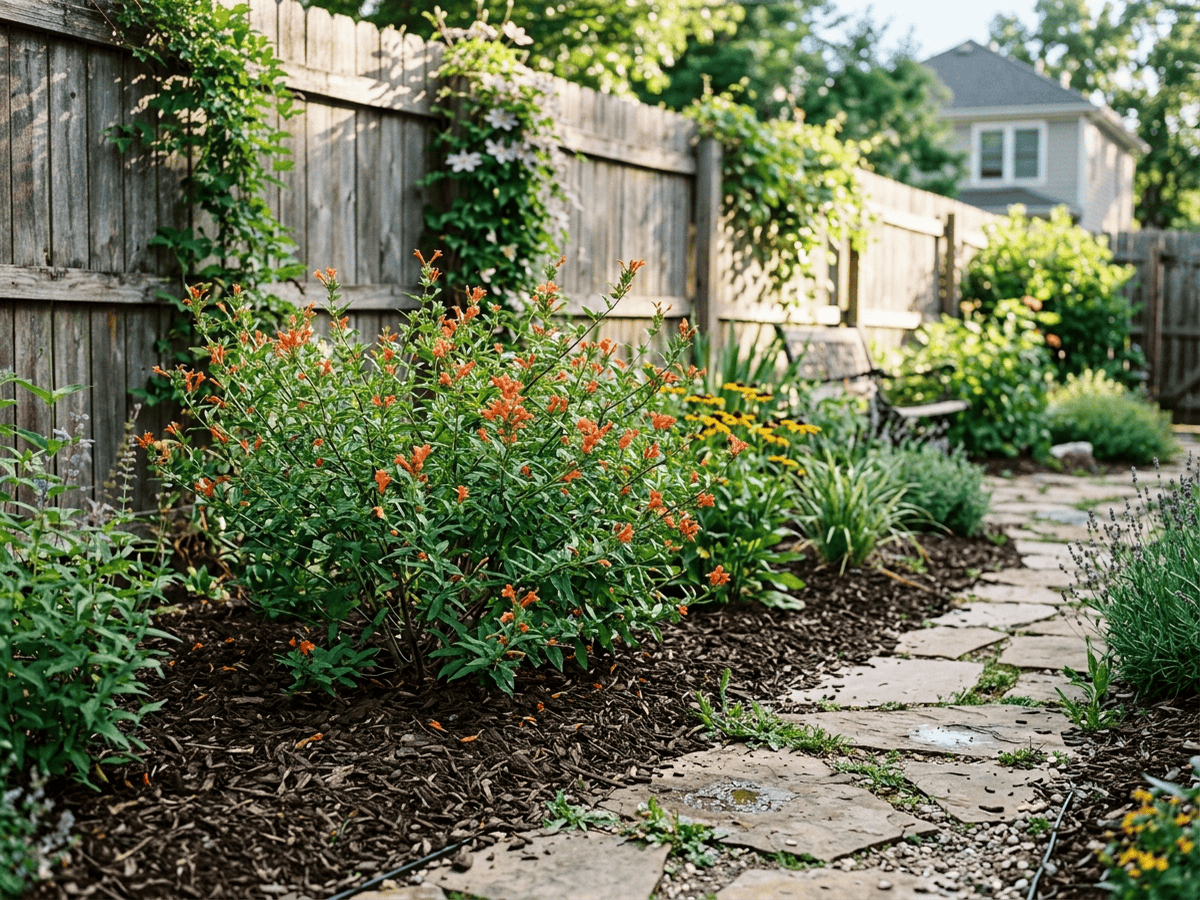
Flame Acanthus, also called Hummingbird Bush or Wright's Anisacanthus, is a deciduous shrub native to the Edwards Plateau of central Texas and adjacent northern Mexico. Growing 3 to 5 feet tall with arching branches, it produces brilliant orange-red tubular flowers from summer into fall that are magnets for ruby-throated hummingbirds and migrating monarch butterflies. A heat- and drought-tough Texas native essential for Southwestern hummingbird gardens.
- Drought-tolerant
- Deer-resistant
- Native
- Pollinator-friendly
How to care for Flame Acanthus
Watering
- Springevery 10 days
- Summerevery 7 days
- Fallevery 10 days
- Winterevery 21 days
Soil · Well-draining
- Top dressingPine bark mulch10%
- Main mixPotting soil + perlite 2:170%
- DrainageLECA / gravel20%
Never skip the drainage layer — standing water is the top cause of root rot.
FERTILIZER
- Springevery 60 days
At a Glance
- NativeNorth America
- Height3–5 ft (0.9–1.5 m)
- Spread3–4 ft (0.9–1.2 m)
- Flower colorOrange, Red
- Foliage colorGreen, Yellow
- SoilSandy, Well-drained, Loamy
- LocationsYard
Bloom time
BLOOM CYCLE
Peak bloom
Jun–Oct
Orange-red tubular flowers June to October
Toxicity
Toxicity unknown
None reported
Unknown
EXPOSURE Unspecified plant material.
EFFECT Toxic effects are not specified.
NOTE Toxicity for humans is not well documented; use caution until verified.
Unknown
EXPOSURE Unspecified plant material.
EFFECT Toxic effects are not specified.
NOTE Toxicity for dogs is not well documented; use caution until verified.
Unknown
EXPOSURE Unspecified plant material.
EFFECT Toxic effects are not specified.
NOTE Toxicity for cats is not well documented; use caution until verified.
Educational information, not medical or veterinary advice. If exposure is suspected, contact a doctor or veterinarian.
DISTRIBUTION


- Native
- North America
History

Anisacanthus quadrifidus, commonly called flame acanthus, Wright's desert honeysuckle, or hummingbird bush, is a deciduous shrub native to south Texas, the Edwards Plateau, and northern Mexico from Nuevo León to San Luis Potosí. The variety wrightii was described by Asa Gray and honors Charles Wright, a 19th-century American botanist who explored Texas and Mexico. The shrub bears long tubular orange to red flowers from midsummer through frost, coinciding with the autumn ruby-throated hummingbird migration through Texas.
Because it tolerates clay, limestone, drought, and heat while blooming during months when few other shrubs flower, the Texas Superstar program and Lady Bird Johnson Wildflower Center popularized it in the 1990s and 2000s. It is now widely planted across central Texas and adjacent regions. Discovered by Charles Wright during his 19th-century surveys of west Texas for the United States-Mexico boundary commission.
Symbolism & meaning
What It Symbolizes
Flame Acanthus burns orange across the Edwards Plateau in late summer, its tubular blossoms fueling migration — hummingbirds bound for Mexico and monarchs drifting toward the Sierra Madre stop here to refuel. As an icon of Texas Hill Country native flora it carries deep regional heritage, a flowering bridge between continents. Its bloom is a hospitality offered to creatures only passing through.
- Migration — fuels hummingbird and monarch journeys
- Texas heritage — icon of Edwards Plateau native flora
Where the Name Comes From
'Anisacanthus' is Greek for 'unequal-spined,' for its irregular spiny calyx; 'quadrifidus' means four-cleft, referring to flower lobes.
Uses & Fun Facts
- Orange-red tubes pull hummingbirds and butterflies all summer
- Texas native shrub for low-water Hill Country gardens
- Provides nectar and cover in Southwest wildlife habitats
Related plants
Plants with similar care
 Chinese AbeliaAbelia chinensis
 Fragrant AbeliaAbelia mosanensis
 Large-Flowered AbeliaAbelia uniflora
 Glossy AbeliaAbelia x grandiflora
Frequently asked questions
How often should I water Flame Acanthus?
In summer, water about every 7 days; in winter, about every 21 days. Adjust for heat, pot size and drainage.
How much light does Flame Acanthus need?
Full sun: 6+ hrs direct. Watch the leaves — scorching or stretching means the light needs adjusting.
Is Flame Acanthus toxic to cats or dogs?
Pets Unknown (Dogs Unknown · Cats Unknown) Educational information, not medical or veterinary advice. If exposure is suspected, contact a doctor or veterinarian.
Is Flame Acanthus easy to grow?
Yes — it is considered an easy, beginner-friendly plant.
When does Flame Acanthus bloom?
It typically blooms Jun–Oct in the Northern Hemisphere.
YardMate
Identify any plant in seconds
Snap a photo — YardMate names the plant, diagnoses problems, and reminds you when to water.
Download on the App Store