 YardMate
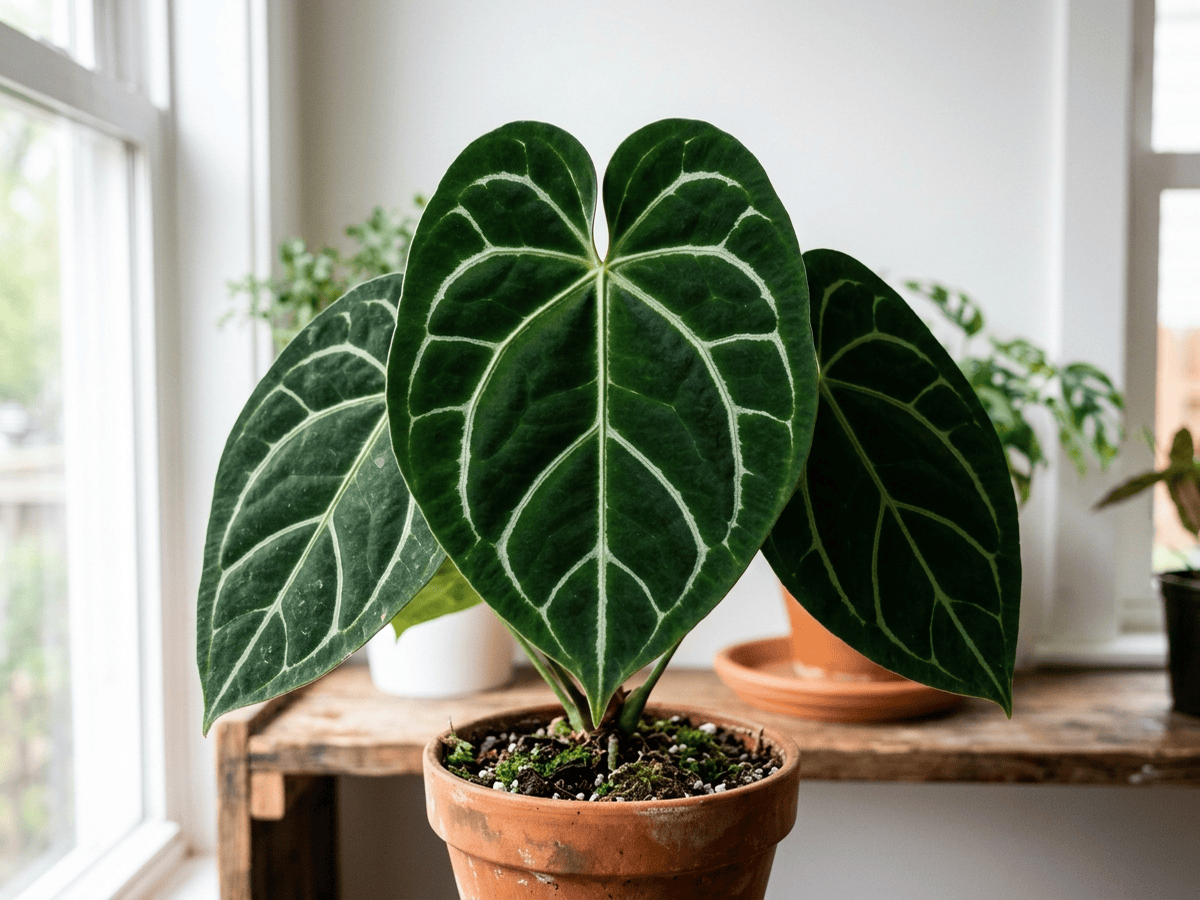


Crystal Anthurium
Anthurium crystallinum
Hard · Experienced growersAbout Crystal Anthurium
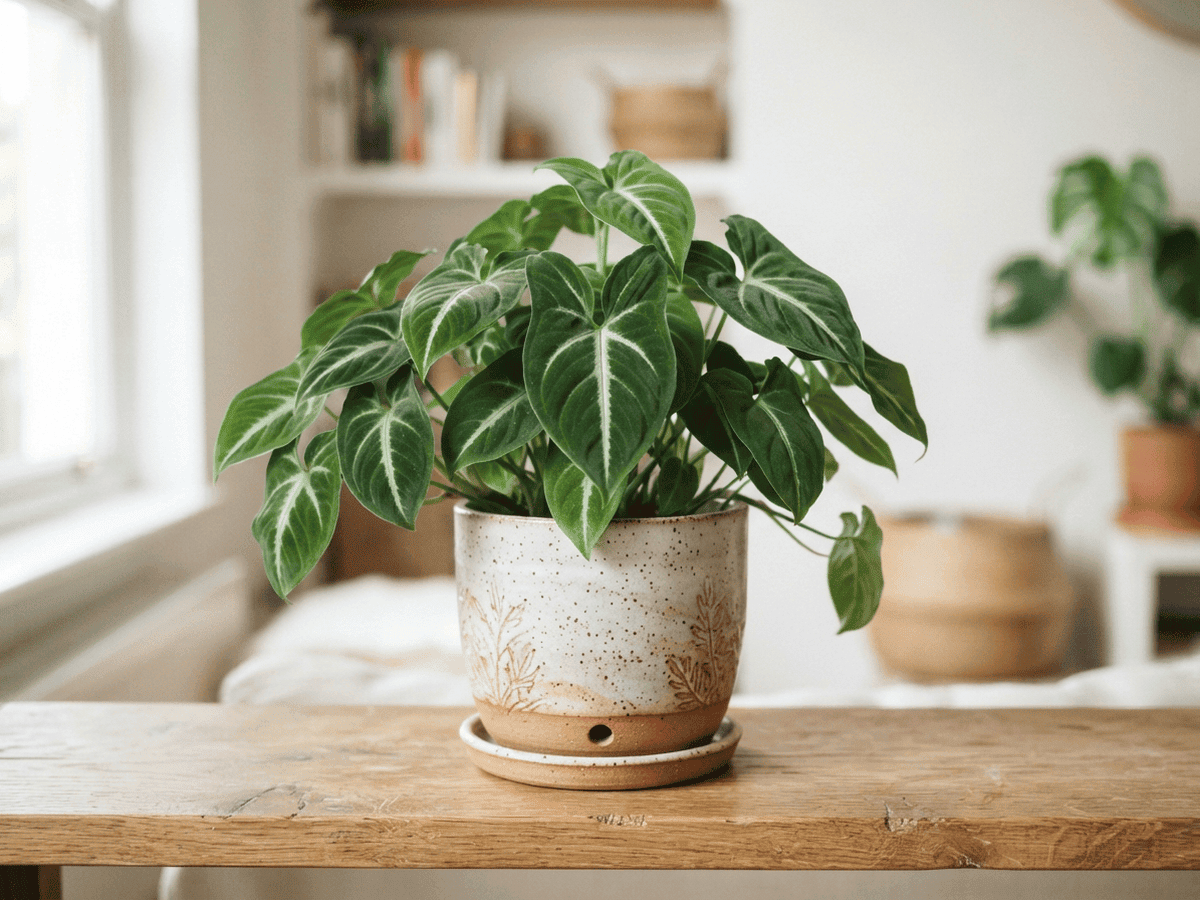
Crystal Anthurium is a stunning Colombian rainforest aroid with enormous heart-shaped velvety dark-green leaves boldly veined in silvery-white. New leaves emerge bronze and mature to deep green with crystalline silver veining that glows in indirect light. Reaching 24-36 inches, its dramatic foliage makes it among the most coveted velvet anthuriums in modern houseplant culture. Demanding high humidity, warmth, and bright indirect light, it is a connoisseur's plant.
- Evergreen
How to care for Crystal Anthurium
Watering
- Springevery 5 days
- Summerevery 5 days
- Fallevery 7 days
- Winterevery 10 days
Soil · Chunky & airy
- Top dressingBark chips10%
- Main mixBark + potting soil + perlite 1:1:170%
- DrainageLECA20%
Chunky pieces hold air pockets open so thick roots don't suffocate.
FERTILIZER
Balanced Feed 14-14-14
An even feed covers all three needs at once, keeping leaves, roots and blooms moving together with nothing pushed out of balance.
- Nitrogen · Leaves
- Phosphorus · Roots + Blooms
- Potassium · Strength
- Springevery 30 days
- Summerevery 30 days
- Fallevery 60 days
At a Glance
- NativeCentral America, South America
- Height2–3 ft (0.6–0.9 m)
- Spread2–3 ft (0.6–0.9 m)
- Flower colorGreen
- Foliage colorDark-green, Silver
- SoilLoamy, Well-drained, Rich
- LocationsIndoor
Bloom time
BLOOM CYCLE
Peak bloom
Jun–Aug
Greenish spathe with spadix (uncommon indoors)
Toxicity
Humans Moderate · Pets Moderate
calcium oxalate raphides
Moderate
- Leaf
- Stem
- Ingestion
EXPOSURE Eating leaves and stems.
EFFECT Oral irritation and drooling.
NOTE Documented concern for humans: Oral irritation and drooling.
Moderate
- Leaf
- Stem
- Ingestion
EXPOSURE Eating leaves and stems.
EFFECT Oral irritation and vomiting.
NOTE ASPCA lists Anthurium as toxic.
Moderate
- Leaf
- Stem
- Ingestion
EXPOSURE Eating leaves and stems.
EFFECT Oral irritation and vomiting.
NOTE ASPCA lists Anthurium as toxic.
Educational information, not medical or veterinary advice. If exposure is suspected, contact a doctor or veterinarian.
DISTRIBUTION


- Native
- Central America
- South America
History

Anthurium crystallinum, commonly called crystal anthurium, is a terrestrial-to-epiphytic evergreen aroid in the family Araceae native to rainforest understory and cloud forest slopes of Panama, Colombia, and northwestern Peru. Belgian horticulturist Jean Jules Linden and French botanist Édouard André formally described the species in 1873 in the Illustration Horticole. The epithet crystallinum refers to the distinctive crystalline appearance of the striking silvery-white venation.
Plants form clumps of heart-shaped velvety dark forest-green leaves 30-60 cm long held upright or pendant on stout petioles, with prominent silvery-white midrib and primary veins that sparkle like crystalline facets under light. New leaves emerge a pinkish-bronze shade before darkening. Unlike many Anthuriums, the small green-brown spadix flowers are insignificant and not decorative.
The species is highly collected as a foliage plant, commanding premium prices in specialty trade. Similar-looking 'Clarinervium' is more widely sold and often confused with crystallinum. Calcium oxalate toxicity typical of aroids. Long an obscure botanical garden plant, it surged to fame during the 2018-2022 American houseplant boom when velvet-leaf anthuriums became among the most coveted and expensive plants in cultivation. Mature specimens command prices in the hundreds of dollars.
Symbolism & meaning
What It Symbolizes
The crystal anthurium lives up to its name through sheer brilliance — silver veins traced across deep velvet leaves, catching and holding the dimmest light as though stitched from moonlight. It is a plant that asks for devotion in return: precise humidity, careful watering, attentive eyes. To those who give it, it answers with foliage so luminous that even on a gray afternoon the room seems brighter than it has any right to be.
- Brilliance — silver veining shimmers in dim light
- Devotion — demands precise care and rewards expertise
Where the Name Comes From
'Anthurium' from Greek meaning tail-flower; 'crystallinum' refers to the crystalline silver veining.
Uses & Fun Facts
- Velvety silver-veined heart leaves grown as humid indoor specimen
- Striking foliage form serves as collector houseplant focal point
Related plants
More Anthurium plants
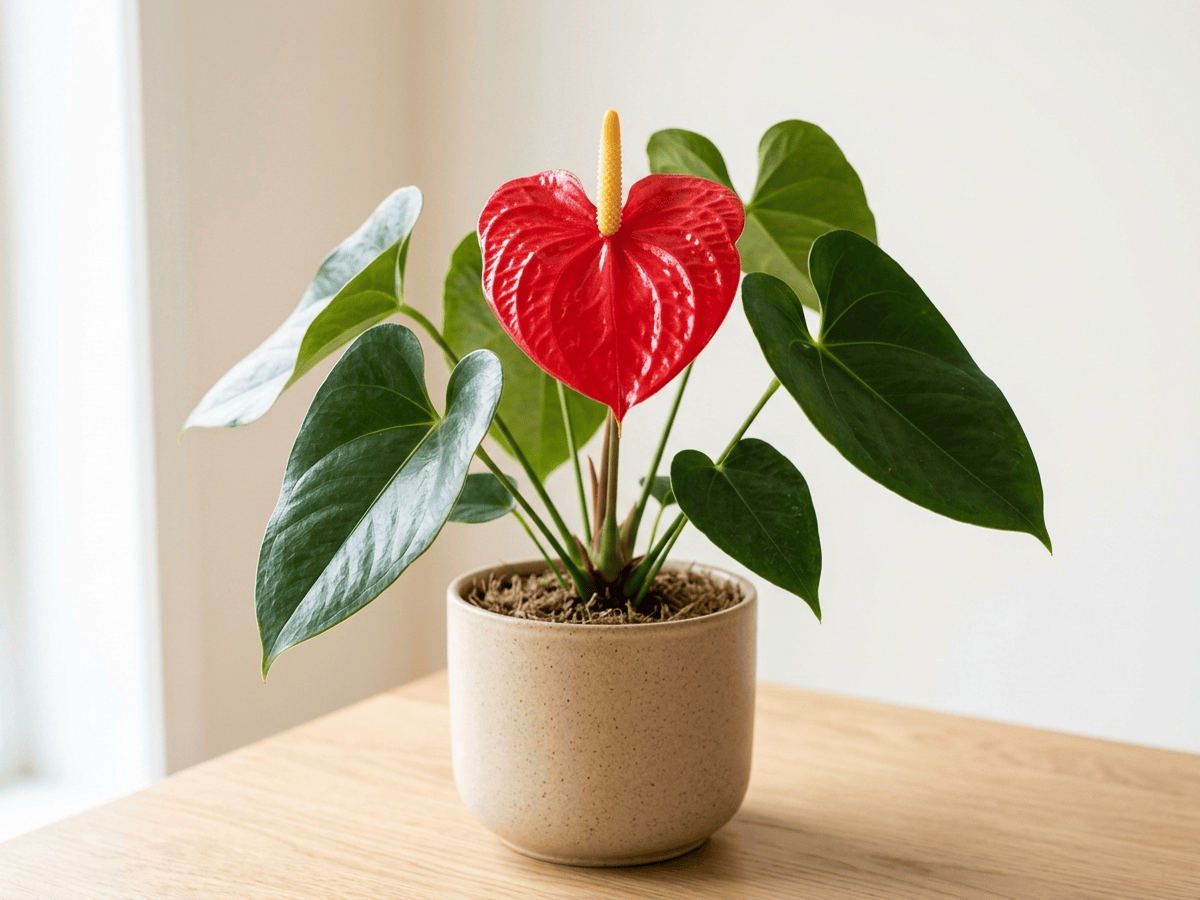 Painter's-PaletteAnthurium andraeanum
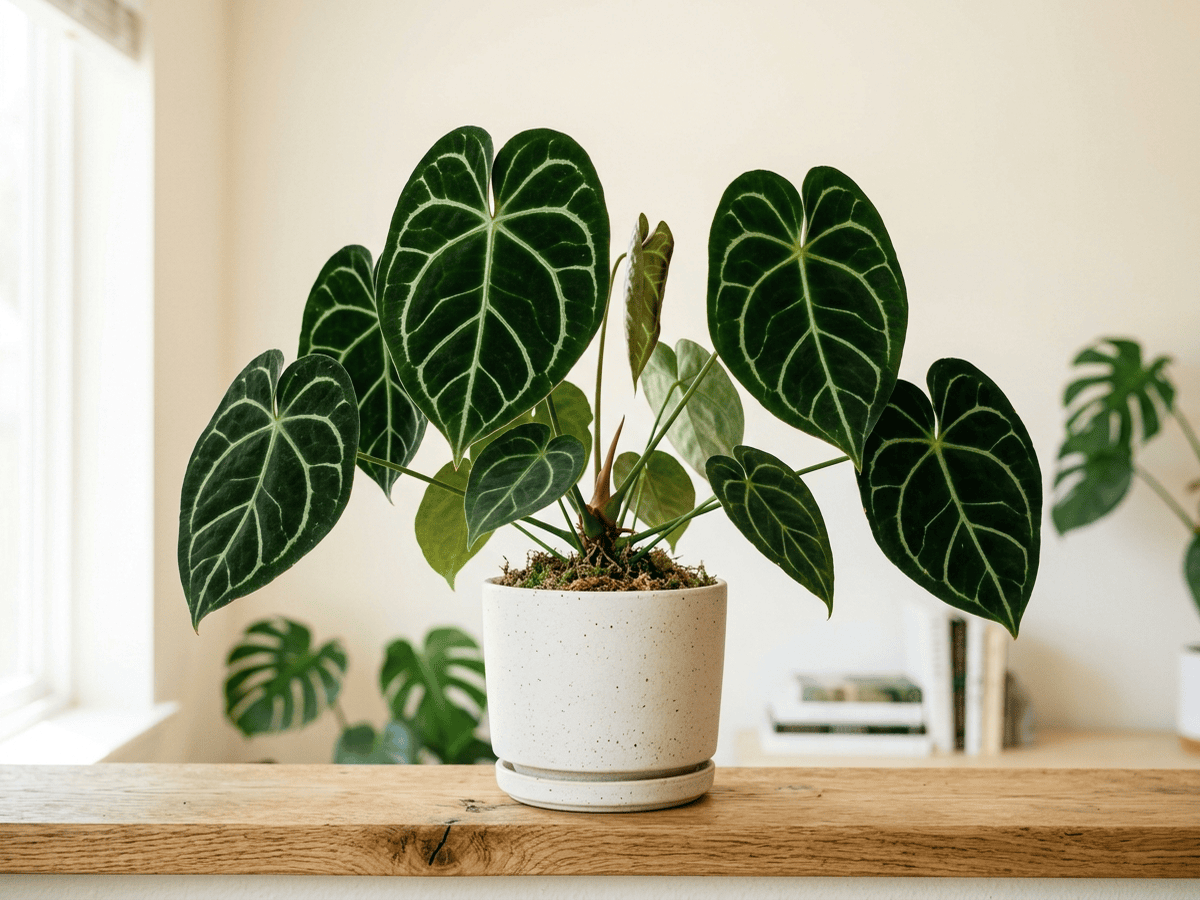 Anthurium clarinerviumAnthurium clarinervium
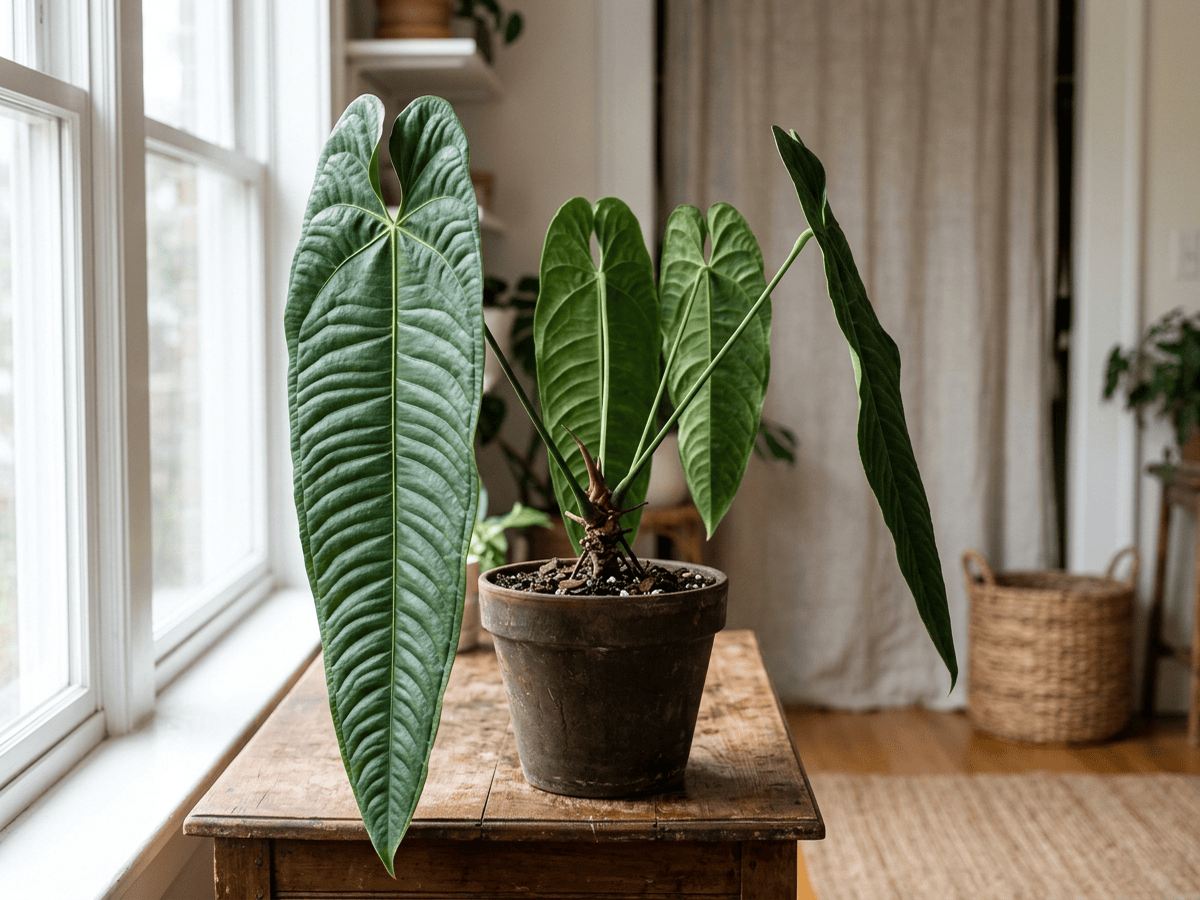 King AnthuriumAnthurium veitchii
Plants with similar care
Frequently asked questions
How often should I water Crystal Anthurium?
In summer, water about every 5 days; in winter, about every 10 days. Adjust for heat, pot size and drainage.
How much light does Crystal Anthurium need?
Indirect: Filtered light. Watch the leaves — scorching or stretching means the light needs adjusting.
Is Crystal Anthurium toxic to cats or dogs?
Pets Moderate (Dogs Moderate · Cats Moderate) Educational information, not medical or veterinary advice. If exposure is suspected, contact a doctor or veterinarian.
Is Crystal Anthurium easy to grow?
It is considered challenging and rewards experienced growers.
Can Crystal Anthurium be grown indoors?
Yes, it adapts well to indoor growing given the right light.
When does Crystal Anthurium bloom?
It typically blooms Jun–Aug in the Northern Hemisphere.
YardMate
Identify any plant in seconds
Snap a photo — YardMate names the plant, diagnoses problems, and reminds you when to water.
Download on the App Store