 YardMate
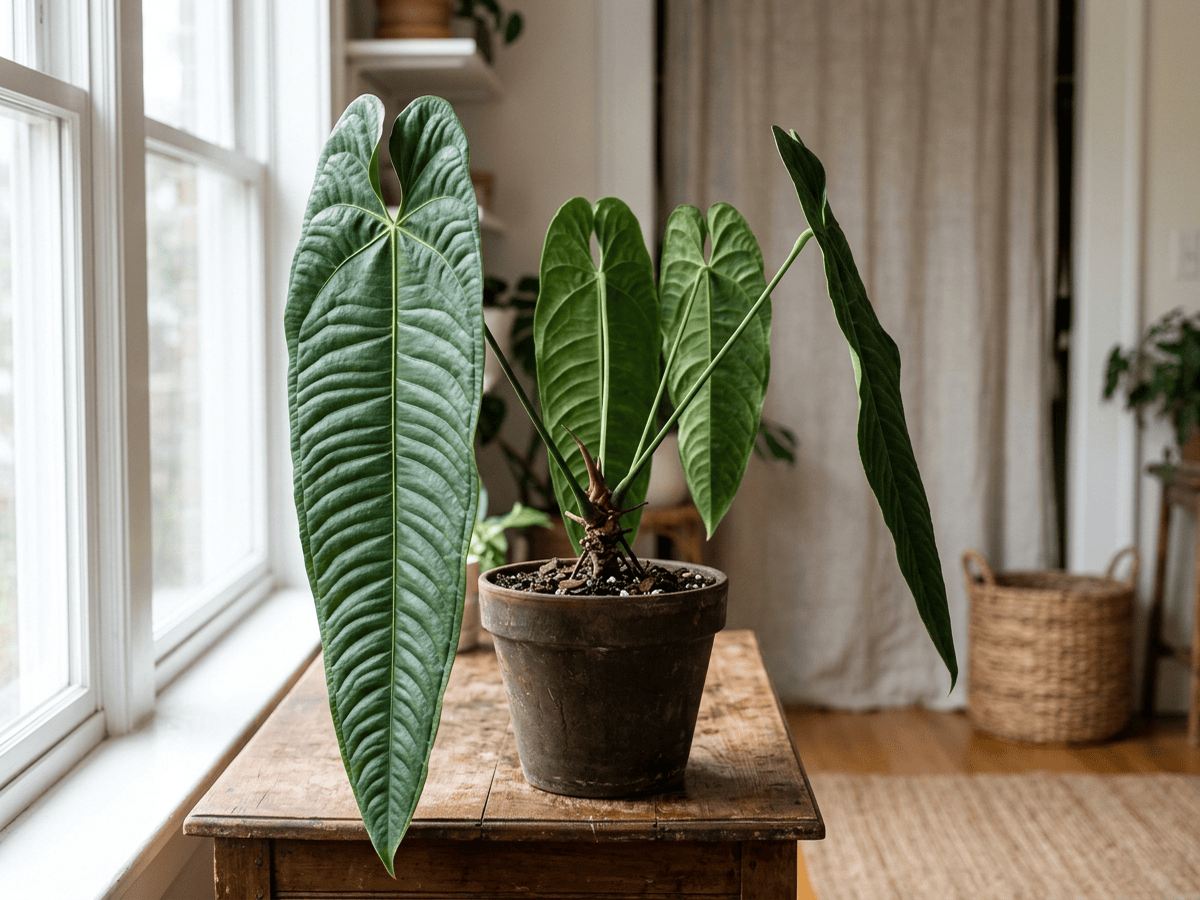


King Anthurium
Anthurium veitchii
Hard · Experienced growersAbout King Anthurium
King Anthurium is a magnificent Colombian rainforest aroid producing pendulous corrugated dark-green leaves up to 4-6 feet long in mature specimens. Each leaf has deeply quilted seersucker texture with prominent ribs running across its length. An epiphyte in the wild that grows hanging from rainforest trees, it requires excellent drainage, high humidity, and bright filtered light. Among the most majestic and expensive collector aroids in modern American houseplant culture.
- Evergreen
- Architectural
How to care for King Anthurium
Watering
- Springevery 5 days
- Summerevery 5 days
- Fallevery 7 days
- Winterevery 10 days
Soil · Chunky & airy
- Top dressingBark chips10%
- Main mixBark + potting soil + perlite 1:1:170%
- DrainageLECA20%
Chunky pieces hold air pockets open so thick roots don't suffocate.
FERTILIZER
Balanced Feed 14-14-14
An even feed covers all three needs at once, keeping leaves, roots and blooms moving together with nothing pushed out of balance.
- Nitrogen · Leaves
- Phosphorus · Roots + Blooms
- Potassium · Strength
- Springevery 30 days
- Summerevery 30 days
- Fallevery 60 days
At a Glance
- NativeSouth America
- Height3–5 ft (0.9–1.5 m)
- Spread2–4 ft (0.6–1.2 m)
- Flower colorGreen, Yellow
- Foliage colorGreen, Red
- SoilWell-drained, Rich
- LocationsIndoor
Bloom time
BLOOM CYCLE
Peak bloom
Jun–Aug
Greenish spathe with spadix (uncommon indoors)
Toxicity
Humans Moderate · Pets Moderate
calcium oxalate raphides
Moderate
- Leaf
- Stem
- Ingestion
EXPOSURE Eating leaves and stems.
EFFECT Oral irritation and drooling.
NOTE Documented concern for humans: Oral irritation and drooling.
Moderate
- Leaf
- Stem
- Ingestion
EXPOSURE Eating leaves and stems.
EFFECT Oral irritation and vomiting.
NOTE ASPCA lists Anthurium as toxic.
Moderate
- Leaf
- Stem
- Ingestion
EXPOSURE Eating leaves and stems.
EFFECT Oral irritation and vomiting.
NOTE ASPCA lists Anthurium as toxic.
Educational information, not medical or veterinary advice. If exposure is suspected, contact a doctor or veterinarian.
DISTRIBUTION


- Native
- South America
History

Anthurium veitchii, commonly called the king anthurium, is a magnificent epiphytic aroid in the family Araceae endemic to cloud forests of the western Andes of Colombia at 400-1200 meters elevation, growing on tree trunks in humid shade. English botanist Maxwell Tylden Masters described the species in 1876 in Gardeners' Chronicle, honoring James Veitch of the famous Veitch Nursery of Exeter and Chelsea, which introduced countless tropical ornamentals to Victorian Britain. The plant is famed for its enormous pendent strap-shaped leaves, which can attain 1.5-2 meters (even 3 meters in exceptional specimens) long in mature plants, with deeply corrugated-rippled dark glossy green surfaces that catch light dramatically.
New leaves emerge rose-pink and unfurl hanging downward, gaining waviness as they mature. The species is one of the most coveted large-leaved aroids among collectors and botanical gardens. Cultivation requires tree-fern pole or moss pole mounting, high humidity, warm temperatures, and bright indirect light.
Commanded extraordinary prices during 2019-2022 rare aroid market. Native to cloud forests of Colombia, discovered in 1876 and named for English nurseryman James Veitch. An obscure botanical curiosity for over a century, it became a defining plant of the modern American collector houseplant scene in the 2018-2022 boom, with mature specimens fetching thousands of dollars at auction.
Symbolism & meaning
What It Symbolizes
Anthurium veitchii commands majesty, its pendulous, deeply corrugated leaves hanging like green banners from the treetops of Colombia's cloud forests. The species name honors the Veitch nursery dynasty, one of horticulture's most influential families, whose plant hunters carried this giant into Victorian conservatories. To grow it is to keep company with a botanical heritage of exploration, ambition, and reverent regard for the rare.
- Majesty — pendulous corrugated leaves command attention
- Heritage — named for one of horticulture's most influential families
Where the Name Comes From
'Veitchii' honors James Veitch, 19th-century English horticulturist.
Uses & Fun Facts
- Long corrugated leaves bring cloud-forest drama to bright interiors
- Corrugated pendant leaves make a collector's aroid for warm bright rooms
Related plants
More Anthurium plants
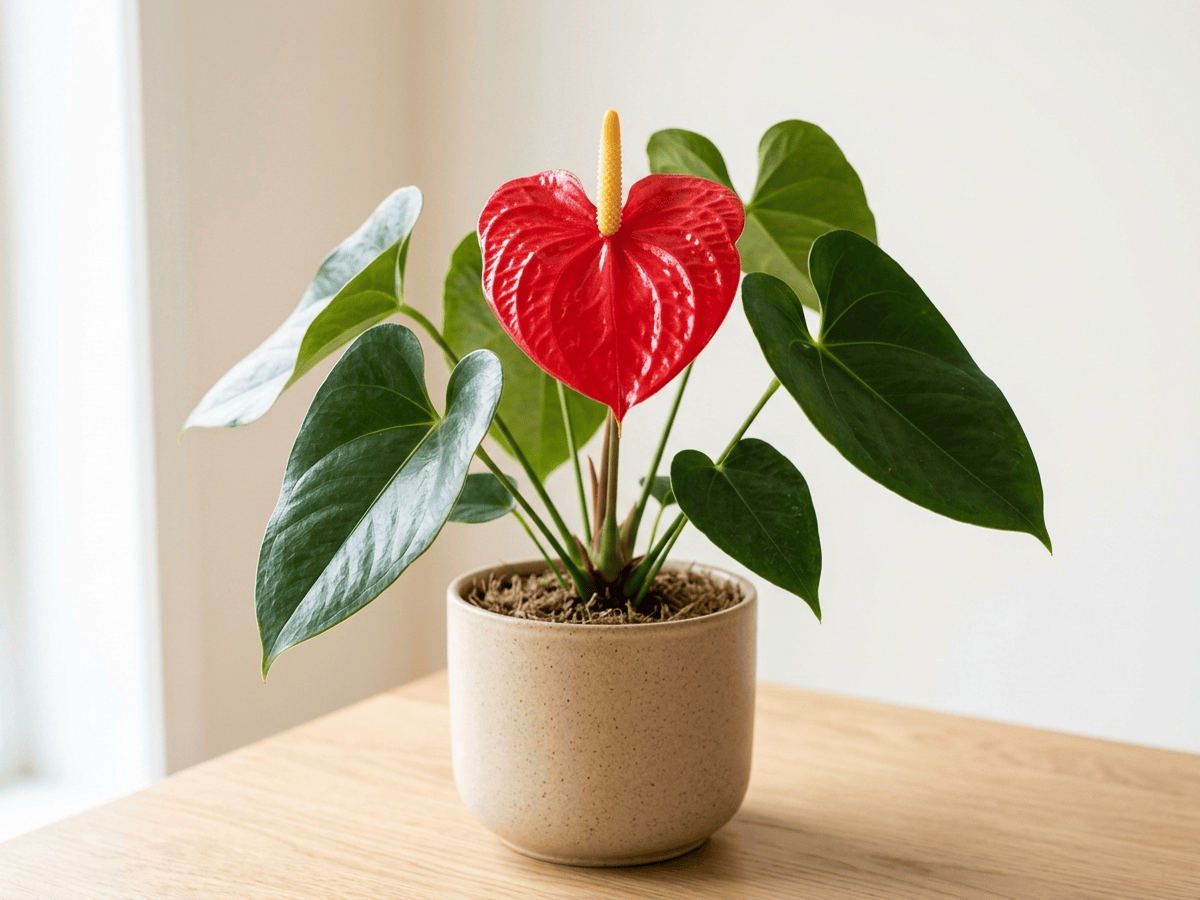 Painter's-PaletteAnthurium andraeanum
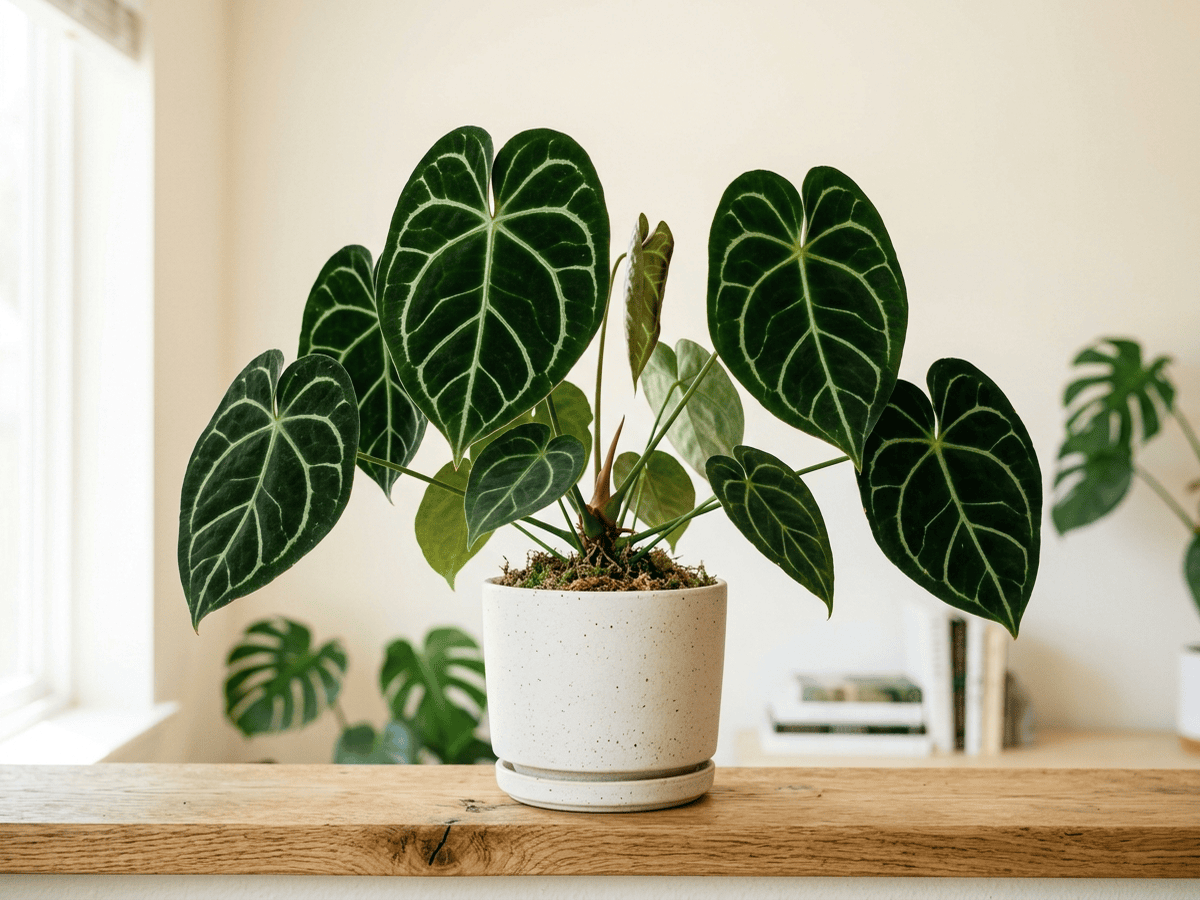 Anthurium clarinerviumAnthurium clarinervium
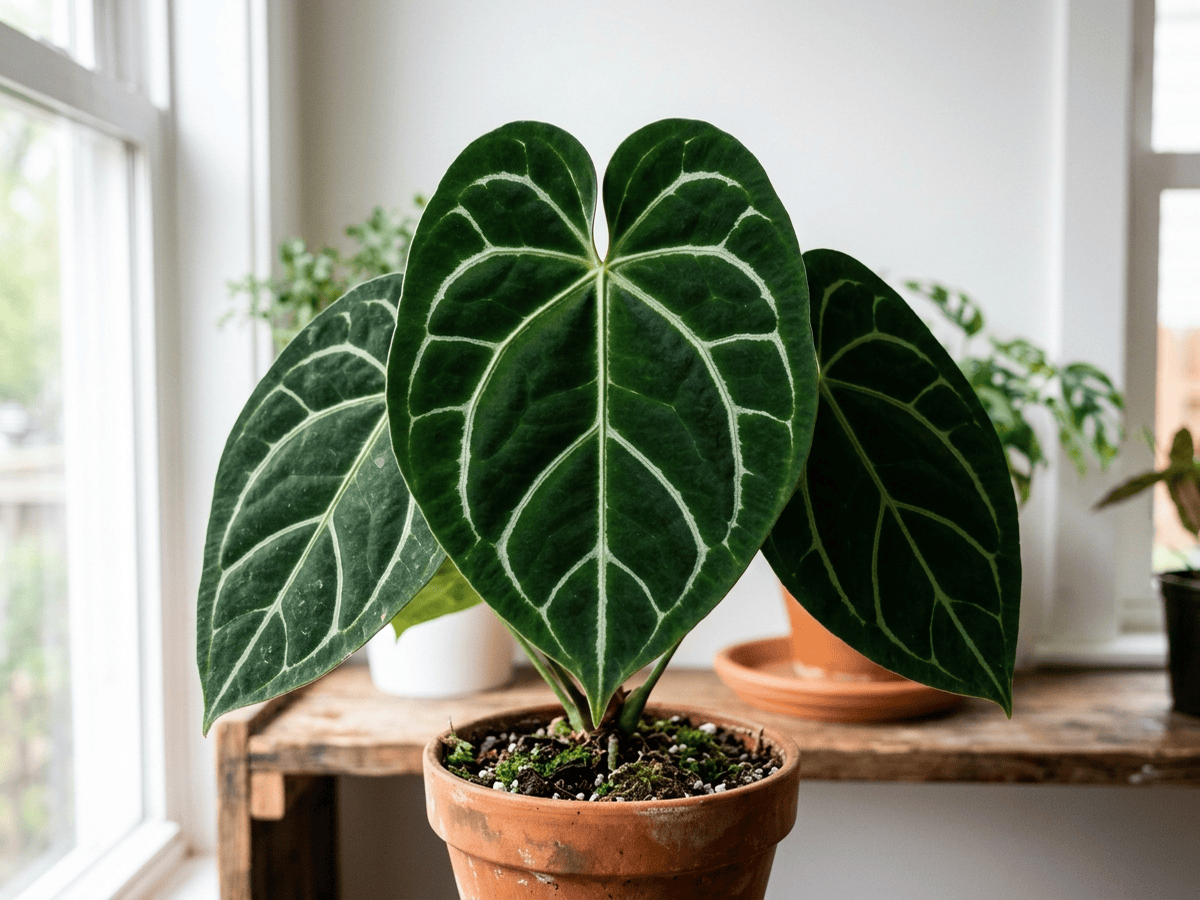 Crystal AnthuriumAnthurium crystallinum
Plants with similar care
Frequently asked questions
How often should I water King Anthurium?
In summer, water about every 5 days; in winter, about every 10 days. Adjust for heat, pot size and drainage.
How much light does King Anthurium need?
Indirect: Filtered light. Watch the leaves — scorching or stretching means the light needs adjusting.
Is King Anthurium toxic to cats or dogs?
Pets Moderate (Dogs Moderate · Cats Moderate) Educational information, not medical or veterinary advice. If exposure is suspected, contact a doctor or veterinarian.
Is King Anthurium easy to grow?
It is considered challenging and rewards experienced growers.
Can King Anthurium be grown indoors?
Yes, it adapts well to indoor growing given the right light.
When does King Anthurium bloom?
It typically blooms Jun–Aug in the Northern Hemisphere.
YardMate
Identify any plant in seconds
Snap a photo — YardMate names the plant, diagnoses problems, and reminds you when to water.
Download on the App Store