 YardMate


Snapdragon
Antirrhinum majus
Easy · Beginner friendlyAbout Snapdragon
Snapdragon is a cool-season annual (or short-lived perennial) beloved for its tall spires of tubular, two-lipped flowers that snap open when gently squeezed. Native to the Mediterranean, it has been a cottage-garden staple in the United States for over a century. Colors range from white, yellow, and pink to deep crimson and bicolors. Snapdragons thrive in spring and fall across most US zones, tolerating light frost and providing vertical drama in beds, borders, and cut-flower gardens.
- Cut-flower
- Deer-resistant
- Pollinator-friendly
How to care for Snapdragon
Watering
- Springevery 3 days
- Summerevery 2 days
- Fallevery 5 days
- Winterevery 10 days
Soil · Well-draining
- Top dressingPine bark mulch10%
- Main mixPotting soil + perlite 2:170%
- DrainageLECA / gravel20%
Never skip the drainage layer — standing water is the top cause of root rot.
FERTILIZER
Balanced Feed 14-14-14
An even feed covers all three needs at once, keeping leaves, roots and blooms moving together with nothing pushed out of balance.
- Nitrogen · Leaves
- Phosphorus · Roots + Blooms
- Potassium · Strength
- Springevery 14 days
- Summerevery 14 days
- Fallevery 30 days
At a Glance
- NativeMediterranean
- Height1–3 ft (0.3–0.9 m)
- Spread1–1.5 ft (0.3–0.5 m)
- Flower colorWhite, Yellow, Pink, Red
- Foliage colorGreen
- SoilLoamy, Well-drained
- LocationsYard · Balcony
Bloom time
BLOOM CYCLE
Peak bloom
Mar, Apr, May, Sep, Oct, Nov
Spires of snapping flowers spring and fall
Fragrance
LIGHT FRAGRANCE
Light sweet scent, more noticeable in warm conditions.
Toxicity
No toxicity has been reported for this plant. Still, it is wise to keep pets from chewing on any houseplant.
Educational information, not medical or veterinary advice. If exposure is suspected, contact a doctor or veterinarian.
DISTRIBUTION

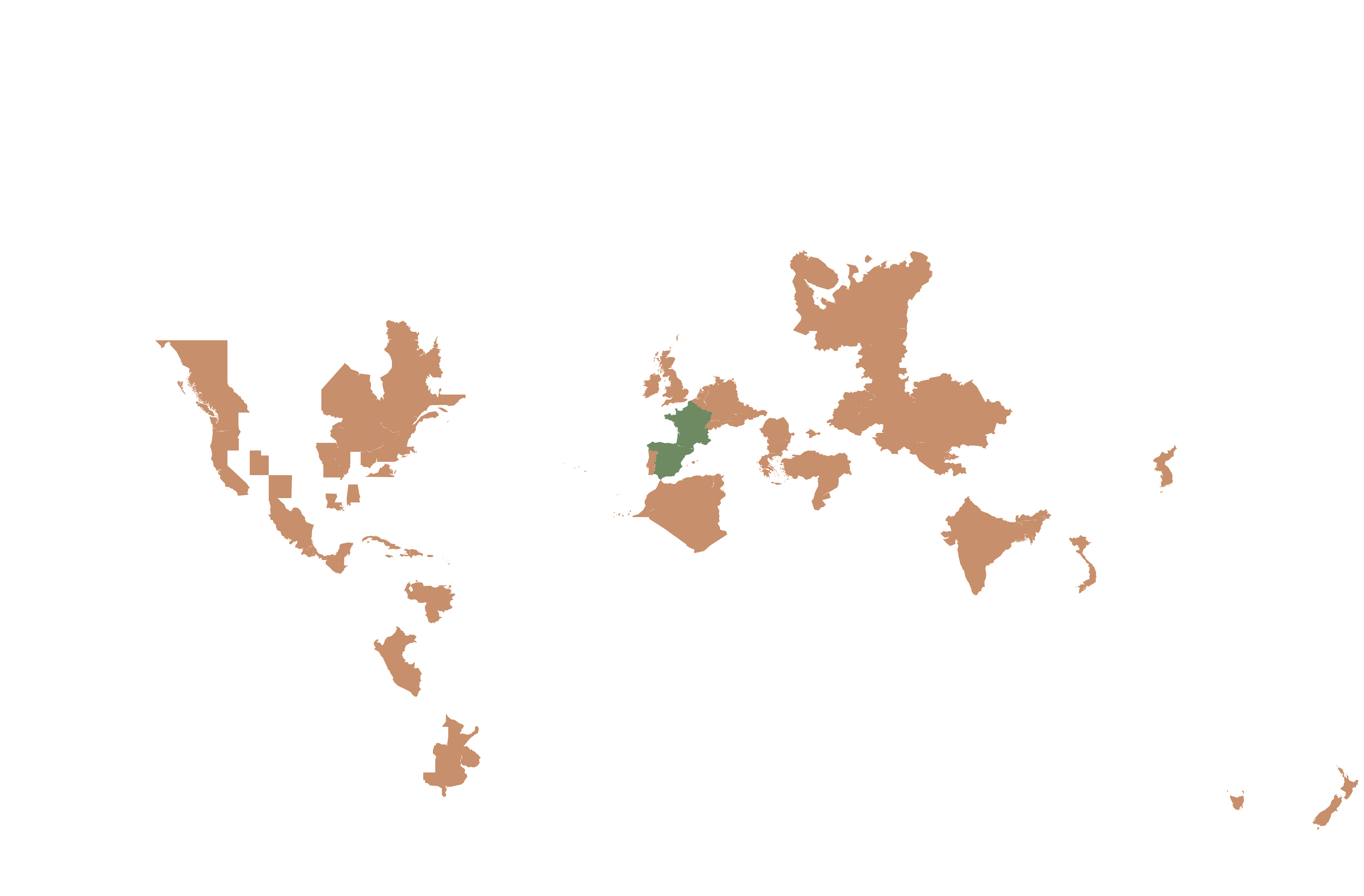
- Native
- Introduced
- Mediterranean
History

Antirrhinum majus is native to the western Mediterranean basin — southern Spain, Portugal, southern France, and northern Morocco — growing on rocky slopes, old walls, and limestone outcrops. It has been cultivated in European gardens since ancient Roman times, and the 1st-century CE writer Pliny the Elder describes it in his Natural History. The genus name "Antirrhinum" is from Greek anti-rhinon meaning "like a nose," and the common name "snapdragon" refers to the distinctive hinged flower architecture: each tubular flower has two fused lower petals forming a closed "dragon mouth" that opens only when a strong pollinator — almost exclusively a large bumblebee (Bombus) — lands on the lower lip and pushes it down with its weight, revealing the nectar and pollen inside.
Honeybees and smaller bees are mostly too light to open the flower, making Antirrhinum a textbook example of specialized bumblebee pollination. Modern horticultural breeding began in the 19th century and has produced an enormous range of flower colors (every color except true blue), plant sizes (dwarf 15 cm bedding forms to 90 cm cut-flower types), and flower forms ("butterfly" open-face forms, "azalea" double-flowered types, and the traditional closed-mouth "dragon" form).
Victorian gardeners prized them in cutting gardens and breeders have since developed dwarf bedding types and tall F1 cultivars for the American market. Children across generations have delighted in pinching the blooms to make the 'dragon' jaws snap. The species is an important model organism in plant developmental genetics; the Antirrhinum genome has been extensively studied for the genetics of flower symmetry, color patterning, and floral evolution, with foundational work by Enrico Coen and Rosemary Carpenter at the John Innes Centre in the UK.
Symbolism & meaning
What It Symbolizes
The Snapdragon embodies graciousness, its hinged blooms balancing strength with gentleness — bold color held by a flower that opens at a child's gentle squeeze. Yet folklore also remembers it as a guard against deception, planted to ward off lies and curses. It is a flower of two faces: warm welcome on the outside, quiet vigilance underneath.
- Graciousness — represents strength paired with gentleness
- Deception — historically planted to ward off lies and curses
Where the Name Comes From
The name Snapdragon describes flowers that open like a dragon mouth. From Greek 'anti' (like) and 'rhis' (snout), describing the snout-shaped flower; 'majus' means 'larger'.
Uses & Fun Facts
- Tall Snapdragon spires last over a week in bouquets
- Hinged flowers reward strong bumblebees that pry them open
- Dwarf strains thrive in cool-season patio pots and window boxes
Related plants
Plants with similar care
 Chinese AbeliaAbelia chinensis
 Fragrant AbeliaAbelia mosanensis
 Large-Flowered AbeliaAbelia uniflora
 Glossy AbeliaAbelia x grandiflora
Frequently asked questions
How often should I water Snapdragon?
In summer, water about every 2 days; in winter, about every 10 days. Adjust for heat, pot size and drainage.
How much light does Snapdragon need?
Full sun: 6+ hrs direct. Watch the leaves — scorching or stretching means the light needs adjusting.
Is Snapdragon toxic to cats or dogs?
No toxicity has been reported for this plant. Still, it is wise to keep pets from chewing on any houseplant. Educational information, not medical or veterinary advice. If exposure is suspected, contact a doctor or veterinarian.
Is Snapdragon easy to grow?
Yes — it is considered an easy, beginner-friendly plant.
When does Snapdragon bloom?
It typically blooms Mar, Apr, May, Sep, Oct, Nov in the Northern Hemisphere.
YardMate
Identify any plant in seconds
Snap a photo — YardMate names the plant, diagnoses problems, and reminds you when to water.
Download on the App Store