 YardMate


Heart-Leaf Ice Plant
Aptenia cordifolia
Easy · Beginner friendlyAbout Heart-Leaf Ice Plant
Baby Sun Rose or Heartleaf Ice Plant is a South African trailing succulent grown as a tender perennial groundcover in zones 9-11 and as a hanging basket annual elsewhere. Growing 2 to 4 inches tall and trailing 2 feet or more, it has heart-shaped glossy succulent leaves and small magenta or yellow daisy flowers. Popular in California and Florida as a drought-tolerant groundcover.
- Drought-tolerant
- Heat-tolerant
- Trailing
- Groundcover
How to care for Heart-Leaf Ice Plant
Watering
- Springevery 10 days
- Summerevery 7 days
- Fallevery 14 days
- Winterevery 21 days
Soil · Fast-draining
- Main mixSand + pumice + soil 1:1:150%
- DrainagePumice / gravel50%
Keep grit at half the mix or more — this soil is meant to dry out fast.
FERTILIZER
This plant needs little to no feeding.
At a Glance
- NativeAfrica
- Height0.3–0.5 ft (0.1–0.2 m)
- Spread2–3 ft (0.6–0.9 m)
- Flower colorPurple, Red, Pink, White
- Foliage colorGreen
- SoilSandy, Well-drained
- LocationsYard · Balcony
Bloom time
BLOOM CYCLE
Peak bloom
Mar–Nov
Small magenta daisies spring through fall
Toxicity
No toxicity has been reported for this plant. Still, it is wise to keep pets from chewing on any houseplant.
Educational information, not medical or veterinary advice. If exposure is suspected, contact a doctor or veterinarian.
DISTRIBUTION

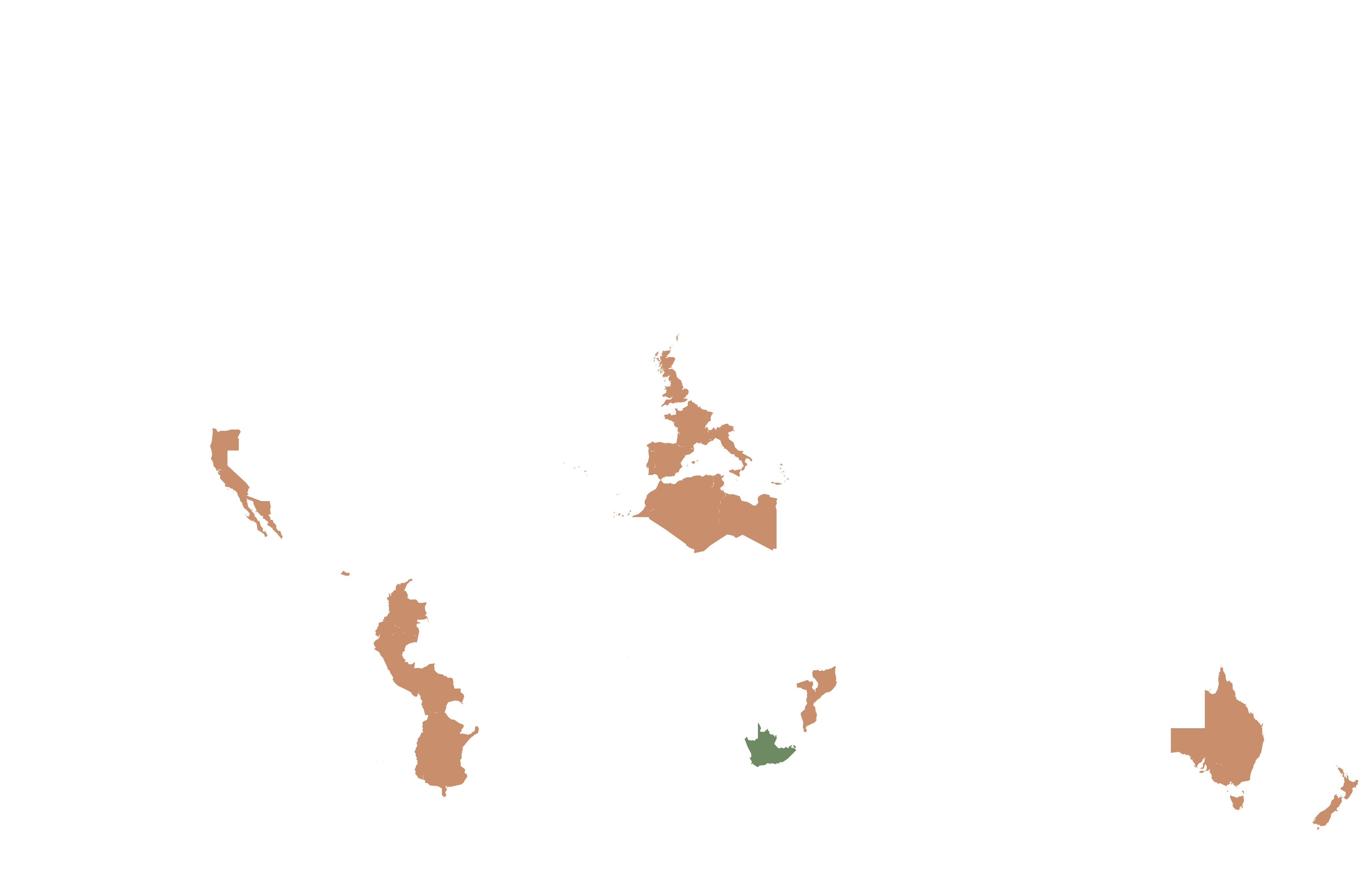
- Native
- Introduced
- Africa
History

Aptenia cordifolia, now often classified as Mesembryanthemum cordifolium, is a prostrate evergreen succulent native to South Africa and Swaziland. Linnaeus the younger described it in 1782 based on cultivated specimens. The plant produces trailing stems clothed in small glossy heart-shaped succulent leaves, giving rise to the common names baby sun rose or heart-leaf iceplant.
Small magenta, red, pink, or white daisy-like flowers appear continuously in warm weather and close at dusk. Because it tolerates salt, reflected heat, and minimal water, the plant has become a staple California coastal and Mediterranean ground cover, sold by the flat for quick slope coverage, but it has naturalized in parts of South Africa's own Cape and some Mediterranean countries, where it is now regulated as a weed.
Native to South Africa, introduced to California gardens in early 1900s. Became widely used as drought-tolerant groundcover in mid-20th century California landscaping. Modern 'Red Apple' cultivar dominates American landscape plantings in mild-winter zones.
Symbolism & meaning
What It Symbolizes
Heart-Leaf Ice Plant offers a warm heart in literal form — its succulent leaves are perfect, tiny green hearts strung along trailing stems. Yet it is a desert kindness too, thriving in dry, harsh places where little else will take root. To plant it is to set tenderness down in difficult soil and trust it to spread anyway.
- Warm heart — heart-shaped succulent leaves
- Desert kindness — thrives where little else will
Where the Name Comes From
'Aptenia' from Greek 'apten' meaning wingless, for the seed capsule; 'cordifolia' means heart-leaved.
Uses & Fun Facts
- Low succulent mat blankets sunny slopes and bare ground
- Trailing fleshy stems spill from hanging baskets and walls
- Bright magenta daisies cover heart-leaved foliage all summer
Related plants
Plants with similar care
 Chinese AbeliaAbelia chinensis
 Fragrant AbeliaAbelia mosanensis
 Large-Flowered AbeliaAbelia uniflora
 Glossy AbeliaAbelia x grandiflora
Frequently asked questions
How often should I water Heart-Leaf Ice Plant?
In summer, water about every 7 days; in winter, about every 21 days. Adjust for heat, pot size and drainage.
How much light does Heart-Leaf Ice Plant need?
Full sun: 6+ hrs direct. Watch the leaves — scorching or stretching means the light needs adjusting.
Is Heart-Leaf Ice Plant toxic to cats or dogs?
No toxicity has been reported for this plant. Still, it is wise to keep pets from chewing on any houseplant. Educational information, not medical or veterinary advice. If exposure is suspected, contact a doctor or veterinarian.
Is Heart-Leaf Ice Plant easy to grow?
Yes — it is considered an easy, beginner-friendly plant.
When does Heart-Leaf Ice Plant bloom?
It typically blooms Mar–Nov in the Northern Hemisphere.
YardMate
Identify any plant in seconds
Snap a photo — YardMate names the plant, diagnoses problems, and reminds you when to water.
Download on the App Store