 YardMate


Monkey-Puzzle
Araucaria araucana
Medium · Some experienceAbout Monkey-Puzzle
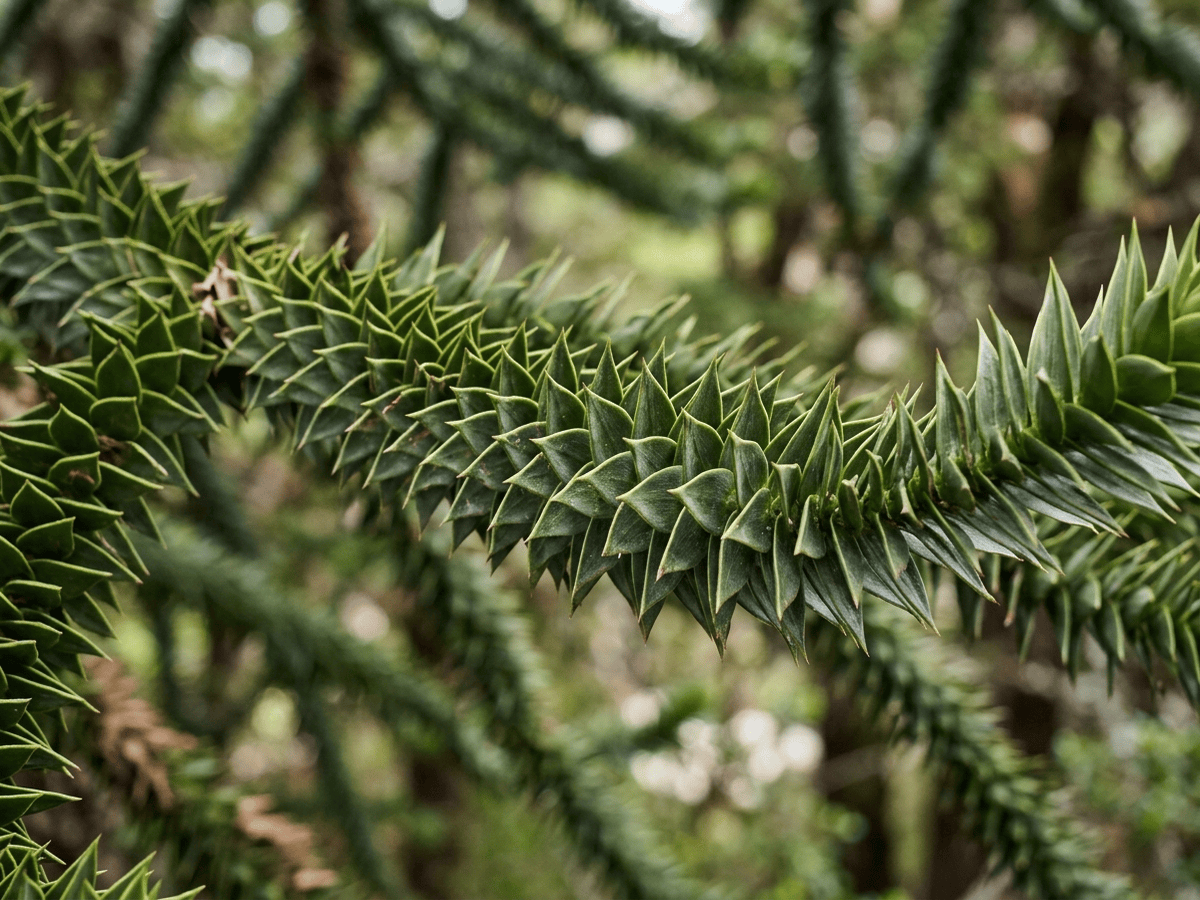
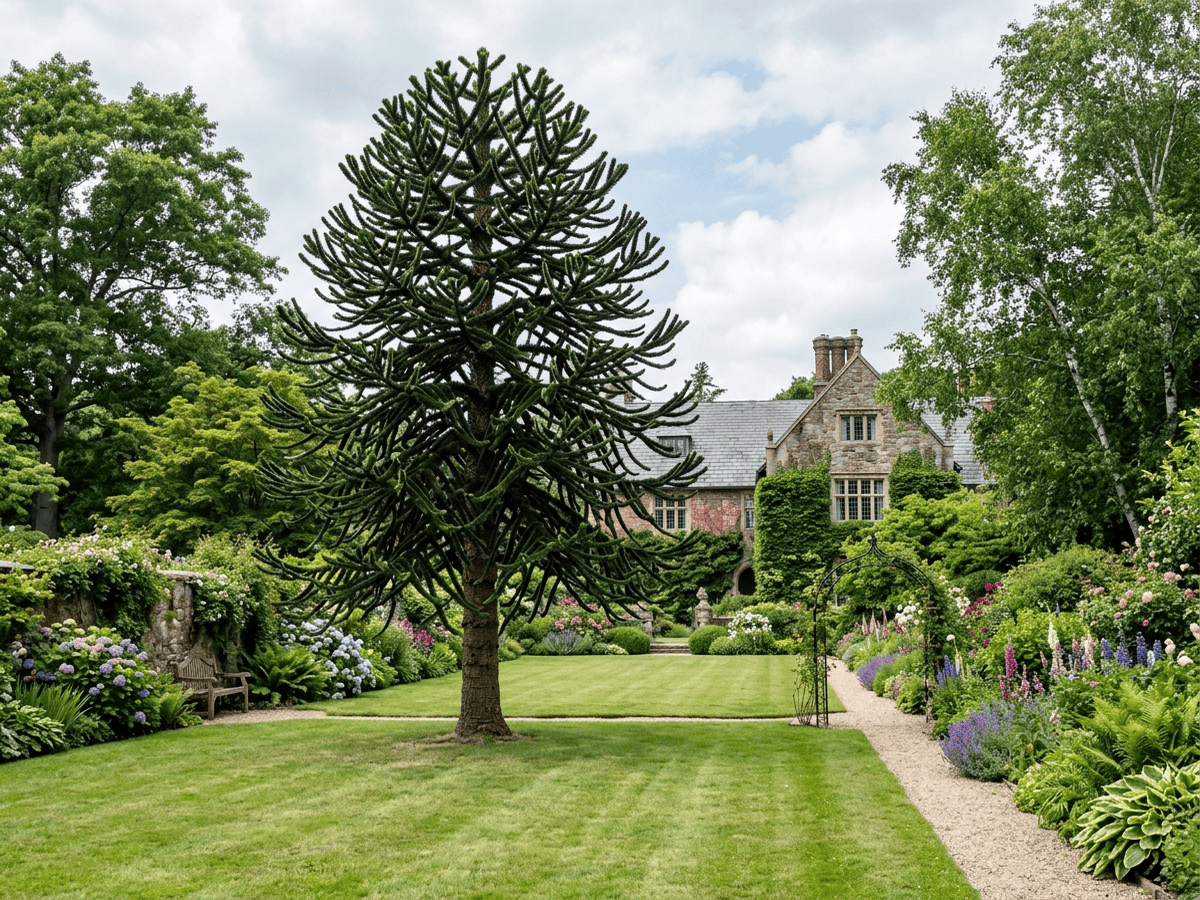
Monkey Puzzle Tree is an extraordinary evergreen conifer native to volcanic slopes of southern Chile and Argentina, reaching 50-80 feet in cultivation, with distinctive whorled horizontal branches densely covered in sharp triangular leathery leaves that spiral around the stems. A living fossil dating to the Mesozoic, it is one of the most unusual trees cultivated in the Pacific Northwest and coastal California where climate allows.
- Evergreen
How to care for Monkey-Puzzle
Watering
- Springevery 10 days
- Summerevery 7 days
- Fallevery 14 days
- Winterevery 30 days
Soil · Well-draining
- Top dressingPine bark mulch10%
- Main mixPotting soil + perlite 2:170%
- DrainageLECA / gravel20%
Never skip the drainage layer — standing water is the top cause of root rot.
FERTILIZER
Balanced Feed 14-14-14
An even feed covers all three needs at once, keeping leaves, roots and blooms moving together with nothing pushed out of balance.
- Nitrogen · Leaves
- Phosphorus · Roots + Blooms
- Potassium · Strength
- Springevery 60 days
At a Glance
- NativeSouth America
- Height50–80 ft (15.2–24.4 m)
- Spread25–35 ft (7.6–10.7 m)
- Flower colorYellow, Green
- Foliage colorDark-green, Green
- Fruit colorBrown
- SoilLoamy, Well-drained, Acidic
- LocationsYard
Bloom time
BLOOM CYCLE
Large yellow male cones on separate trees
Toxicity
No toxicity has been reported for this plant. Still, it is wise to keep pets from chewing on any houseplant.
Educational information, not medical or veterinary advice. If exposure is suspected, contact a doctor or veterinarian.
DISTRIBUTION


- Native
- Introduced
- South America
History
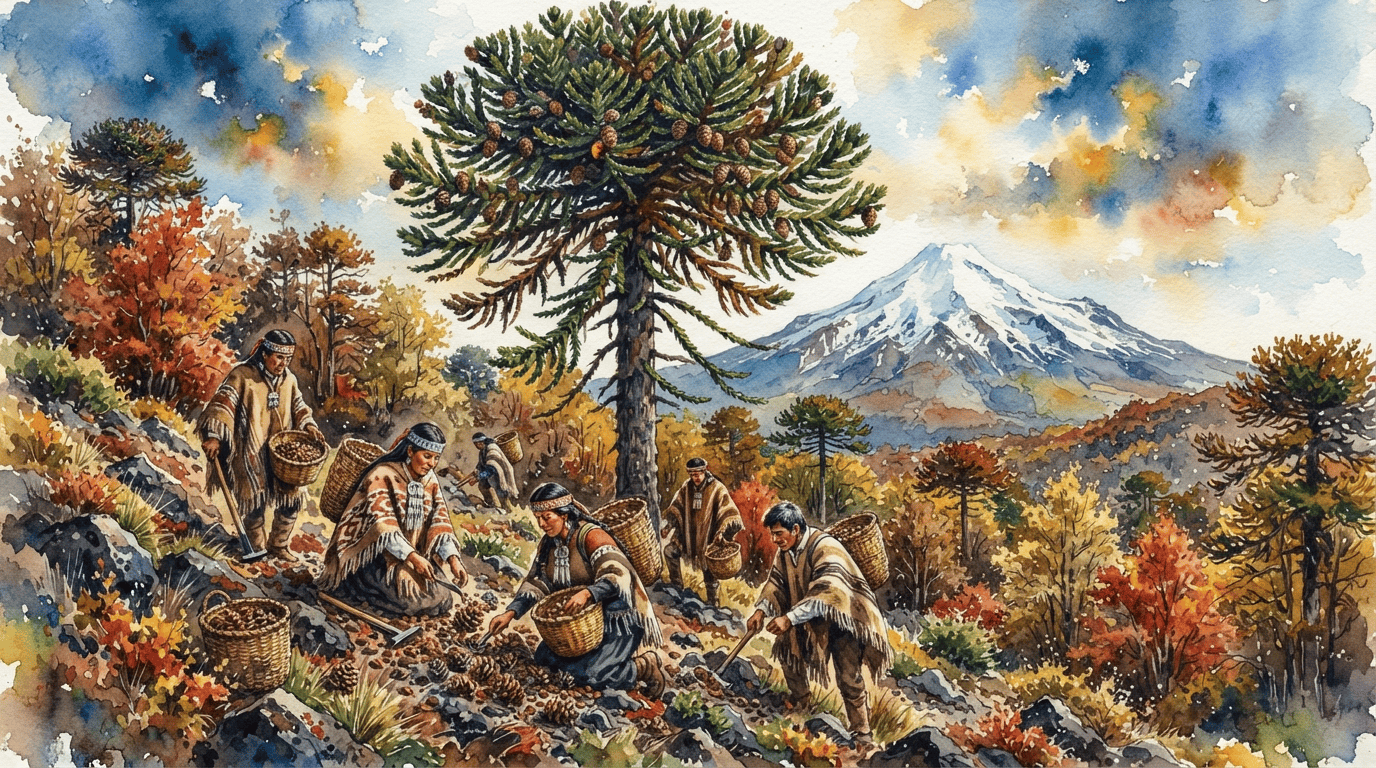
Araucaria araucana is endemic to a narrow band of the southern Andes in south-central Chile and adjacent Argentina, typically on volcanic slopes between 600 and 1800 meters. Italian-Chilean priest Juan Ignacio Molina described it in 1782 as Pinus araucana. The common name monkey puzzle arose in the 1850s in Cornwall, England, where the novelty tree was said to puzzle any monkey trying to climb its sharply armored branches.
For the indigenous Pehuenche (literally people of the pehuén) and related Mapuche peoples, the large starchy seeds (piñones) of the female cones are a sacred staple food—gathered in autumn ceremonies, stored through winter, and central to traditional cuisine and identity. Archibald Menzies collected seeds for Joseph Banks in 1795, introducing the species to Britain where it became a Victorian garden sensation.
The species is declared a Chilean natural monument (1976) and listed as Endangered by the IUCN due to logging, wildfire, and climate change. The Mapuche Pewenche people of Chile and Argentina are named for the tree ('pewen' means monkey puzzle) and have depended on its large edible nuts ('piñones') for centuries as a winter staple. Named 'monkey puzzle' by a British gardener who remarked it 'would be a puzzle for a monkey to climb'.
Symbolism & meaning
What It Symbolizes
The Monkey-Puzzle is a Mesozoic survivor, a living fossil whose meaning is antiquity itself, the long memory of a green world older than mammals. For the Mapuche people of the southern Andes its piñones have been a sacred staple food, weaving the tree into a heritage of ceremony and sustenance. To plant a monkey-puzzle is to host time itself in the garden, a creature whose calendar is measured in epochs rather than seasons.
- Antiquity — Mesozoic living fossil conifer
- Heritage — sacred staple food of Mapuche people
Where the Name Comes From
'Araucaria' from the Mapuche region of Arauco in Chile; 'araucana' reinforces the origin.
Uses & Fun Facts
- Large piñones seeds traditionally roasted and eaten in Chile
- Prehistoric Monkey-Puzzle silhouette anchors large lawns
- Sacred Pehuenche tree of the southern Andes
Related plants
Plants with similar care
 Mexican AbeliaAbelia floribunda
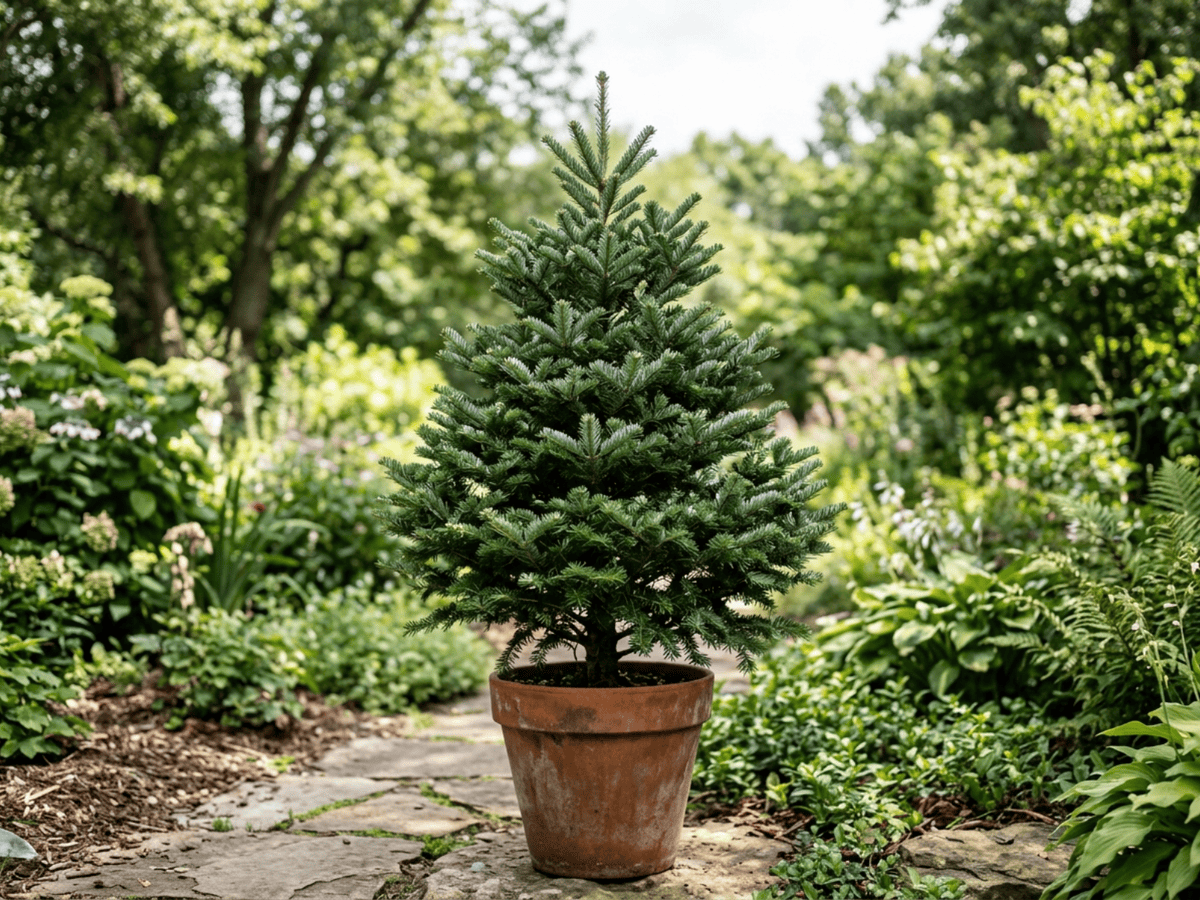 Fraser FirAbies fraseri
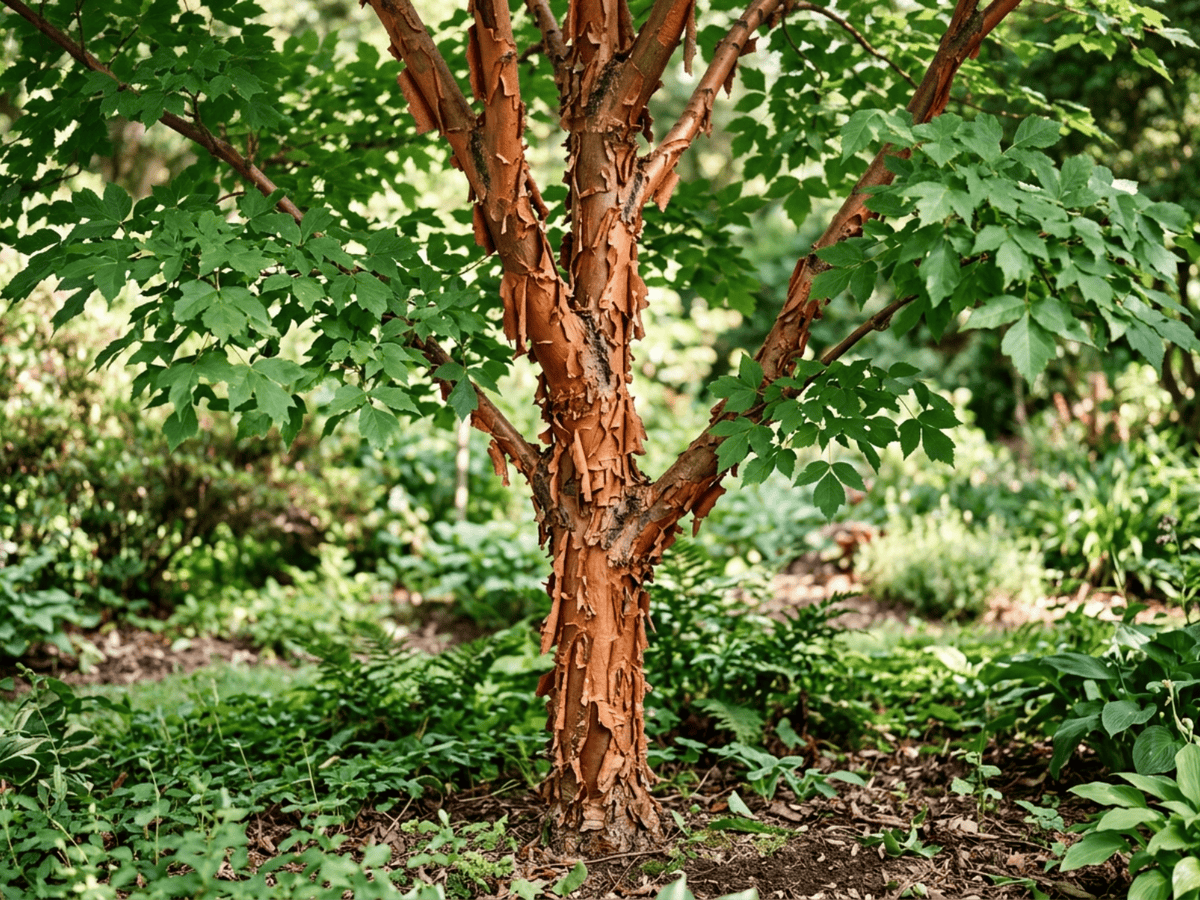 Paperbark MapleAcer griseum
 Sugar MapleAcer saccharum
Frequently asked questions
How often should I water Monkey-Puzzle?
In summer, water about every 7 days; in winter, about every 30 days. Adjust for heat, pot size and drainage.
How much light does Monkey-Puzzle need?
Full sun: 6+ hrs direct. Watch the leaves — scorching or stretching means the light needs adjusting.
Is Monkey-Puzzle toxic to cats or dogs?
No toxicity has been reported for this plant. Still, it is wise to keep pets from chewing on any houseplant. Educational information, not medical or veterinary advice. If exposure is suspected, contact a doctor or veterinarian.
Is Monkey-Puzzle easy to grow?
It is moderately demanding: a good choice once you have a little experience.
YardMate
Identify any plant in seconds
Snap a photo — YardMate names the plant, diagnoses problems, and reminds you when to water.
Download on the App Store