 YardMate



Pipevine
Aristolochia macrophylla
Medium · Some experienceAbout Pipevine
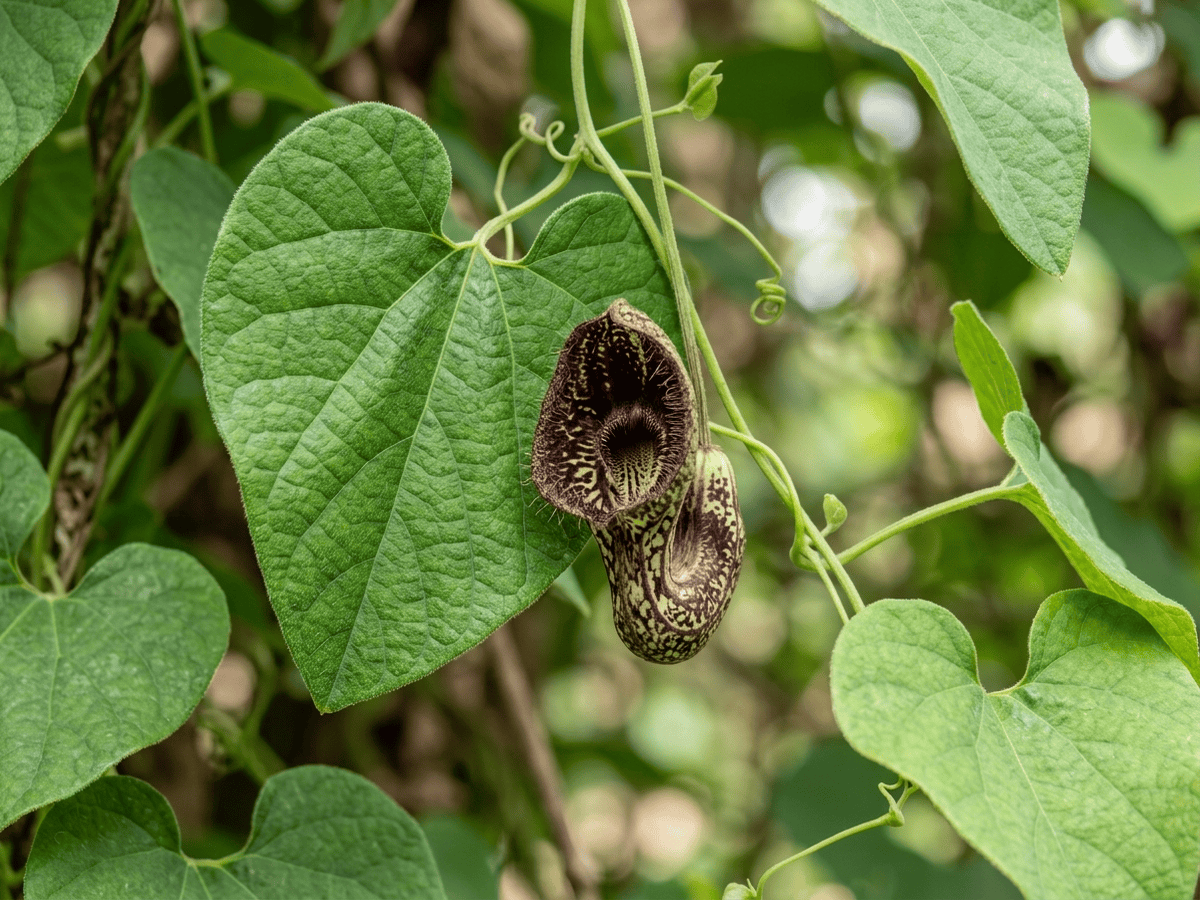
Dutchman's Pipe is a dramatic eastern US native vine reaching 20-30 feet with enormous heart-shaped leaves that create a lush tropical screen. Unusual curved brown-purple pipe-shaped flowers are hidden among the foliage in late spring. Native to Appalachian woodlands, it is the sole larval host for the beautiful pipevine swallowtail butterfly, making it a keystone plant for butterfly gardens.
- Climbing
- Native
How to care for Pipevine
Watering
- Springevery 7 days
- Summerevery 5 days
- Fallevery 10 days
- Winterevery 21 days
Soil · Well-draining
- Top dressingPine bark mulch10%
- Main mixPotting soil + perlite 2:170%
- DrainageLECA / gravel20%
Never skip the drainage layer — standing water is the top cause of root rot.
FERTILIZER
Balanced Feed 14-14-14
An even feed covers all three needs at once, keeping leaves, roots and blooms moving together with nothing pushed out of balance.
- Nitrogen · Leaves
- Phosphorus · Roots + Blooms
- Potassium · Strength
- Springevery 30 days
At a Glance
- NativeNorth America
- Height20–30 ft (6.1–9.1 m)
- Spread10–15 ft (3–4.6 m)
- Flower colorGreen, Purple
- Foliage colorGreen, Yellow
- Fruit colorBrown
- SoilMoisture-retentive, Loamy, Rich
- LocationsYard
Bloom time
BLOOM CYCLE
Peak bloom
May–Jun
Curved brown-purple pipe flowers May to June
Fragrance
LIGHT FRAGRANCE
Mild carrion-like scent attracts fly pollinators.
Toxicity
Humans Toxic · Pets Toxic
aristolochic acids
Toxic
- Leaf
- Stem
- Root
- Ingestion
EXPOSURE Eating leaves, stems, and roots.
EFFECT Kidney damage, cancer risk from aristolochic acids.
NOTE Aristolochic acids are potent nephrotoxins and carcinogens; traditional Chinese medicine use of related Aristolochia species has caused documented kidney failure and urothelial cancer in humans (aristolochic acid nephropathy). Butterflies sequester these chemicals as defense.
Toxic
- Leaf
- Stem
- Root
- Ingestion
EXPOSURE Eating leaves, stems, and roots.
EFFECT Kidney failure.
NOTE Aristolochic acids are potent nephrotoxins and carcinogens; traditional Chinese medicine use of related Aristolochia species has caused documented kidney failure and urothelial cancer in humans (aristolochic acid nephropathy). Butterflies sequester these chemicals as defense.
Toxic
- Leaf
- Stem
- Root
- Ingestion
EXPOSURE Eating leaves, stems, and roots.
EFFECT Kidney failure.
NOTE Aristolochic acids are potent nephrotoxins and carcinogens; traditional Chinese medicine use of related Aristolochia species has caused documented kidney failure and urothelial cancer in humans (aristolochic acid nephropathy). Butterflies sequester these chemicals as defense.
Educational information, not medical or veterinary advice. If exposure is suspected, contact a doctor or veterinarian.
DISTRIBUTION


- Native
- Introduced
- North America
History
Aristolochia macrophylla is native to the Appalachian Mountains of the eastern United States from Pennsylvania south to Georgia and Alabama, typically on moist rich rocky slopes. French botanist Jean-Baptiste Lamarck formally described the species in 1783 (sometimes cited as A. durior, an older synonym). The epithet macrophylla means large-leaved, referring to the enormous heart-shaped leaves 15-30 cm across.
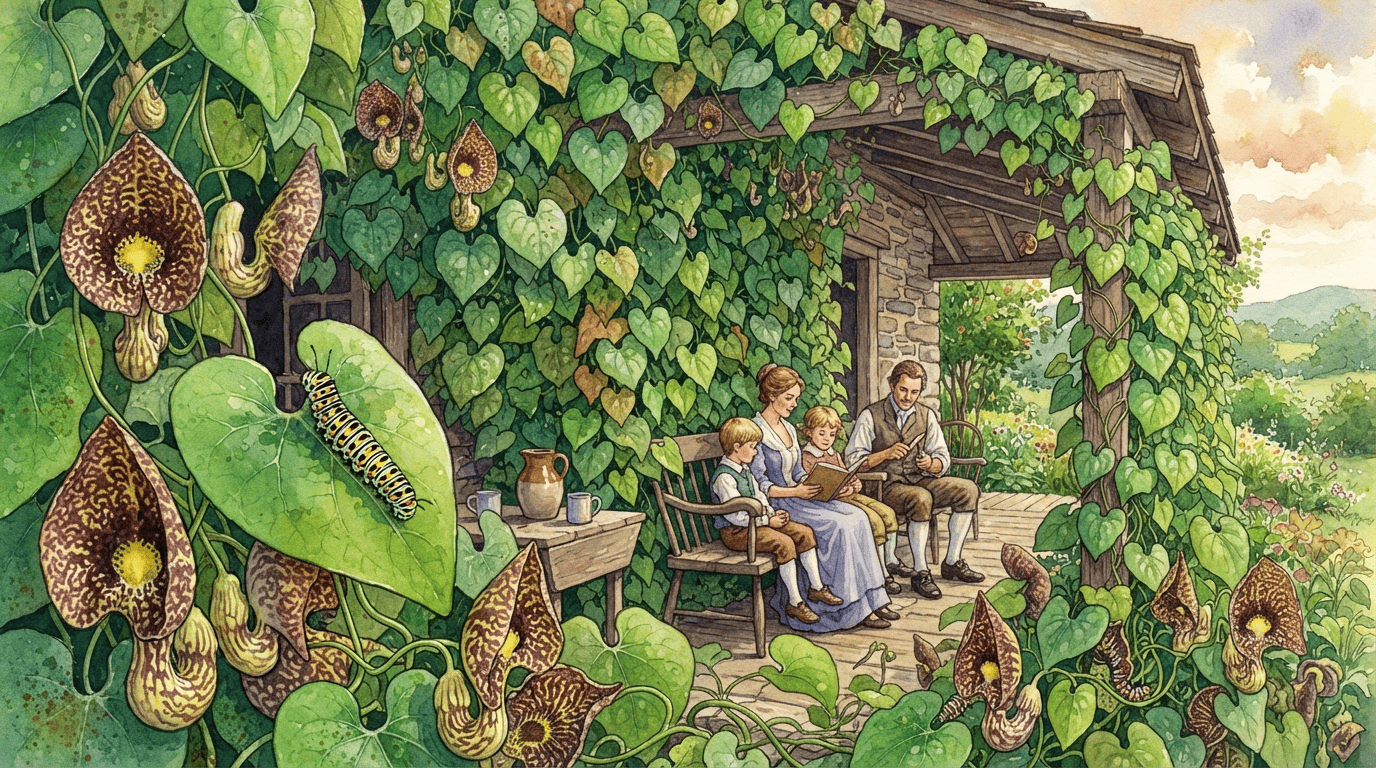
The 6-10 meter vigorous deciduous twining vine produces bizarre 3-5 cm flowers shaped like old-fashioned Dutch meerschaum smoking pipes—curved green tube with a flared purple-brown lip. The flower is a pollination trap: pollinating flies are lured inside and held by downward-pointing hairs until pollen is received, then released the next day when the hairs wither. In colonial-era American gardens it was prized as a vigorous shade screen for porches and arbors and is still occasionally planted for this purpose.
Most importantly, A. macrophylla is a critical larval host plant for the pipevine swallowtail butterfly (Battus philenor), whose caterpillars sequester the plant's aristolochic acids as a chemical defense. Called 'Dutchman's Pipe' for the resemblance of flowers to old Meerschaum smoking pipes. Used by Appalachian settlers to shade front porches in summer, where its huge leaves created a living porch curtain. Native Americans used the roots medicinally though modern science has identified the compounds as toxic.
Symbolism & meaning
What It Symbolizes
Pipevine is a flower of Hidden gifts — its strange pipe-shaped blooms tucked beneath enormous heart-shaped leaves, easy to miss unless you stoop and look. Its Ancestry belongs to the deep porches of Appalachia, where generations trained it across lattice for shade. Each vine carries a quiet message: the best gifts often hide in plain sight.
- Hidden gifts — unusual flowers tucked under huge leaves
- Ancestry — a heritage Appalachian porch vine
Where the Name Comes From
The name Pipevine describes its vining or arching growth. From Greek 'aristos' (best) and 'locheia' (childbirth), reflecting ancient birth-related use; 'macrophylla' means large-leaved.
Uses & Fun Facts
- Vigorous vine cloaks arbors and porches with heart-shaped leaves
- Host plant for Pipevine swallowtail butterfly caterpillars
- Hidden pipe-shaped flowers among dense overlapping foliage
Related plants
Plants with similar care
 Japanese MapleAcer palmatum
 Azure MonkshoodAconitum carmichaelii
 Florida HobblebushAgarista populifolia
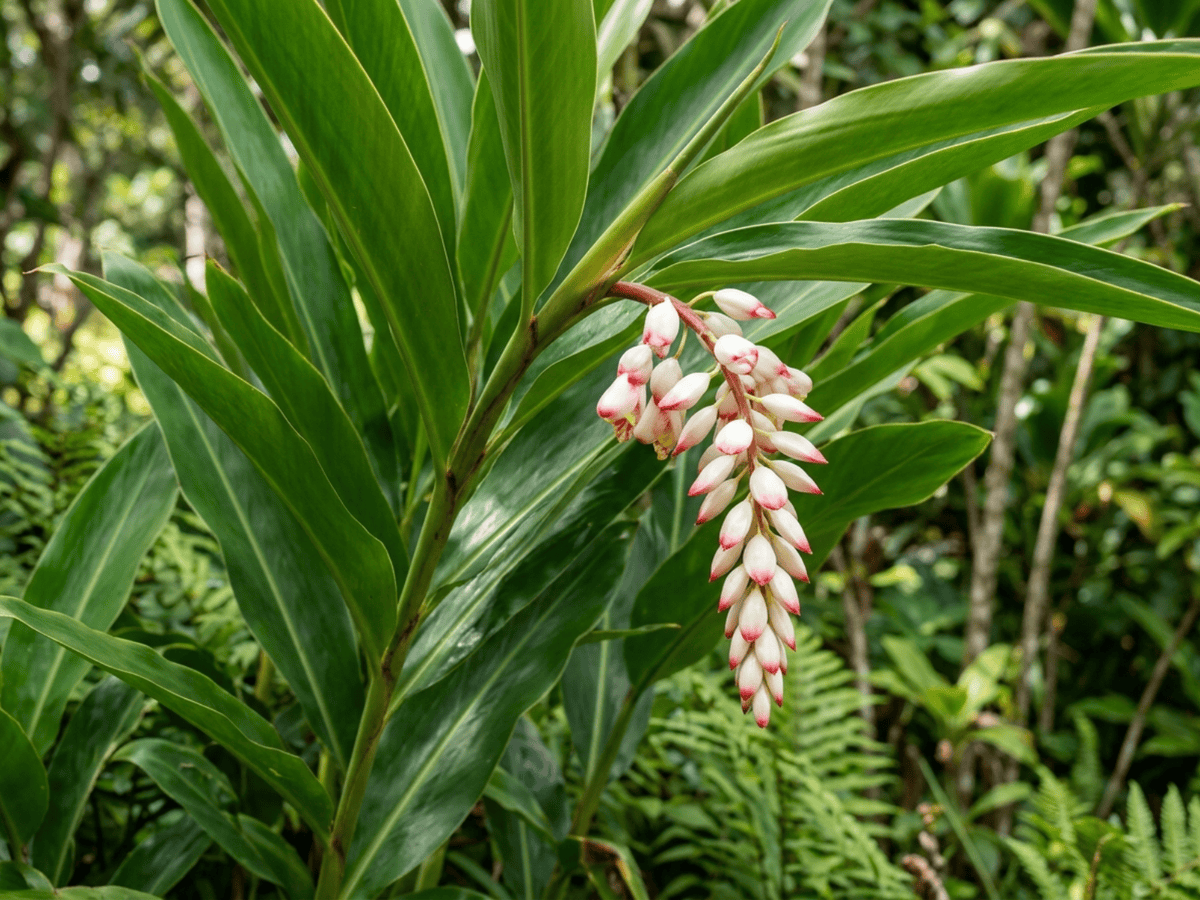 Shell GingerAlpinia zerumbet
Frequently asked questions
How often should I water Pipevine?
In summer, water about every 5 days; in winter, about every 21 days. Adjust for heat, pot size and drainage.
How much light does Pipevine need?
Part shade: 2–4 hrs direct. Watch the leaves — scorching or stretching means the light needs adjusting.
Is Pipevine toxic to cats or dogs?
Pets Toxic (Dogs Toxic · Cats Toxic) Educational information, not medical or veterinary advice. If exposure is suspected, contact a doctor or veterinarian.
Is Pipevine easy to grow?
It is moderately demanding: a good choice once you have a little experience.
When does Pipevine bloom?
It typically blooms May–Jun in the Northern Hemisphere.
YardMate
Identify any plant in seconds
Snap a photo — YardMate names the plant, diagnoses problems, and reminds you when to water.
Download on the App Store