 YardMate


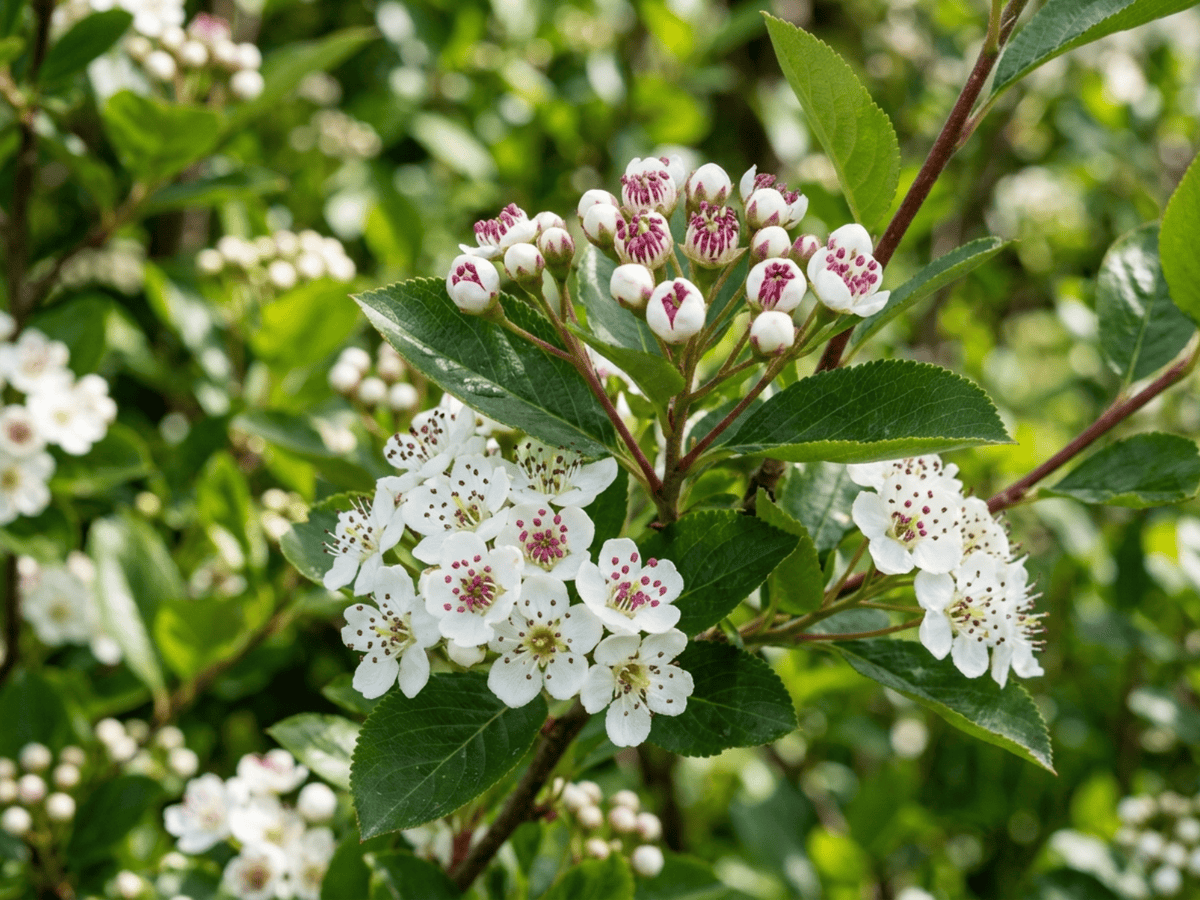

Purple Chokeberry
Aronia prunifolia
Easy · Beginner friendlyAbout Purple Chokeberry
Purple Chokeberry is a hybrid native American chokeberry (Aronia arbutifolia × A. melanocarpa) growing 6-10 feet tall, producing clusters of white flowers in spring, abundant purple-black berries in summer, and brilliant red-purple fall foliage. The berries are extraordinarily high in antioxidants—one of the highest known in temperate fruits. Hardy in USDA zones 3-8 and an excellent multi-purpose native shrub for American gardens.
- Edible
- Cold-hardy
- Fall-color
- Native
How to care for Purple Chokeberry
Watering
- Springevery 5 days
- Summerevery 4 days
- Fallevery 7 days
- Winterpause watering
Soil · Well-draining
- Top dressingPine bark mulch10%
- Main mixPotting soil + perlite 2:170%
- DrainageLECA / gravel20%
Never skip the drainage layer — standing water is the top cause of root rot.
FERTILIZER
Balanced Feed 14-14-14
An even feed covers all three needs at once, keeping leaves, roots and blooms moving together with nothing pushed out of balance.
- Nitrogen · Leaves
- Phosphorus · Roots + Blooms
- Potassium · Strength
- Springevery 60 days
- Summerevery 60 days
At a Glance
- NativeNorth America
- Height6–12 ft (1.8–3.7 m)
- Spread3–6 ft (0.9–1.8 m)
- Flower colorWhite
- Foliage colorGreen, Red
- Fruit colorBlack, Purple
- SoilLoamy, Well-drained, Acidic
- LocationsYard
Bloom time
BLOOM CYCLE
Peak bloom
May
White clusters May
Fragrance
LIGHT FRAGRANCE
The flowers have a mild scent.
Toxicity
No toxicity has been reported for this plant. Still, it is wise to keep pets from chewing on any houseplant.
Educational information, not medical or veterinary advice. If exposure is suspected, contact a doctor or veterinarian.
DISTRIBUTION

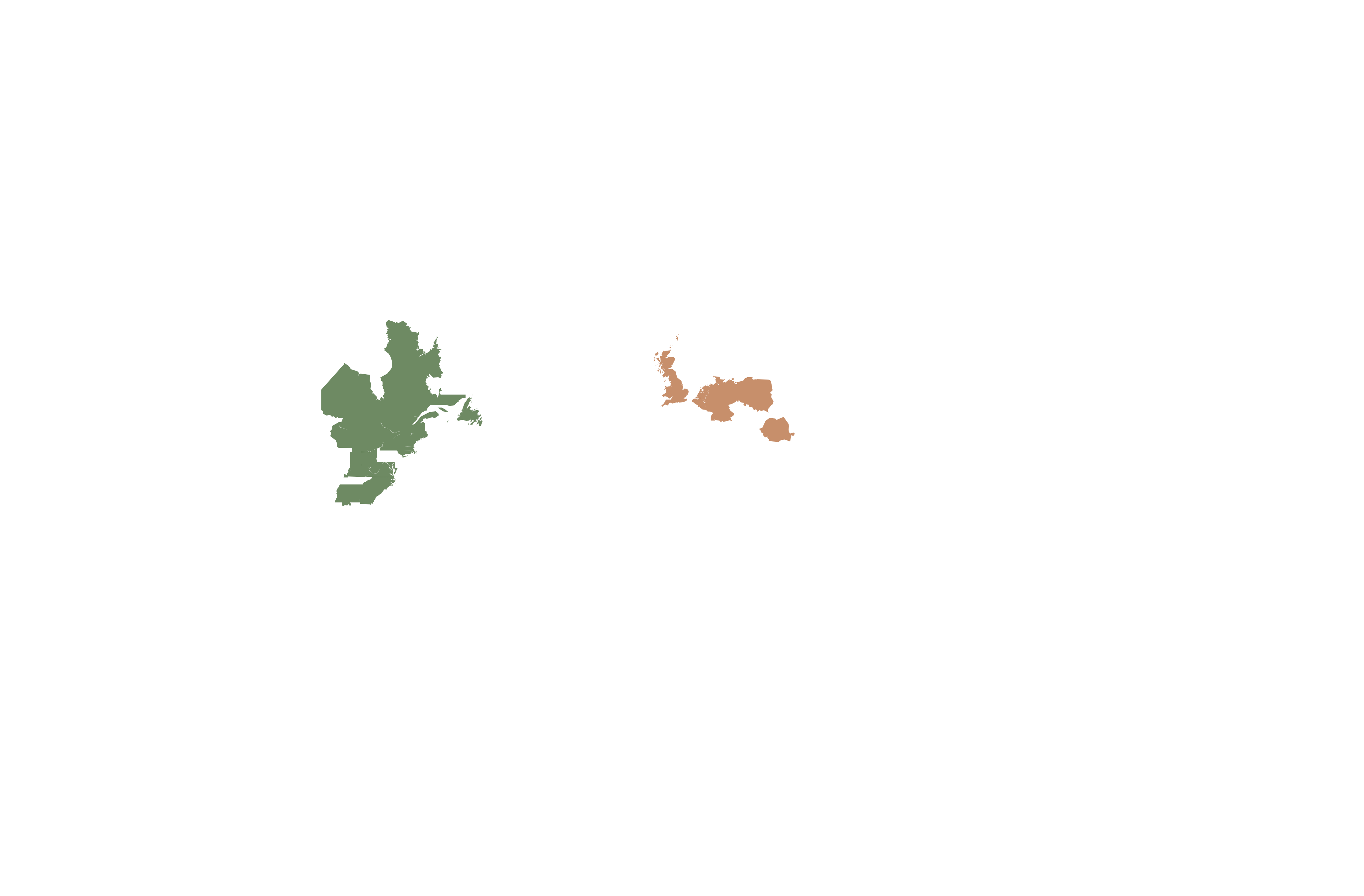
- Native
- Introduced
- North America
History
Aronia prunifolia is a natural hybrid between the American red chokeberry (A. arbutifolia) and black chokeberry (A. melanocarpa), occurring where the two species overlap across eastern North America. American botanist Edward L. Greene formally named it in 1901, though the hybrid nature was only fully understood through later work. It typically produces dark purple-to-black fruit in pendant clusters persisting through fall and into winter when not eaten by birds.
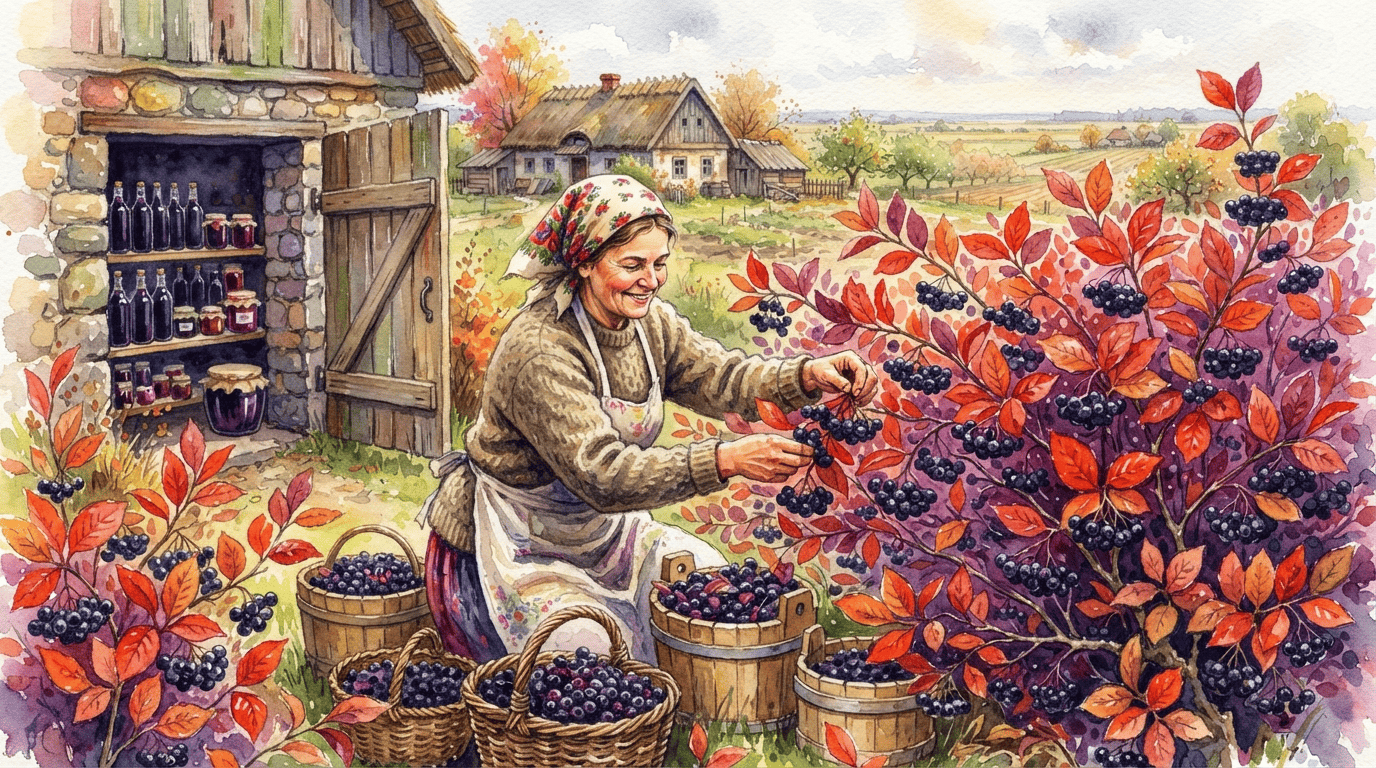
Fall color is brilliant scarlet-red. Despite the common name chokeberry—earned because the extremely astringent raw fruit puckers the mouth—the fruit has gained prominence as a superfood since the 2000s, with exceptionally high anthocyanin and antioxidant content. Eastern European countries especially Poland have long cultivated aronia commercially for juice and jam.
The cultivar 'Viking' is the most commonly grown selection. A naturally occurring hybrid between the red and black chokeberries, native across the eastern and central United States. Aronia berries have become a superfood in American markets for their extraordinary antioxidant content—surpassing blueberries and açaí. Growing industry for aronia juice, powder, and wine primarily centered in the Midwest.
Symbolism & meaning
What It Symbolizes
Purple Chokeberry is vitality without theatrical display. Dark fruit, clean white flowers, and red autumn leaves give it three seasons of quiet usefulness for birds and people alike. Its meaning is stored strength: the kind of abundance that ripens in overlooked thickets and waits for someone observant enough to notice.
- Vitality — stores vitality in antioxidant-rich fruit
- Heritage — Indigenous American medicinal and food plant
Where the Name Comes From
The common name highlights its purple coloring. 'Aronia' from Greek 'aria' (an old name for related plants); 'prunifolia' means 'plum-leaved'.
Uses & Fun Facts
- Antioxidant-rich purple-black berries used in jams, juice, syrup
- Late-summer fruit feeds songbirds and small mammals
- Brilliant red-purple fall foliage on a tidy native shrub
- White spring flowers support native bees and pollinators
Related plants
Plants with similar care
 Chinese AbeliaAbelia chinensis
 Fragrant AbeliaAbelia mosanensis
 Large-Flowered AbeliaAbelia uniflora
 Glossy AbeliaAbelia x grandiflora
Frequently asked questions
How often should I water Purple Chokeberry?
Water about every 5 days during the growing season, and always let excess water drain away.
How much light does Purple Chokeberry need?
Full sun: 6+ hrs direct. Watch the leaves — scorching or stretching means the light needs adjusting.
Is Purple Chokeberry toxic to cats or dogs?
No toxicity has been reported for this plant. Still, it is wise to keep pets from chewing on any houseplant. Educational information, not medical or veterinary advice. If exposure is suspected, contact a doctor or veterinarian.
Is Purple Chokeberry easy to grow?
Yes — it is considered an easy, beginner-friendly plant.
When does Purple Chokeberry bloom?
It typically blooms May in the Northern Hemisphere.
YardMate
Identify any plant in seconds
Snap a photo — YardMate names the plant, diagnoses problems, and reminds you when to water.
Download on the App Store