 YardMate

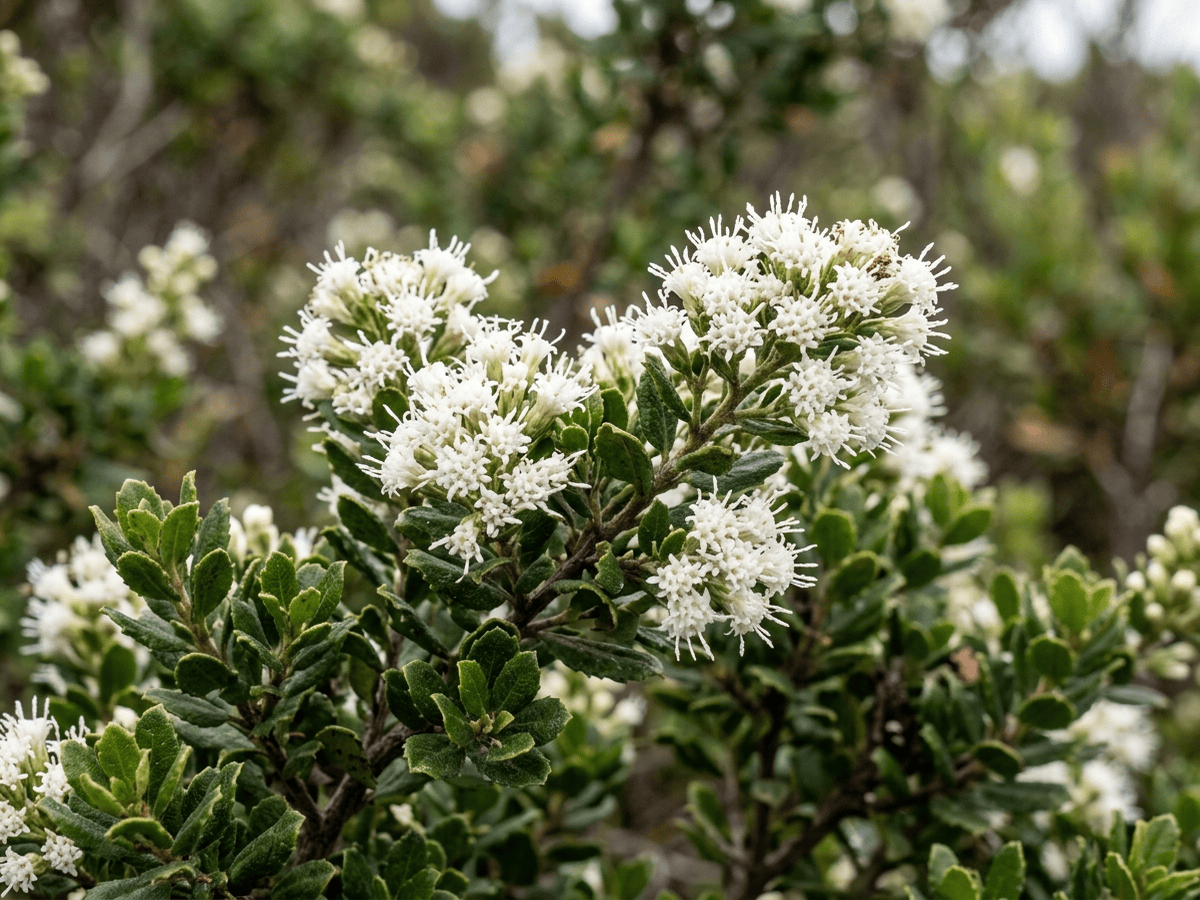


Coyote Brush
Baccharis pilularis
Easy · Beginner friendlyAbout Coyote Brush
Coyote Brush is a California native evergreen shrub with low-growing 'Pigeon Point' and 'Twin Peaks' cultivars commonly used as tough groundcovers reaching 1-3 feet tall and spreading 6-10 feet. Small yellow flowers in fall support native pollinators and beneficial insects. Extremely drought-tolerant once established, fire-resistant, and native throughout California, it is a workhorse plant for low-water California gardens and restoration projects.
- Drought-tolerant
- Groundcover
- Evergreen
- Native
How to care for Coyote Brush
Watering
- Springevery 14 days
- Summerevery 21 days
- Fallevery 21 days
- Winterevery 30 days
Soil · Well-draining
- Top dressingPine bark mulch10%
- Main mixPotting soil + perlite 2:170%
- DrainageLECA / gravel20%
Never skip the drainage layer — standing water is the top cause of root rot.
FERTILIZER
This plant needs little to no feeding.
At a Glance
- NativeNorth America
- Height1–3 ft (0.3–0.9 m)
- Spread4–6 ft (1.2–1.8 m)
- Flower colorYellow
- Foliage colorDark-green
- Fruit colorWhite
- SoilSandy, Well-drained
- LocationsYard
Bloom time
BLOOM CYCLE
Peak bloom
Sep–Nov
Small yellow flowers September to November
Fragrance
LIGHT FRAGRANCE
Resinous scent from crushed leaves.
Toxicity
Humans Slight · Pets Slight
trematone analogs
Slight
- Leaf
- Ingestion
EXPOSURE Eating leaves.
EFFECT Gastrointestinal upset.
NOTE Other Baccharis species contain trematone causing livestock poisoning; B. pilularis effects are mild.
Slight
- Leaf
- Ingestion
EXPOSURE Eating leaves.
EFFECT Vomiting.
NOTE Other Baccharis species contain trematone causing livestock poisoning; B. pilularis effects are mild.
Slight
- Leaf
- Ingestion
EXPOSURE Eating leaves.
EFFECT Vomiting.
NOTE Other Baccharis species contain trematone causing livestock poisoning; B. pilularis effects are mild.
Educational information, not medical or veterinary advice. If exposure is suspected, contact a doctor or veterinarian.
DISTRIBUTION


- Native
- Introduced
- North America
History
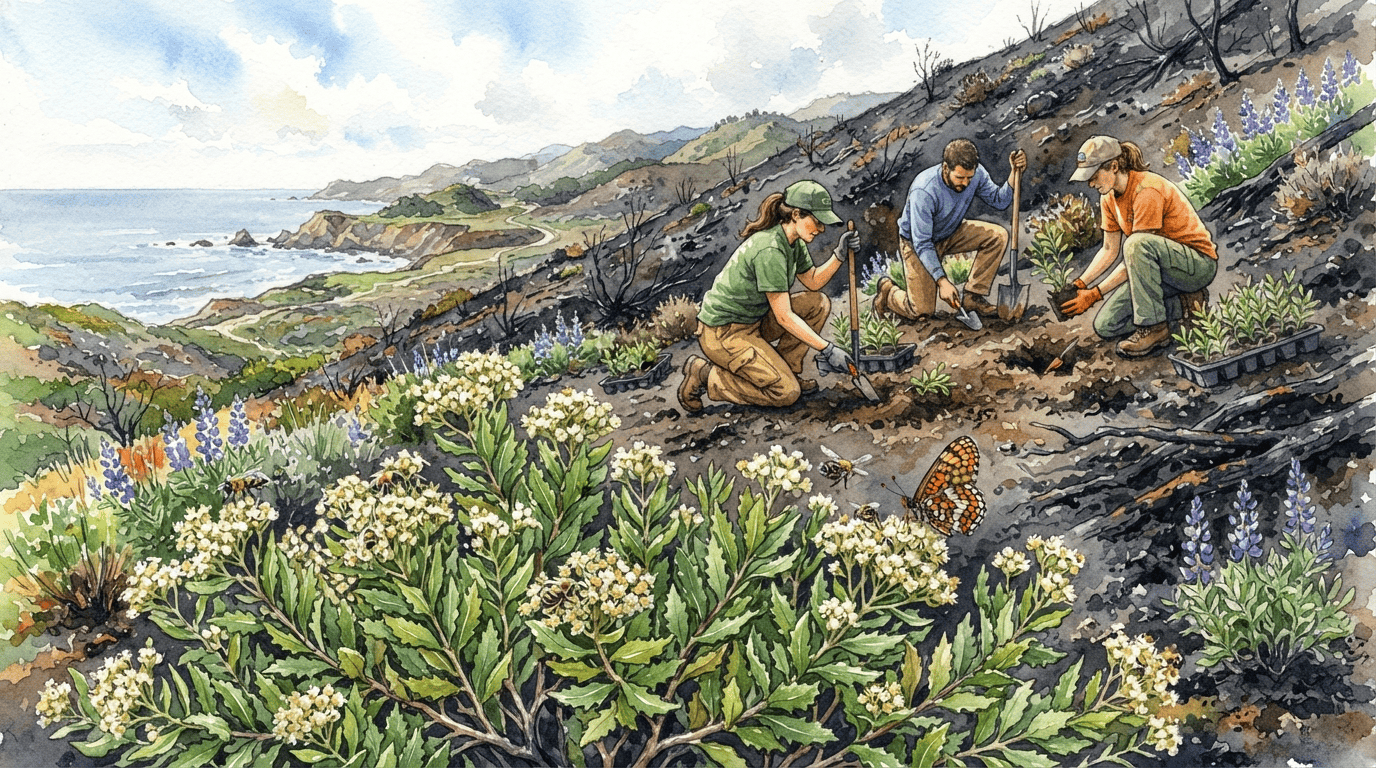
Baccharis pilularis, commonly called coyote brush or chaparral broom, is a dioecious evergreen shrub native to the California Floristic Province from Oregon to northern Baja California. Swiss botanist Augustin Pyramus de Candolle formally described it in 1836 in his Prodromus based on specimens collected during early California exploration. The species is highly variable, ranging from prostrate coastal mat-forming populations to upright inland shrubs two meters tall, and inland botanists long treated these as subspecies pilularis (prostrate, coastal) and subspecies consanguinea (upright, inland).
Small white-to-cream flower heads appear late summer through fall. The species is dioecious and female plants produce enormous quantities of wind-borne cottony pappus that can clog gutters, so male clones like 'Pigeon Point' and 'Twin Peaks' selected by Saratoga Horticultural Research Foundation became standard landscape choices in the 1970s. Pioneer after fires, fixes nitrogen via root associations, and important larval host for the sagebrush checkerspot butterfly.
A foundational plant of California coastal scrub ecosystems. 'Pigeon Point' was selected at the Santa Cruz coast. Used extensively in California freeway and park landscaping for its toughness. A favored plant for beneficial insect habitat, supporting predatory wasps and native bees as food runs low in autumn.
Symbolism & meaning
What It Symbolizes
Coyote Brush signals quiet strength, the unsung workhorse of California low-water gardens that holds slopes together while glamorous neighbors come and go. It carries deep resilience, surviving drought, fire, and decades of neglect, returning even when burned to the ground. It is often read as a flower of the dependable, those whose worth is measured not in flowers but in the simple fact that they remain when everything else has failed.
- Quiet strength — workhorse of California low-water gardens
- Resilience — survives drought, fire, and neglect
Where the Name Comes From
The name Coyote Brush describes its rushlike stems. 'Baccharis' was an ancient Greek name for a fragrant shrub; 'pilularis' means little pill, referring to flower heads.
Uses & Fun Facts
- Tough evergreen mat for slopes and fire-wise yards
- Fall blooms support native bees and beneficial insects
- California native shrub shelters small birds and insects
Related plants
Plants with similar care
 Chinese AbeliaAbelia chinensis
 Fragrant AbeliaAbelia mosanensis
 Large-Flowered AbeliaAbelia uniflora
 Glossy AbeliaAbelia x grandiflora
Frequently asked questions
How often should I water Coyote Brush?
In summer, water about every 21 days; in winter, about every 30 days. Adjust for heat, pot size and drainage.
How much light does Coyote Brush need?
Full sun: 6+ hrs direct. Watch the leaves — scorching or stretching means the light needs adjusting.
Is Coyote Brush toxic to cats or dogs?
Pets Slight (Dogs Slight · Cats Slight) Educational information, not medical or veterinary advice. If exposure is suspected, contact a doctor or veterinarian.
Is Coyote Brush easy to grow?
Yes — it is considered an easy, beginner-friendly plant.
When does Coyote Brush bloom?
It typically blooms Sep–Nov in the Northern Hemisphere.
YardMate
Identify any plant in seconds
Snap a photo — YardMate names the plant, diagnoses problems, and reminds you when to water.
Download on the App Store