 YardMate


Lawn Daisy
Bellis perennis
Easy · Beginner friendlyAbout Lawn Daisy
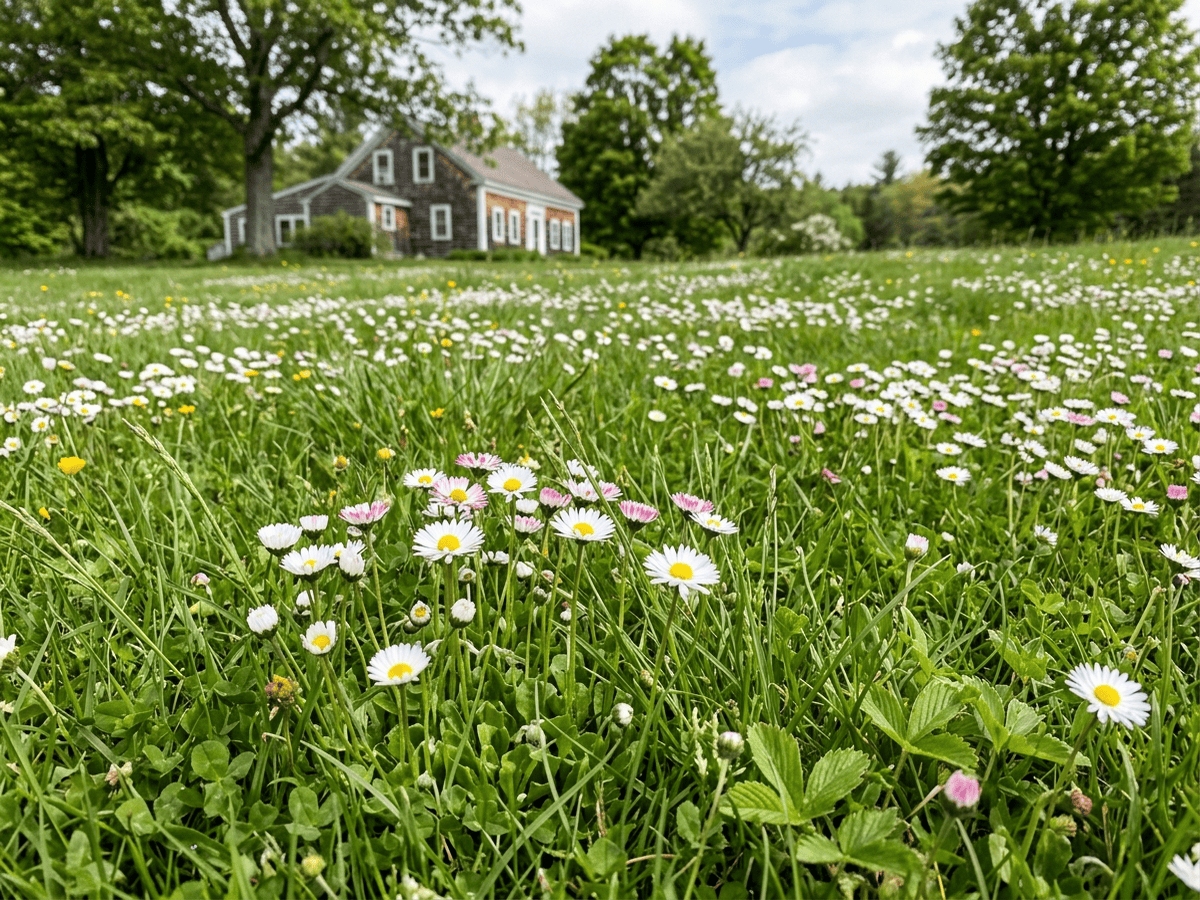
English Daisy is a European perennial widely naturalized in US lawns, prized in gardens for its small white-pink daisies but a weed in turf where it forms spreading mats that crowd out grass. Growing only 2 to 6 inches tall with basal rosettes of spoon-shaped leaves, it produces 1-inch white daisies with yellow centers from early spring through fall in cool climates. Common lawn weed across the Pacific Northwest and northeastern US.
- Groundcover
How to care for Lawn Daisy
Watering
- Springevery 5 days
- Summerevery 3 days
- Fallevery 7 days
- Winterevery 14 days
Soil · Rich & well-draining
- Top dressingCompost10%
- Main mixPotting soil + compost 3:180%
- DrainageGravel10%
Top up the compost layer each season.
FERTILIZER
- Springevery 45 days
- Summerevery 60 days
At a Glance
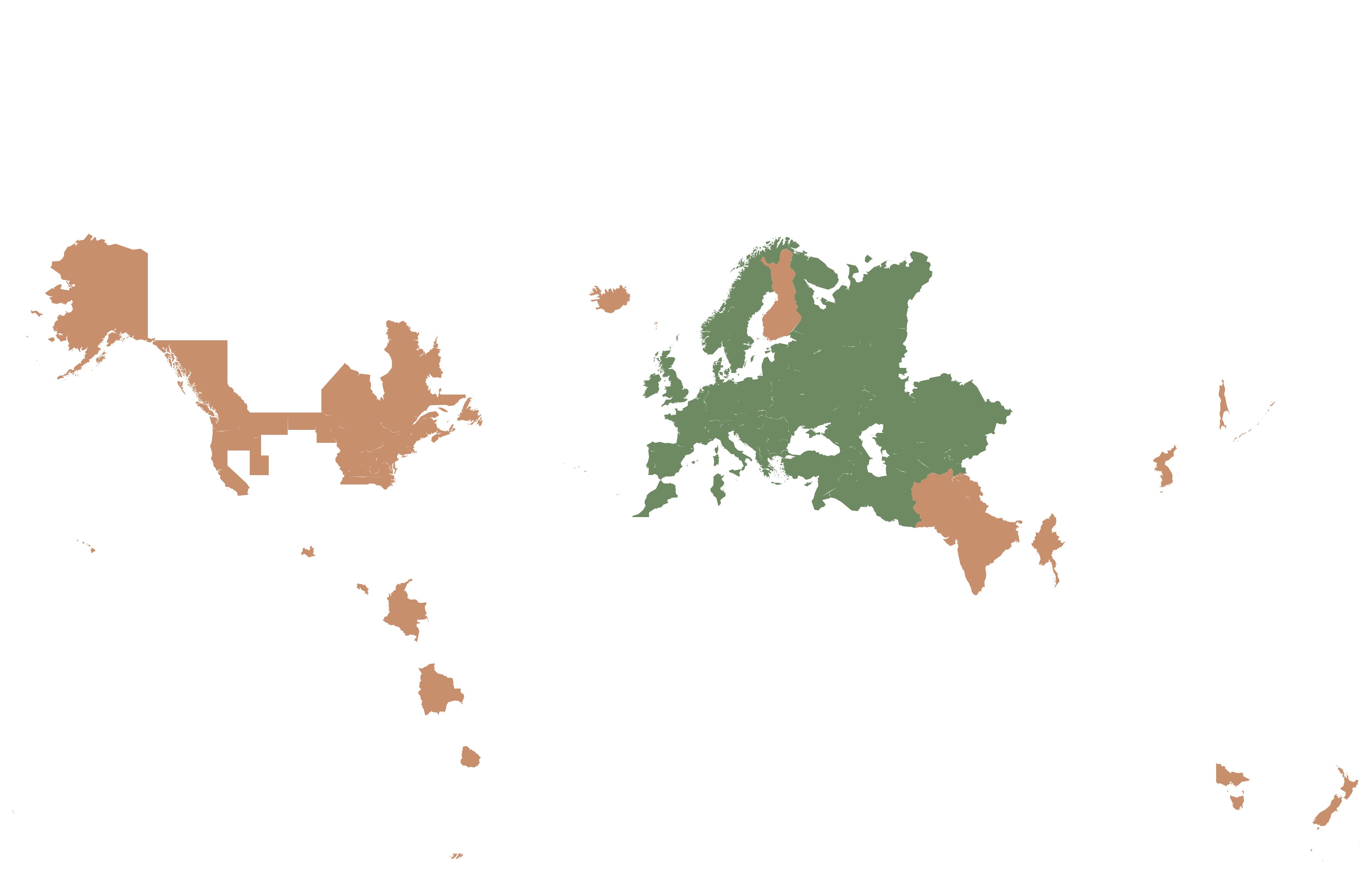
- NativeEurope, Africa, Western Asia
- Height0.3–0.5 ft (0.1–0.2 m)
- Spread0.3–0.5 ft (0.1–0.2 m)
- Flower colorWhite, Pink, Red
- Foliage colorGreen
- SoilMoisture-retentive, Loamy, Well-drained
- LocationsYard
Bloom time
BLOOM CYCLE
Peak bloom
Mar–Nov
Small white-pink daisies spring to fall in cool climates
Fragrance
LIGHT FRAGRANCE
The flowers have a very lightly sweet-scented scent.
Toxicity
No toxicity has been reported for this plant. Still, it is wise to keep pets from chewing on any houseplant.
Educational information, not medical or veterinary advice. If exposure is suspected, contact a doctor or veterinarian.
DISTRIBUTION

- Native
- Introduced
- Europe
- Africa
- Western Asia
History

Bellis perennis is native to Europe, North Africa, and western Asia. Linnaeus described it in Species Plantarum (1753); the genus name derives from Latin bellus ('pretty'). It has been grown in European gardens for over 2000 years, mentioned in the herbals of Dioscorides and Pliny the Elder.
The common name 'daisy' comes from Old English 'dæges-eage' (day's eye), referring to the flower heads opening at sunrise and closing at dusk. Medieval and Renaissance European herbalism used it for wound healing — Henry VIII reportedly ate it with milk to treat stomach ulcers. In most climates it is a short-lived perennial of lawns, blooming in cool seasons.
Cultivated garden forms with large red or pink pom-pom flower heads (the 'Tasso' and 'Habanera' series) have been selected since the 16th century. It is the national flower of Italy. Native to Europe, English Daisy has been a cottage garden staple since medieval times and escaped into American lawns soon after colonial introduction. In the Pacific Northwest and New England, it naturalizes so freely in cool moist turf that it is treated as a common lawn weed while being sold ornamentally elsewhere.
Symbolism & meaning
What It Symbolizes
The Lawn Daisy evokes Innocence out of place — the medieval flower of purity now most often seen scattered across a clipped suburban lawn. It still carries the Cottage charm of European meadows, where children once threaded its stems into chains and lovers tested 'he loves me, he loves me not.' A small white star stubbornly carrying old stories underfoot.
- Innocence — traditional European flower of purity
- Cottage charm — medieval lawn flower
Where the Name Comes From
The name Lawn Daisy describes its daisy-like flower heads. 'Bellis' from Latin 'bellus' meaning pretty; 'perennis' means perennial.
Uses & Fun Facts
- Low rosettes naturalize across lawns and meadow edges
- Young leaves and flowers added raw to salads
- Pink and white pompom flowers carpet spring gardens
Related plants
Plants with similar care
 Chinese AbeliaAbelia chinensis
 Fragrant AbeliaAbelia mosanensis
 Large-Flowered AbeliaAbelia uniflora
 Glossy AbeliaAbelia x grandiflora
Frequently asked questions
How often should I water Lawn Daisy?
In summer, water about every 3 days; in winter, about every 14 days. Adjust for heat, pot size and drainage.
How much light does Lawn Daisy need?
Full sun: 6+ hrs direct. Watch the leaves — scorching or stretching means the light needs adjusting.
Is Lawn Daisy toxic to cats or dogs?
No toxicity has been reported for this plant. Still, it is wise to keep pets from chewing on any houseplant. Educational information, not medical or veterinary advice. If exposure is suspected, contact a doctor or veterinarian.
Is Lawn Daisy easy to grow?
Yes — it is considered an easy, beginner-friendly plant.
When does Lawn Daisy bloom?
It typically blooms Mar–Nov in the Northern Hemisphere.
YardMate
Identify any plant in seconds
Snap a photo — YardMate names the plant, diagnoses problems, and reminds you when to water.
Download on the App Store