 YardMate



Arizona Beggarticks
Bidens ferulifolia
Easy · Beginner friendlyAbout Arizona Beggarticks
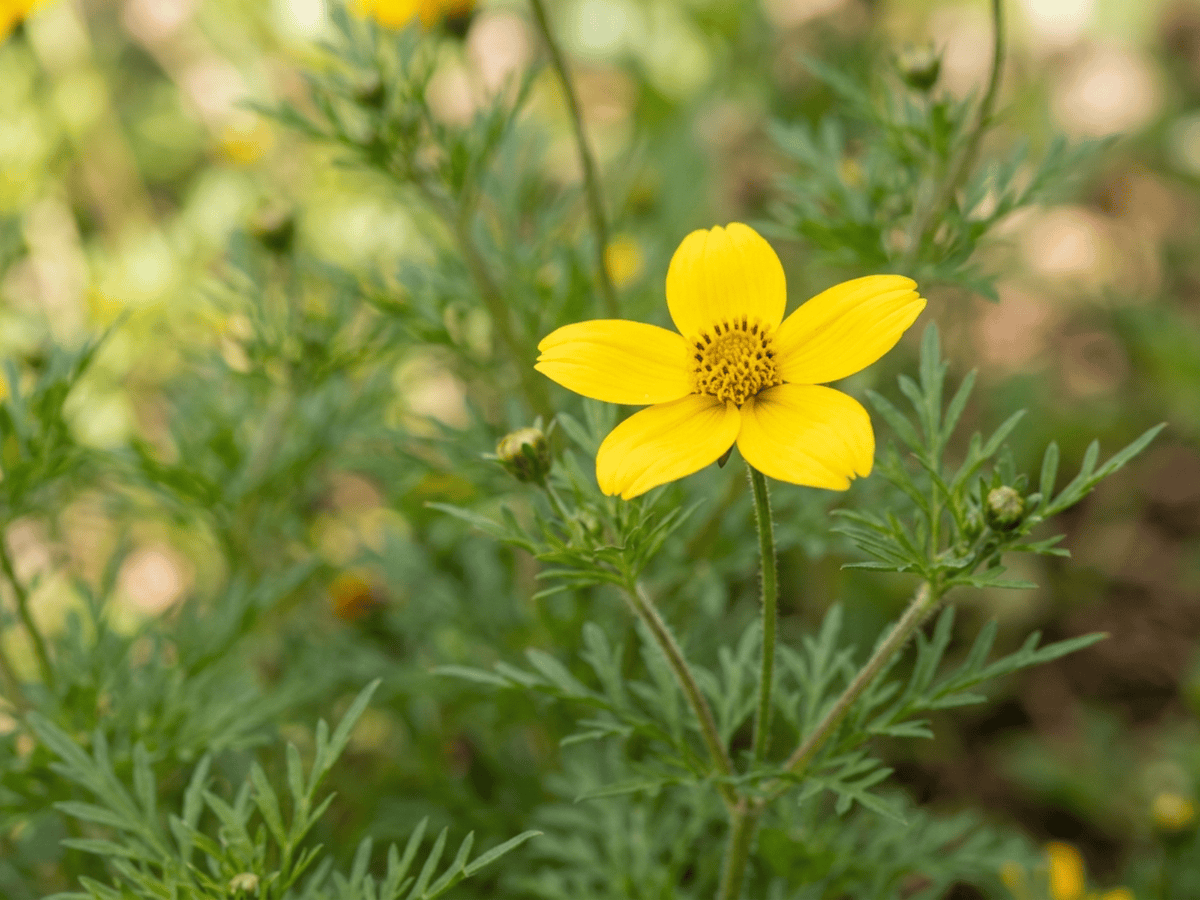
Apache Beggarticks is a tender perennial from the Southwestern US and Mexico grown as an annual, forming 12–18 inch trailing mounds covered in small, bright yellow or gold daisy flowers. Heat- and drought-tolerant, self-cleaning, and an outstanding container spiller and hanging-basket plant. The 'Blazing' and 'Goldilocks Rocks' series have made it a staple of US summer container programs.
- Drought-tolerant
- Heat-tolerant
- Trailing
- Native
How to care for Arizona Beggarticks
Watering
- Springevery 5 days
- Summerevery 4 days
- Fallevery 10 days
- Winterevery 21 days
Soil · Well-draining
- Top dressingPine bark mulch10%
- Main mixPotting soil + perlite 2:170%
- DrainageLECA / gravel20%
Never skip the drainage layer — standing water is the top cause of root rot.
FERTILIZER
Balanced Feed 14-14-14
An even feed covers all three needs at once, keeping leaves, roots and blooms moving together with nothing pushed out of balance.
- Nitrogen · Leaves
- Phosphorus · Roots + Blooms
- Potassium · Strength
- Springevery 14 days
- Summerevery 14 days
- Fallevery 21 days
At a Glance
- NativeNorth America
- Height1–2 ft (0.3–0.6 m)
- Spread1–2 ft (0.3–0.6 m)
- Flower colorYellow, Orange, Red
- Foliage colorGreen
- SoilSandy, Well-drained
- LocationsYard · Balcony
Bloom time
BLOOM CYCLE
Peak bloom
May–Nov
Golden daisies late spring to frost
Fragrance
NO FRAGRANCE
No notable fragrance.
Toxicity
No toxicity has been reported for this plant. Still, it is wise to keep pets from chewing on any houseplant.
Educational information, not medical or veterinary advice. If exposure is suspected, contact a doctor or veterinarian.
DISTRIBUTION

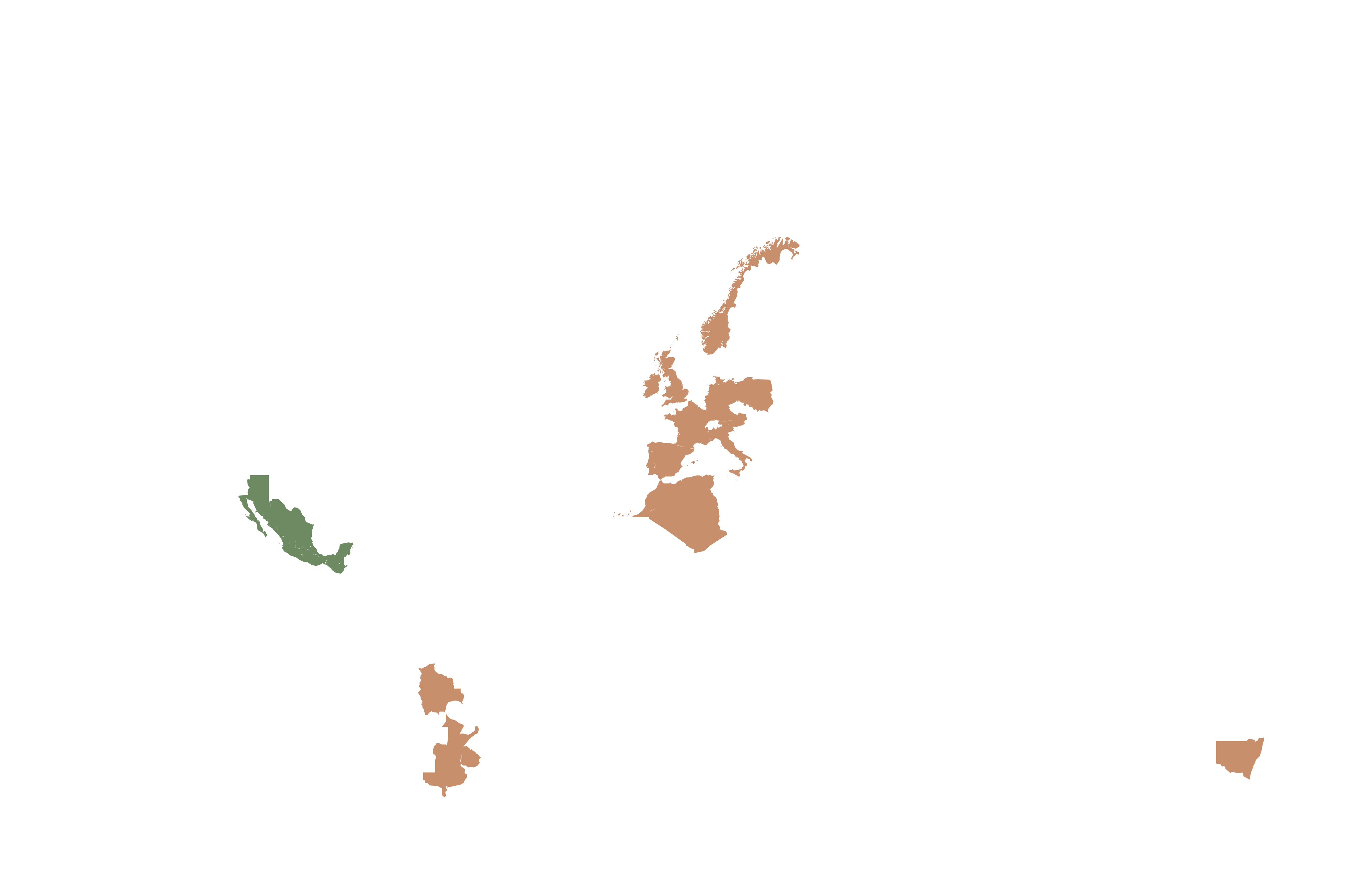
- Native
- Introduced
- North America
History
Bidens ferulifolia is native to Mexico and adjacent southwestern United States (Arizona, New Mexico), growing in disturbed open ground, grasslands, and roadside habitats. The species epithet "ferulifolia" refers to the finely-divided fennel-like (Ferula-like) leaves. It is a trailing and mounding tender perennial or warm-season annual 30-50 cm tall with 60-90 cm lateral spread, with lacy medium-green finely-dissected leaves and, from early summer through hard frost (or year-round in frost-free climates), produces continuous small 2-3 cm daisy-form flowers with bright golden-yellow ray petals and yellow-brown disk centers.
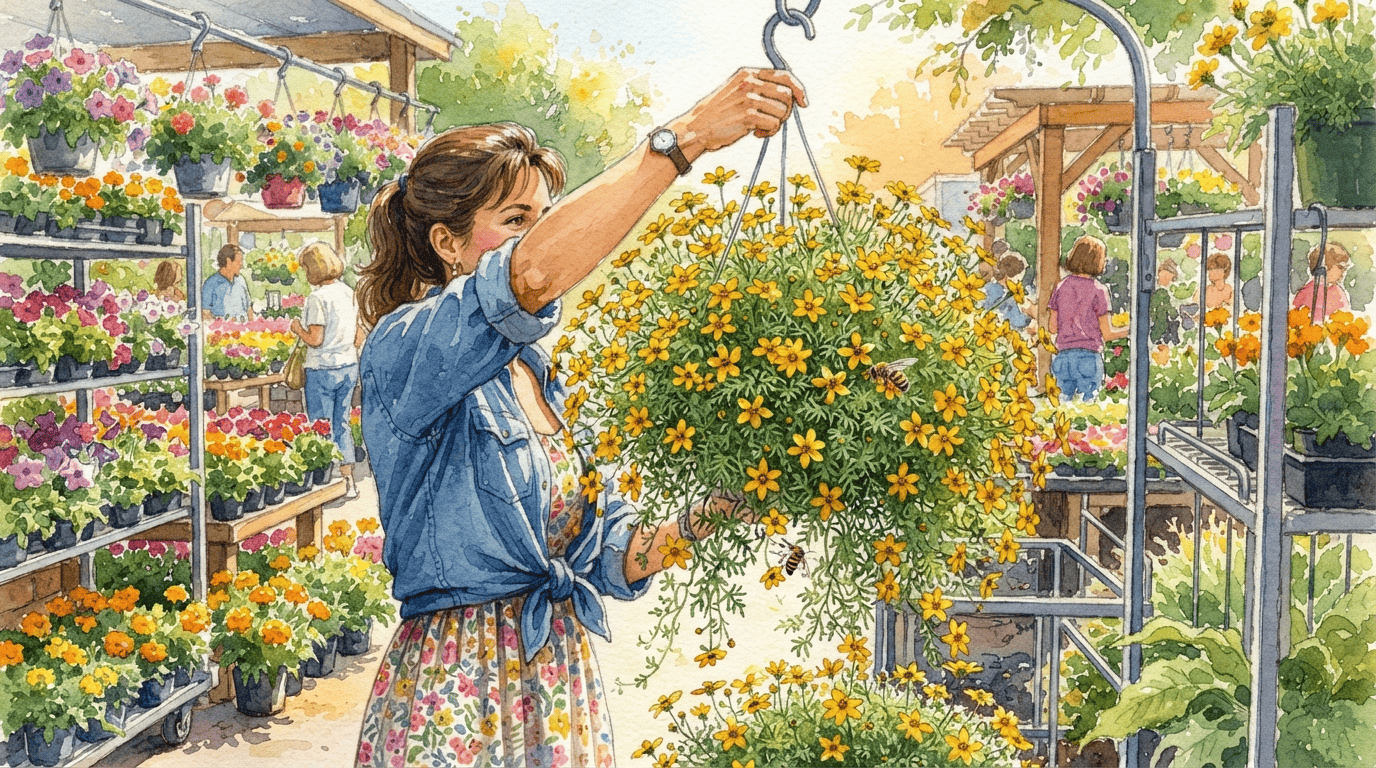
The exceptionally long bloom season and heat tolerance have made the species one of the most widely-grown "spiller" plants for mixed summer container plantings and hanging baskets — trailing alongside upright "thrillers" and mounding "fillers" in the classic American container-design formula. Modern cultivar series have extended the color range: "Goldie" (classic yellow), "Peter's Gold Carpet" (golden-yellow groundcover form), "Namid Compact Yellow," the "Bee" series ("Bee Dance," "Bee Happy," etc.), and the relatively recent "Campfire" series (introduced around 2013, combining bright yellow with red-orange bicoloration). Attracts pollinators including native bees and butterflies.
Fully hardy only to USDA zone 9-10; grown as a warm-season annual elsewhere. Requires full sun and tolerates heat, drought, and container-drying better than most summer bedding plants. Introduced to the American container-plant market in the 1990s, it quickly became a top-selling summer spiller alongside Scaevola and Calibrachoa.
Symbolism & meaning
What It Symbolizes
Arizona Beggarticks radiate cheer through golden flowers that seem to gather sunlight directly into their petals. Yet beneath that lightness lies real resilience — they bloom unapologetically through the hottest, driest months when more delicate plants surrender. A small daily reminder that stamina and good humor are not opposites; some plants run on both.
- Cheer — golden flowers radiate warmth
- Resilience — blooms through heat and drought
Where the Name Comes From
Genus from Latin 'bi' (two) and 'dens' (tooth) for the two-toothed seed; 'ferulifolia' means 'fennel-leaved'.
Uses & Fun Facts
- Trailing yellow daisies spill from baskets and window boxes
- Bright golden flowers attract bees and small butterflies
- Long-blooming filler for mixed annual containers
Related plants
Plants with similar care
 Chinese AbeliaAbelia chinensis
 Fragrant AbeliaAbelia mosanensis
 Large-Flowered AbeliaAbelia uniflora
 Glossy AbeliaAbelia x grandiflora
Frequently asked questions
How often should I water Arizona Beggarticks?
In summer, water about every 4 days; in winter, about every 21 days. Adjust for heat, pot size and drainage.
How much light does Arizona Beggarticks need?
Full sun: 6+ hrs direct. Watch the leaves — scorching or stretching means the light needs adjusting.
Is Arizona Beggarticks toxic to cats or dogs?
No toxicity has been reported for this plant. Still, it is wise to keep pets from chewing on any houseplant. Educational information, not medical or veterinary advice. If exposure is suspected, contact a doctor or veterinarian.
Is Arizona Beggarticks easy to grow?
Yes — it is considered an easy, beginner-friendly plant.
When does Arizona Beggarticks bloom?
It typically blooms May–Nov in the Northern Hemisphere.
YardMate
Identify any plant in seconds
Snap a photo — YardMate names the plant, diagnoses problems, and reminds you when to water.
Download on the App Store