 YardMate

Swan River Daisy
Brachyscome iberidifolia
Easy · Beginner friendlyAbout Swan River Daisy
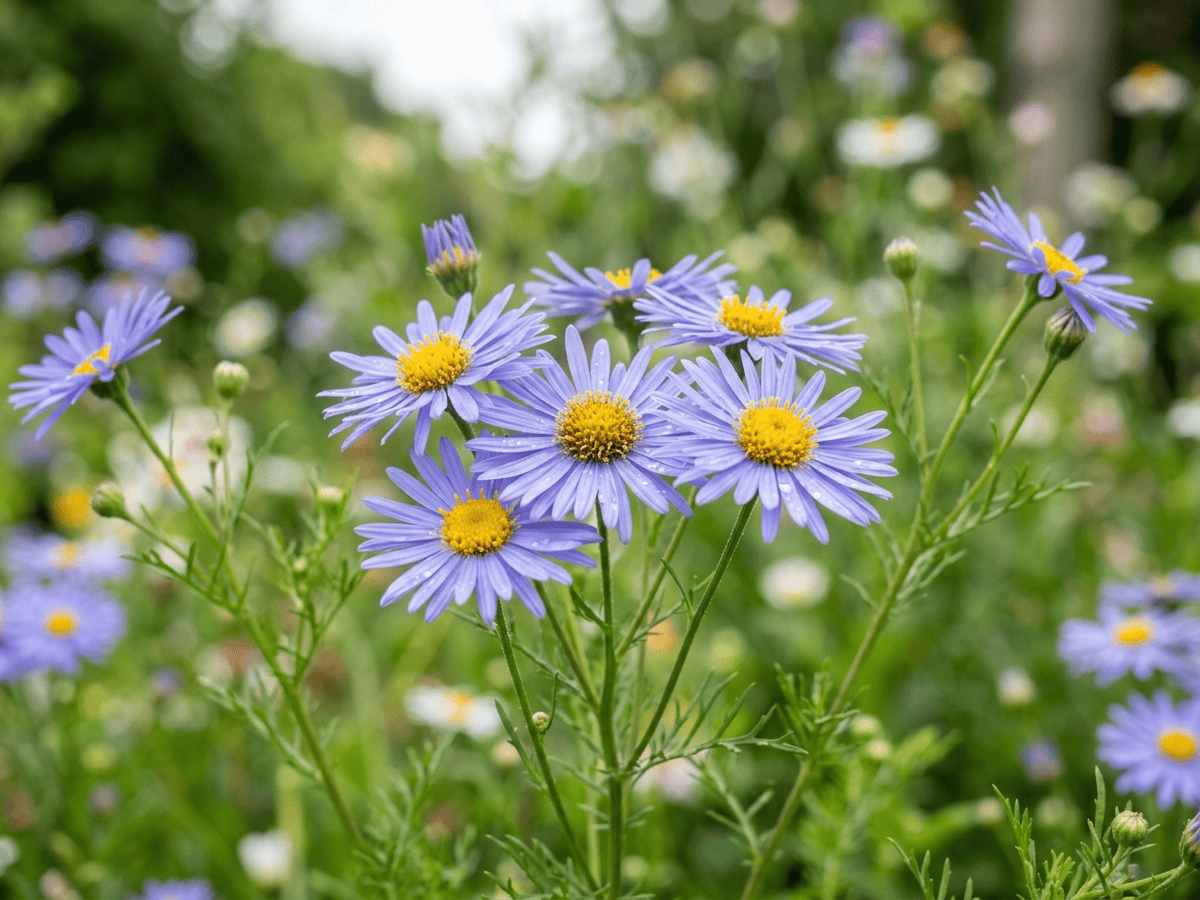
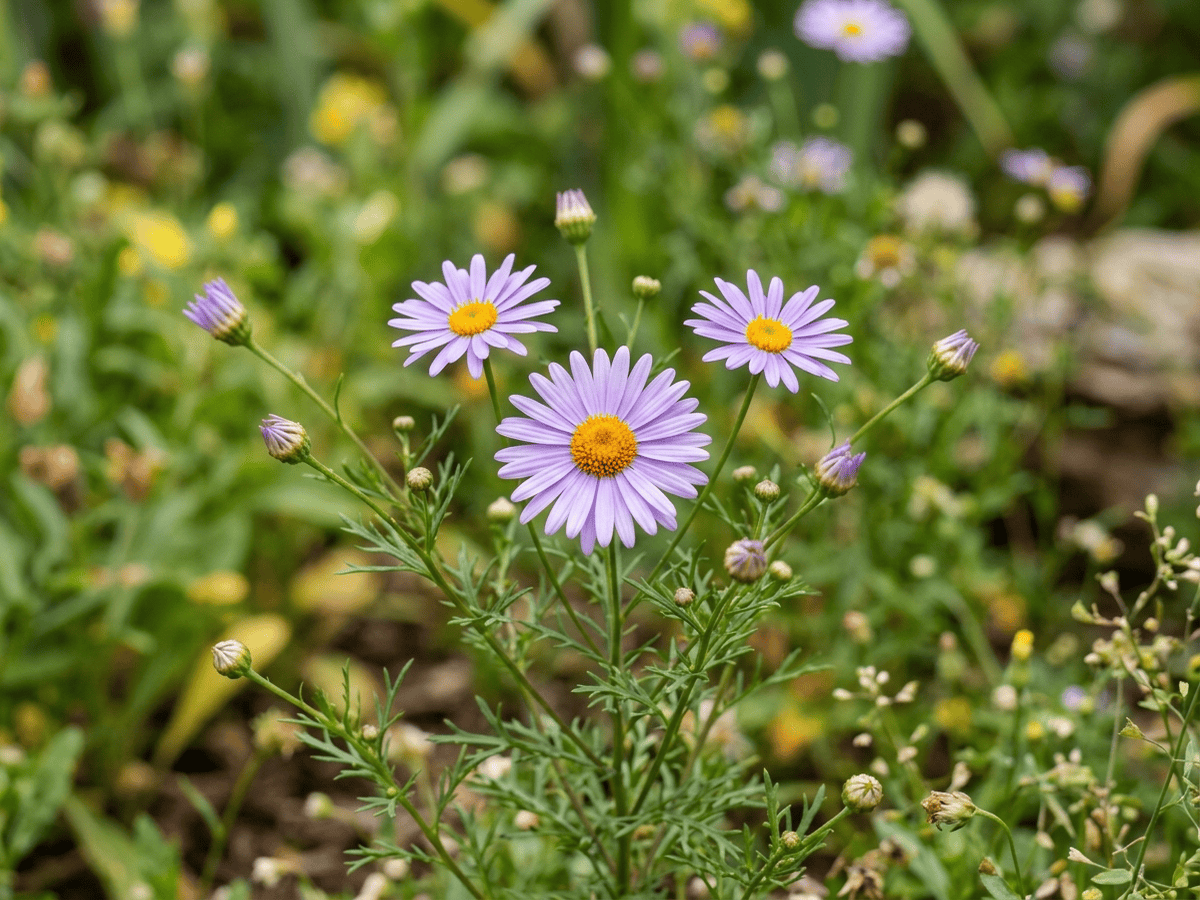
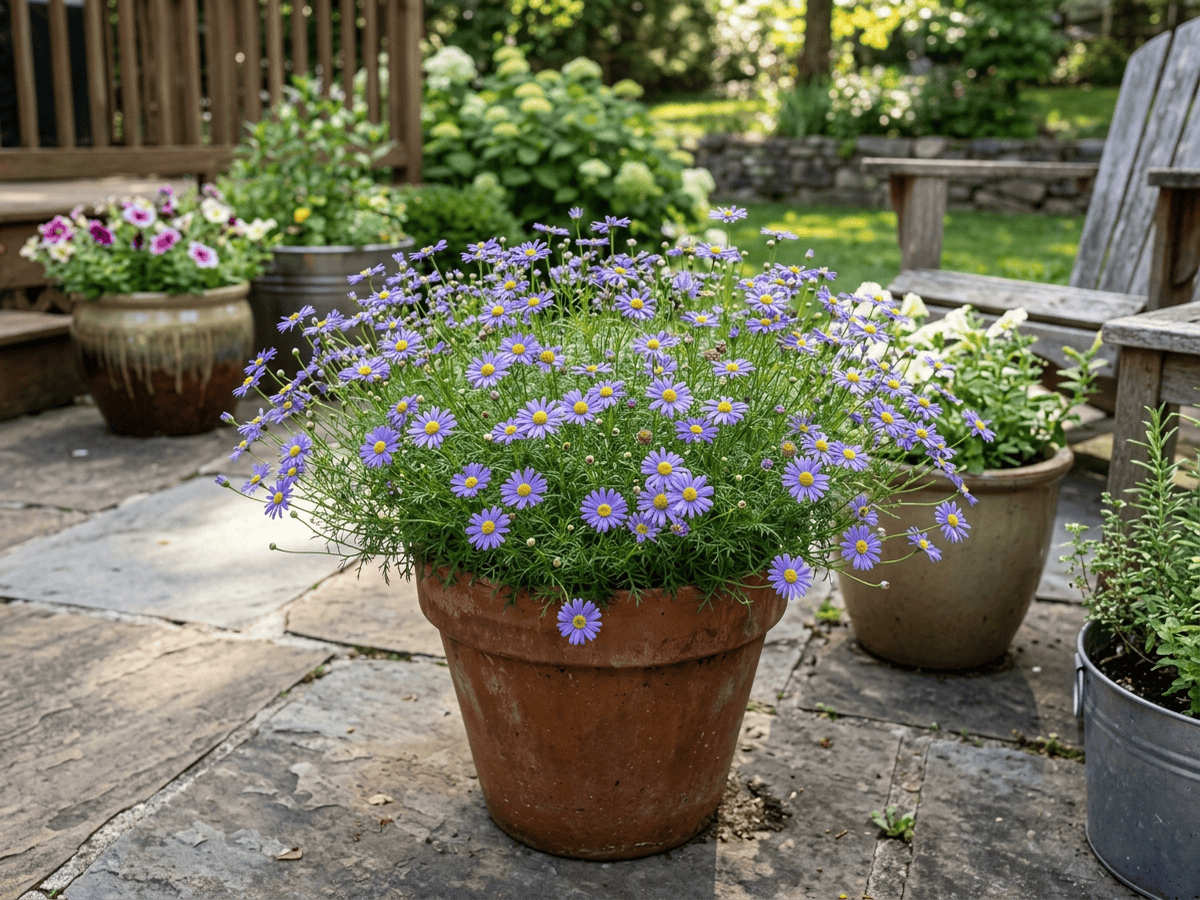
Swan River Daisy is an Australian annual producing a profusion of small 1-inch blue, purple, pink, or white daisy flowers over fine feathery foliage. Growing 8 to 18 inches tall in spreading mounded form, it blooms continuously from spring through frost, a top-tier container and basket filler in American gardens. Especially valued for its true-blue color forms, rare among annual flowers.
- Deer-resistant
- Container-friendly
- Long-blooming
- Pollinator-friendly
How to care for Swan River Daisy
Watering
- Springevery 4 days
- Summerevery 3 days
- Fallevery 5 days
- Winterevery 7 days
Soil · Well-draining
- Top dressingPine bark mulch10%
- Main mixPotting soil + perlite 2:170%
- DrainageLECA / gravel20%
Never skip the drainage layer — standing water is the top cause of root rot.
FERTILIZER
Balanced Feed 14-14-14
An even feed covers all three needs at once, keeping leaves, roots and blooms moving together with nothing pushed out of balance.
- Nitrogen · Leaves
- Phosphorus · Roots + Blooms
- Potassium · Strength
- Springevery 21 days
- Summerevery 21 days
- Fallevery 30 days
At a Glance
- NativeAustralasia
- Height0.5–1.5 ft (0.2–0.5 m)
- Spread1–1.5 ft (0.3–0.5 m)
- Flower colorBlue, Purple, Pink, White
- Foliage colorGreen
- SoilLoamy, Well-drained
- LocationsBalcony · Yard
Bloom time
BLOOM CYCLE
Peak bloom
Mar–Nov
Small daisies continuous spring to frost
Toxicity
Toxicity unknown
None reported
Unknown
EXPOSURE Unspecified plant material.
EFFECT Toxic effects are not specified.
NOTE Toxicity for humans is not well documented; use caution until verified.
Unknown
EXPOSURE Unspecified plant material.
EFFECT Toxic effects are not specified.
NOTE Toxicity for dogs is not well documented; use caution until verified.
Unknown
EXPOSURE Unspecified plant material.
EFFECT Toxic effects are not specified.
NOTE Toxicity for cats is not well documented; use caution until verified.
Educational information, not medical or veterinary advice. If exposure is suspected, contact a doctor or veterinarian.
DISTRIBUTION


- Native
- Introduced
- Australasia
History
Brachyscome iberidifolia, the Swan River daisy, is a slender annual native to the sandy plains of Western Australia, particularly around the Swan River basin near present-day Perth. English botanist George Bentham described the species in 1837, soon after James Drummond and other early colonial botanists collected it in the new Swan River Colony. The plant produces fine lacy foliage and masses of small 2 to 3 centimeter daisy flowers in blue, violet, pink, white, or mauve, blooming through spring and early summer.
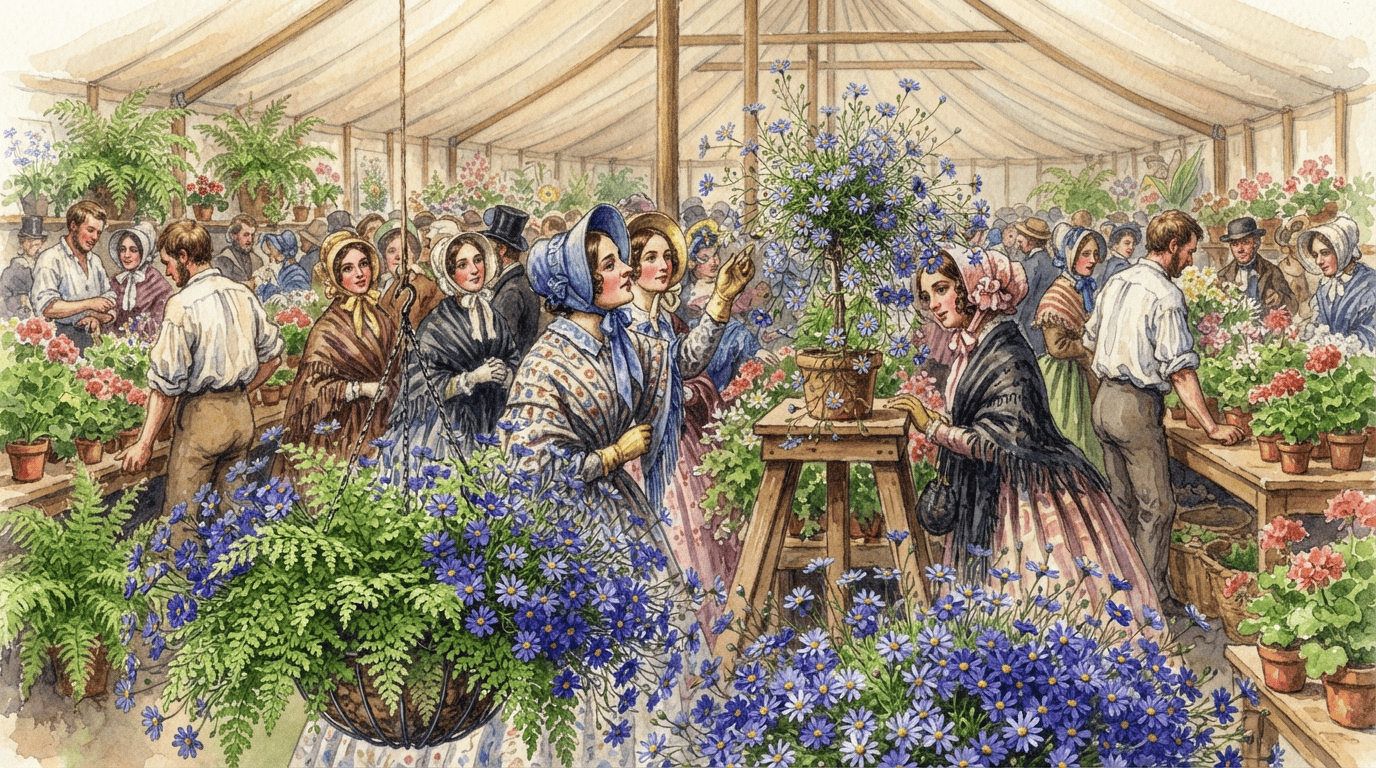
European horticulturists quickly embraced it for edging, containers, and hanging baskets. Modern cultivars include the Brasco, Surdaisy, and Jumbo series from Proven Winners, Suntory, and Dümmen Orange.
Many former Brachyscome species are now placed in the genus Brachycome. Native to western Australia along the Swan River region, introduced to European gardens in the early 1800s and to American gardens soon after. Proven Winners' Surdaisy and Brass Buttons series modernized it as a go-to American container flower.
Symbolism & meaning
What It Symbolizes
The Swan River daisy carries the color of an Australian sky in each small flower — a true clear blue rare among daisies, more common to the heavens than the herbaceous border. Its threadlike foliage performs a delicate dance in the lightest breeze, its blossoms nodding like a chorus of upturned faces. From the West Australian coast it has wandered into gardens worldwide, bringing its bright weather with it.
- Australian sky — rare true-blue daisy flowers
- Delicate dance — fine foliage sways in the breeze
Where the Name Comes From
The name Swan River Daisy describes its daisy-like flower heads. 'Brachyscome' from Greek means short-haired, for the brief seed pappus; 'iberidifolia' means with leaves like Iberis (candytuft).
Uses & Fun Facts
- Daisy-like blue flowers draw small native bees and hoverflies
- Trailing compact form thrives in patio containers and hanging baskets
Related plants
Plants with similar care
 Chinese AbeliaAbelia chinensis
 Fragrant AbeliaAbelia mosanensis
 Large-Flowered AbeliaAbelia uniflora
 Glossy AbeliaAbelia x grandiflora
Frequently asked questions
How often should I water Swan River Daisy?
In summer, water about every 3 days; in winter, about every 7 days. Adjust for heat, pot size and drainage.
How much light does Swan River Daisy need?
Full sun: 6+ hrs direct. Watch the leaves — scorching or stretching means the light needs adjusting.
Is Swan River Daisy toxic to cats or dogs?
Pets Unknown (Dogs Unknown · Cats Unknown) Educational information, not medical or veterinary advice. If exposure is suspected, contact a doctor or veterinarian.
Is Swan River Daisy easy to grow?
Yes — it is considered an easy, beginner-friendly plant.
When does Swan River Daisy bloom?
It typically blooms Mar–Nov in the Northern Hemisphere.
YardMate
Identify any plant in seconds
Snap a photo — YardMate names the plant, diagnoses problems, and reminds you when to water.
Download on the App Store