 YardMate


Cheatgrass
Bromus tectorum
Easy · Beginner friendlyAbout Cheatgrass
Cheatgrass or Downy Brome is a Mediterranean winter annual grass that has ecologically devastated millions of acres of the Western US sagebrush steppe since its 1800s introduction. Germinates in fall, grows through winter, sets nodding purple-tinged seed heads by May, and dies to a golden straw-like thatch by midsummer that carries catastrophic wildfires. Considered the most ecologically destructive invasive plant in western North America.
- Drought-tolerant
- Fast-growing
- Heat-tolerant
How to care for Cheatgrass
Watering
- Springevery 10 days
- Summerpause watering
- Fallevery 14 days
- Winterevery 14 days
Soil · Well-draining
- Top dressingPine bark mulch10%
- Main mixPotting soil + perlite 2:170%
- DrainageLECA / gravel20%
Never skip the drainage layer — standing water is the top cause of root rot.
FERTILIZER
This plant needs little to no feeding.
At a Glance
- NativeMediterranean, East Asia
- Height1–2 ft (0.3–0.6 m)
- Spread0.5–1 ft (0.2–0.3 m)
- Flower colorGreen, Purple
- Foliage colorGreen, Purple
- Fruit colorPurple, Brown
- SoilSandy, Well-drained
- LocationsYard
Bloom time
BLOOM CYCLE
Peak bloom
Apr–Jun
Nodding purple-tinged seed heads April through June
Toxicity
Pets Slight
Unknown toxic principle
Not reported
EXPOSURE No exposure route is reported.
EFFECT No toxic effect is reported.
NOTE No toxicity is reported for humans in this catalog; this is not evidence that the plant is edible or harmless.
Slight
- Seed
- Contact
EXPOSURE Touching seeds.
EFFECT Barbed awns cause soft-tissue infections.
NOTE Barbed seed awns can lodge in pet soft tissue; not chemically toxic. Early-season forage is edible to livestock.
Slight
- Seed
- Contact
EXPOSURE Touching seeds.
EFFECT Barbed awns cause soft-tissue infections.
NOTE Barbed seed awns can lodge in pet soft tissue; not chemically toxic. Early-season forage is edible to livestock.
Educational information, not medical or veterinary advice. If exposure is suspected, contact a doctor or veterinarian.
DISTRIBUTION

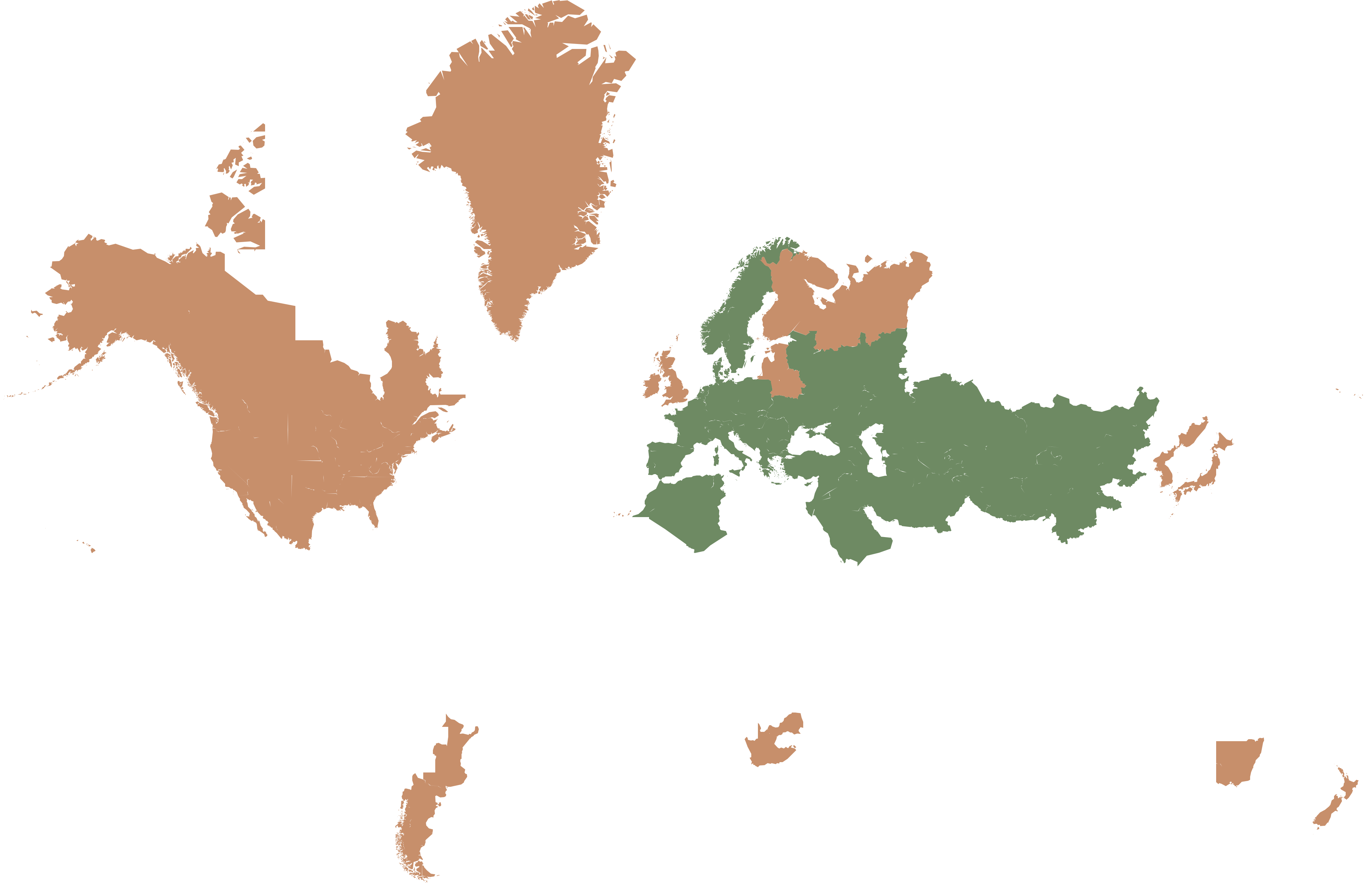
- Native
- Introduced
- Mediterranean
- East Asia
History
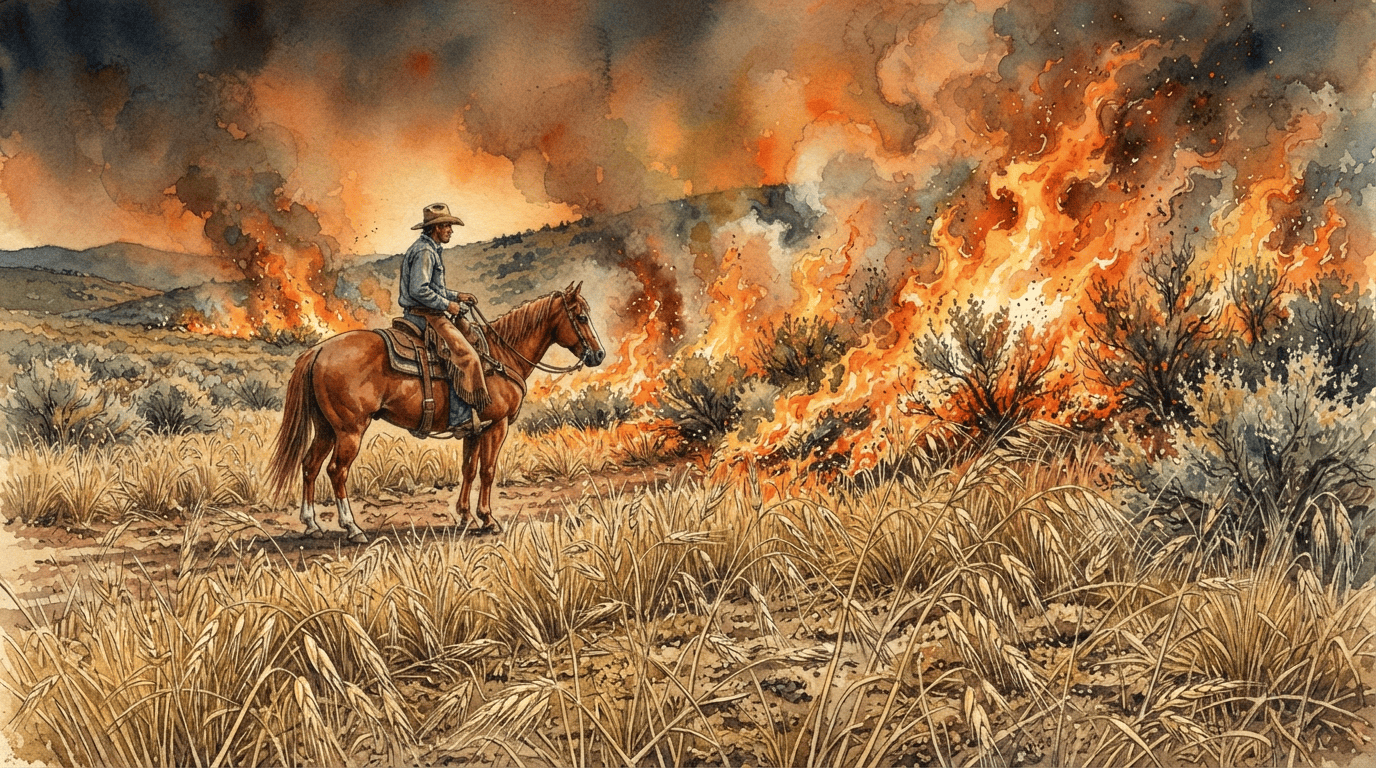
Bromus tectorum originated in Eurasia and was introduced to the western US around the 1860s-1890s in shipments of grain and packing straw. Linnaeus described it in Species Plantarum (1753); the epithet tectorum ('of roofs') refers to its growth in moss on tiled roofs in its native Mediterranean region. It germinates in autumn, overwinters as a rosette, and matures by late spring, dying to dry yellow straw by June — ideal fuel for summer wildfires.
Before cheatgrass invasion, Great Basin sagebrush steppe burned every 60-110 years; cheatgrass-dominated lands now burn every 3-5 years, preventing sagebrush regeneration and permanently converting the ecosystem to annual grassland. This cheatgrass-wildfire feedback loop is one of the most profound ecological transformations in US history, affecting an estimated 100 million acres of western rangeland.
Native to the Mediterranean, introduced to North America in the 1800s via contaminated wheat seed and packing straw. By the 1930s had colonized vast areas of the Great Basin and Intermountain West. Fuels catastrophic wildfires that destroy native sagebrush habitat and sage-grouse populations, making it the most ecologically damaging plant invasion in western North America.
Symbolism & meaning
What It Symbolizes
Cheatgrass is ecological catastrophe in grass form, its name earned by cheating settlers of expected harvests and now cheating the western US of its native range. Drying early, it ignites easily, fueling the catastrophic megafires that scorch sagebrush country each summer. In its slim, nodding heads lies one of the great cautionary tales of accidental introductions.
- Ecological catastrophe — drives catastrophic western US wildfires
- Cheat — named for cheating farmers of expected crop yields
Where the Name Comes From
The name Cheatgrass describes its grasslike foliage. 'Bromus' from Greek 'bromos' meaning oats; 'tectorum' from Latin means of roofs, for traditional growth on European thatched roofs.
Related plants
Plants with similar care
 Chinese AbeliaAbelia chinensis
 Fragrant AbeliaAbelia mosanensis
 Large-Flowered AbeliaAbelia uniflora
 Glossy AbeliaAbelia x grandiflora
Frequently asked questions
How often should I water Cheatgrass?
Water about every 10 days during the growing season, and always let excess water drain away.
How much light does Cheatgrass need?
Full sun: 6+ hrs direct. Watch the leaves — scorching or stretching means the light needs adjusting.
Is Cheatgrass toxic to cats or dogs?
Pets Slight (Dogs Slight · Cats Slight) Educational information, not medical or veterinary advice. If exposure is suspected, contact a doctor or veterinarian.
Is Cheatgrass easy to grow?
Yes — it is considered an easy, beginner-friendly plant.
When does Cheatgrass bloom?
It typically blooms Apr–Jun in the Northern Hemisphere.
YardMate
Identify any plant in seconds
Snap a photo — YardMate names the plant, diagnoses problems, and reminds you when to water.
Download on the App Store