 YardMate


Paper Mulberry
Broussonetia papyrifera
Easy · Beginner friendlyAbout Paper Mulberry
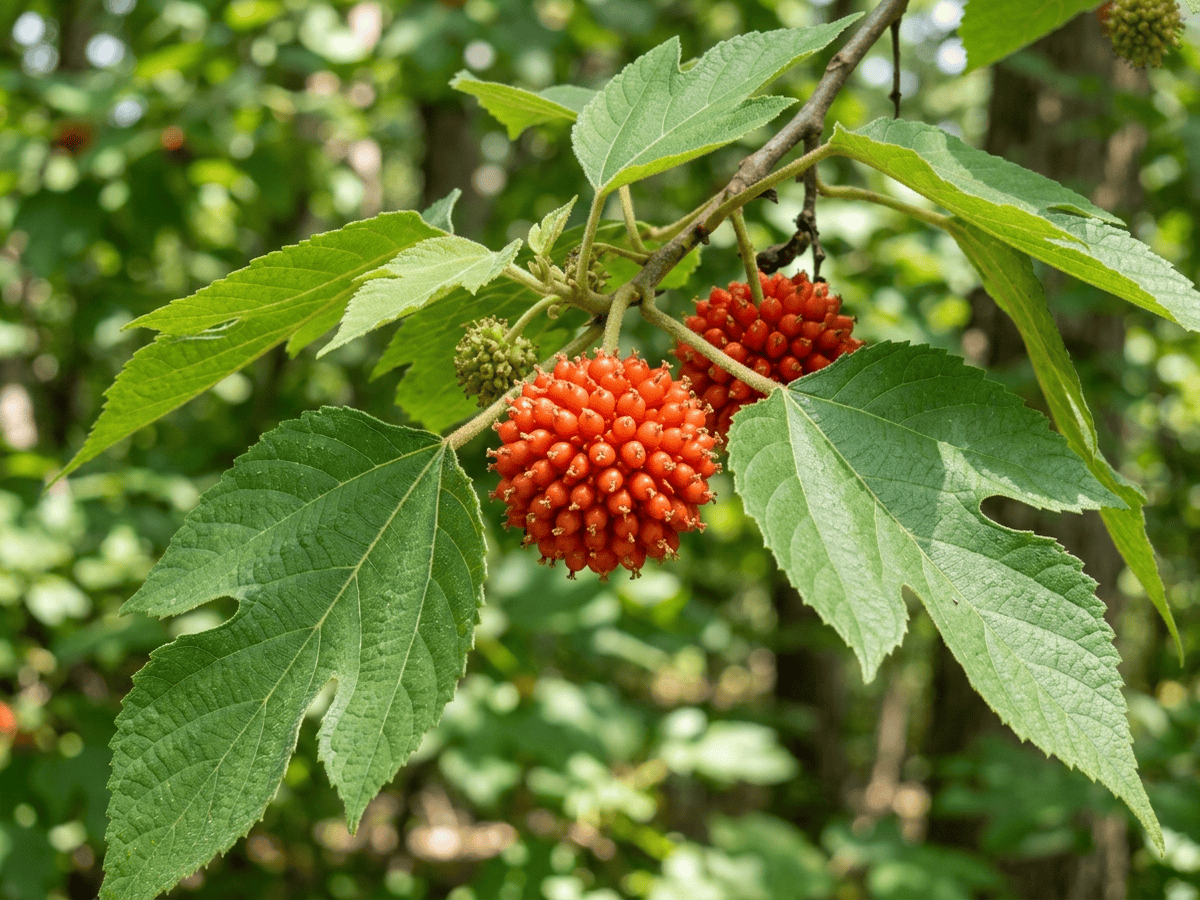
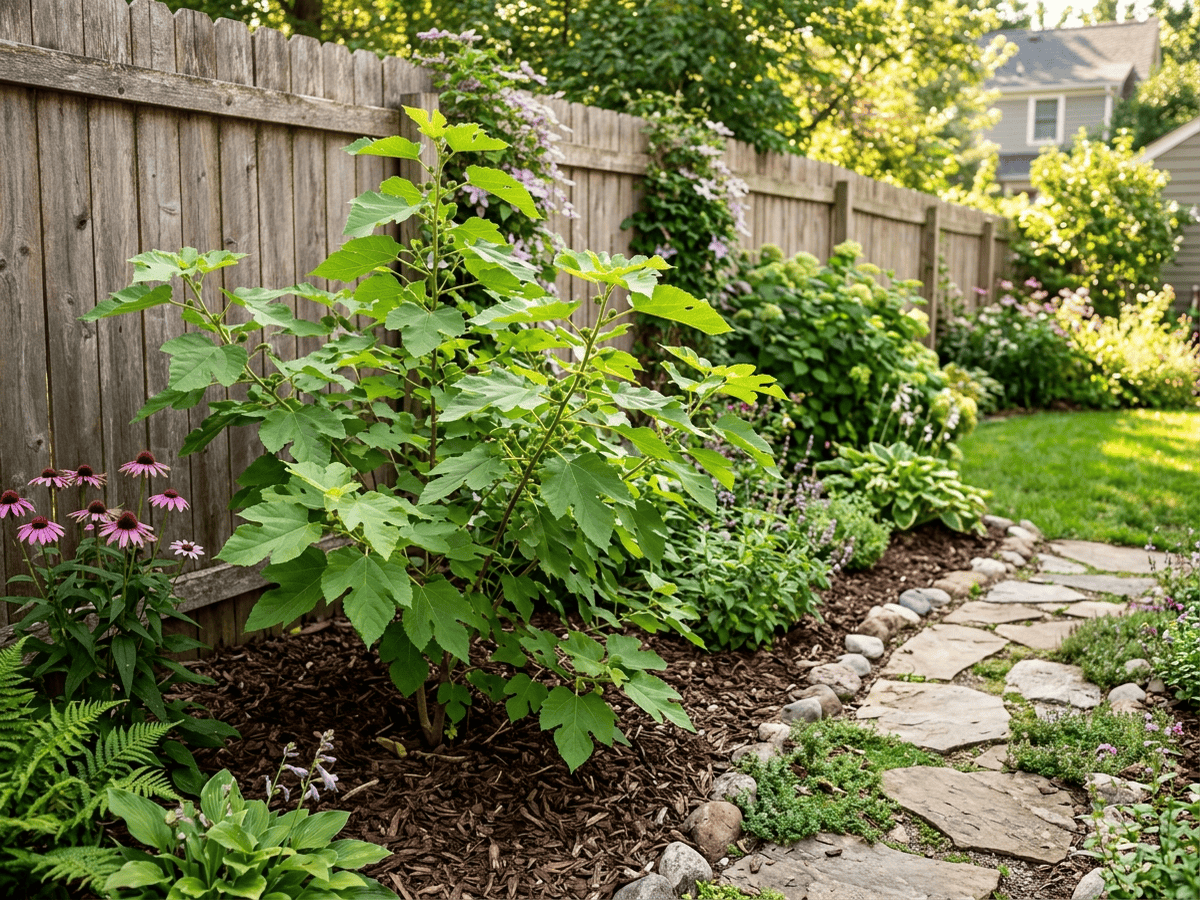
Paper Mulberry is an East Asian deciduous tree introduced to colonial America by Benjamin Franklin in 1785 and now invasive across the southeastern and mid-Atlantic US. Growing 30 to 50 feet tall with large variable-shaped leaves (often mitten-shaped) and milky sap, it produces orange-red fleshy fruit aggregates in summer and suckers aggressively from roots to form dense thickets. Listed invasive in many southeastern states.
- Fast-growing
How to care for Paper Mulberry
Watering
- Springevery 14 days
- Summerevery 10 days
- Fallevery 14 days
- Winterevery 30 days
Soil · Well-draining
- Top dressingPine bark mulch10%
- Main mixPotting soil + perlite 2:170%
- DrainageLECA / gravel20%
Never skip the drainage layer — standing water is the top cause of root rot.
FERTILIZER
- Springevery 45 days
At a Glance
- NativeEast Asia
- Height30–50 ft (9.1–15.2 m)
- Spread30–45 ft (9.1–13.7 m)
- Flower colorGreen, White
- Foliage colorGreen
- Fruit colorRed, Orange
- SoilLoamy, Well-drained
- LocationsYard
Bloom time
BLOOM CYCLE
Peak bloom
Mar–May
Catkin-like male flowers spring; inconspicuous female flowers
Toxicity
Humans Slight
Unknown toxic principle
Slight
- Flower
- Inhalation
EXPOSURE Inhaling flowers.
EFFECT Severe allergic rhinitis and asthma from pollen.
NOTE Pollen is a major aeroallergen; fruit edible.
Not reported
EXPOSURE No exposure route is reported.
EFFECT No toxic effect is reported.
NOTE No toxicity is reported for dogs in this catalog; this is not evidence that the plant is edible or harmless.
Not reported
EXPOSURE No exposure route is reported.
EFFECT No toxic effect is reported.
NOTE No toxicity is reported for cats in this catalog; this is not evidence that the plant is edible or harmless.
Educational information, not medical or veterinary advice. If exposure is suspected, contact a doctor or veterinarian.
DISTRIBUTION

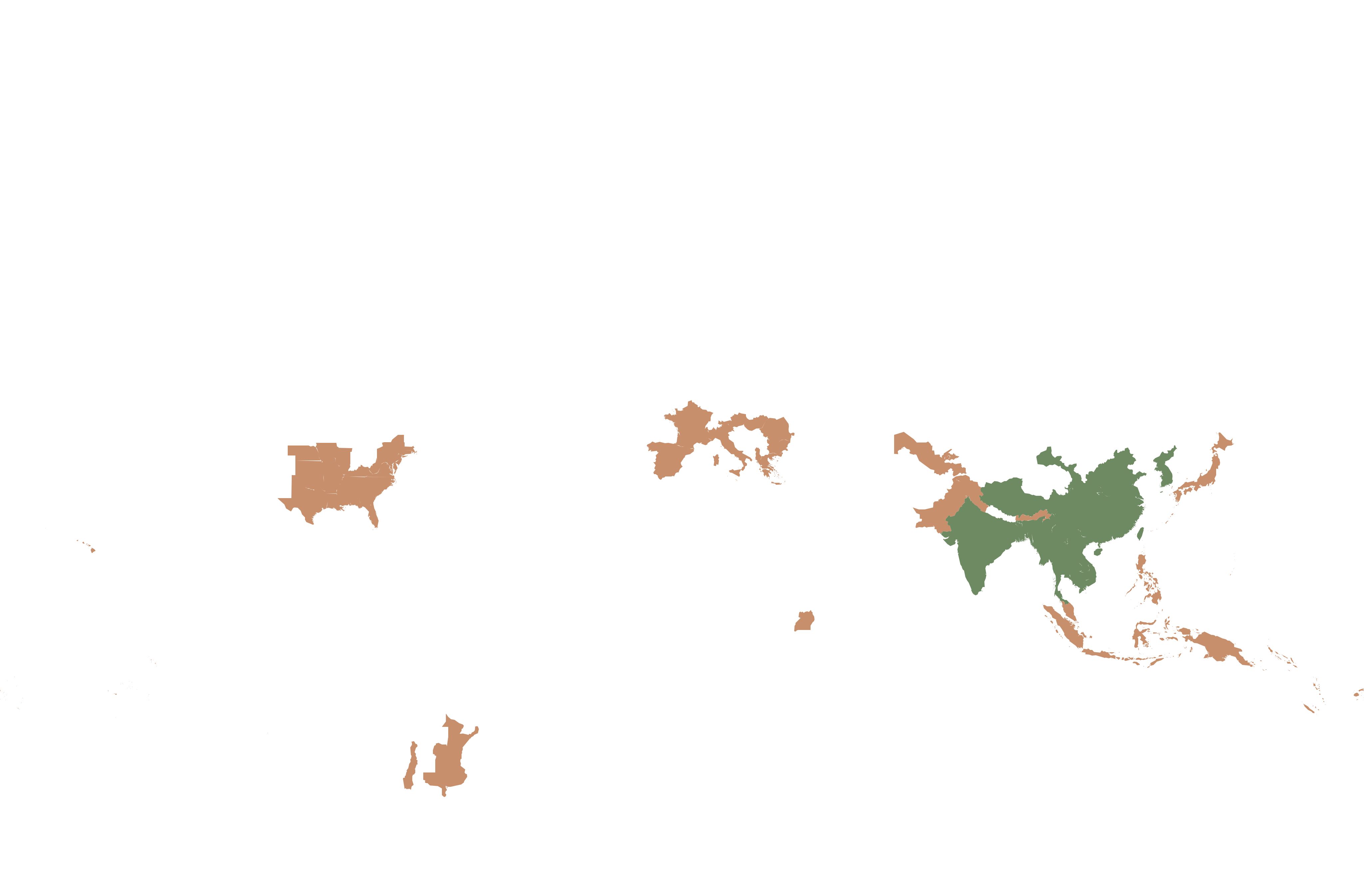
- Native
- Introduced
- East Asia
History
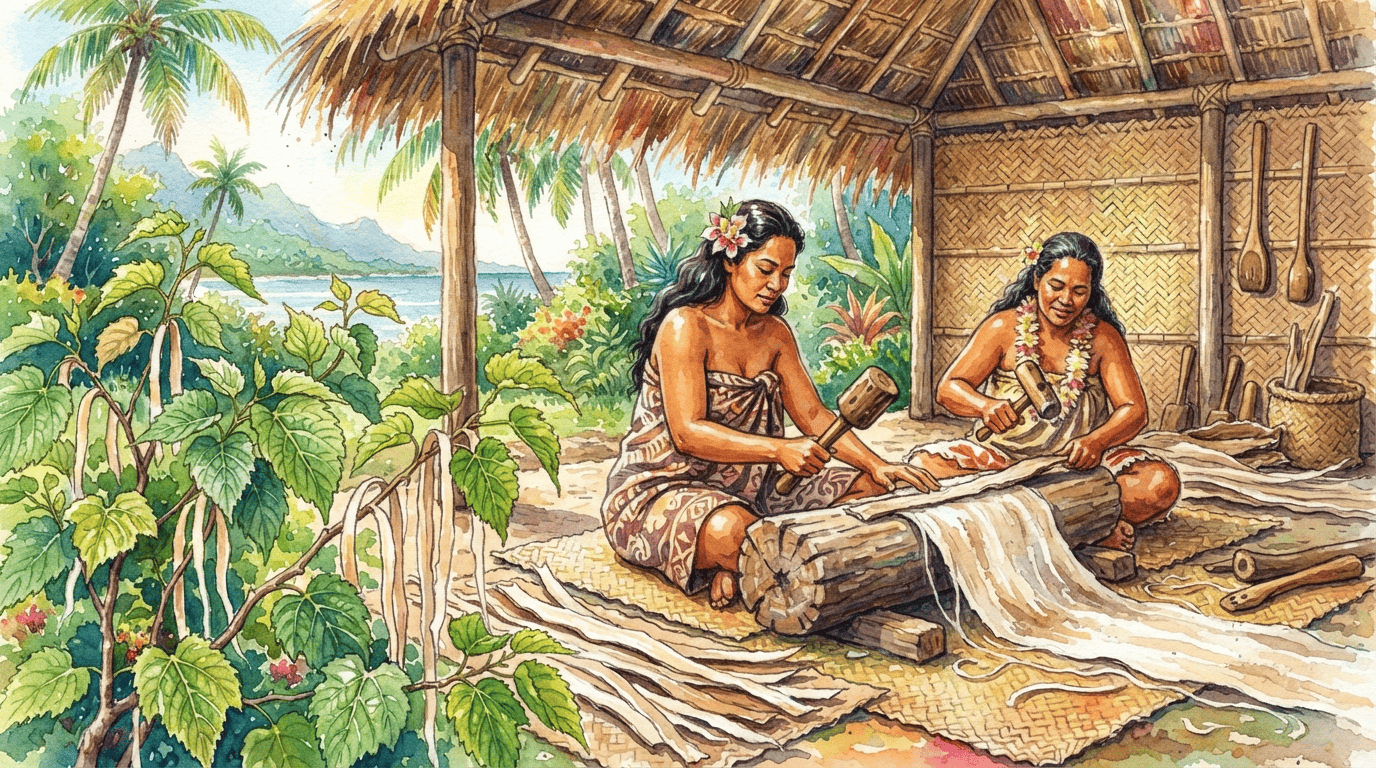
Broussonetia papyrifera, paper mulberry, is a deciduous tree native to East Asia and Taiwan whose cultural importance is hard to overstate. Chinese papermakers used its inner bark from the second century CE, and the technology spread along the Silk Road to reach Europe by the twelfth century. Austronesian-speaking peoples carried cuttings across the Pacific in their voyaging canoes, and tapa cloth made from paper mulberry bast remains a sacred material in Hawaii, Samoa, and Tonga.
The tree reached American horticulture around 1750 as an ornamental, and male clones that produce copious allergenic pollen now dominate roadsides and abandoned lots across the southeastern United States. DNA evidence published in 2015 traced Pacific tapa cultures back to a single Taiwanese mulberry lineage carried along the Austronesian expansion.
Native to East Asia, Paper Mulberry was introduced to America in 1785 by Benjamin Franklin as a potential papermaking fiber. Now invasive across the American South, it is also the primary allergenic tree in many southern cities where it has naturalized, producing such quantities of male pollen that it tops allergy rankings.
Symbolism & meaning
What It Symbolizes
The Paper Mulberry evokes persistent ancestry, for it has fed the ancient craft of Asian washi paper for more than a thousand years, its inner bark beaten into sheets that carried prayers and poems. In America it arrived as Franklin's gift, introduced by Benjamin Franklin in 1785 and naturalising widely from those early plantings. To trace a paper mulberry on a city lot is to follow a thread of cultural inheritance running from East Asian scribes to a Philadelphia statesman's curiosity.
- Ancient paper — traditional fiber for Asian washi paper
- Franklin's gift — introduced by Benjamin Franklin in 1785
Where the Name Comes From
'Broussonetia' honors French naturalist Pierre Broussonet (1761-1807); 'papyrifera' from Latin means paper-bearing, for traditional use as paper fiber.
Uses & Fun Facts
- Inner bark traditionally beaten into Pacific tapa cloth
- Source of Japanese washi and Polynesian barkcloth
Related plants
Plants with similar care
 Chinese AbeliaAbelia chinensis
 Fragrant AbeliaAbelia mosanensis
 Large-Flowered AbeliaAbelia uniflora
 Glossy AbeliaAbelia x grandiflora
Frequently asked questions
How often should I water Paper Mulberry?
In summer, water about every 10 days; in winter, about every 30 days. Adjust for heat, pot size and drainage.
How much light does Paper Mulberry need?
Full sun: 6+ hrs direct. Watch the leaves — scorching or stretching means the light needs adjusting.
Is Paper Mulberry toxic to cats or dogs?
Pets Not reported (Dogs Not reported · Cats Not reported) Educational information, not medical or veterinary advice. If exposure is suspected, contact a doctor or veterinarian.
Is Paper Mulberry easy to grow?
Yes — it is considered an easy, beginner-friendly plant.
When does Paper Mulberry bloom?
It typically blooms Mar–May in the Northern Hemisphere.
YardMate
Identify any plant in seconds
Snap a photo — YardMate names the plant, diagnoses problems, and reminds you when to water.
Download on the App Store