 YardMate


Rough Reedgrass
Calamagrostis arundinacea
Easy · Beginner friendlyAbout Rough Reedgrass
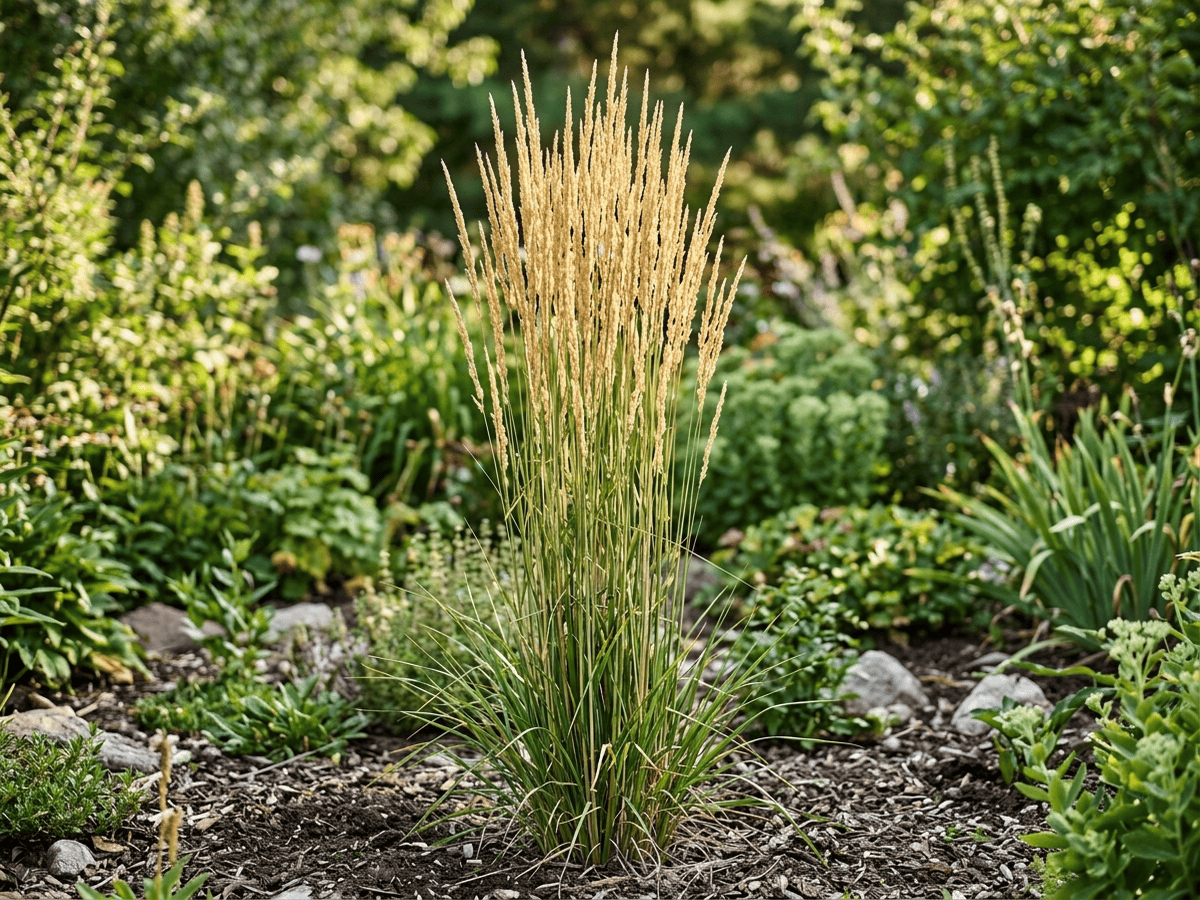
Reed Grass is a Eurasian woodland ornamental grass reaching 2-4 feet tall, forming clumps of arching green leaves topped by narrow upright feathery plumes in summer that age to silver. Tolerant of partial shade and moist soils, it is one of the most adaptable cool-season grasses for American gardens. The cultivar 'Karl Foerster' is the most famous selection though it is technically a hybrid—the wild type remains popular for naturalistic woodland-edge plantings.
- Shade-tolerant
How to care for Rough Reedgrass
Watering
- Springevery 10 days
- Summerevery 14 days
- Fallevery 14 days
- Winterevery 30 days
Soil · Well-draining
- Top dressingPine bark mulch10%
- Main mixPotting soil + perlite 2:170%
- DrainageLECA / gravel20%
Never skip the drainage layer — standing water is the top cause of root rot.
FERTILIZER
- Springevery 60 days
At a Glance
- NativeEast Asia
- Height2–4 ft (0.6–1.2 m)
- Spread2–3 ft (0.6–0.9 m)
- Flower colorWhite, Cream
- Foliage colorGreen
- SoilLoamy, Well-drained
- LocationsYard
Bloom time
BLOOM CYCLE
Peak bloom
Jun–Aug
Narrow upright feathery plumes in summer aging to silver
Toxicity
Humans Safe · Pets Safe
None reported
Safe
EXPOSURE No exposure route is reported.
EFFECT No toxic effect is reported.
NOTE Listed as non-toxic for humans; avoid eating ornamental plants unless confirmed edible.
Safe
EXPOSURE No exposure route is reported.
EFFECT No toxic effect is reported.
NOTE Listed as non-toxic for dogs; avoid eating ornamental plants unless confirmed edible.
Safe
EXPOSURE No exposure route is reported.
EFFECT No toxic effect is reported.
NOTE Listed as non-toxic for cats; avoid eating ornamental plants unless confirmed edible.
Educational information, not medical or veterinary advice. If exposure is suspected, contact a doctor or veterinarian.
DISTRIBUTION

- Native
- East Asia
History

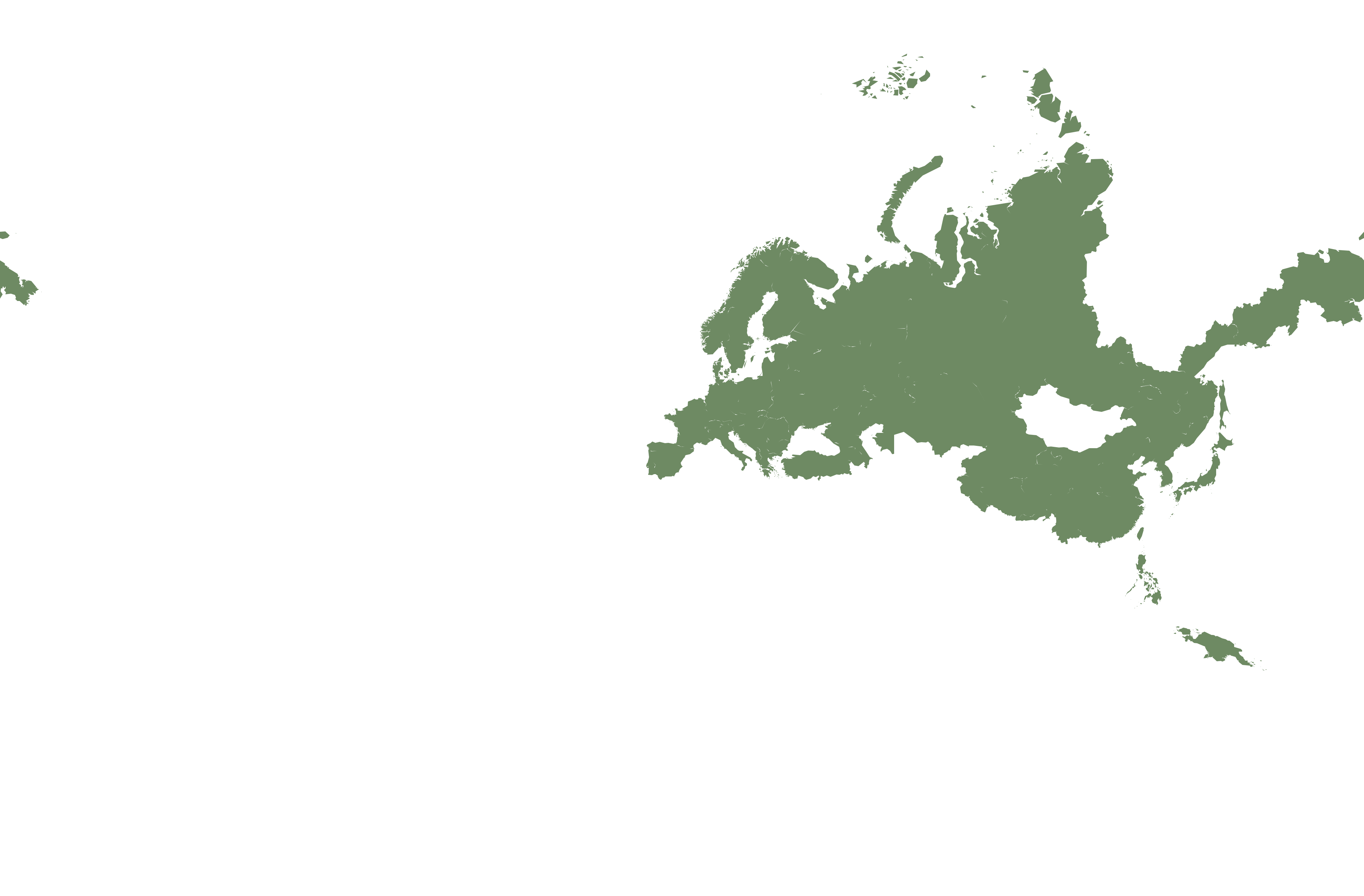
Calamagrostis arundinacea, commonly called bush grass, is a cool-season rhizomatous perennial grass in the family Poaceae widespread across temperate Eurasia from Britain and continental Europe through Russia to Japan and Korea, growing in forest clearings, woodland edges, and montane meadows. Carl Linnaeus described it as Arundo arundinacea in 1753 in Species Plantarum; German botanist Albrecht Wilhelm Roth transferred it to Calamagrostis in 1789. The species is significant as one of the parents of the enormously popular Karl Foerster feather reed grass (C. × acutiflora 'Karl Foerster'), a sterile hybrid between C. arundinacea and C. epigejos.
Plants form 60-90 cm clumps of narrow arching bright green blades, producing upright flowering stems to 120 cm with feathery 10-20 cm purple-tinged panicles in summer that fade to buff. Unlike many ornamental grasses, tolerates partial shade and moist soil, making it useful for woodland edges and mixed perennial plantings.
Slowly rhizomatous, forming expanding tufts rather than tight clumps. × acutiflora) was named Perennial Plant of the Year in 2001 and revolutionized American naturalistic garden design—popularizing all Calamagrostis grasses in the process.
Symbolism & meaning
What It Symbolizes
Rough Reedgrass embodies steadfastness, its upright form holding firm through wind and snow when softer grasses bend or break. As one of the foundational grasses of modern naturalistic design, it carries a horticultural heritage that shaped how contemporary meadows are imagined. It is often read as a flower of structural integrity, the vertical line on which loose plantings depend, quiet architecture in a moving landscape.
- Steadfastness — upright form holds through wind and snow
- Heritage — foundational grass of modern naturalistic design
Where the Name Comes From
The name Rough Reedgrass describes its grasslike foliage. 'Arundinacea' from Latin meaning reed-like, referring to its tall slender form.
Uses & Fun Facts
- Silvery feathery plumes light up woodland edges
- Clumping grass anchors naturalistic shaded landscapes
Related plants
More Calamagrostis plants
Plants with similar care
 Chinese AbeliaAbelia chinensis
 Fragrant AbeliaAbelia mosanensis
 Large-Flowered AbeliaAbelia uniflora
 Glossy AbeliaAbelia x grandiflora
Frequently asked questions
How often should I water Rough Reedgrass?
In summer, water about every 14 days; in winter, about every 30 days. Adjust for heat, pot size and drainage.
How much light does Rough Reedgrass need?
Full sun: 6+ hrs direct. Watch the leaves — scorching or stretching means the light needs adjusting.
Is Rough Reedgrass toxic to cats or dogs?
Pets Safe (Dogs Safe · Cats Safe) Educational information, not medical or veterinary advice. If exposure is suspected, contact a doctor or veterinarian.
Is Rough Reedgrass easy to grow?
Yes — it is considered an easy, beginner-friendly plant.
When does Rough Reedgrass bloom?
It typically blooms Jun–Aug in the Northern Hemisphere.
YardMate
Identify any plant in seconds
Snap a photo — YardMate names the plant, diagnoses problems, and reminds you when to water.
Download on the App Store