 YardMate
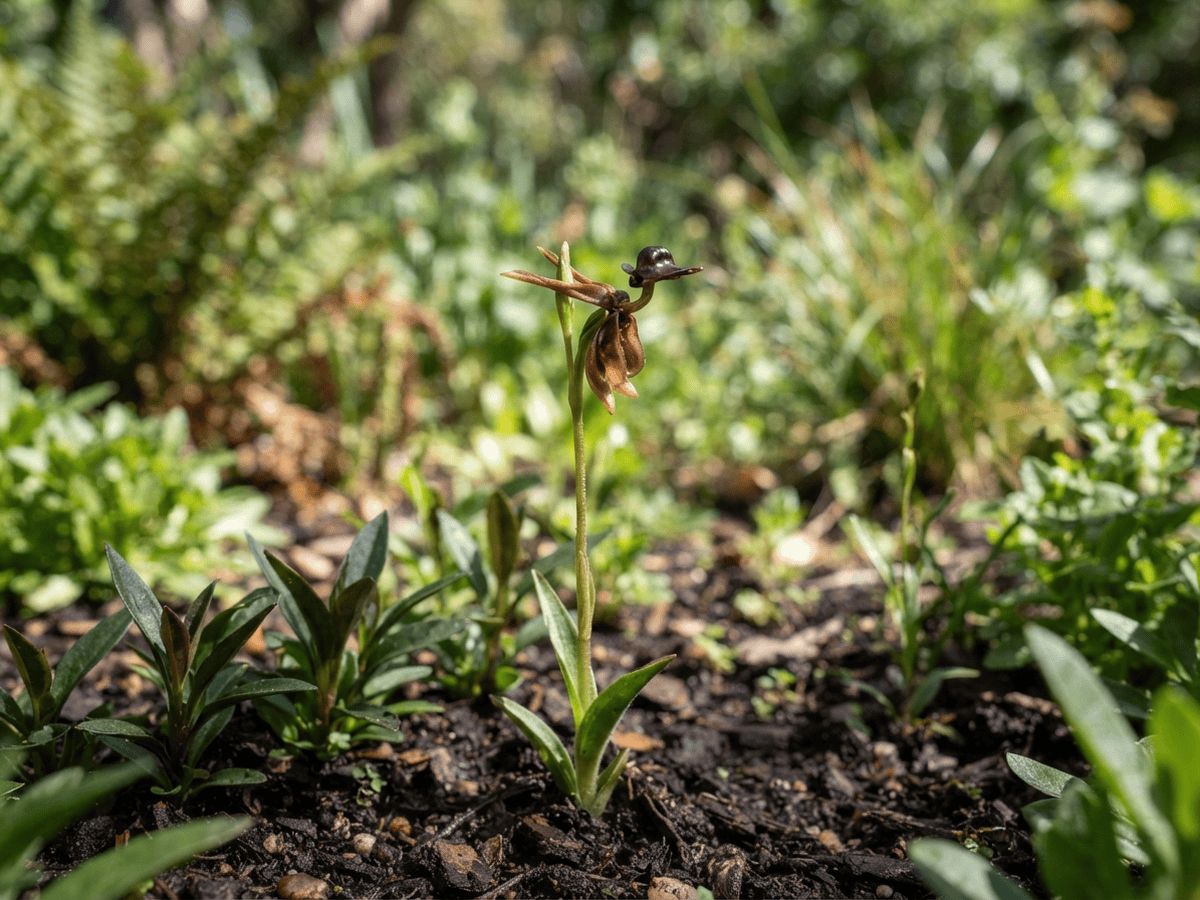


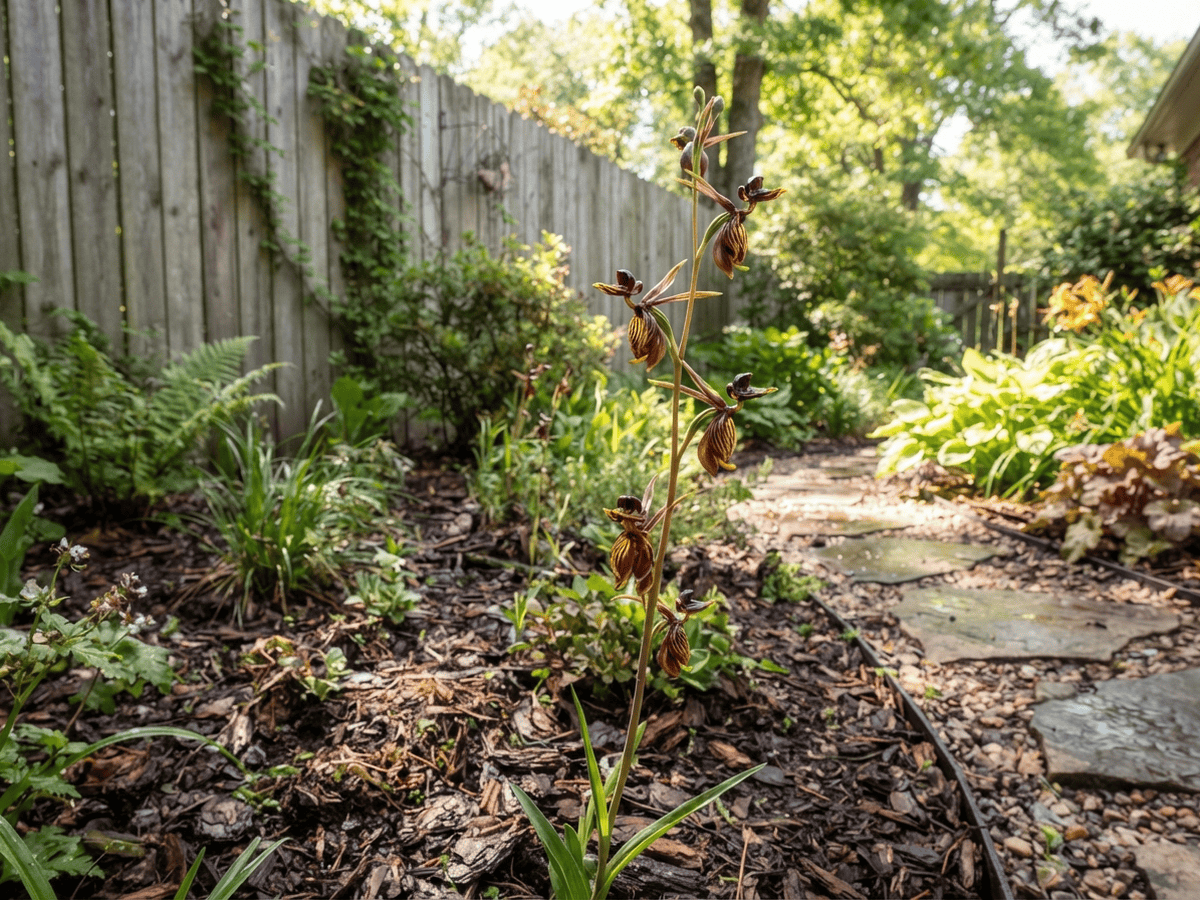
Flying Duck Orchid
Caleana major
Hard · Experienced growersAbout Flying Duck Orchid
The Flying Duck Orchid is a small terrestrial orchid native to the heathlands and open forests of eastern and southern Australia, prized for a flower shaped so uncannily like a duck in flight that it seems sculpted rather than grown. Its glossy, dark maroon-brown labellum forms the bird's 'head,' while the column mimics an outstretched body, luring native sawflies into an ingenious trap-pollination system that snaps shut on any insect that triggers it. Growing from an underground tuber in sandy, well-drained soil, it depends on a symbiotic soil fungus to survive and is almost never seen outside the wild.
- Pollinator-friendly
- Slow-growing
- Compact
- Drought-tolerant
How to care for Flying Duck Orchid
Watering
- Springevery 7 days
- Summerevery 7 days
- Fallevery 14 days
- Winterevery 30 days
Soil · Airy & open
- Single layerOrchid bark + charcoal100%
No soil at all — orchid roots need air moving around them.
FERTILIZER
- Springevery 30 days
- Summerevery 30 days
- Fallevery 30 days
At a Glance
- NativeAustralia
- Height0.5–1.5 m
- Spread0.5–1 m
- Flower colorBrown, Yellow
- Foliage colorGreen
- SoilWell-drained, Sandy
- LocationsYard · Patio
Bloom time
BLOOM CYCLE
Peak bloom
Oct–Nov
This plant blooms in the autumn, with the flowering period typically lasting several weeks.
Toxicity
No toxicity has been reported for this plant. Still, it is wise to keep pets from chewing on any houseplant.
Educational information, not medical or veterinary advice. If exposure is suspected, contact a doctor or veterinarian.
DISTRIBUTION


- Native
- Australia
History

When the English botanist Robert Brown formally described this small terrestrial orchid in 1810, after collecting around the young colony of Sydney, he could hardly have anticipated how strange its life story would prove to be. He placed it in a new genus, Caleana, honoring the botanical collector George Caley, who had spent years combing the bushland of New South Wales for unfamiliar plants and shipping specimens back to Kew. For decades afterward, the orchid's uncanny duck-shaped bloom was simply admired as a curiosity of the Australian bush, until closer observation revealed its trap-pollination mechanism. The hinged, irritable labellum sits balanced on a springy strap; when a male sawfly, drawn to the flower, lands on it searching for a mate, the trigger snaps the labellum downward, pinning the insect briefly against the column and dusting it with pollen before it struggles free to visit the next flower. Because the orchid depends entirely on a particular soil fungus to germinate and survive, like most Australian terrestrial orchids, it has never been successfully cultivated at scale, and no nursery can offer it. Its only real audience is bushwalkers and orchid enthusiasts, who plan spring trips to sandy heathland and open forest specifically hoping to spot its unmistakable silhouette nodding among the leaf litter, cameras ready for a flower that looks, for all the world, like a duck caught mid-flight.
Symbolism & meaning
What It Symbolizes
To Australian bushwalkers, the Flying Duck Orchid has become a small emblem of nature's trickery: a flower that mimics a bird only to spring a trap on the insect it lures. Because it thrives solely alongside its wild fungal partners and vanishes the moment conditions change, spotting one in bloom feels like catching a fleeting secret of the bush.
- Deception — The orchid's hinged, trap-set flower, which snaps shut on unsuspecting sawflies to ensure pollination, has made it an emblem of nature's cunning and disguise.
- Rarity — Because it cannot be cultivated away from its wild fungal partners, the Flying Duck Orchid symbolizes fleeting beauty found only in its native habitat.
Where the Name Comes From
The genus Caleana honors George Caley (1770-1829), an English botanist and plant collector who explored the bushland around colonial Sydney in the early 1800s. The species epithet major is Latin for 'greater' or 'larger,' distinguishing this orchid from its smaller relative, Caleana minor.
Uses & Fun Facts
- Relies on native sawflies for its unique trap-pollination system, making it a curiosity among Australian native pollinators.
- Sought out by orchid enthusiasts and bushwalkers for its uncanny duck-shaped bloom, though it is never sold as a garden plant.
Related plants
Plants with similar care
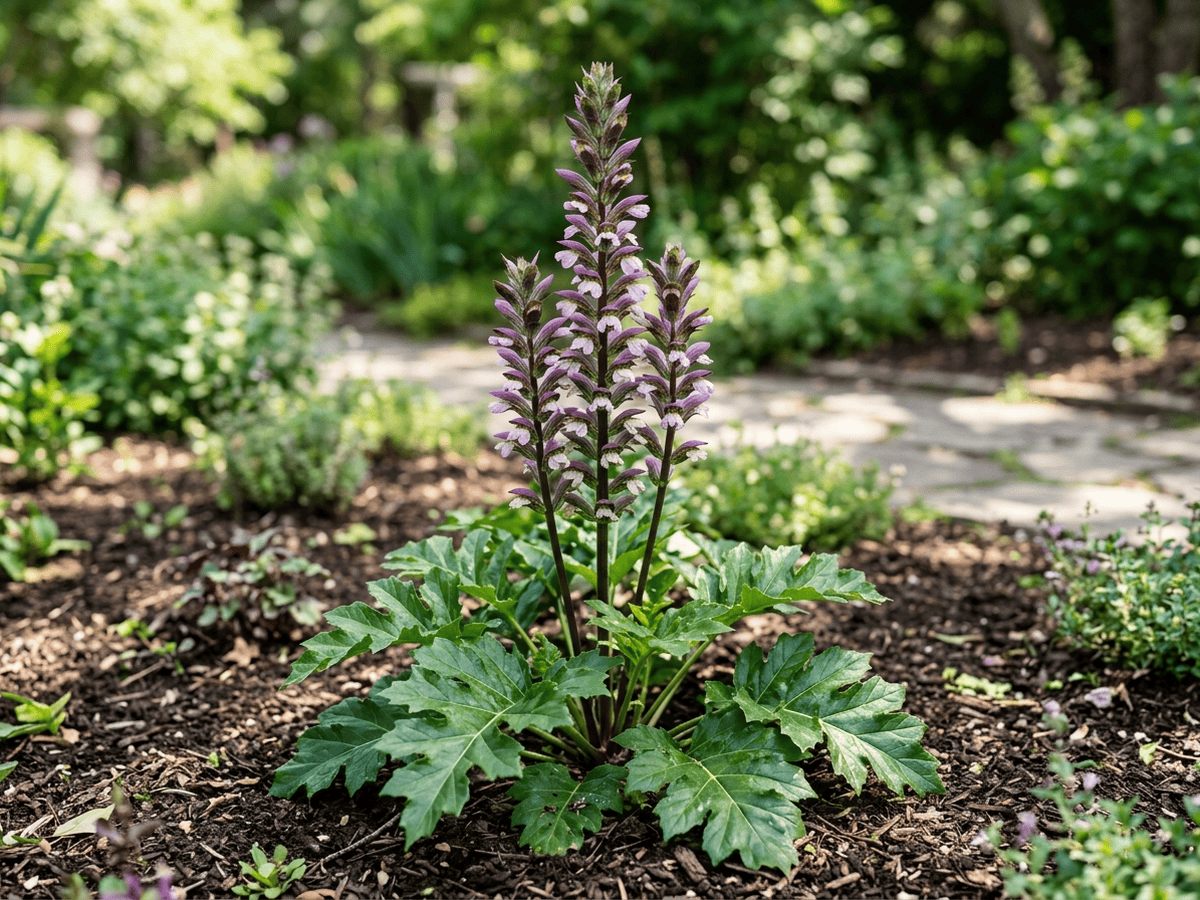 Bear's BreechesAcanthus mollis
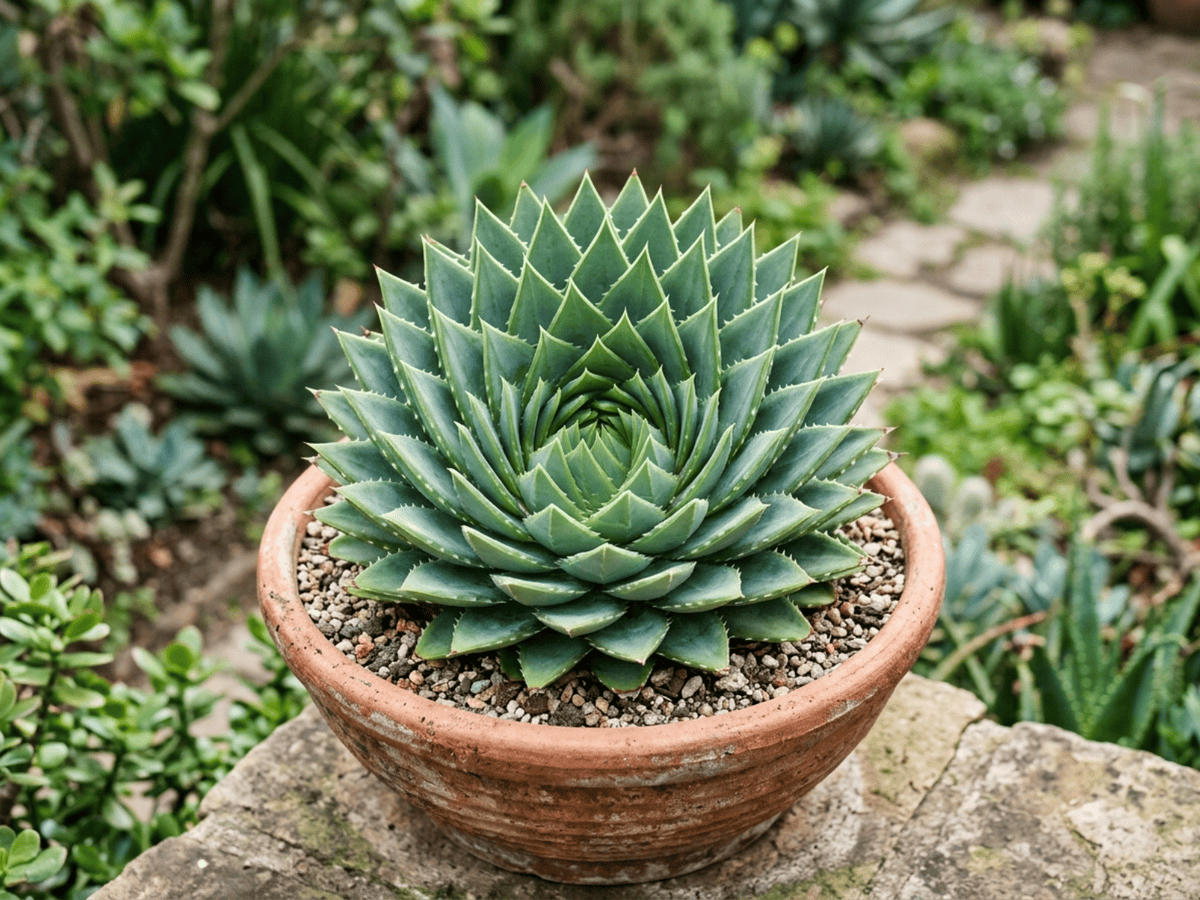 Spiral AloeAloe polyphylla
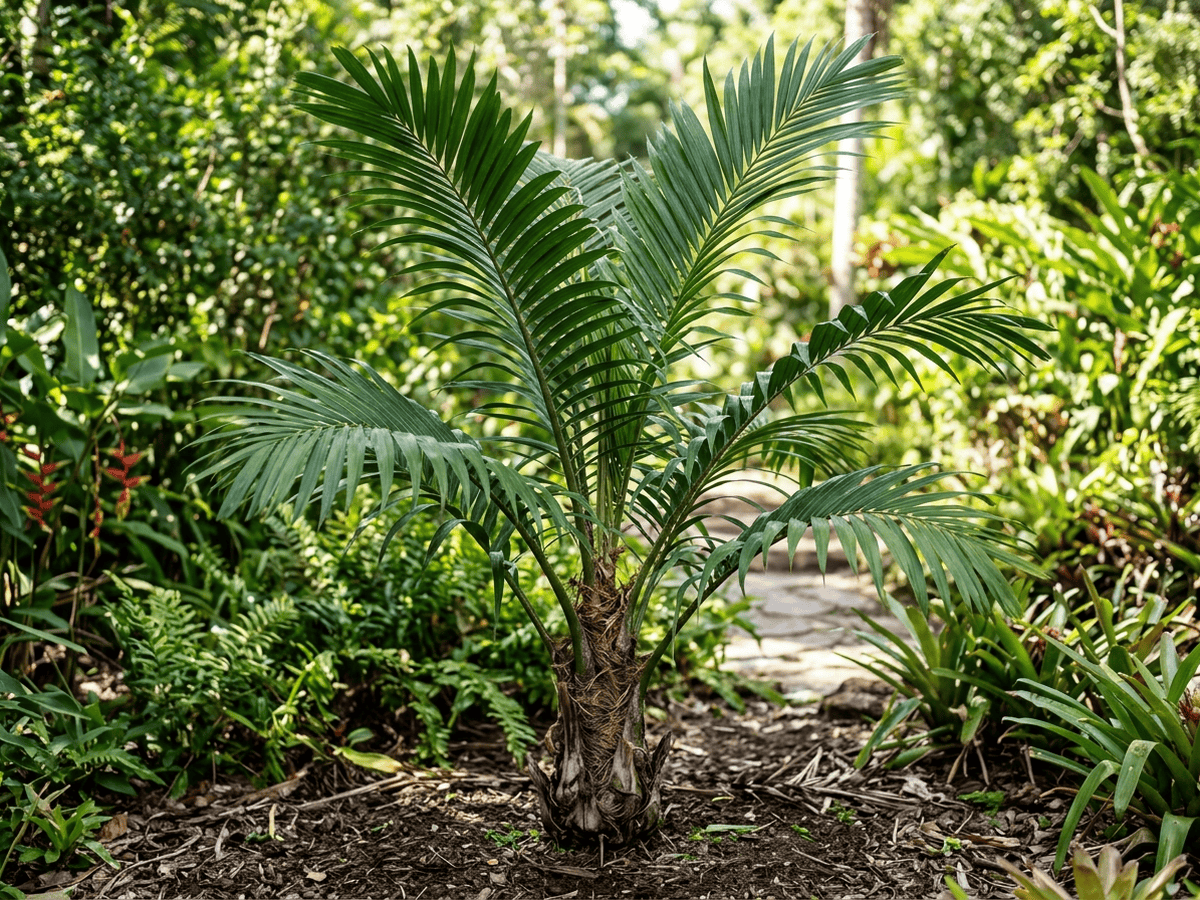 Formosa PalmArenga engleri
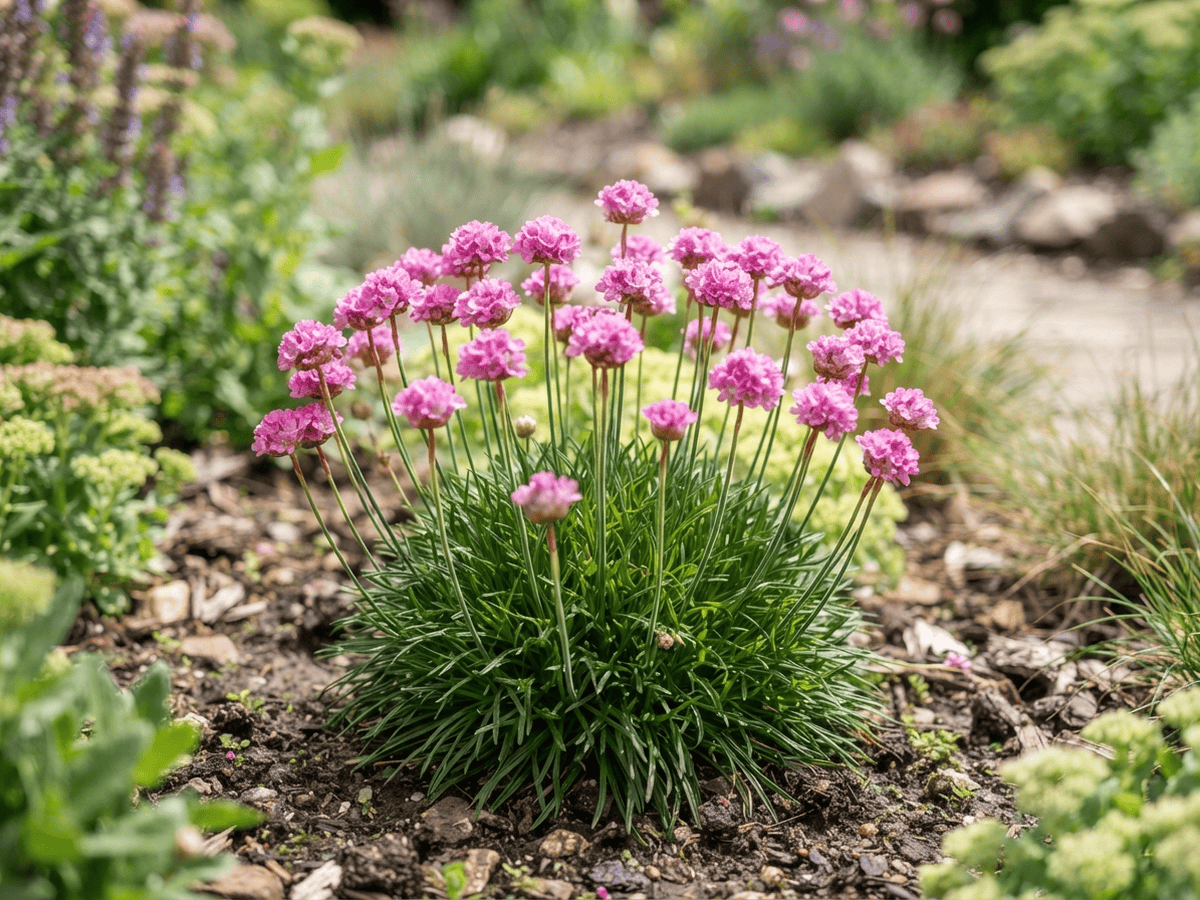 Sea ThriftArmeria maritima
Frequently asked questions
How often should I water Flying Duck Orchid?
In summer, water about every 7 days; in winter, about every 30 days. Adjust for heat, pot size and drainage.
How much light does Flying Duck Orchid need?
Part shade: 2–4 hrs direct. Watch the leaves — scorching or stretching means the light needs adjusting.
Is Flying Duck Orchid toxic to cats or dogs?
No toxicity has been reported for this plant. Still, it is wise to keep pets from chewing on any houseplant. Educational information, not medical or veterinary advice. If exposure is suspected, contact a doctor or veterinarian.
Is Flying Duck Orchid easy to grow?
It is considered challenging and rewards experienced growers.
When does Flying Duck Orchid bloom?
It typically blooms Oct–Nov in the Northern Hemisphere.
YardMate
Identify any plant in seconds
Snap a photo — YardMate names the plant, diagnoses problems, and reminds you when to water.
Download on the App Store