 YardMate


Hedge Bindweed
Calystegia sepium
Easy · Beginner friendlyAbout Hedge Bindweed
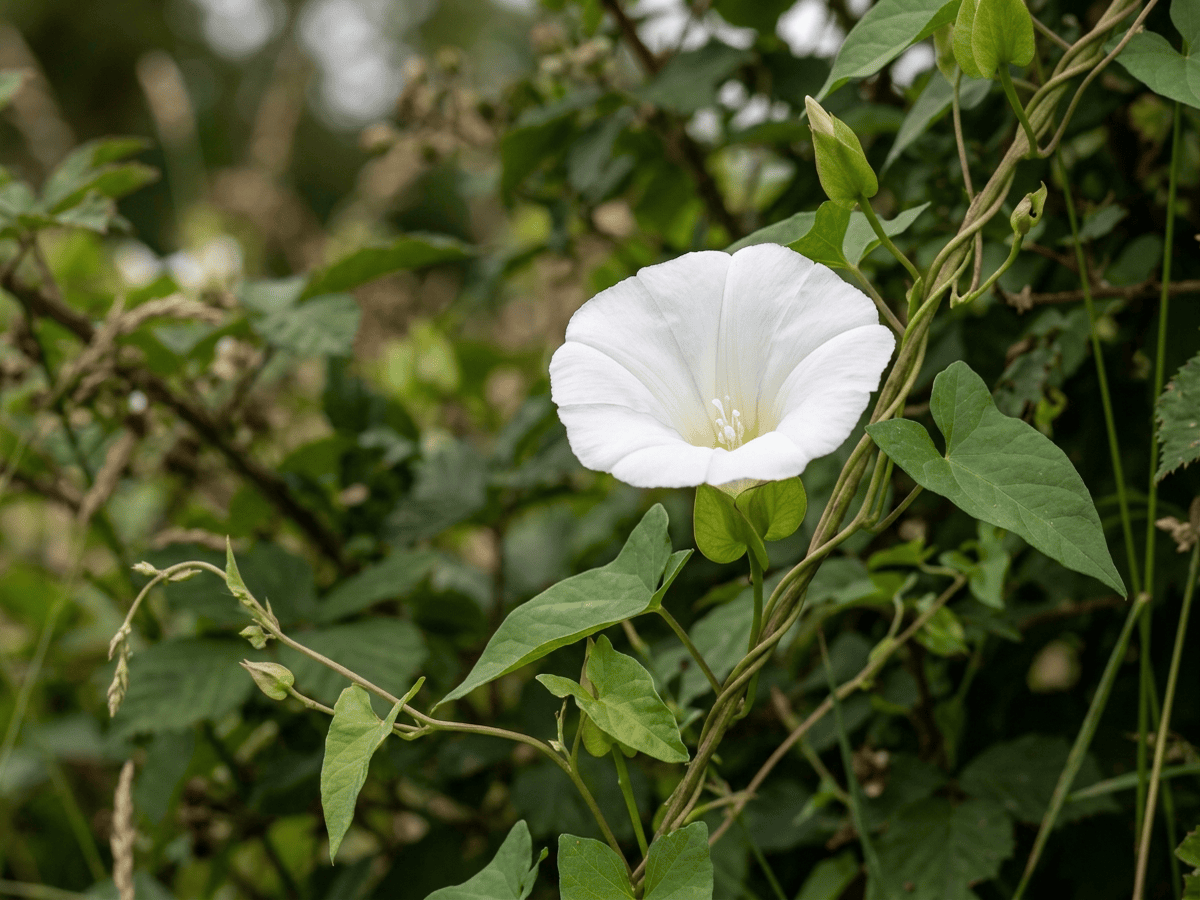
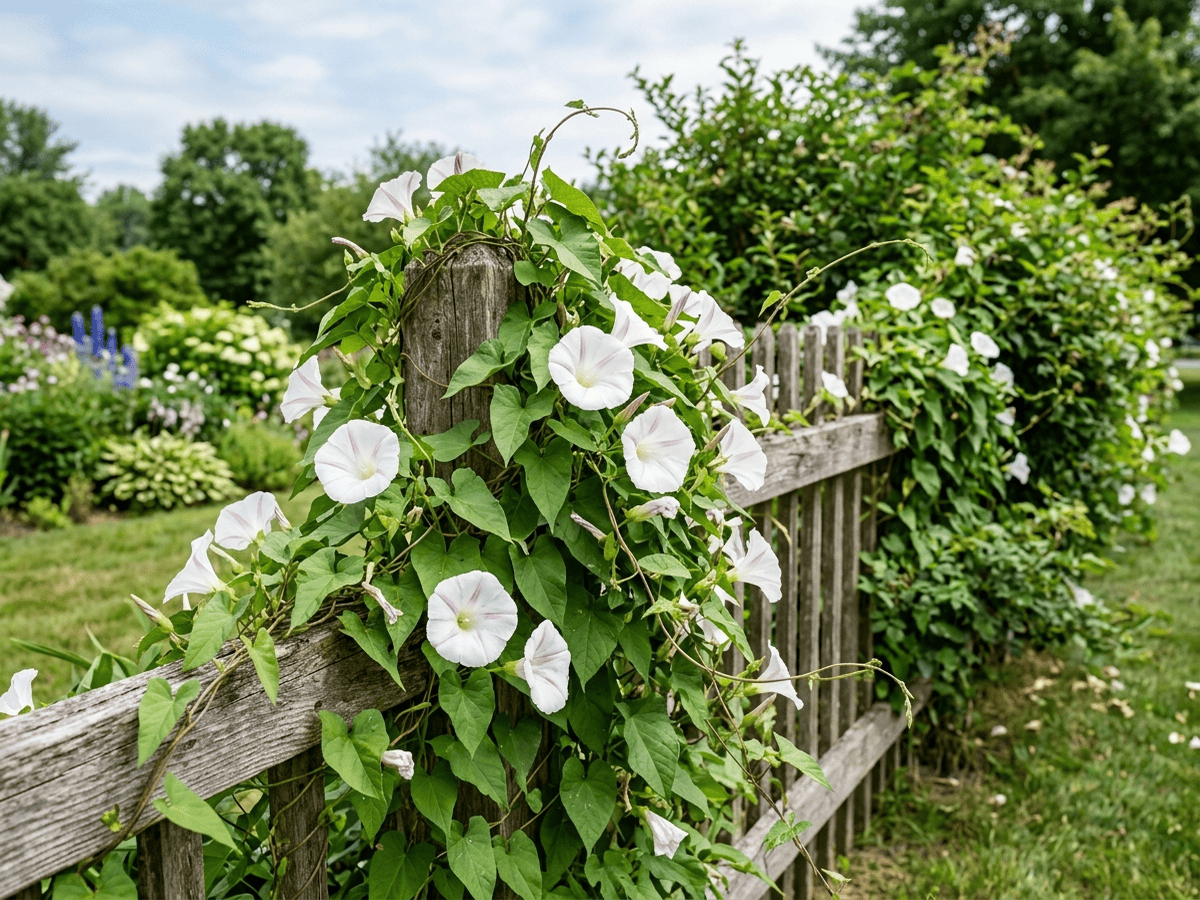
Hedge Bindweed is a native North American and European perennial vine with climbing twining stems, arrow-shaped leaves, and large showy white trumpet flowers 2 to 3 inches across. A more vigorous relative of Field Bindweed, it smothers garden plants, fences, and shrubs from summer through frost. Widely naturalized across US gardens and fencerows, listed as a noxious weed in several states.
- Climbing
How to care for Hedge Bindweed
Watering
- Springevery 14 days
- Summerevery 10 days
- Fallevery 14 days
- Winterevery 30 days
Soil · Well-draining
- Top dressingPine bark mulch10%
- Main mixPotting soil + perlite 2:170%
- DrainageLECA / gravel20%
Never skip the drainage layer — standing water is the top cause of root rot.
FERTILIZER
This plant needs little to no feeding.
At a Glance
- NativeNorth America
- Height6–10 ft (1.8–3 m)
- Spread6–12 ft (1.8–3.7 m)
- Flower colorWhite, Pink
- Foliage colorGreen
- SoilMoisture-retentive, Loamy, Well-drained
- LocationsYard
Bloom time
BLOOM CYCLE
Peak bloom
Jun–Nov
Large 2-3 inch white trumpet flowers summer to frost
Fragrance
LIGHT FRAGRANCE
The flowers have a light sweet scent.
Toxicity
Humans Slight · Pets Slight
resin glycosides
Slight
- Root
- Seed
- Ingestion
EXPOSURE Eating roots and seeds.
EFFECT Digestive upset.
NOTE Mildly purgative; rarely eaten due to bitterness.
Slight
- Root
- Seed
- Ingestion
EXPOSURE Eating roots and seeds.
EFFECT Vomiting and diarrhea.
NOTE Mildly purgative; rarely eaten due to bitterness.
Slight
- Root
- Seed
- Ingestion
EXPOSURE Eating roots and seeds.
EFFECT Vomiting and diarrhea.
NOTE Mildly purgative; rarely eaten due to bitterness.
Educational information, not medical or veterinary advice. If exposure is suspected, contact a doctor or veterinarian.
DISTRIBUTION

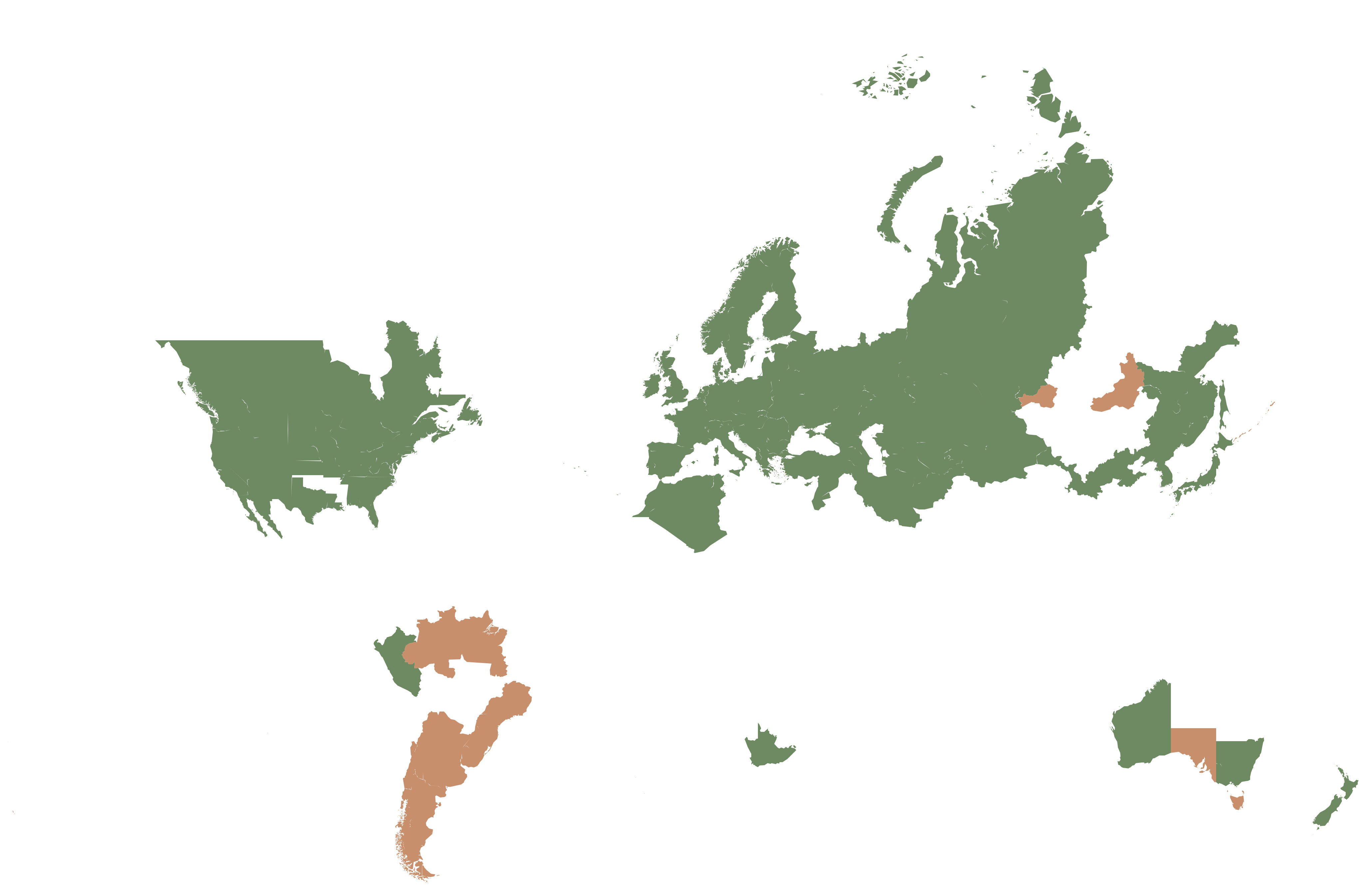
- Native
- Introduced
- North America
History

Calystegia sepium, hedge bindweed or hedge false bindweed, is a twining herbaceous perennial native across temperate Eurasia and North America, making it one of the few genuinely circumboreal weed species. Unlike the smaller field bindweed, hedge bindweed climbs vigorously over hedges, fences, and neighbouring plants to heights of two to three meters, producing a succession of pure white (occasionally pink-striped) funnel flowers up to seven centimeters across through summer. The flowers open at dawn and remain open through the day, producing abundant nectar for bumblebees, and moonflower hawk moths visit in the evening.
The plant spreads by both seed and extensive fleshy rhizomes that fragment readily, making it extremely difficult to eradicate once established in a hedge or flowerbed. Native variants occur across North America and Europe, and Hedge Bindweed is now widespread across US fencerows, gardens, and disturbed ground.
Large showy flowers make it occasionally confused with cultivated morning glories but its aggressive climbing and rhizomes strangle desirable garden plants rapidly.
Symbolism & meaning
What It Symbolizes
Hedge Bindweed is the Beautiful strangler — pure white trumpets opening like morning glory's elegant cousin, while its stems quietly throttle the shrub beneath. It is what the Morning glory cousin looks like when freed from cultivation: charming above ground, ruthless below. A flower whose innocence is part of its strategy.
- Hedgerow strangler — climbs and smothers shrubs and fences
- Morning glory cousin — large relative of cultivated morning glory
Where the Name Comes From
'Calystegia' from Greek 'kalyx-stege' meaning cup-covering, for bracts covering the flower base; 'sepium' from Latin 'sepes' meaning hedge.
Uses & Fun Facts
- Aggressive vine smothers fences with white trumpet flowers
Related plants
Plants with similar care
 Chinese AbeliaAbelia chinensis
 Fragrant AbeliaAbelia mosanensis
 Large-Flowered AbeliaAbelia uniflora
 Glossy AbeliaAbelia x grandiflora
Frequently asked questions
How often should I water Hedge Bindweed?
In summer, water about every 10 days; in winter, about every 30 days. Adjust for heat, pot size and drainage.
How much light does Hedge Bindweed need?
Full sun: 6+ hrs direct. Watch the leaves — scorching or stretching means the light needs adjusting.
Is Hedge Bindweed toxic to cats or dogs?
Pets Slight (Dogs Slight · Cats Slight) Educational information, not medical or veterinary advice. If exposure is suspected, contact a doctor or veterinarian.
Is Hedge Bindweed easy to grow?
Yes — it is considered an easy, beginner-friendly plant.
When does Hedge Bindweed bloom?
It typically blooms Jun–Nov in the Northern Hemisphere.
YardMate
Identify any plant in seconds
Snap a photo — YardMate names the plant, diagnoses problems, and reminds you when to water.
Download on the App Store