 YardMate


American Trumpet Vine
Campsis radicans
Easy · Beginner friendlyAbout American Trumpet Vine
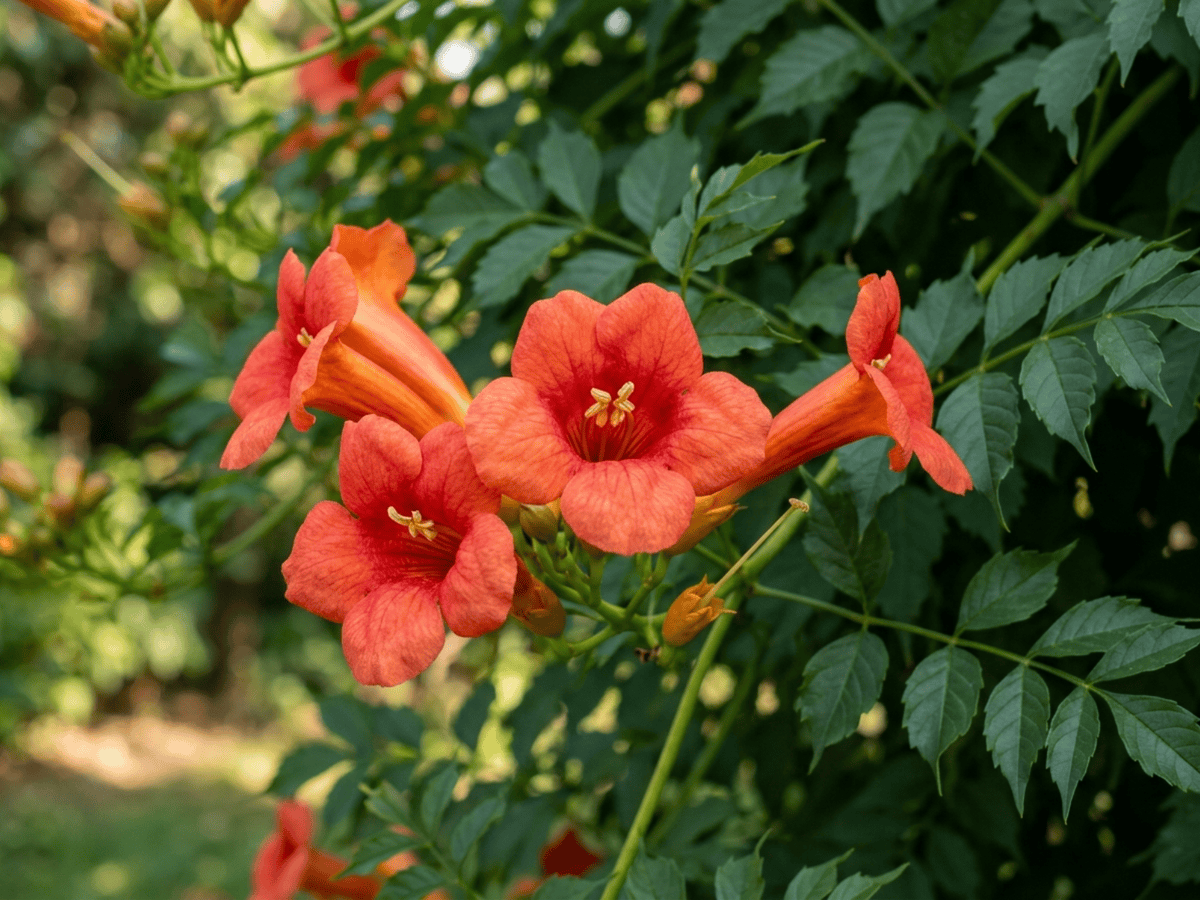
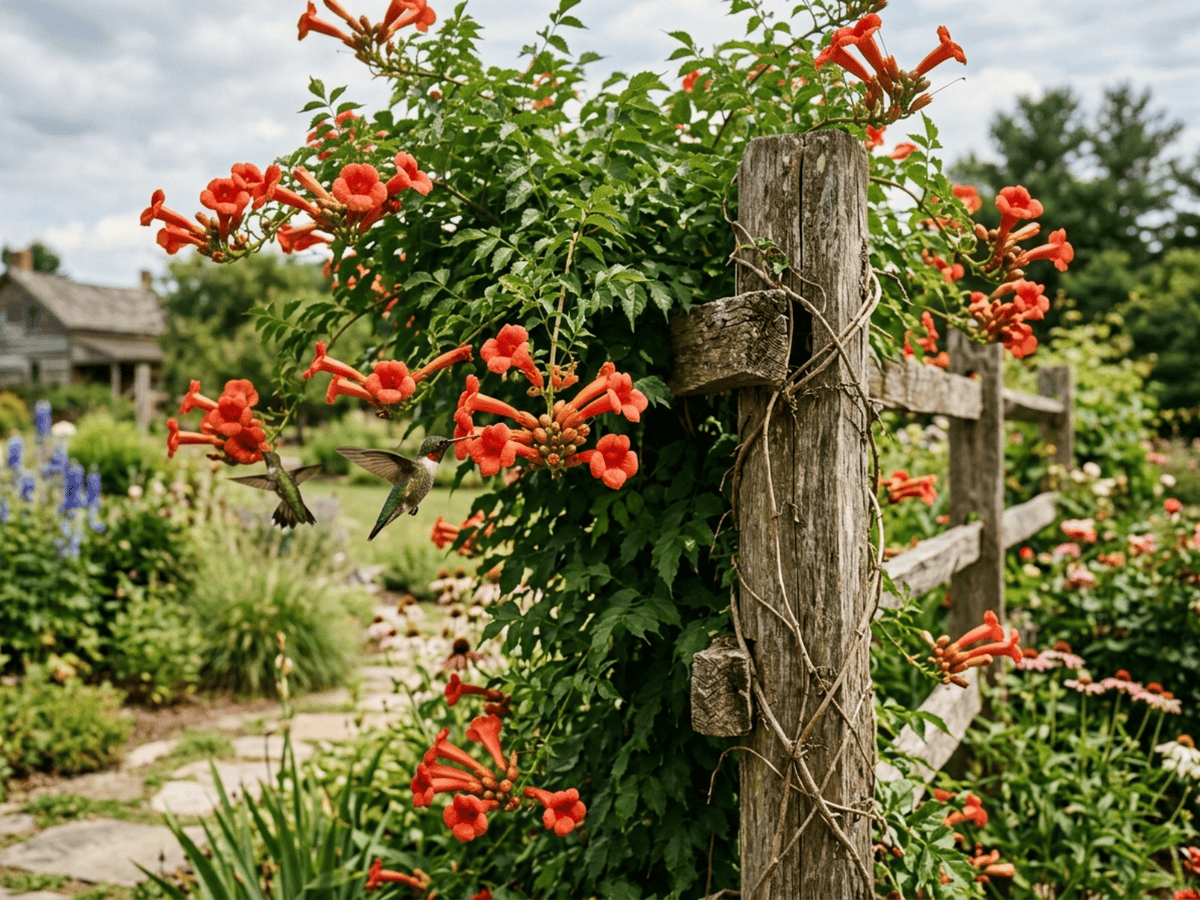
Campsis radicans, known as trumpet vine or trumpet creeper, is a bold, vigorous deciduous vine native to the southeastern United States. It produces clusters of large, trumpet-shaped flowers in brilliant shades of orange, red, and yellow from midsummer into fall, making it one of the most important hummingbird-attracting plants in North America. The compound leaves with serrated leaflets give the vine a lush, tropical appearance. It climbs by aerial rootlets and can reach 10 to 12 meters, covering arbors, pergolas, and fences with impressive speed. The vine is extremely robust and can grow in poor soil, drought, and urban conditions. However, its aggressive suckering habit means it can spread far from the original planting via underground runners. The cultivar 'Flava' offers golden-yellow flowers, while 'Madame Galen' is a popular hybrid with larger salmon-red blooms. Despite its assertive nature, few vines can match its summer flower power and wildlife value.
- Drought-tolerant
- Climbing
- Pollinator-friendly
How to care for American Trumpet Vine
Watering
- Springevery 7 days
- Summerevery 5 days
- Fallevery 14 days
- Winterevery 30 days
Soil · Well-draining
- Top dressingPine bark mulch10%
- Main mixPotting soil + perlite 2:170%
- DrainageLECA / gravel20%
Never skip the drainage layer — standing water is the top cause of root rot.
FERTILIZER
- Springevery 60 days
At a Glance
- NativeNorth America
- Height25–40 ft (7.6–12.2 m)
- Spread10–20 ft (3–6.1 m)
- Flower colorOrange, Red, Yellow
- Foliage colorGreen, Yellow
- SoilWell-drained, Loamy, Neutral
- LocationsYard
Bloom time
BLOOM CYCLE
Peak bloom
Jul–Oct
Orange-red trumpets midsummer to fall; blooms on new wood — prune hard in late winter
Fragrance
NO FRAGRANCE
No notable fragrance.
Toxicity
Humans Slight · Pets Slight
Unknown toxic principle
Slight
- Leaf
- Flower
- Sap
- Contact
EXPOSURE Touching leaves, flowers, and sap.
EFFECT Leaves and flowers can cause contact dermatitis in sensitive individuals — hence another common name, "cow-itch vine.".
NOTE Documented concern for humans: Leaves and flowers can cause contact dermatitis in sensitive individuals — hence another common name, "cow-itch vine.".
Slight
- Leaf
- Flower
- Ingestion
EXPOSURE Eating leaves and flowers.
EFFECT Mild GI upset and skin contact may cause minor irritation.
NOTE Not listed by ASPCA. Handle with gloves to avoid contact dermatitis in sensitive individuals.
Slight
- Leaf
- Flower
- Ingestion
EXPOSURE Eating leaves and flowers.
EFFECT Mild GI upset.
NOTE Not listed by ASPCA. Handle with gloves to avoid contact dermatitis in sensitive individuals.
Educational information, not medical or veterinary advice. If exposure is suspected, contact a doctor or veterinarian.
DISTRIBUTION


- Native
- Introduced
- North America
History
Campsis radicans is native to the southeastern United States, from New Jersey and Illinois south to Florida and west to Texas. It is a vigorous woody climbing vine, using small adhesive aerial rootlets along its stems to attach to bark, stone, and wooden structures. The large tubular orange to scarlet trumpet flowers (5-8 cm long) bloom from mid-summer into early autumn and are famously attractive to ruby-throated hummingbirds — the species is one of the most important garden hummingbird flowers in eastern North America. In its native range it was known to Indigenous Southeastern peoples and early colonial botanists; Mark Catesby documented it in his 1730s "Natural History of Carolina."
Despite its native status, it has a strong tendency to sucker from the roots and produce shoots many meters from the original plant, making it very difficult to control — once established it is essentially permanent, and aggressive suckering can continue for years after attempted removal. The aerial rootlets can damage wooden siding, gutters, and the mortar of old brick walls. The related but more manageable Chinese Campsis grandiflora and the hybrid C. x tagliabuana "Madame Galen" are often recommended as less-invasive alternatives for garden use.
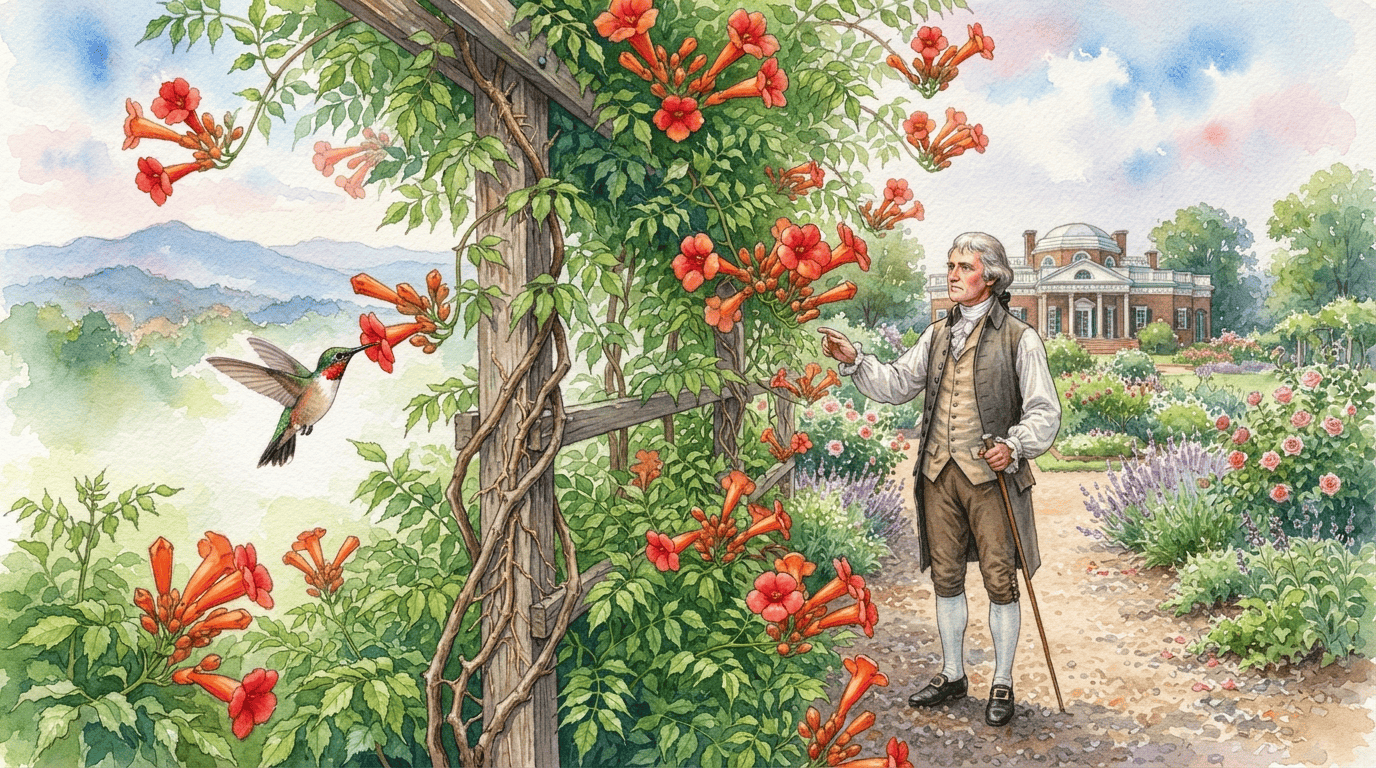
Trumpet vine is native to the southeastern United States and was one of the first American plants cultivated in European gardens, arriving in England by 1640. It was a favorite of Thomas Jefferson, who grew it at Monticello for its hummingbird-attracting flowers. The Choctaw and Cherokee peoples used root bark preparations medicinally. In the wild, it is an important component of forest edges and streambanks, where its flowers sustain ruby-throated hummingbirds during their southward migration.
Symbolism & meaning
What It Symbolizes
American Trumpet Vine is often read as a flower of Ambition — climbing relentlessly toward any height it can find, gripping with aerial roots wherever it lands. Its scarlet trumpets lift in a tone of Celebration, sounding silent fanfares for the hummingbirds that follow them. It is a Southern vine of bold announcements, refusing to be inconspicuous.
- Ambition — The vine's relentless upward climbing represents determination to reach new heights
- Celebration — Bold trumpet-shaped flowers evoke fanfare and joyful announcement
Where the Name Comes From
The name American Trumpet Vine describes its vining or arching growth. 'Campsis' derives from Greek 'kampsis' meaning 'bending' or 'curvature,' referring to the curved stamens inside the flower. 'Radicans' means 'rooting' in Latin, describing the aerial rootlets.
Uses & Fun Facts
- Vigorous vine clothes arbors with orange trumpet flowers
- Tubular blooms are magnets for ruby-throated hummingbirds
- Bold summer color on pergolas and large fences
Related plants
Plants with similar care
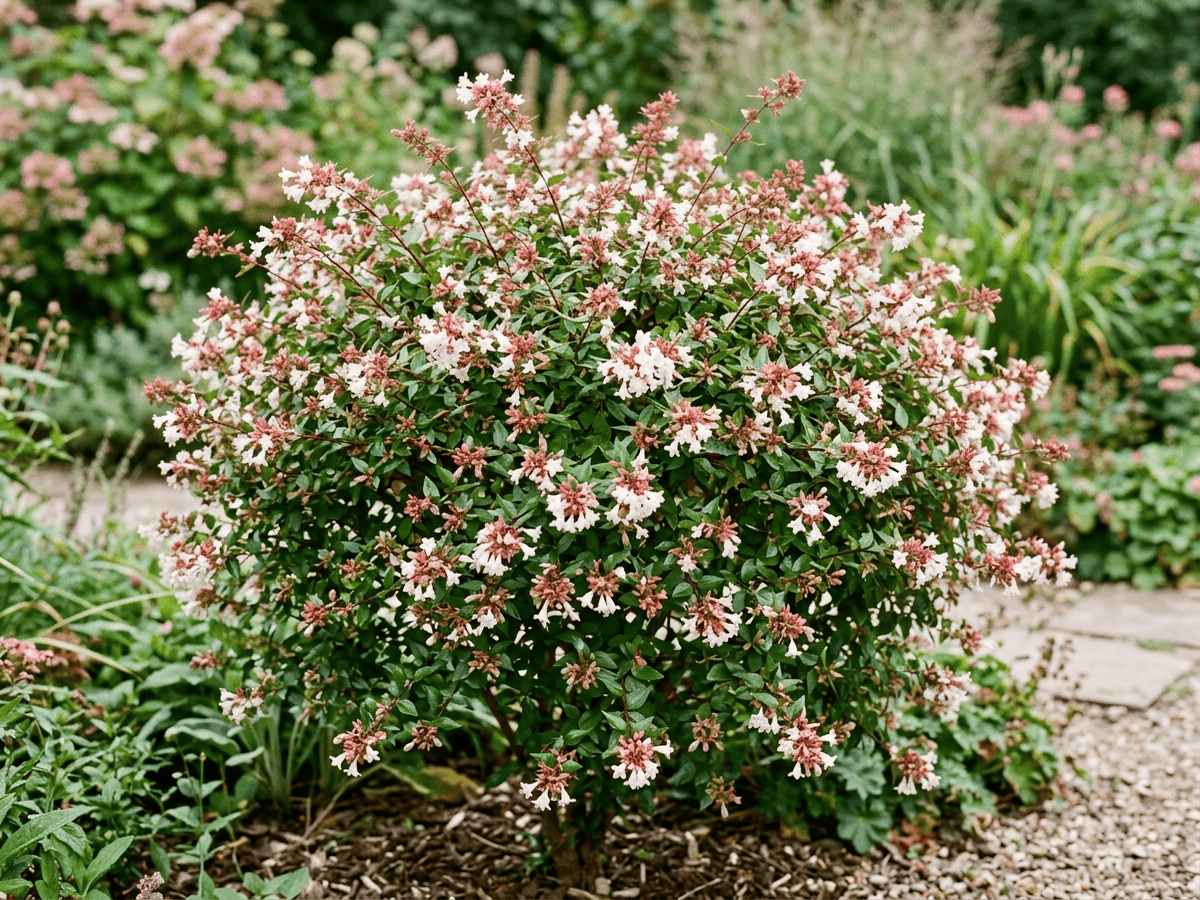 Chinese AbeliaAbelia chinensis
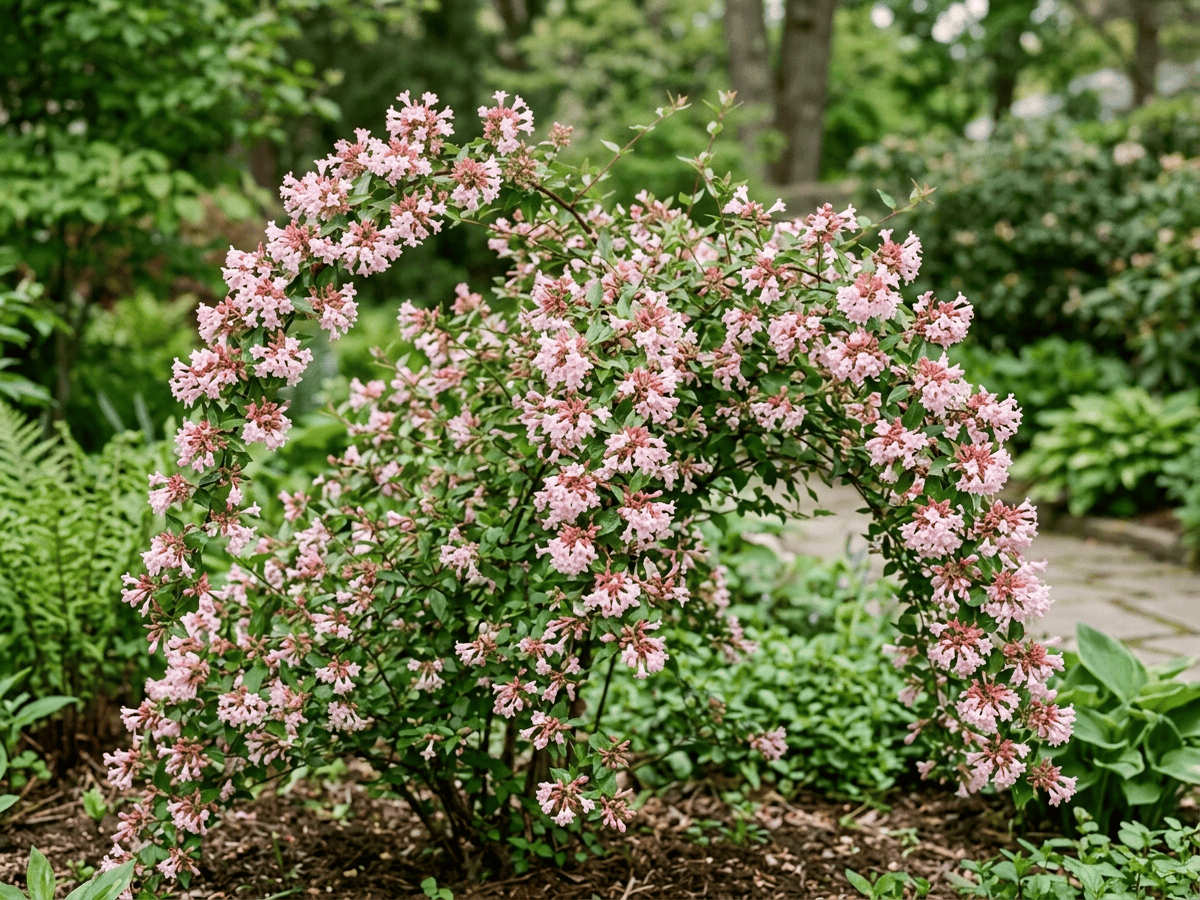 Fragrant AbeliaAbelia mosanensis
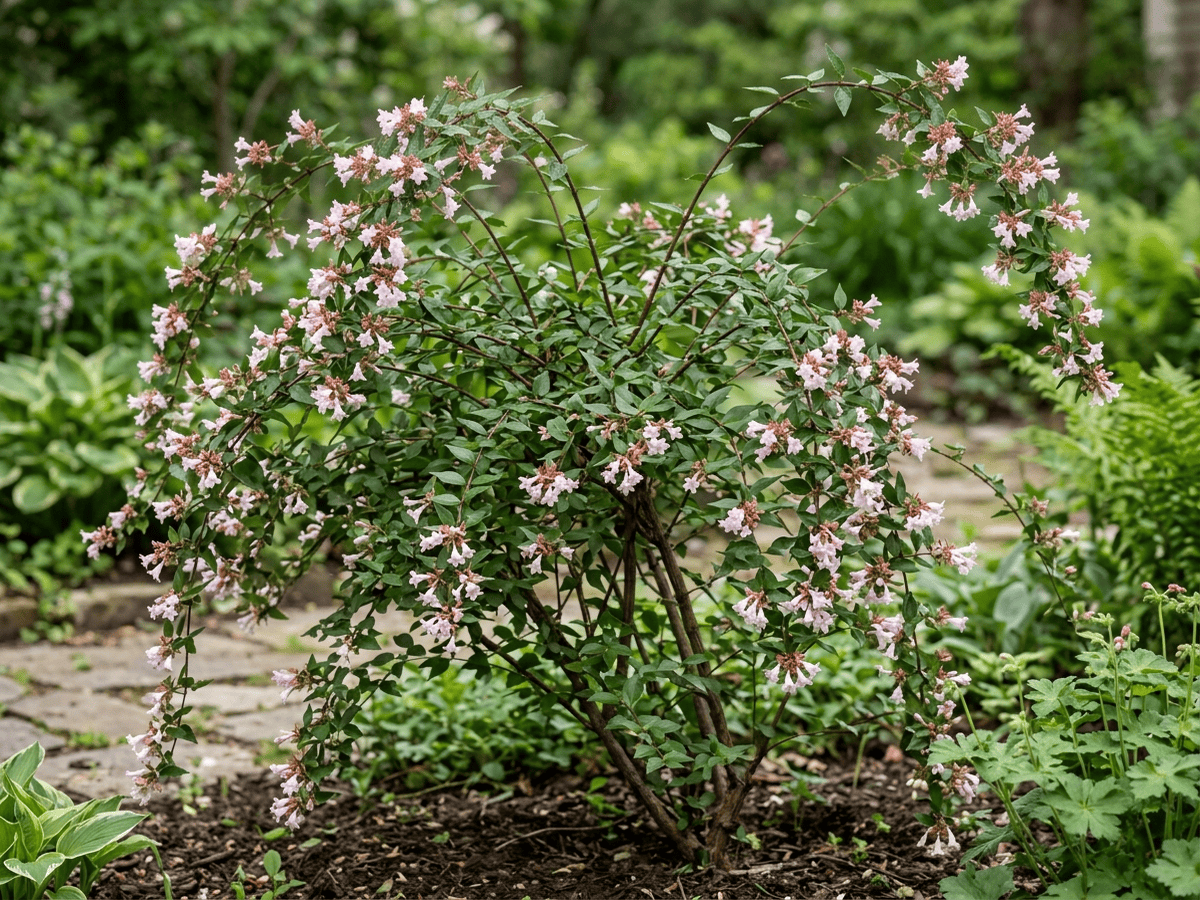 Large-Flowered AbeliaAbelia uniflora
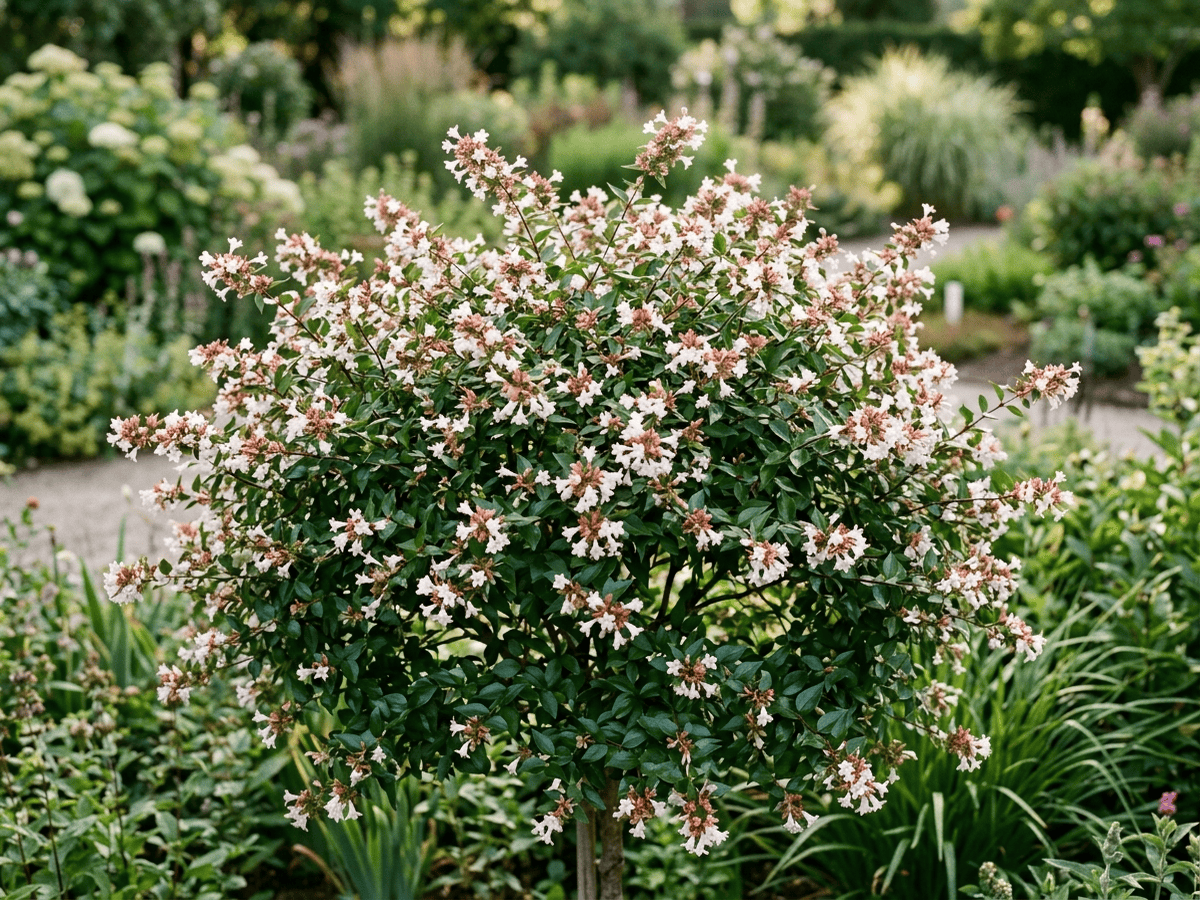 Glossy AbeliaAbelia x grandiflora
Frequently asked questions
How often should I water American Trumpet Vine?
In summer, water about every 5 days; in winter, about every 30 days. Adjust for heat, pot size and drainage.
How much light does American Trumpet Vine need?
Full sun: 6+ hrs direct. Watch the leaves — scorching or stretching means the light needs adjusting.
Is American Trumpet Vine toxic to cats or dogs?
Pets Slight (Dogs Slight · Cats Slight) Educational information, not medical or veterinary advice. If exposure is suspected, contact a doctor or veterinarian.
Is American Trumpet Vine easy to grow?
Yes — it is considered an easy, beginner-friendly plant.
When does American Trumpet Vine bloom?
It typically blooms Jul–Oct in the Northern Hemisphere.
YardMate
Identify any plant in seconds
Snap a photo — YardMate names the plant, diagnoses problems, and reminds you when to water.
Download on the App Store