 YardMate


Musk Thistle
Carduus nutans
Easy · Beginner friendlyAbout Musk Thistle
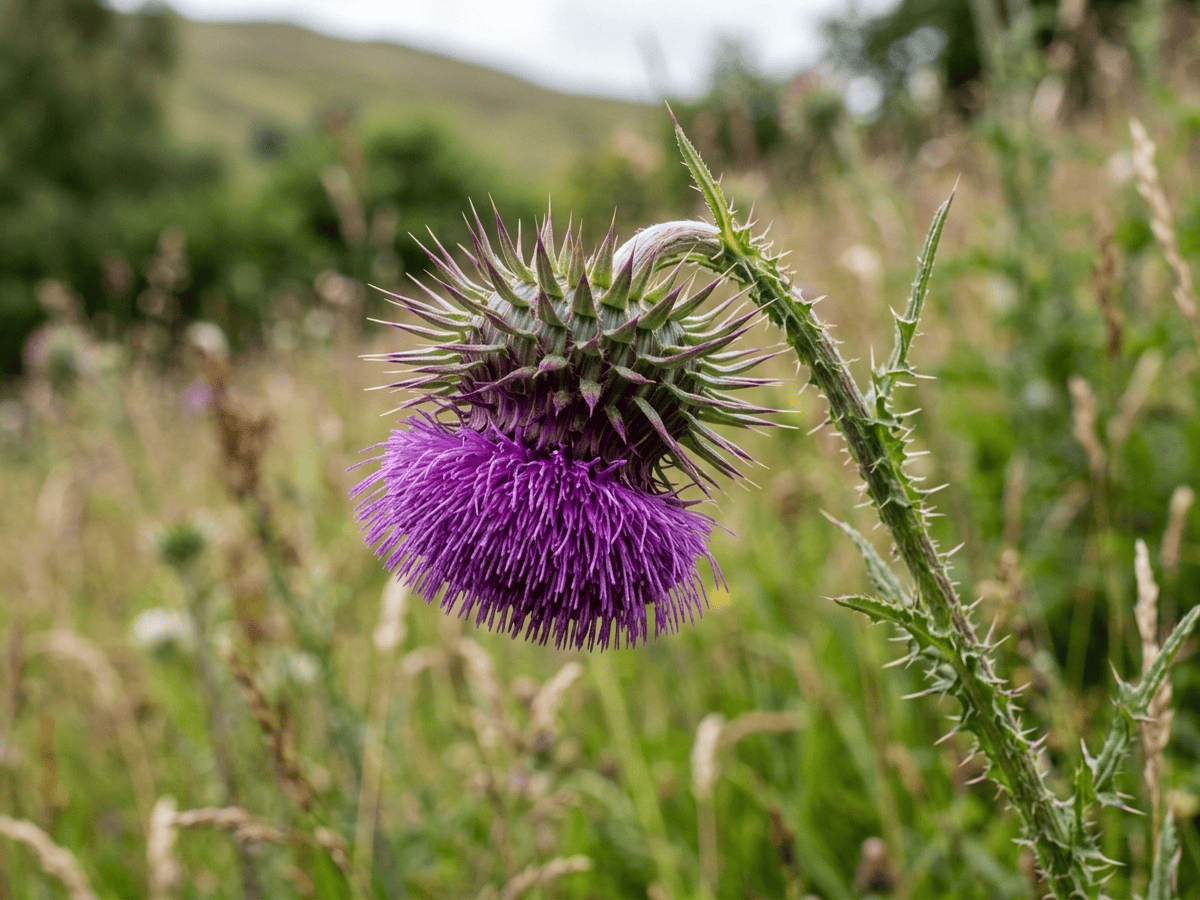
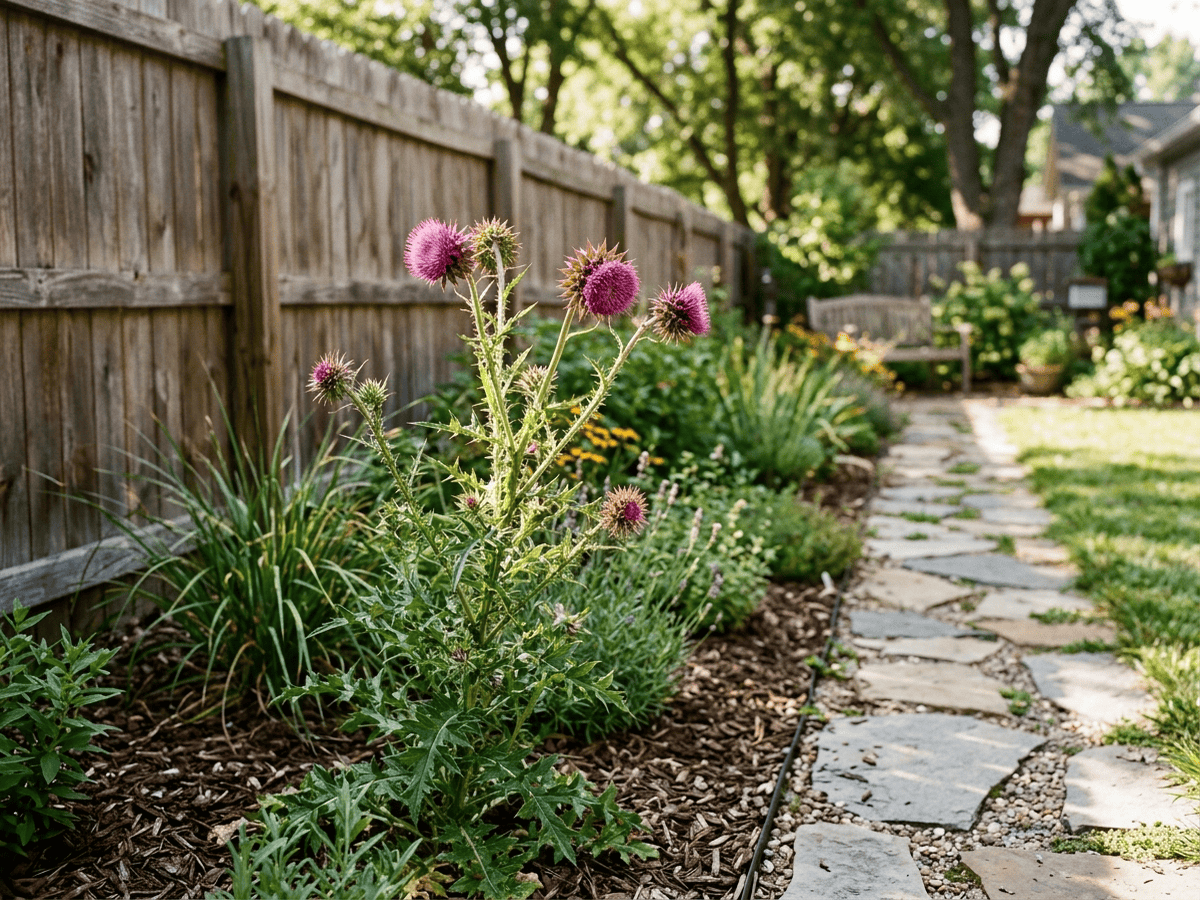
Musk Thistle or Nodding Thistle is a Eurasian biennial thistle with large drooping 2 to 3 inch purple flower heads, invasive across much of the US from the Great Plains eastward. Growing 3 to 6 feet tall with deeply lobed spiny leaves, each plant produces up to 120,000 wind-borne seeds. Listed as noxious in most central and western states due to devastating pasture impacts.
- Pollinator-friendly
- Drought-tolerant
- Wildlife-friendly
- Fast-growing
How to care for Musk Thistle
Watering
- Springevery 14 days
- Summerevery 10 days
- Fallevery 14 days
- Winterevery 30 days
Soil · Well-draining
- Top dressingPine bark mulch10%
- Main mixPotting soil + perlite 2:170%
- DrainageLECA / gravel20%
Never skip the drainage layer — standing water is the top cause of root rot.
FERTILIZER
This plant needs little to no feeding.
At a Glance
- NativeEurope, Africa, Western Asia
- Height3–7 ft (0.9–2.1 m)
- Spread1–2 ft (0.3–0.6 m)
- Flower colorPink, Purple
- Foliage colorGreen
- SoilLoamy, Well-drained, Alkaline
- LocationsYard
Bloom time
BLOOM CYCLE
Peak bloom
Jun–Aug
Large drooping purple flower heads summer of second year
Fragrance
MODERATE FRAGRANCE
The flowers have a sweet musky scent.
Toxicity
Humans Slight · Pets Slight
Unknown toxic principle
Slight
- Leaf
- Stem
- Contact
EXPOSURE Touching leaves and stems.
EFFECT Pricks from spines.
NOTE Not chemically toxic; mechanical injury from spines.
Slight
- Leaf
- Stem
- Contact
EXPOSURE Touching leaves and stems.
EFFECT Pricks from spines.
NOTE Not chemically toxic; mechanical injury from spines.
Slight
- Leaf
- Stem
- Contact
EXPOSURE Touching leaves and stems.
EFFECT Pricks from spines.
NOTE Not chemically toxic; mechanical injury from spines.
Educational information, not medical or veterinary advice. If exposure is suspected, contact a doctor or veterinarian.
DISTRIBUTION

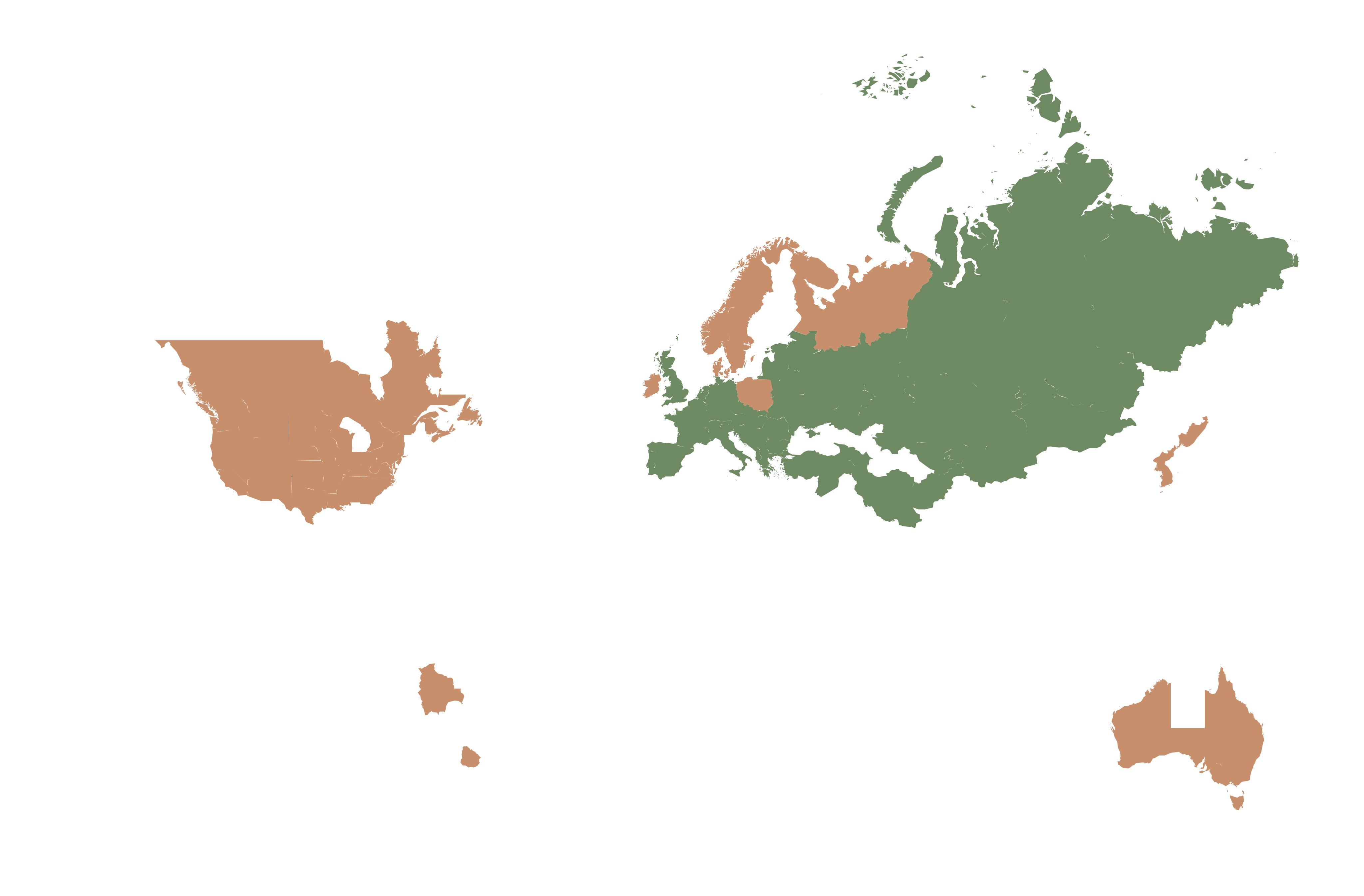
- Native
- Introduced
- Europe
- Africa
- Western Asia
History
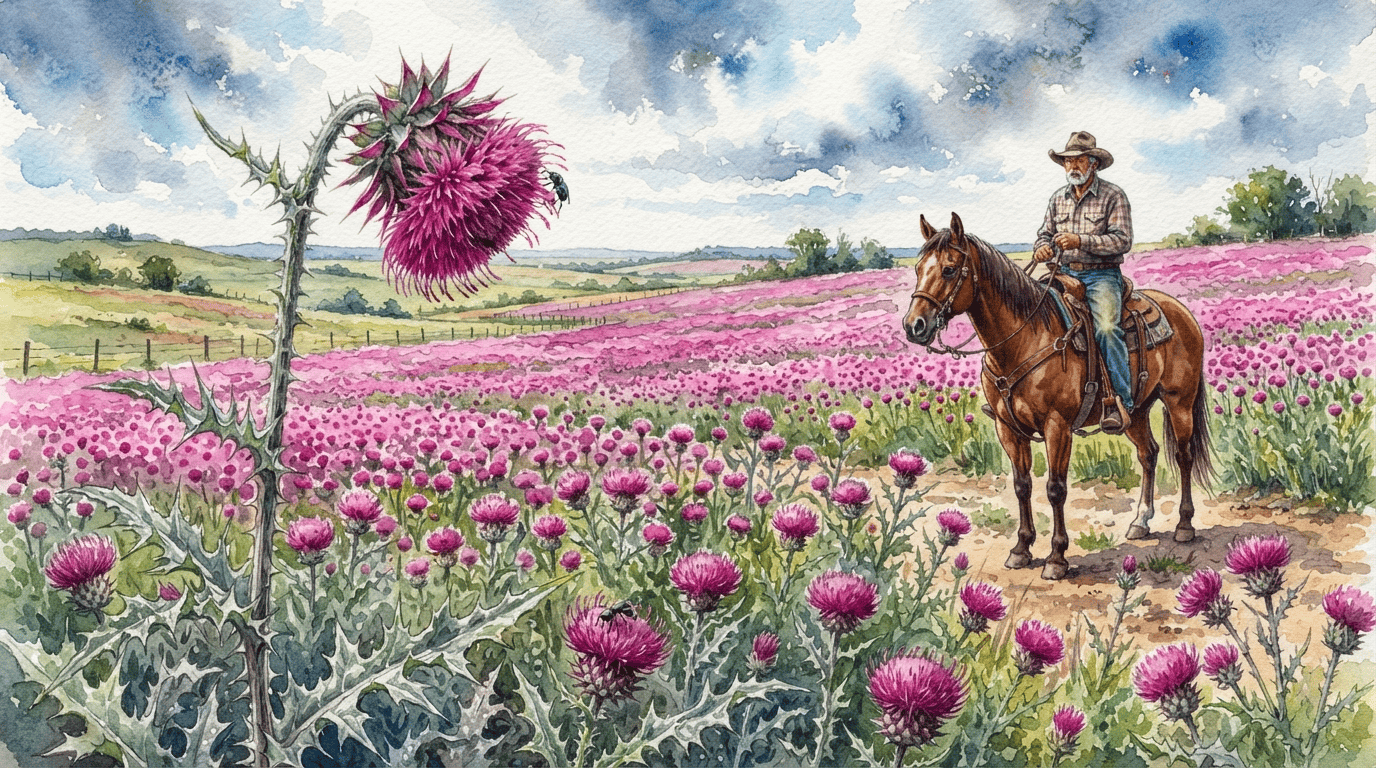
Carduus nutans, musk or nodding thistle, is a biennial composite native to Europe, North Africa, and western Asia. First recorded in the eastern United States around 1853, probably from ballast soil, it spread westward through contaminated hay and crop seed and by the mid-twentieth century infested millions of rangeland hectares across the central plains. Its large, sweetly fragrant magenta flowerheads nod on long peduncles, giving the species its specific epithet nutans (nodding), and each head produces hundreds of wind-borne seeds.
A classical biological control program starting in the 1960s released the seed-head weevil Rhinocyllus conicus and the rosette weevil Trichosirocalus horridus from Europe; both established widely and dramatically reduced thistle densities, making it a textbook case of weed biocontrol. Native to Europe and western Asia, Musk Thistle arrived in the US in the early 1900s and spread rapidly across pastures and rangelands from Nebraska and Kansas eastward.
Listed noxious in many states, it is partially controlled by the introduced biocontrol weevil Rhinocyllus conicus.
Symbolism & meaning
What It Symbolizes
Musk Thistle is the showy invader of overgrazed pastures across temperate North America, its crimson flower heads nodding heavily on tall, intimidating stems. Each plant is a seed cannon — up to 120,000 wind-borne seeds a season, riding the prairie air into every neighbor's field. Beautiful close up and ruinous at scale, it is the European import that turned rangeland economics upside down.
- Nodding invader — distinctive drooping flower heads
- Seed cannon — 120,000 wind-borne seeds per plant
Where the Name Comes From
'Carduus' from Latin for thistle; 'nutans' from Latin means nodding, for the characteristic drooping flower heads.
Related plants
Plants with similar care
 Chinese AbeliaAbelia chinensis
 Fragrant AbeliaAbelia mosanensis
 Large-Flowered AbeliaAbelia uniflora
 Glossy AbeliaAbelia x grandiflora
Frequently asked questions
How often should I water Musk Thistle?
In summer, water about every 10 days; in winter, about every 30 days. Adjust for heat, pot size and drainage.
How much light does Musk Thistle need?
Full sun: 6+ hrs direct. Watch the leaves — scorching or stretching means the light needs adjusting.
Is Musk Thistle toxic to cats or dogs?
Pets Slight (Dogs Slight · Cats Slight) Educational information, not medical or veterinary advice. If exposure is suspected, contact a doctor or veterinarian.
Is Musk Thistle easy to grow?
Yes — it is considered an easy, beginner-friendly plant.
When does Musk Thistle bloom?
It typically blooms Jun–Aug in the Northern Hemisphere.
YardMate
Identify any plant in seconds
Snap a photo — YardMate names the plant, diagnoses problems, and reminds you when to water.
Download on the App Store