 YardMate


Buttonbush
Cephalanthus occidentalis
Easy · Beginner friendlyAbout Buttonbush
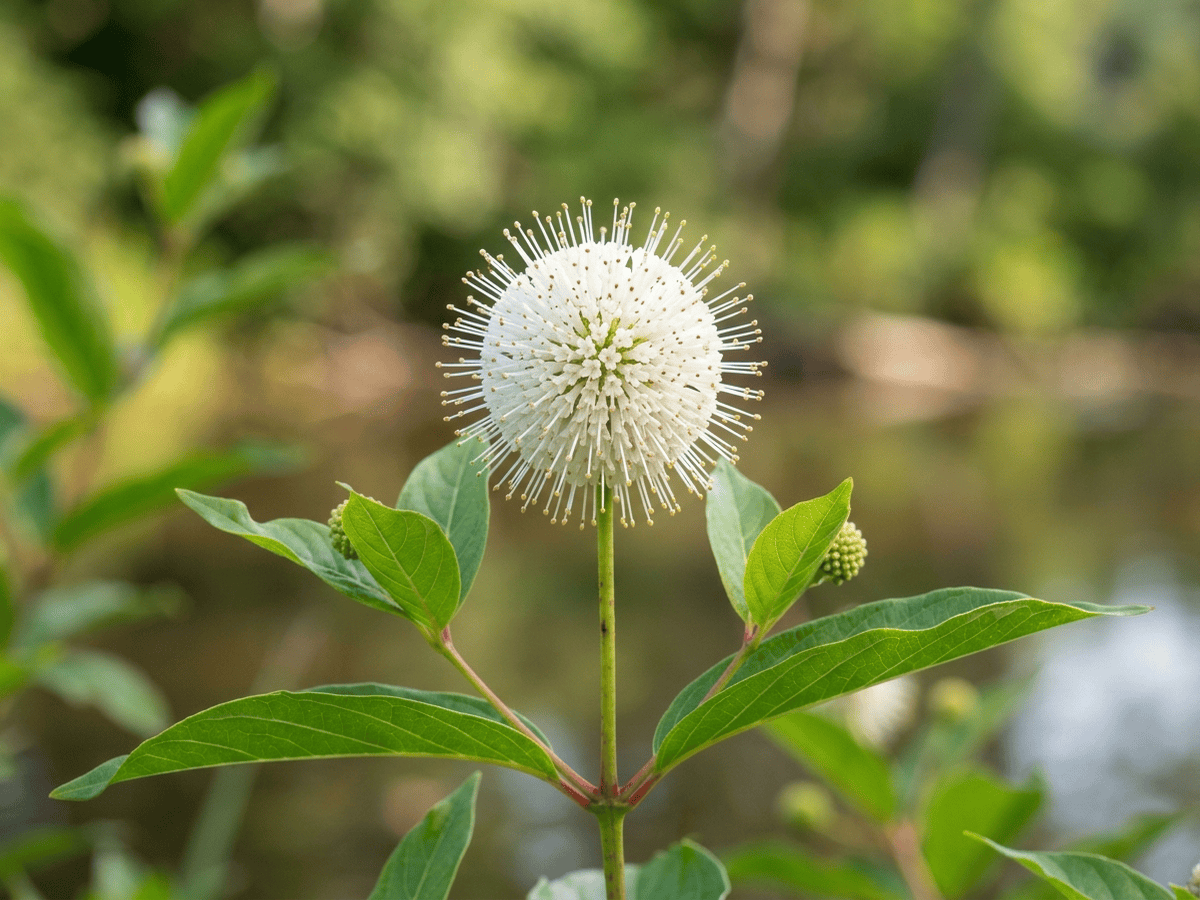
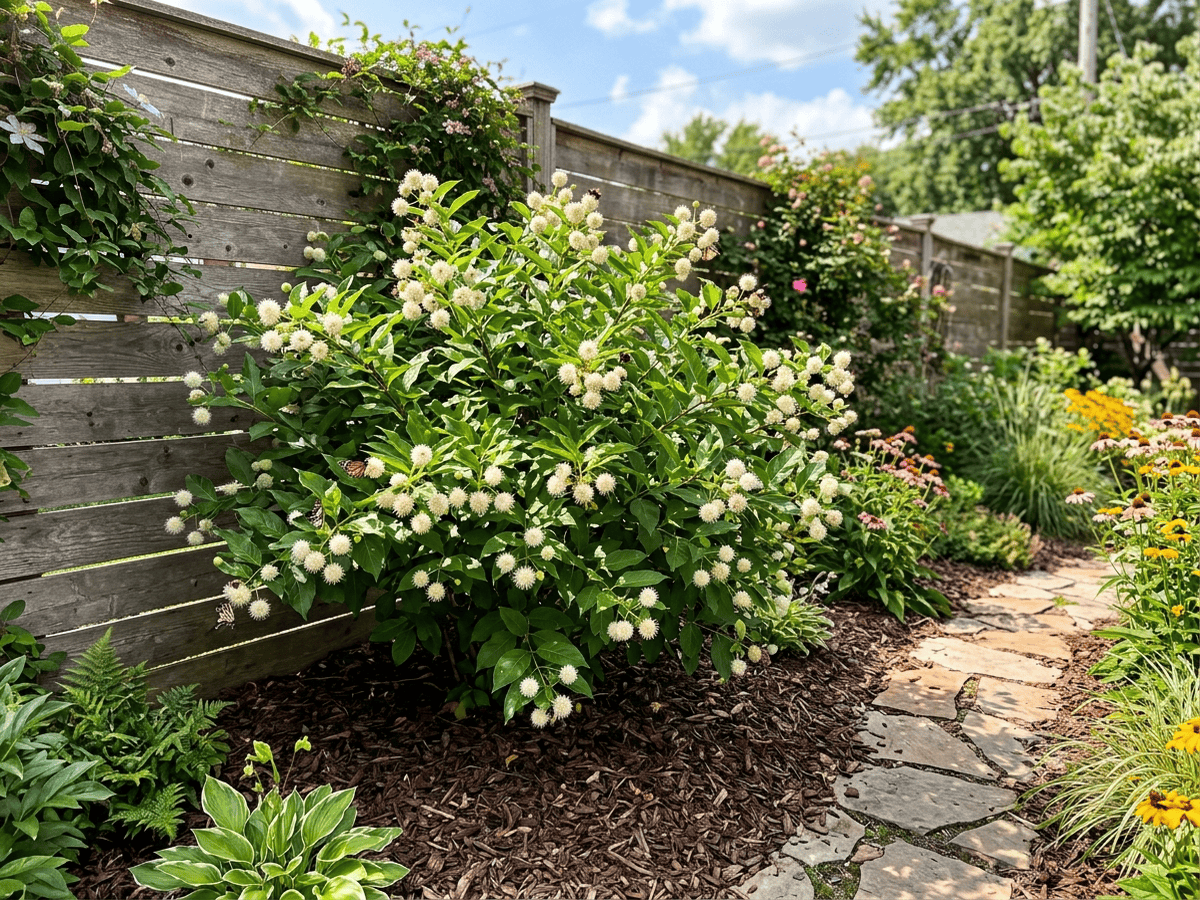
Buttonbush is a native North American deciduous shrub growing 6-12 feet tall, prized for its spherical white pincushion flowerheads that look like tiny satellites dotted with tubular blossoms. Found in wet soils along streams, ponds, and wetlands across most of the US, it is a pollinator magnet attracting butterflies, bees, and hummingbirds in midsummer. Waterfowl eat the seeds and it provides excellent wildlife habitat in rain gardens and pond margins.
- Native
- Pollinator-friendly
- Wildlife-friendly
How to care for Buttonbush
Watering
- Springevery 3 days
- Summerevery 3 days
- Fallevery 5 days
- Winterevery 10 days
Soil · Moisture-retentive
- Top dressingSphagnum moss10%
- Main mixPeat + coco coir 1:180%
- DrainagePerlite / gravel10%
Keep it evenly moist — but the drainage layer still matters.
FERTILIZER
- Springevery 30 days
At a Glance
- NativeNorth America, Central America
- Height6–12 ft (1.8–3.7 m)
- Spread6–10 ft (1.8–3 m)
- Flower colorWhite, Cream
- Foliage colorGreen, Yellow
- Fruit colorBrown
- SoilMoisture-retentive, Loamy, Clay
- LocationsYard
Bloom time
BLOOM CYCLE
Peak bloom
Jun–Aug
White spherical flower clusters June to August
Fragrance
MODERATE FRAGRANCE
Sweet honey-jasmine fragrance from the spherical flower heads.
Toxicity
Humans Slight · Pets Slight
cephalanthin and cephaleine
Slight
- Leaf
- Bark
- Ingestion
EXPOSURE Eating leaves and bark.
EFFECT GI upset, convulsions at very high doses from cephalanthin.
NOTE Livestock have occasionally been poisoned by the bark. Not commonly eaten; low practical risk.
Slight
- Leaf
- Bark
- Ingestion
EXPOSURE Eating leaves and bark.
EFFECT Possible GI upset.
NOTE Livestock have occasionally been poisoned by the bark. Not commonly eaten; low practical risk.
Slight
- Leaf
- Bark
- Ingestion
EXPOSURE Eating leaves and bark.
EFFECT Possible GI upset.
NOTE Livestock have occasionally been poisoned by the bark. Not commonly eaten; low practical risk.
Educational information, not medical or veterinary advice. If exposure is suspected, contact a doctor or veterinarian.
DISTRIBUTION

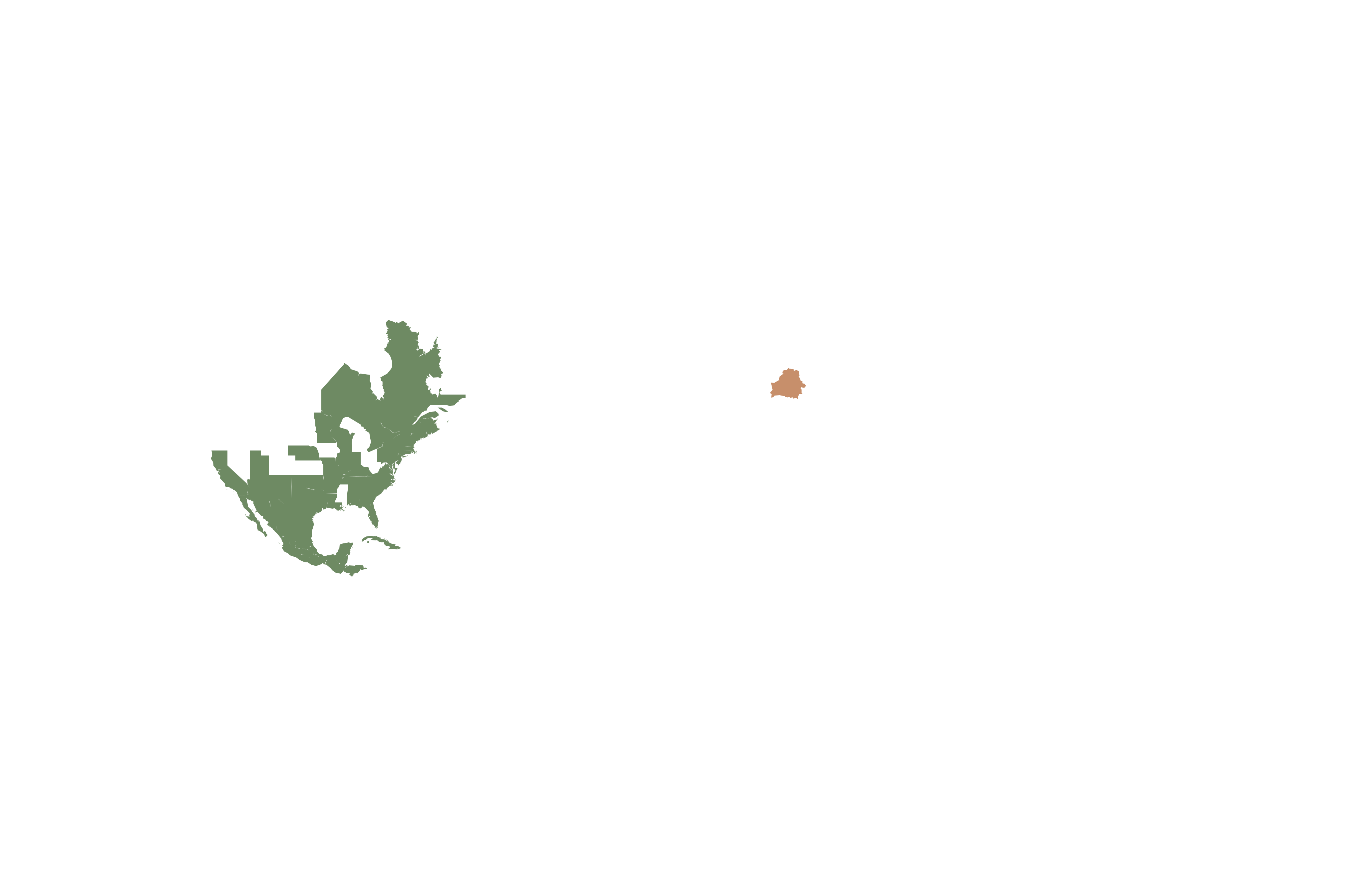
- Native
- Introduced
- North America
- Central America
History
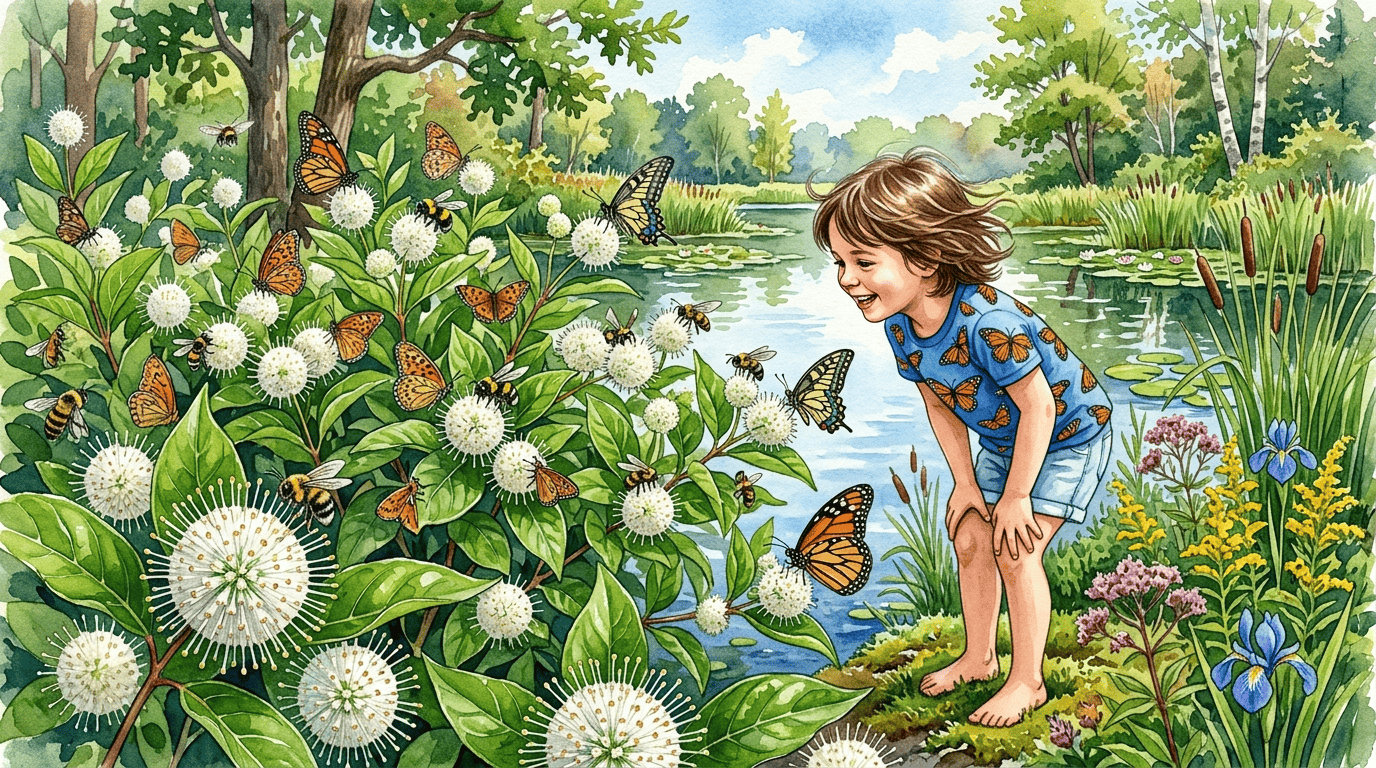
Cephalanthus occidentalis occurs naturally from southern Canada through the eastern and central United States to Mexico and Cuba, typically in wetlands, pond and stream margins, and swamp forests. Linnaeus described the species in 1753, the genus name Cephalanthus meaning head-flower from Greek kephale (head) and anthos (flower), referring to the spherical head-like inflorescences. The perfectly round 3-4 cm flower heads—composed of dozens of tiny tubular white flowers with protruding styles—look like old-fashioned pincushions or miniature sputniks.
Blooming in midsummer, they are among the best pollinator plants in the eastern native flora, attracting over 20 butterfly species, native bees, wasps, flies, and hummingbirds. Seeds are food for ducks and shorebirds. Indigenous peoples including the Cree, Ojibwe, and Choctaw used bark decoctions as a tonic, emetic, and febrifuge; the bark contains cephalanthin glycoside.
Modern cultivars include 'Sputnik', 'Sugar Shack' (compact with red fruits), and 'Fiber Optics' (improved bloom). A 1-3 meter shrub of wet to average soils, hardy to zone 5. Widely planted in American colonial rain-catchment gardens. Native Americans used bark as a medicinal for fevers and toothache. Today celebrated as a keystone plant for rain gardens and stormwater management in the US, receiving increased attention as native landscaping expands.
Symbolism & meaning
What It Symbolizes
Buttonbush is a flower of Ecological harmony — rooted at the edge where land becomes water, bridging the two with arching branches and round white pincushion blooms. Its Generosity is wide: bees crowd the flowers, ducks gather the seeds, and songbirds shelter in its tangle. Few native shrubs feed so many lives at once.
- Harmony — bridges land and water ecosystems
- Generosity — feeds pollinators, birds, and waterfowl
Where the Name Comes From
From Greek 'kephale' (head) and 'anthos' (flower); 'occidentalis' means western.
Uses & Fun Facts
- Spherical white flower heads draw bees and butterflies
- Native shrub provides cover in wetlands and pond edges
- Unusual pincushion blooms add interest to rain gardens
Related plants
Plants with similar care
 Chinese AbeliaAbelia chinensis
 Fragrant AbeliaAbelia mosanensis
 Large-Flowered AbeliaAbelia uniflora
 Glossy AbeliaAbelia x grandiflora
Frequently asked questions
How often should I water Buttonbush?
In summer, water about every 3 days; in winter, about every 10 days. Adjust for heat, pot size and drainage.
How much light does Buttonbush need?
Full sun: 6+ hrs direct. Watch the leaves — scorching or stretching means the light needs adjusting.
Is Buttonbush toxic to cats or dogs?
Pets Slight (Dogs Slight · Cats Slight) Educational information, not medical or veterinary advice. If exposure is suspected, contact a doctor or veterinarian.
Is Buttonbush easy to grow?
Yes — it is considered an easy, beginner-friendly plant.
When does Buttonbush bloom?
It typically blooms Jun–Aug in the Northern Hemisphere.
YardMate
Identify any plant in seconds
Snap a photo — YardMate names the plant, diagnoses problems, and reminds you when to water.
Download on the App Store