 YardMate


Chinese Plumbago
Ceratostigma willmottianum
Easy · Beginner friendlyAbout Chinese Plumbago
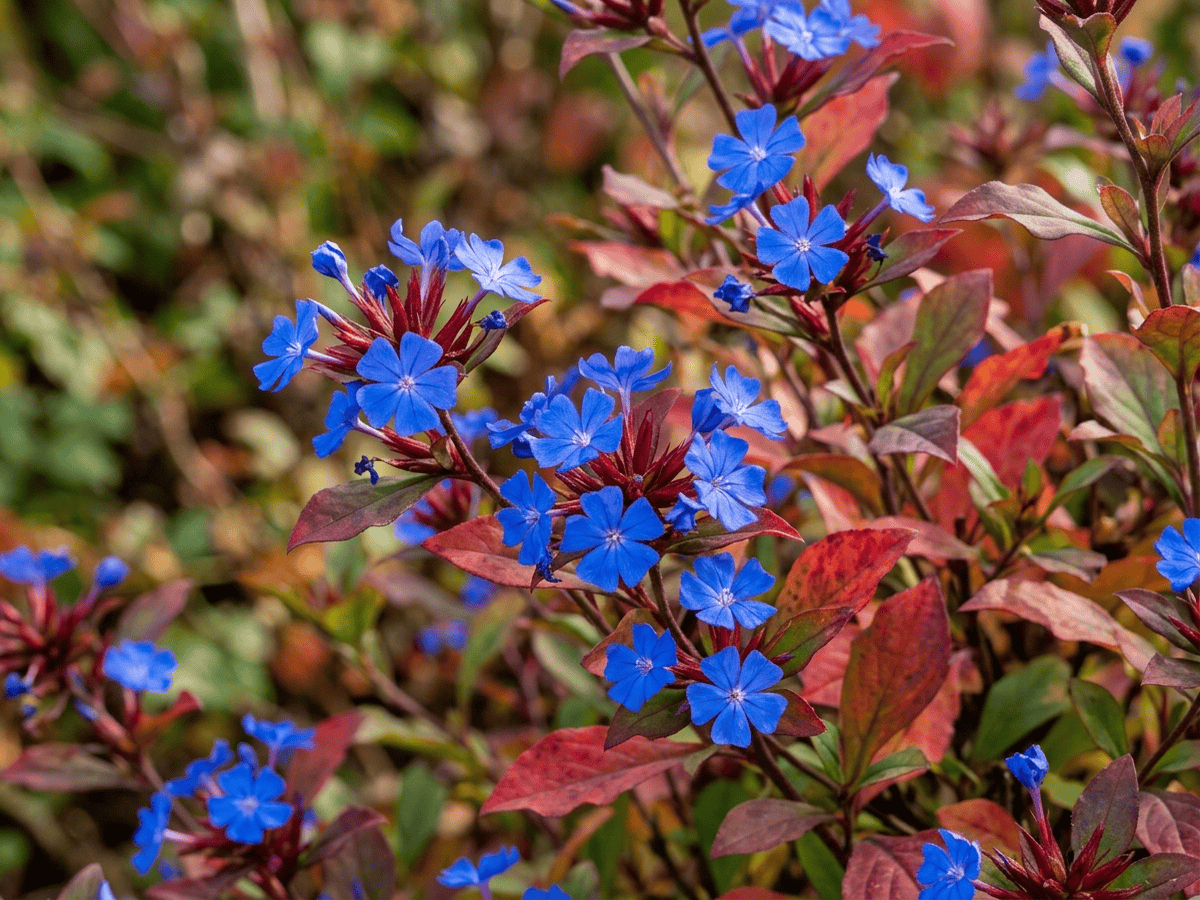
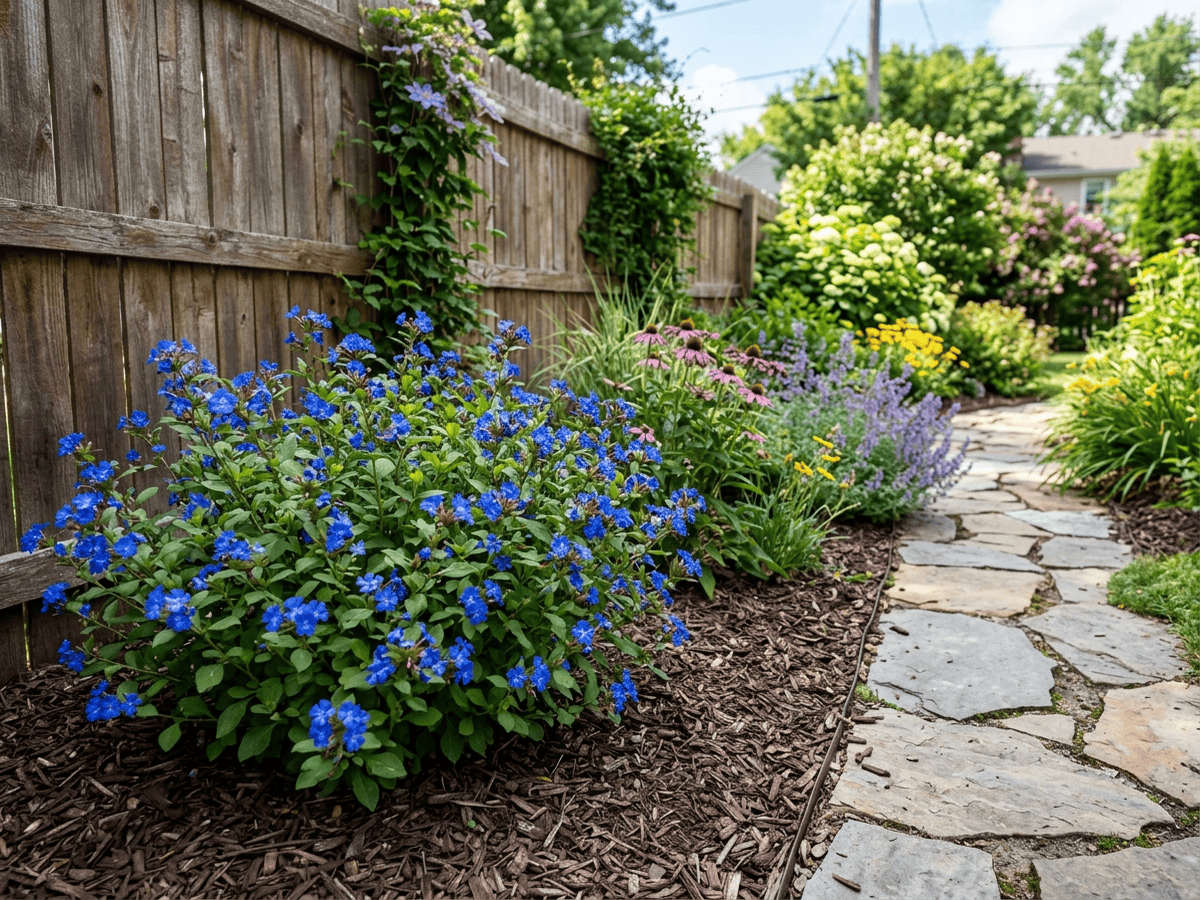
Chinese Plumbago is a compact deciduous shrub from western China, growing 2-4 feet tall with vivid cobalt-blue flowers from late summer through fall. The brilliant blue is among the most intense flower colors in the garden, rivaling gentians. As temperatures cool in autumn, the leaves turn striking shades of red, bronze, and purple while the plant continues to produce blue flowers—creating a dramatic blue-and-red color combination. An outstanding addition to the late-season garden.
- Drought-tolerant
- Fall-color
- Pollinator-friendly
How to care for Chinese Plumbago
Watering
- Springevery 10 days
- Summerevery 7 days
- Fallevery 14 days
- Winterevery 30 days
Soil · Well-draining
- Top dressingPine bark mulch10%
- Main mixPotting soil + perlite 2:170%
- DrainageLECA / gravel20%
Never skip the drainage layer — standing water is the top cause of root rot.
FERTILIZER
Balanced Feed 14-14-14
An even feed covers all three needs at once, keeping leaves, roots and blooms moving together with nothing pushed out of balance.
- Nitrogen · Leaves
- Phosphorus · Roots + Blooms
- Potassium · Strength
- Springevery 30 days
At a Glance
- NativeEast Asia
- Height2–3 ft (0.6–0.9 m)
- Spread3–4 ft (0.9–1.2 m)
- Flower colorBlue
- Foliage colorGreen, Red, Bronze
- SoilLoamy, Well-drained
- LocationsYard
Bloom time
BLOOM CYCLE
Peak bloom
Aug–Nov
Intense cobalt-blue flowers August to October; red-bronze fall foliage
Toxicity
Humans Slight
plumbagin (in some related species)
Slight
- Leaf
- Stem
- Contact
EXPOSURE Touching leaves and stems.
EFFECT Possible contact dermatitis (family contains plumbagin).
NOTE Family Plumbaginaceae contains plumbagin, a skin irritant; specific data for this species limited.
Not reported
EXPOSURE No exposure route is reported.
EFFECT No toxic effect is reported.
NOTE No toxicity is reported for dogs in this catalog; this is not evidence that the plant is edible or harmless.
Not reported
EXPOSURE No exposure route is reported.
EFFECT No toxic effect is reported.
NOTE No toxicity is reported for cats in this catalog; this is not evidence that the plant is edible or harmless.
Educational information, not medical or veterinary advice. If exposure is suspected, contact a doctor or veterinarian.
DISTRIBUTION


- Native
- East Asia
History

Ceratostigma willmottianum is native to western China (Sichuan, Yunnan, Tibet). English botanist Otto Stapf described the species in 1914 from material collected by Ernest Henry Wilson in western Sichuan in 1908. The epithet willmottianum honors Ellen Willmott (1858-1934), the English horticulturist and author of The Genus Rosa, who sponsored many of Wilson's Chinese collecting expeditions.
The low woody shrub (0.5-1.2 m) produces compact terminal clusters of vivid sky-blue to gentian-blue five-petaled flowers 1.5-2 cm across from August into October, when few other shrubs contribute true-blue flowers to the garden. Foliage turns rich red-bronze in autumn—a striking contrast with the still-persisting blue flowers. Often treated as a die-back subshrub in colder zones where winter frost kills stems back to a woody crown, from which new flowering growth regenerates each spring.
The species received the RHS Award of Garden Merit and remains a late-season staple of mixed borders. 'Forest Blue' and 'Desert Skies' are selected cultivars. Named after Ellen Willmott (1858–1934), one of the most famous female gardeners in English history, who grew it at her legendary Warley Place estate. Collected by Ernest Wilson in western Sichuan, China. The simultaneous display of cobalt-blue flowers and crimson autumn foliage is unique in horticulture. In the Pacific Northwest and mid-Atlantic, it performs beautifully in well-drained borders.
Symbolism & meaning
What It Symbolizes
Chinese plumbago is often read as a flower of determination — when most of the garden has surrendered to autumn, it opens its electric-blue blossoms as if the season had only just begun. It offers a rare contrast few plants can match: those gentian-blue flowers set against leaves turning fiery red. To plant it is to schedule a small celebration for the moment everything else is winding down.
- Determination — blooms brilliantly as the garden season ends
- Contrast — rare combination of blue flowers and red autumn leaves
Where the Name Comes From
The name Chinese Plumbago points to China. 'Ceratostigma' from Greek 'keras' (horn) and 'stigma', referring to horn-like stigma projections; 'willmottianum' honors Ellen Willmott.
Uses & Fun Facts
- Cobalt-blue late-summer flowers feed butterflies and bees
- Rich crimson autumn foliage with lingering true-blue blooms
Related plants
Plants with similar care
 Chinese AbeliaAbelia chinensis
 Fragrant AbeliaAbelia mosanensis
 Large-Flowered AbeliaAbelia uniflora
 Glossy AbeliaAbelia x grandiflora
Frequently asked questions
How often should I water Chinese Plumbago?
In summer, water about every 7 days; in winter, about every 30 days. Adjust for heat, pot size and drainage.
How much light does Chinese Plumbago need?
Full sun: 6+ hrs direct. Watch the leaves — scorching or stretching means the light needs adjusting.
Is Chinese Plumbago toxic to cats or dogs?
Pets Not reported (Dogs Not reported · Cats Not reported) Educational information, not medical or veterinary advice. If exposure is suspected, contact a doctor or veterinarian.
Is Chinese Plumbago easy to grow?
Yes — it is considered an easy, beginner-friendly plant.
When does Chinese Plumbago bloom?
It typically blooms Aug–Nov in the Northern Hemisphere.
YardMate
Identify any plant in seconds
Snap a photo — YardMate names the plant, diagnoses problems, and reminds you when to water.
Download on the App Store