 YardMate


Greater Honeywort
Cerinthe major
Easy · Beginner friendlyAbout Greater Honeywort
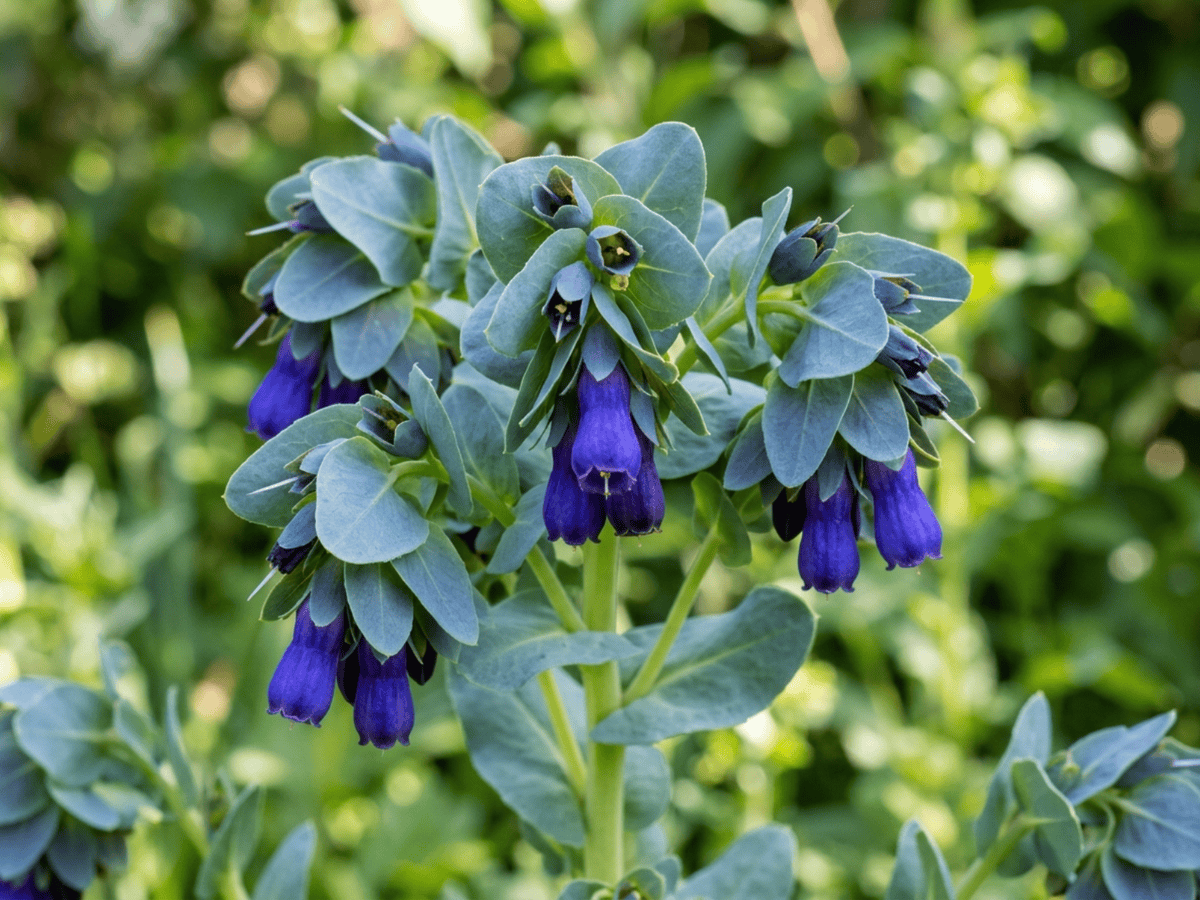
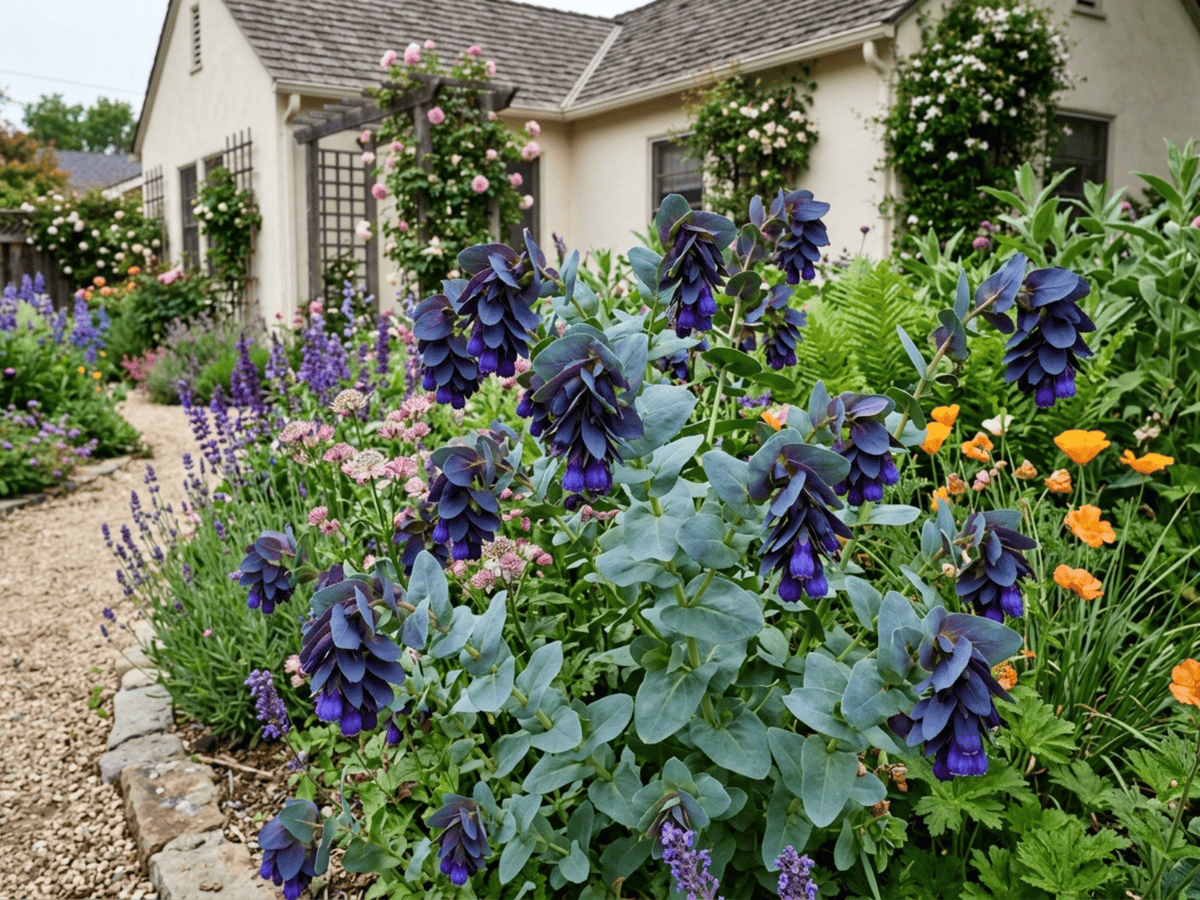
Honeywort is a cool-season annual from the Mediterranean, 18–24 inches tall, with waxy blue-green leaves and pendant tubular flowers in purple, royal blue, and yellow. The dark purple-bracted cultivar 'Purpurascens' is especially popular in American cutting and cottage gardens. Thrives in cool spring weather; bolts in heat. A bee magnet and cherished novelty cut flower in Pacific Northwest and New England gardens. Self-seeds.
- Cut-flower
- Pollinator-friendly
How to care for Greater Honeywort
Watering
- Springevery 5 days
- Summerevery 4 days
- Fallevery 7 days
- Winterpause watering
Soil · Well-draining
- Top dressingPine bark mulch10%
- Main mixPotting soil + perlite 2:170%
- DrainageLECA / gravel20%
Never skip the drainage layer — standing water is the top cause of root rot.
FERTILIZER
Balanced Feed 14-14-14
An even feed covers all three needs at once, keeping leaves, roots and blooms moving together with nothing pushed out of balance.
- Nitrogen · Leaves
- Phosphorus · Roots + Blooms
- Potassium · Strength
- Springevery 30 days
- Summerevery 30 days
At a Glance
- NativeMediterranean, Europe
- Height1–2 ft (0.3–0.6 m)
- Spread1–1.5 ft (0.3–0.5 m)
- Flower colorPurple, Yellow, Blue
- Foliage colorBlue-green, Silver
- SoilLoamy, Well-drained
- LocationsYard · Balcony
Bloom time
BLOOM CYCLE
Peak bloom
Mar–Jun
Purple pendants spring to early summer
Toxicity
Toxicity unknown
None reported
Unknown
EXPOSURE Unspecified plant material.
EFFECT Toxic effects are not specified.
NOTE Toxicity for humans is not well documented; use caution until verified.
Unknown
EXPOSURE Unspecified plant material.
EFFECT Toxic effects are not specified.
NOTE Toxicity for dogs is not well documented; use caution until verified.
Unknown
EXPOSURE Unspecified plant material.
EFFECT Toxic effects are not specified.
NOTE Toxicity for cats is not well documented; use caution until verified.
Educational information, not medical or veterinary advice. If exposure is suspected, contact a doctor or veterinarian.
DISTRIBUTION


- Native
- Introduced
- Mediterranean
- Europe
History
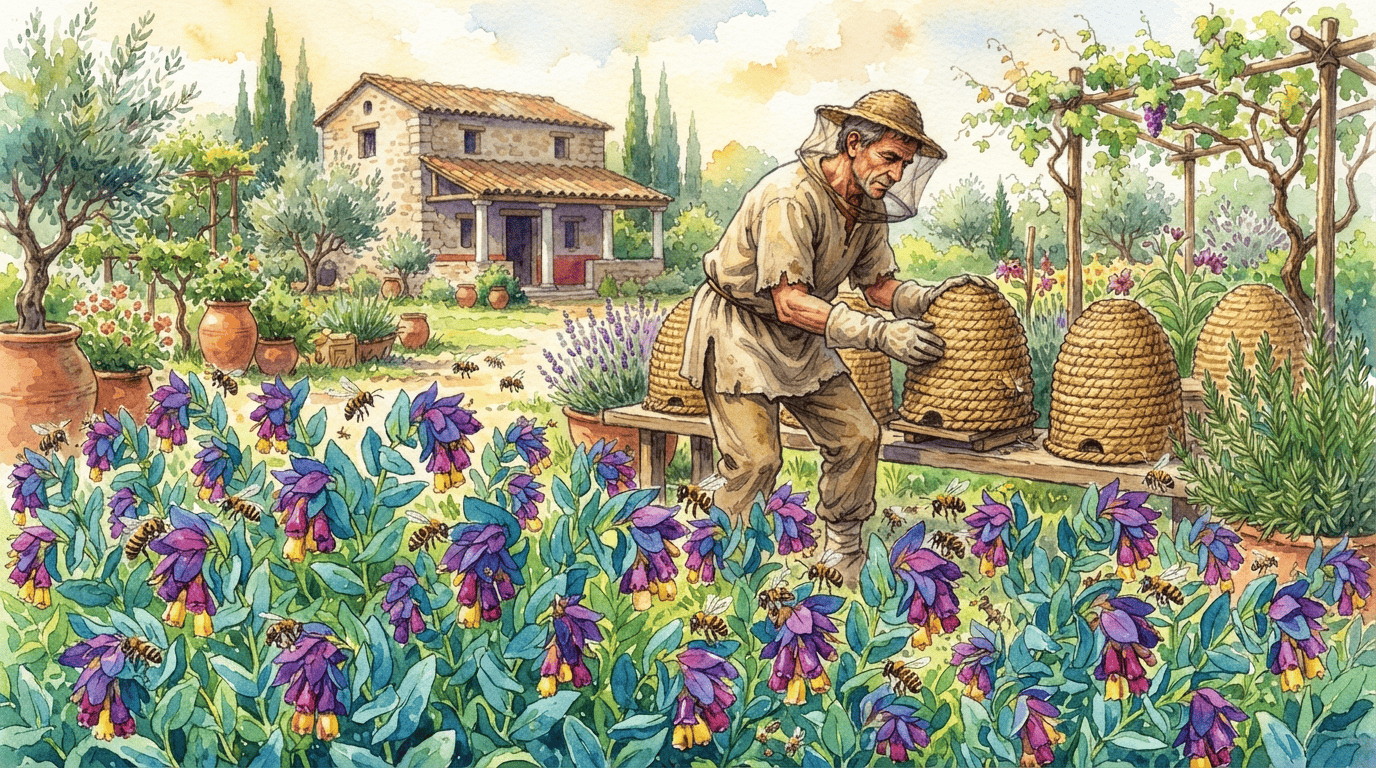
Native to the Mediterranean, Cerinthe major has been grown since antiquity as a nectar-rich forage for honeybees—the genus name derives from Greek keros (wax) and anthos (flower). Pliny the Elder mentioned it in Naturalis Historia as a bee plant. The striking purple-bracted subspecies 'Purpurascens' was collected in Greece and introduced to British gardens in the 1970s through seed exchanges.
Plantsman Christopher Lloyd championed it at Great Dixter in the 1990s, triggering widespread adoption in cottage-style plantings. Unlike many Mediterranean annuals, it self-sows reliably in cool-summer climates.
Today it is valued for its waxy blue-green foliage and pendant tubular flowers in shades from yellow to deep violet. Long known in Mediterranean herb gardens, it was popularized in American horticulture in the 1990s by seed-saver networks and cut-flower farmers. The dusky tones made it a darling of the 'natural' and 'sepia-palette' American cottage garden movement.
Symbolism & meaning
What It Symbolizes
Honeywort is the patron of uniqueness in the spring border — there is genuinely nothing else like its smoky blue-violet bracts cupping inky purple bells. Its quiet beauty rewards gardeners who lean in close: the colors are muted, almost bruised, the kind of palette that reveals itself only on second look. It is for the patient gardener who prizes nuance over splash.
- Uniqueness — unlike anything else in the spring garden
- Quiet beauty — muted tones reward closer looking
Where the Name Comes From
Genus from Greek 'keros' (wax) for the waxy foliage; 'major' means 'larger'.
Uses & Fun Facts
- Waxy purple-blue bracts and stems prized for spring bouquets
- Pendant tubular flowers attract bumblebees and honeybees
- Cool-season annual for Mediterranean-style cottage borders
Related plants
Plants with similar care
 Chinese AbeliaAbelia chinensis
 Fragrant AbeliaAbelia mosanensis
 Large-Flowered AbeliaAbelia uniflora
 Glossy AbeliaAbelia x grandiflora
Frequently asked questions
How often should I water Greater Honeywort?
Water about every 5 days during the growing season, and always let excess water drain away.
How much light does Greater Honeywort need?
Full sun: 6+ hrs direct. Watch the leaves — scorching or stretching means the light needs adjusting.
Is Greater Honeywort toxic to cats or dogs?
Pets Unknown (Dogs Unknown · Cats Unknown) Educational information, not medical or veterinary advice. If exposure is suspected, contact a doctor or veterinarian.
Is Greater Honeywort easy to grow?
Yes — it is considered an easy, beginner-friendly plant.
When does Greater Honeywort bloom?
It typically blooms Mar–Jun in the Northern Hemisphere.
YardMate
Identify any plant in seconds
Snap a photo — YardMate names the plant, diagnoses problems, and reminds you when to water.
Download on the App Store