 YardMate
Mediterranean fan palm
Chamaerops humilis
Hard · Experienced growersAbout Mediterranean fan palm
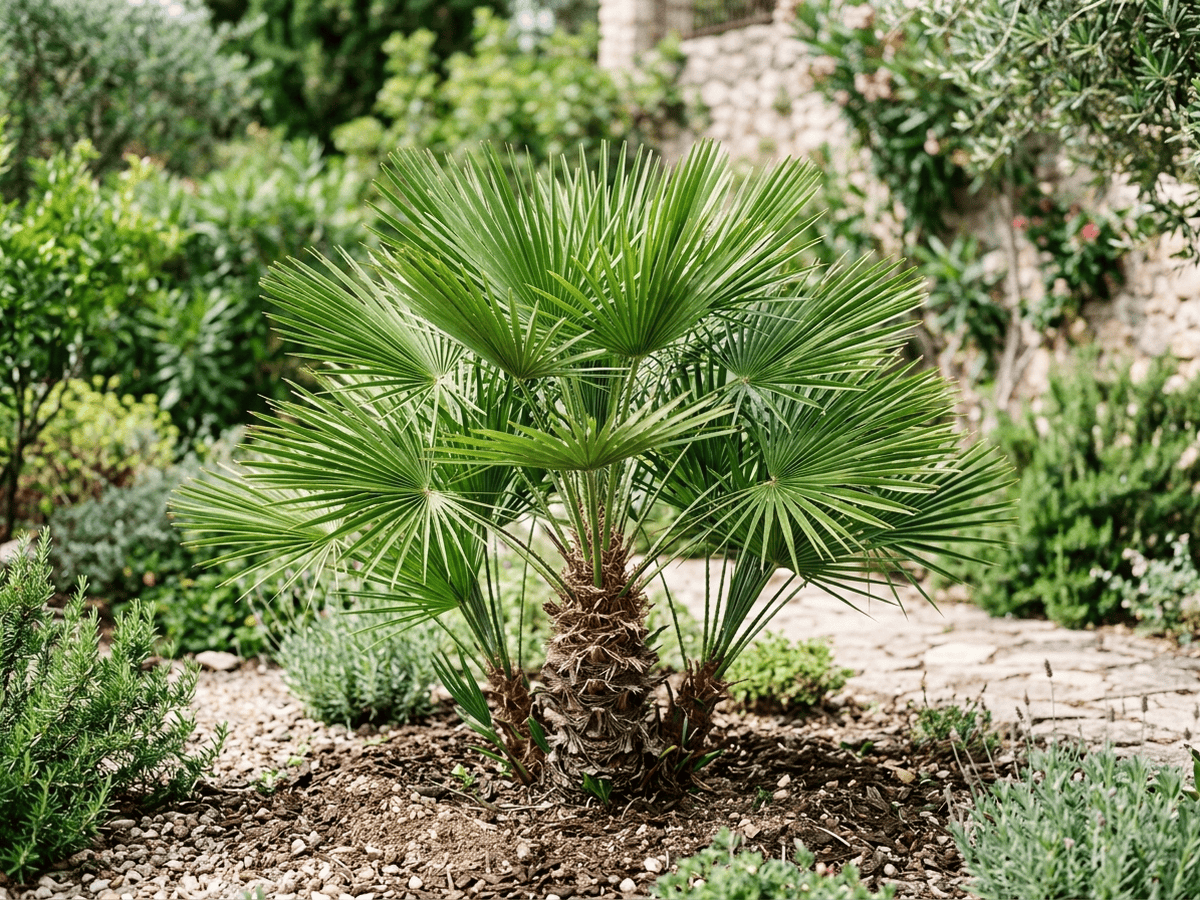
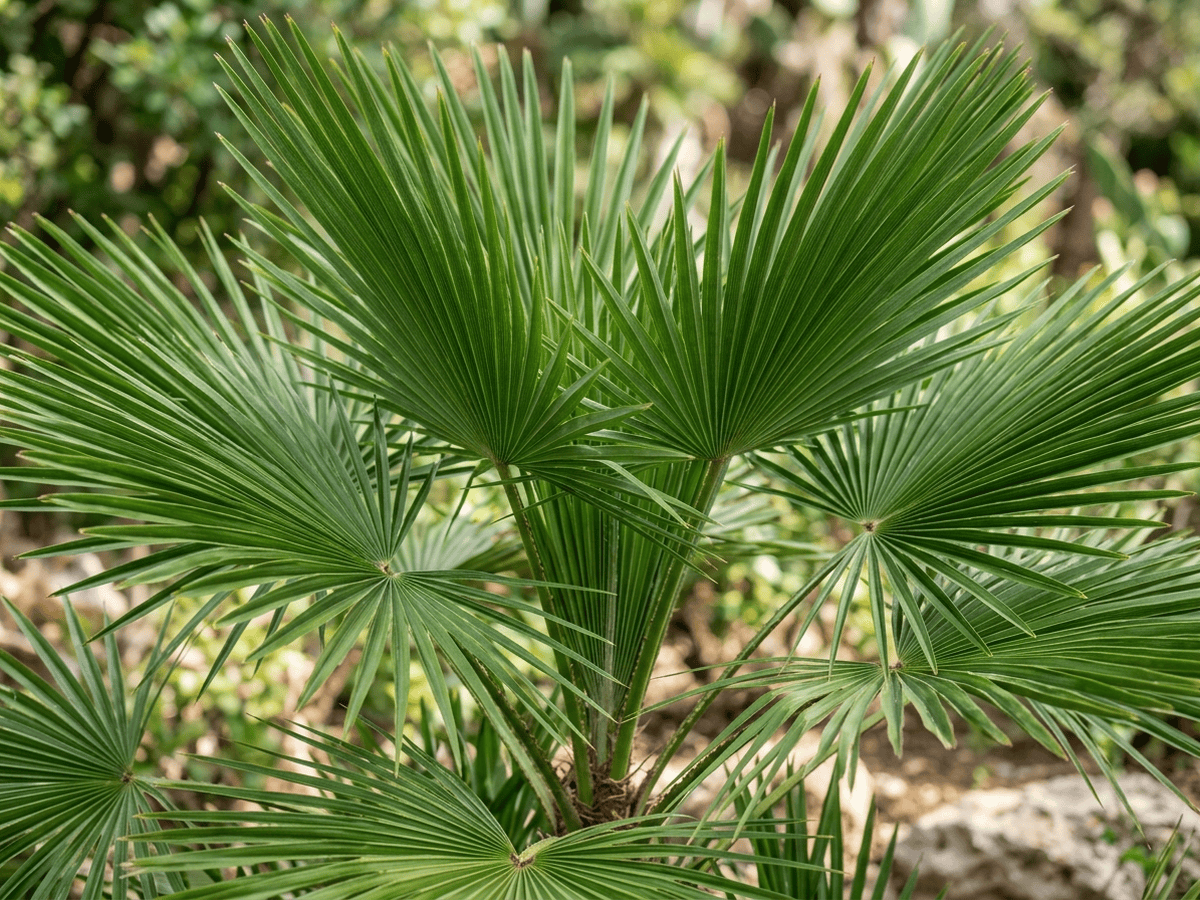
The Mediterranean fan palm is the only palm native to continental Europe and one of the most cold-hardy palms in cultivation. It grows as a dense, multi-trunked clump of stiff, fan-shaped fronds in shades of blue-green to silvery grey, with sharp spines lining the base of each leaf stalk. Native to rocky coastal hillsides and scrubland from Iberia and southern France to North Africa, it thrives in sandy, well-drained soil under full sun and shrugs off drought, salt spray, and winter temperatures into the mid-teens Fahrenheit. Slow-growing and compact, rarely topping 20 feet, it suits coastal gardens, xeriscapes, and large containers alike.
- Drought-tolerant
- Cold-hardy
- Evergreen
- Slow-growing
- Compact
- Container-friendly
How to care for Mediterranean fan palm
Watering
- Springevery 30 days
- Summerevery 14 days
- Fallevery 30 days
- Winterpause watering
Soil · Well-draining
- Main mixLoam + bark + perlite 2:1:175%
- DrainageLECA25%
Bark keeps the mix from compacting under a heavy root ball.
FERTILIZER
Balanced Feed 14-14-14
An even feed covers all three needs at once, keeping leaves, roots and blooms moving together with nothing pushed out of balance.
- Nitrogen · Leaves
- Phosphorus · Roots + Blooms
- Potassium · Strength
- Springevery 30 days
- Summerevery 30 days
- Fallevery 30 days
At a Glance
- NativeMediterranean
- Height10–20 ft (3–6.1 m)
- Spread6–10 ft (1.8–3 m)
- Foliage colorGreen
- SoilWell-drained, Sandy
- LocationsYard · Patio
Fragrance
LIGHT FRAGRANCE
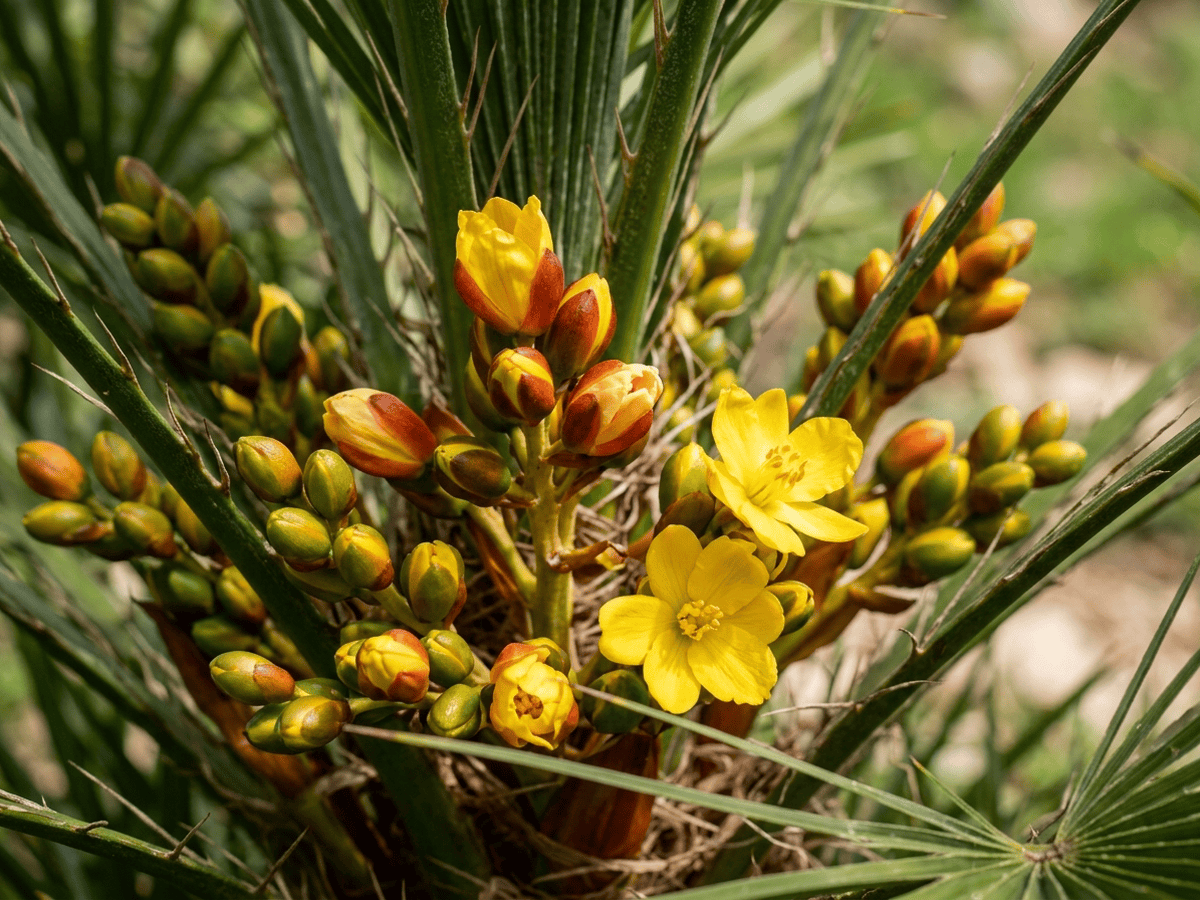
Small clusters of yellow spring flowers give off a faint, sweet fragrance.
Toxicity
No toxicity has been reported for this plant. Still, it is wise to keep pets from chewing on any houseplant.
Educational information, not medical or veterinary advice. If exposure is suspected, contact a doctor or veterinarian.
DISTRIBUTION


- Native
- Introduced
- Mediterranean
History
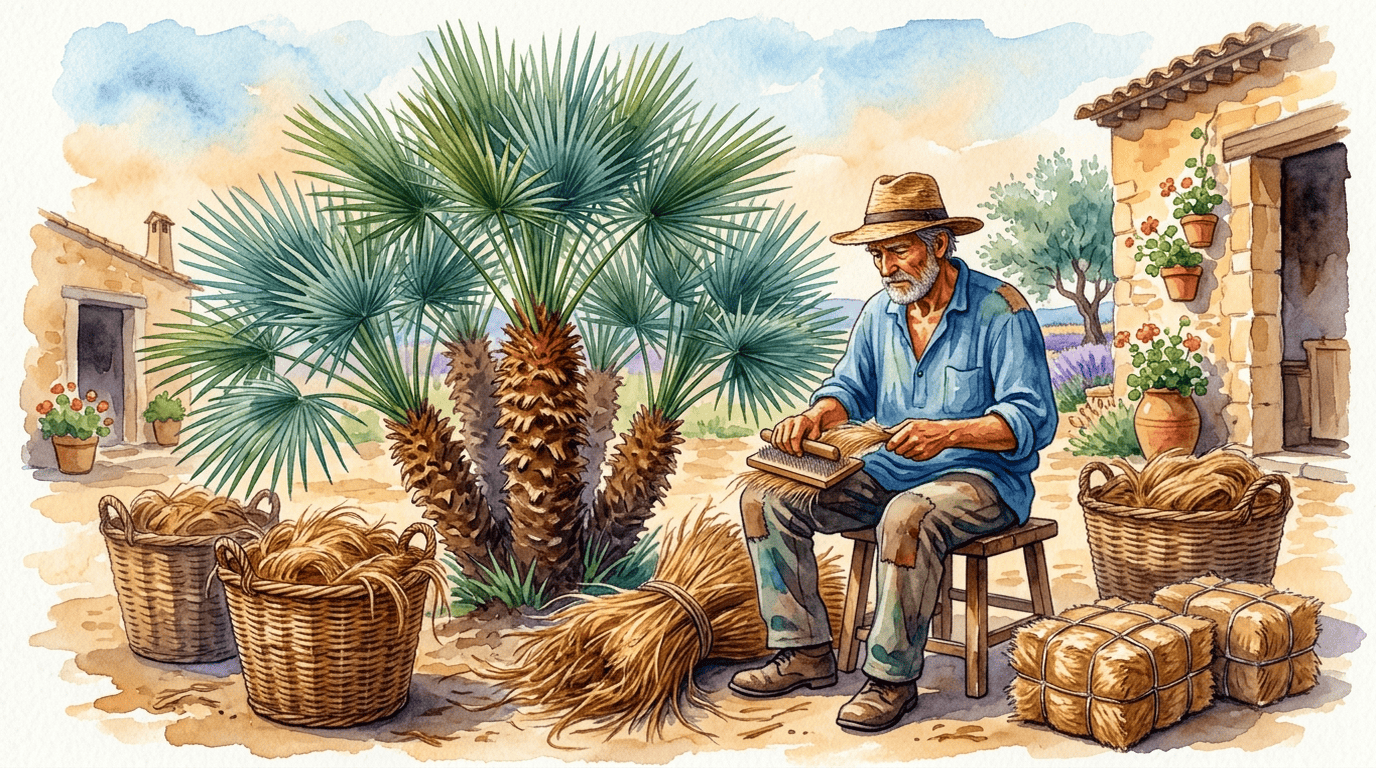
For much of the nineteenth and early twentieth centuries, the Mediterranean fan palm was less a garden ornamental than a raw material. Workers across French Provence, Corsica, and the Maghreb harvested the fibrous mass at the base of its trunk and along its petioles, combing and carding it into a coarse, springy fiber known in the furniture trade as crin végétal, 'vegetable horsehair.' Cottage industries in towns such as Marseille and Algiers grew up around this humble palm, supplying stuffing for mattresses, upholstered chairs, saddle pads, and even early automobile seats — a cheaper, more abundant substitute for real horsehair. Bales of the fiber were shipped by the ton to furniture makers across Europe, and the trade supported thousands of rural families who had few other sources of cash income. The palm itself was rarely killed in the process; new fiber regrew each year from the persistent leaf bases, so a single wild clump could be harvested for generations. Only after synthetic foams and fibers arrived in the mid-twentieth century did the crin végétal trade fade, leaving the Mediterranean fan palm to be rediscovered instead for its startling cold tolerance and sculptural form in gardens far outside its native range.
Symbolism & meaning
What It Symbolizes
Growing wild on rocky, wind-scoured slopes where little else thrives, the Mediterranean fan palm has come to represent quiet endurance — a plant that shrugs off drought, salt, and frost without complaint. As the only palm native to continental Europe, it also carries a strong sense of place, evoking the sun-baked hillsides of Iberia, Provence, and North Africa wherever it is grown.
- Resilience — Its ability to withstand drought, salt spray, and freezing winters has made it a symbol of endurance in harsh coastal terrain.
- Home — As the only palm native to mainland Europe, it is closely tied to Mediterranean identity and a sense of place along its native coastlines.
Where the Name Comes From
The genus name Chamaerops comes from the Greek chamai, 'on the ground,' and rhops, 'bush,' describing its low, shrub-like habit compared with taller palms; the species name humilis is Latin for 'low' or 'humble.'
Uses & Fun Facts
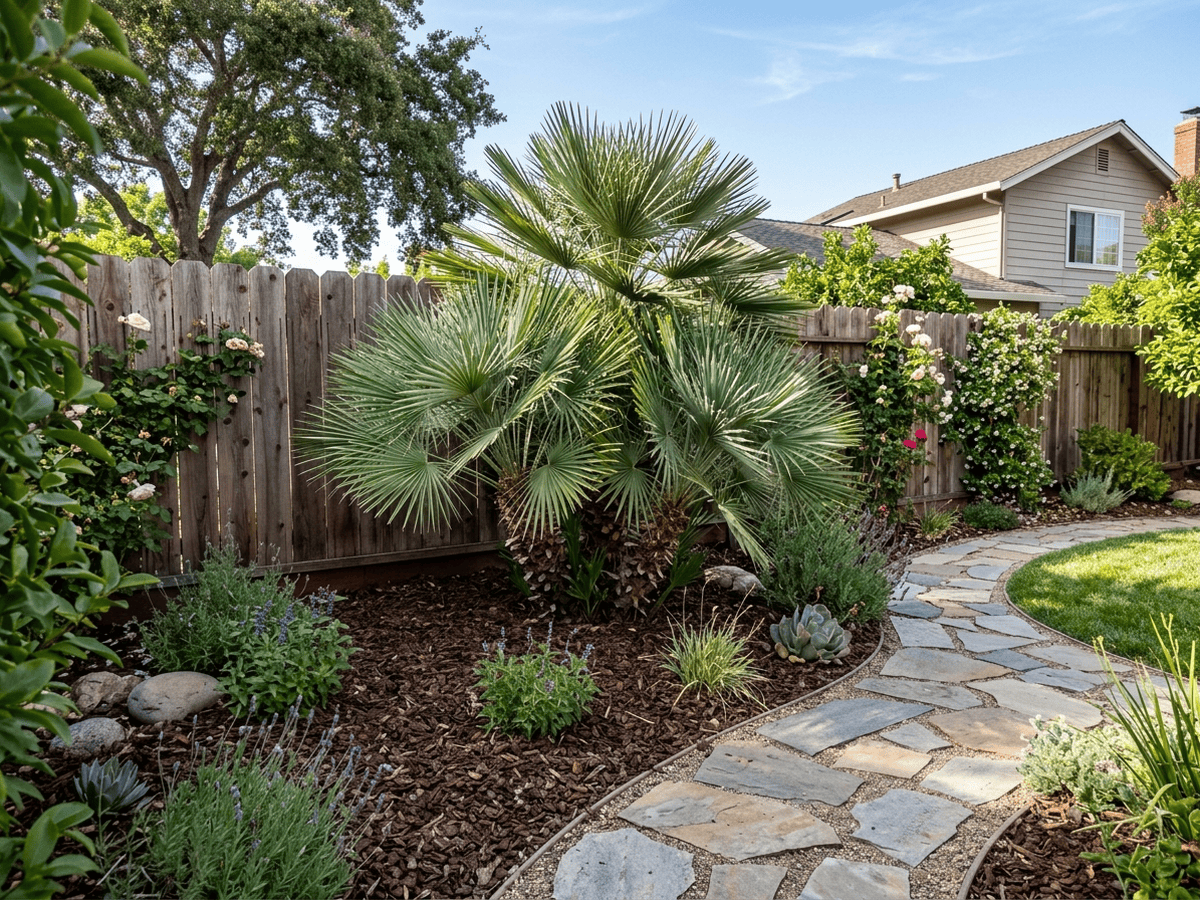
- Prized as a cold-hardy accent palm for Mediterranean-style gardens, courtyards, and large containers.
- Leaf fiber was historically carded into 'crin végétal' for stuffing mattresses and upholstery.
- The tender inner heart (palmito) has been eaten as a delicacy in Spain since Roman times.
- Small yellow flowers attract bees, and ripe fruit provides food for birds and small mammals.
Related plants
Plants with similar care
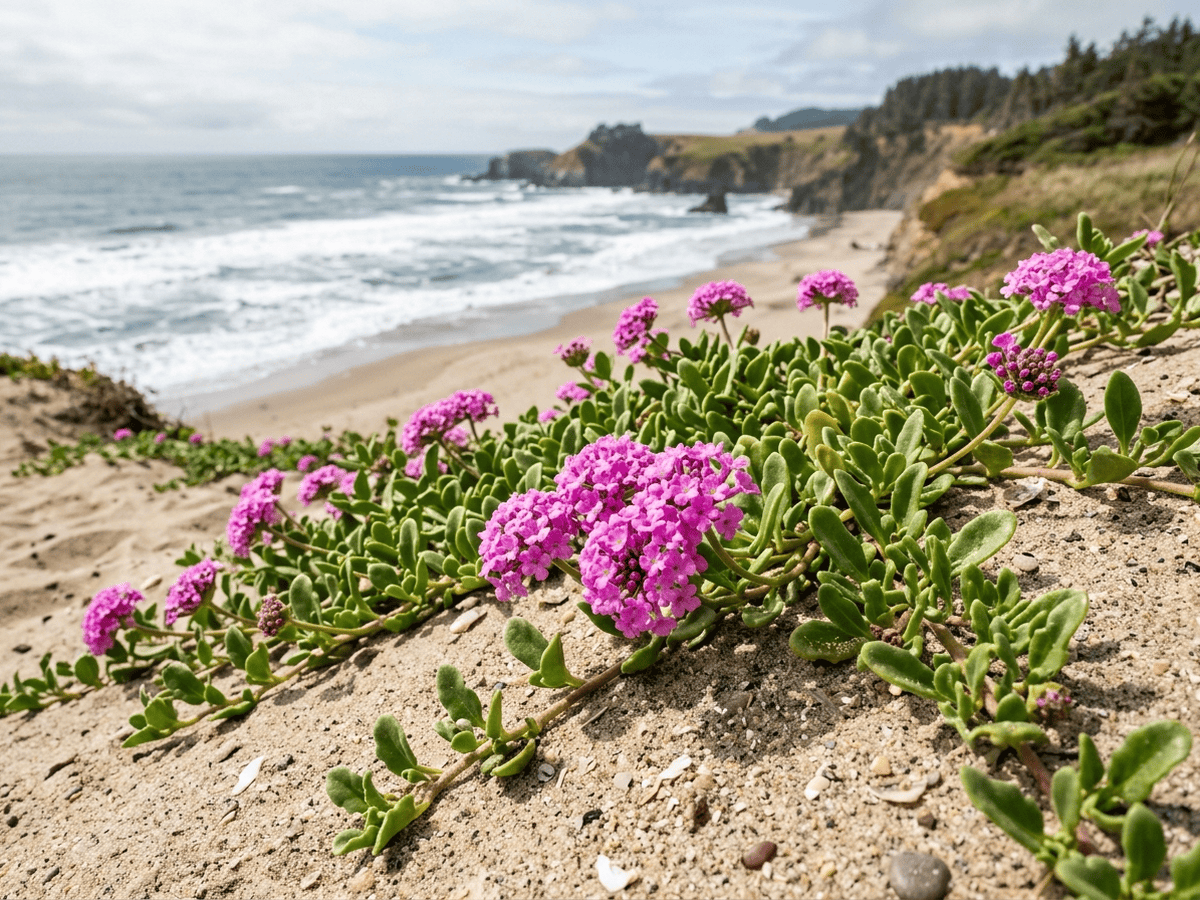 Pink Sand VerbenaAbronia umbellata
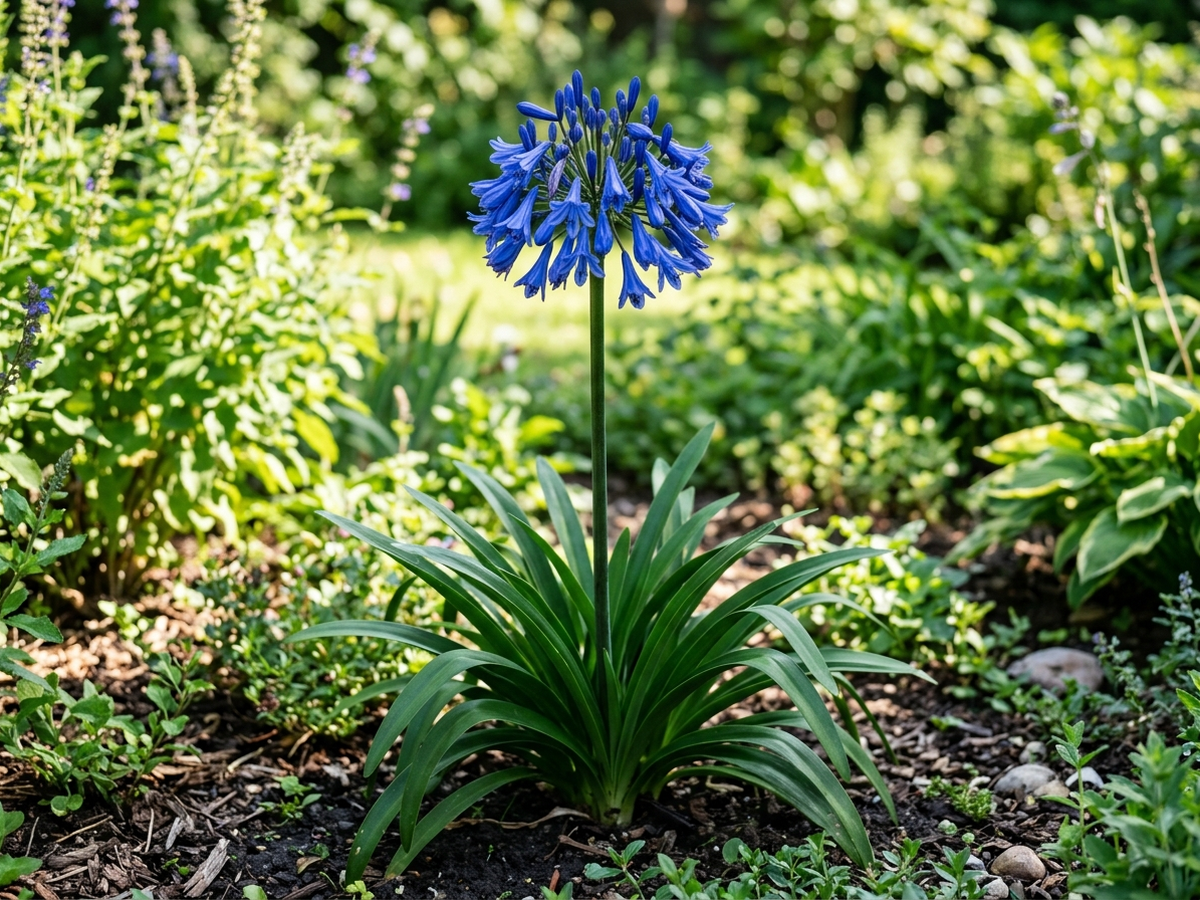 Drooping AgapanthusAgapanthus inapertus
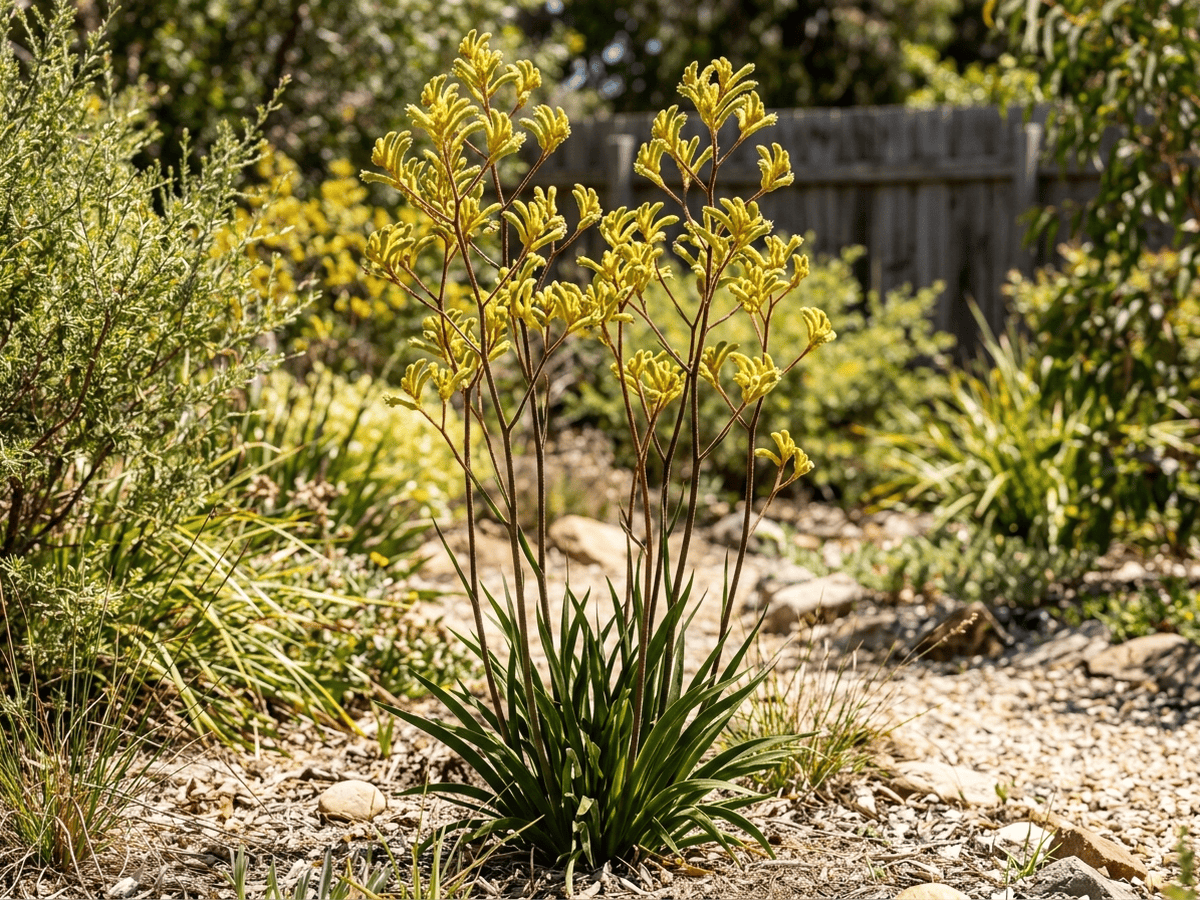 Tall Kangaroo PawAnigozanthos flavidus
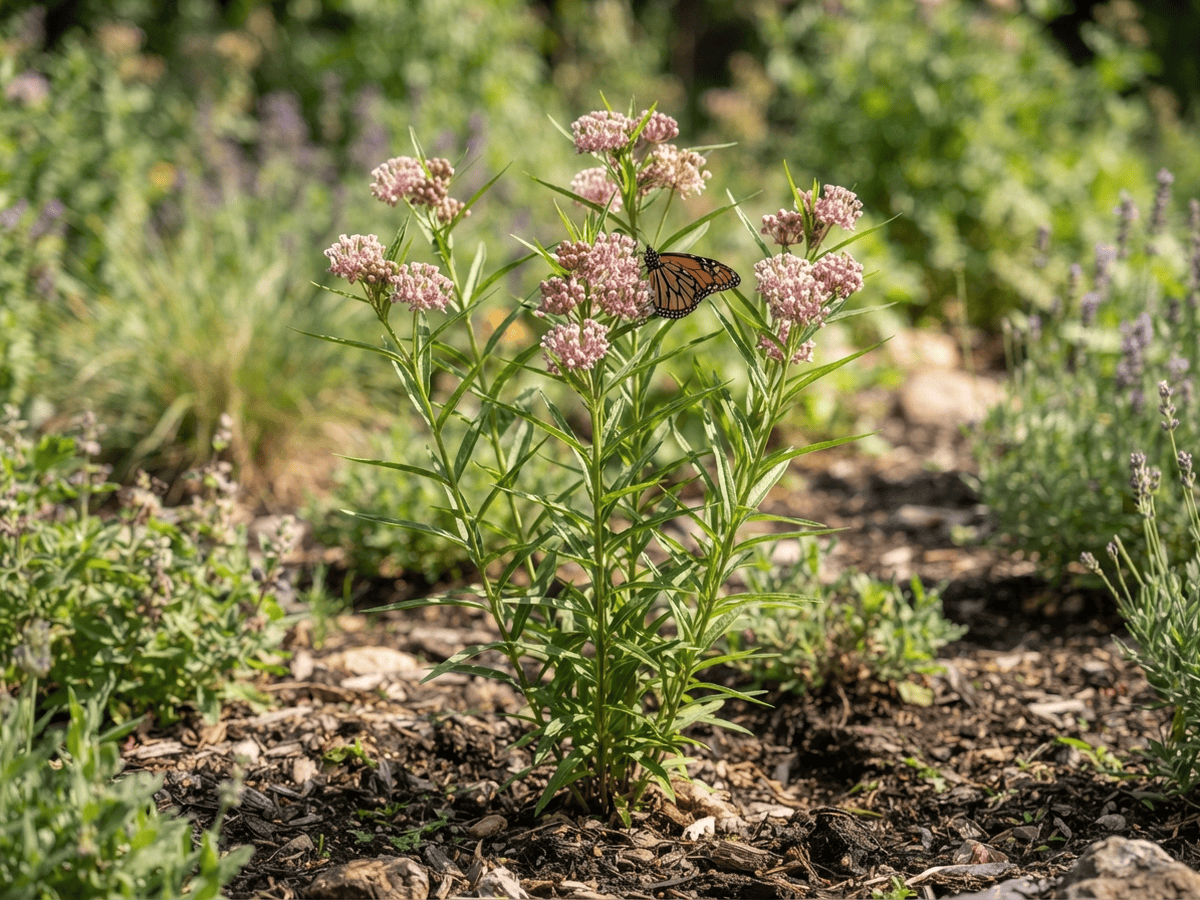 Narrowleaf MilkweedAsclepias fascicularis
Frequently asked questions
How often should I water Mediterranean fan palm?
Water about every 30 days during the growing season, and always let excess water drain away.
How much light does Mediterranean fan palm need?
Full sun: 6+ hrs direct. Watch the leaves — scorching or stretching means the light needs adjusting.
Is Mediterranean fan palm toxic to cats or dogs?
No toxicity has been reported for this plant. Still, it is wise to keep pets from chewing on any houseplant. Educational information, not medical or veterinary advice. If exposure is suspected, contact a doctor or veterinarian.
Is Mediterranean fan palm easy to grow?
It is considered challenging and rewards experienced growers.
YardMate
Identify any plant in seconds
Snap a photo — YardMate names the plant, diagnoses problems, and reminds you when to water.
Download on the App Store