 YardMate


× Chitalpa
Chitalpa tashkentensis
Easy · Beginner friendlyAbout × Chitalpa
Chitalpa is a hybrid small tree between Desert Willow (Chilopsis linearis) and Southern Catalpa (Catalpa bignonioides), growing 20-30 feet tall and producing abundant clusters of trumpet-shaped pink or white flowers from late spring through fall. Drought-tolerant and heat-loving, it is an excellent ornamental tree for American Southwest and Western landscapes, hardy in USDA zones 6-9.
- Drought-tolerant
- Heat-tolerant
- Long-blooming
- Pollinator-friendly
How to care for × Chitalpa
Watering
- Springevery 10 days
- Summerevery 7 days
- Fallevery 14 days
- Winterpause watering
Soil · Well-draining
- Top dressingPine bark mulch10%
- Main mixPotting soil + perlite 2:170%
- DrainageLECA / gravel20%
Never skip the drainage layer — standing water is the top cause of root rot.
FERTILIZER
Balanced Feed 14-14-14
An even feed covers all three needs at once, keeping leaves, roots and blooms moving together with nothing pushed out of balance.
- Nitrogen · Leaves
- Phosphorus · Roots + Blooms
- Potassium · Strength
- Springevery 60 days
- Summerevery 60 days
At a Glance
- Height20–30 ft (6.1–9.1 m)
- Spread20–30 ft (6.1–9.1 m)
- Flower colorPink, White
- Foliage colorGreen
- SoilLoamy, Well-drained, Sandy
- LocationsYard
Bloom time
BLOOM CYCLE
Peak bloom
May–Oct
Pink or white trumpets May to October
Fragrance
LIGHT FRAGRANCE
The flowers have a mild scent.
Toxicity
Toxicity unknown
None reported
Unknown
EXPOSURE Unspecified plant material.
EFFECT Toxic effects are not specified.
NOTE Toxicity for humans is not well documented; use caution until verified.
Unknown
EXPOSURE Unspecified plant material.
EFFECT Toxic effects are not specified.
NOTE Toxicity for dogs is not well documented; use caution until verified.
Unknown
EXPOSURE Unspecified plant material.
EFFECT Toxic effects are not specified.
NOTE Toxicity for cats is not well documented; use caution until verified.
Educational information, not medical or veterinary advice. If exposure is suspected, contact a doctor or veterinarian.
History
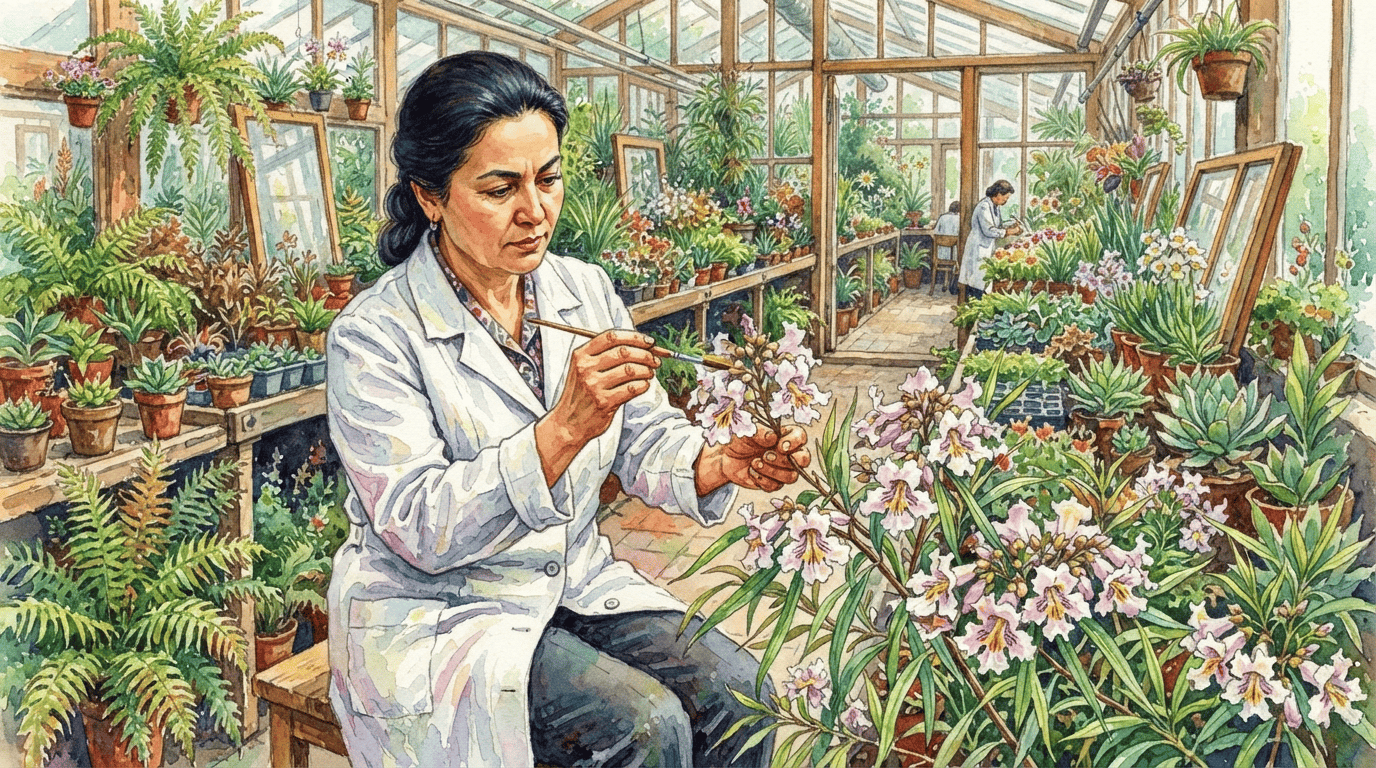
x Chitalpa tashkentensis is one of horticulture's rare intergeneric hybrids, produced in 1964 at the Uzbek Academy of Sciences' botanical garden in Tashkent, Uzbekistan, through crossing American desert willow (Chilopsis linearis) with southern catalpa (Catalpa bignonioides). Uzbek botanist F.N. Rusanov named the nothogenus combining the parent names. In 1977 material reached the United States through a scientific exchange and was distributed by the New Mexico State University extension service.
The tree's combination of Chilopsis's desert tolerance with Catalpa's larger 1-2 inch orchid-like white-to-pink flowers produced in profusion through summer made it an ideal small tree for xeriscape gardens in the American Southwest. Cultivars 'Morning Cloud' (white) and 'Pink Dawn' (rosy-pink) are widely grown.
Like many wide hybrids it is sterile, producing no seed pods. Created at the Uzbekistan Botanical Garden in Tashkent by botanist Nikolai Rusanov in 1964 (hence 'tashkentensis') and introduced to American gardens in the 1990s. An increasingly popular tree in Southwestern American cities for its tough elegance and extended bloom.
Symbolism & meaning
What It Symbolizes
× Chitalpa wears the meaning of resilience, thriving in hot, dry conditions that punish most ornamentals and lifting orchid-like flowers through the heat. Another layer is union, for the plant itself is a hybrid born of two American genera, Catalpa and Chilopsis, joined first in a Soviet botanic garden. Few trees are as quietly cosmopolitan in their origins, and few speak as clearly of the strength that comes from crossing rather than guarding boundaries.
- Resilience — thrives in hot dry conditions
- Union — blends two American genera
Where the Name Comes From
'Chitalpa' combines Chilopsis and Catalpa; 'tashkentensis' refers to Tashkent, Uzbekistan where hybridized.
Uses & Fun Facts
- Trumpet flowers attract hummingbirds across hot summers
Related plants
Plants with similar care
 Chinese AbeliaAbelia chinensis
 Fragrant AbeliaAbelia mosanensis
 Large-Flowered AbeliaAbelia uniflora
 Glossy AbeliaAbelia x grandiflora
Frequently asked questions
How often should I water × Chitalpa?
Water about every 10 days during the growing season, and always let excess water drain away.
How much light does × Chitalpa need?
Full sun: 6+ hrs direct. Watch the leaves — scorching or stretching means the light needs adjusting.
Is × Chitalpa toxic to cats or dogs?
Pets Unknown (Dogs Unknown · Cats Unknown) Educational information, not medical or veterinary advice. If exposure is suspected, contact a doctor or veterinarian.
Is × Chitalpa easy to grow?
Yes — it is considered an easy, beginner-friendly plant.
When does × Chitalpa bloom?
It typically blooms May–Oct in the Northern Hemisphere.
YardMate
Identify any plant in seconds
Snap a photo — YardMate names the plant, diagnoses problems, and reminds you when to water.
Download on the App Store