 YardMate


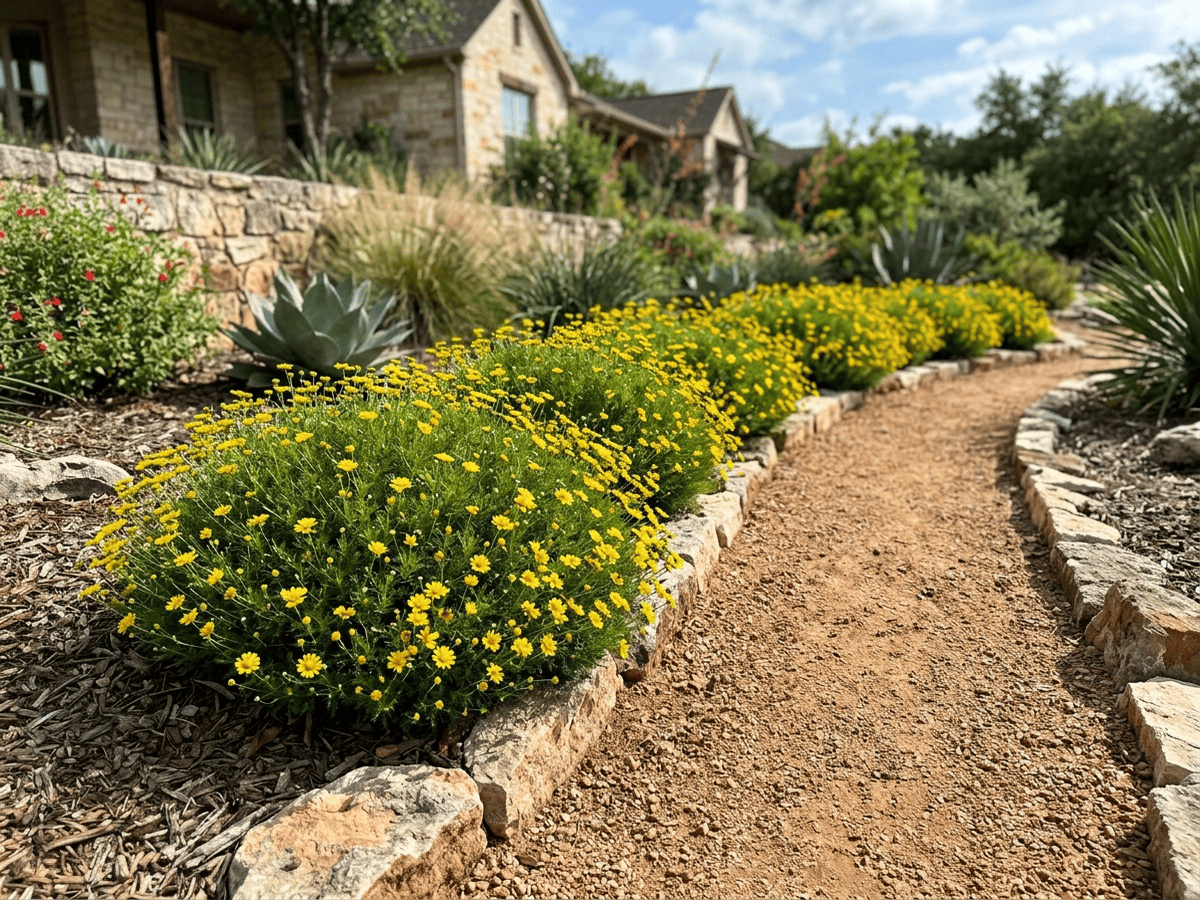
Damianita
Chrysactinia mexicana
Easy · Beginner friendlyAbout Damianita
Damianita is a small evergreen subshrub native to the Trans-Pecos region of west Texas, New Mexico, and northern Mexico. Forming dense rounded mounds 1 to 2 feet tall and wide, its needle-like aromatic foliage is covered for months with bright yellow daisy-like flowers from spring through fall. A staple of Southwest xeriscape gardens, it thrives in poor rocky alkaline soils, intense heat, and deep drought where most ornamentals fail.
- Drought-tolerant
- Deer-resistant
- Evergreen
- Long-blooming
How to care for Damianita
Watering
- Springevery 14 days
- Summerevery 10 days
- Fallevery 21 days
- Winterevery 30 days
Soil · Fast-draining
- Main mixSand + pumice + soil 1:1:150%
- DrainagePumice / gravel50%
Keep grit at half the mix or more — this soil is meant to dry out fast.
FERTILIZER
This plant needs little to no feeding.
At a Glance
- NativeNorth America
- Height1–2 ft (0.3–0.6 m)
- Spread1–2 ft (0.3–0.6 m)
- Flower colorYellow
- Foliage colorGreen
- SoilSandy, Well-drained, Alkaline
- LocationsYard · Balcony
Bloom time
BLOOM CYCLE
Peak bloom
Mar–Nov
Bright yellow daisy flowers spring through fall
Fragrance
STRONG FRAGRANCE
Sharp resinous herbal scent when foliage is brushed.
Toxicity
Toxicity unknown
None reported
Unknown
EXPOSURE Unspecified plant material.
EFFECT Toxic effects are not specified.
NOTE Toxicity for humans is not well documented; use caution until verified.
Unknown
EXPOSURE Unspecified plant material.
EFFECT Toxic effects are not specified.
NOTE Toxicity for dogs is not well documented; use caution until verified.
Unknown
EXPOSURE Unspecified plant material.
EFFECT Toxic effects are not specified.
NOTE Toxicity for cats is not well documented; use caution until verified.
Educational information, not medical or veterinary advice. If exposure is suspected, contact a doctor or veterinarian.
DISTRIBUTION


- Native
- North America
History
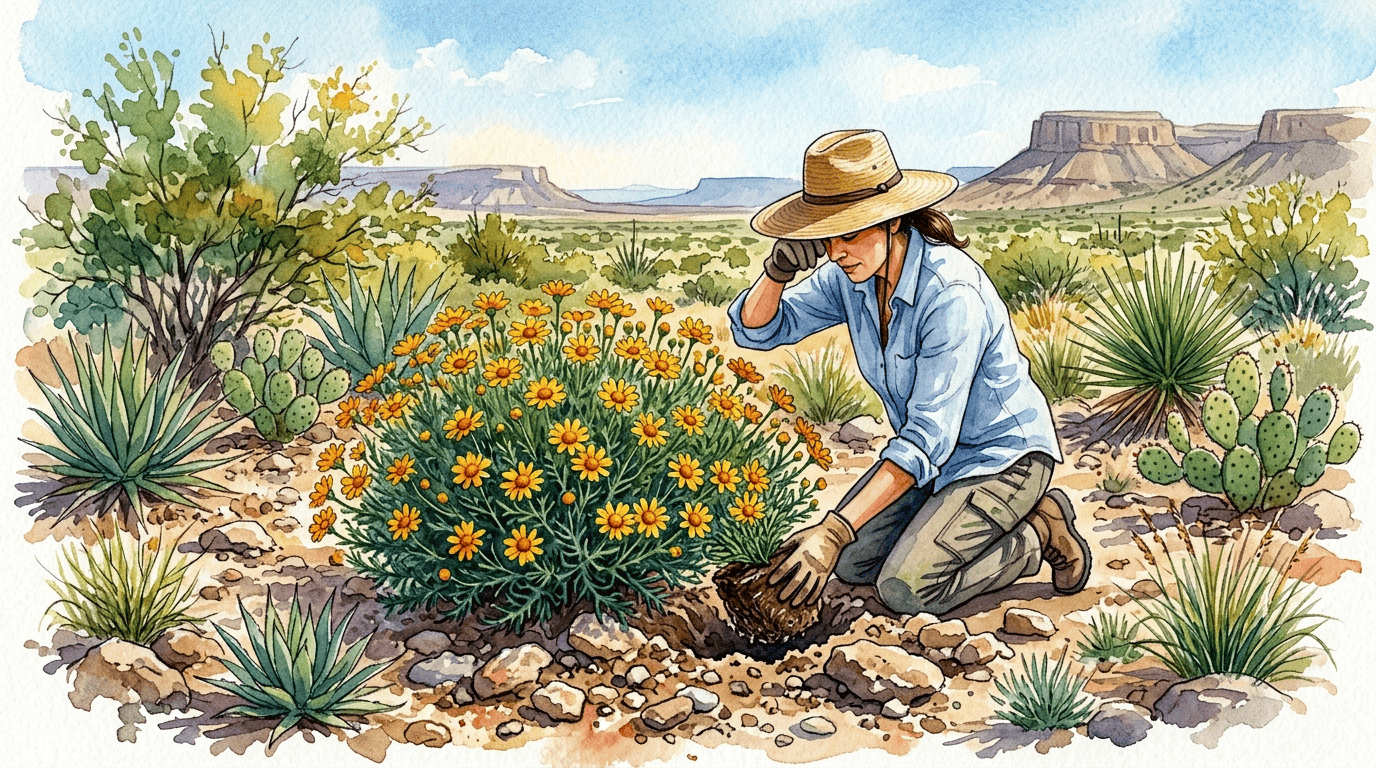
Chrysactinia mexicana, commonly called damianita or damianita daisy, is a compact evergreen subshrub native to the Chihuahuan Desert of west Texas, southern New Mexico, and northern Mexico. American botanist Asa Gray described it in 1849 from Texas specimens. The plant forms a tight rounded mound of needle-like aromatic dark green leaves that emit a sharp resinous scent, and in spring through fall it bears bright golden-yellow daisy flowers on short stalks above the foliage.
Because it thrives in rocky alkaline soils and tolerates prolonged drought, American southwestern horticulture programs including Texas A&M Earth-Kind and the Lady Bird Johnson Wildflower Center strongly recommend it for rock gardens, borders, and mass plantings. It remains a pillar of central and west Texas residential xeriscape.
A Trans-Pecos and northern Mexico native increasingly important in Southwest landscaping for its remarkable drought tolerance and very long bloom season.
Symbolism & meaning
What It Symbolizes
Damianita is sunshine compressed into a small, fragrant Texas shrub, dazzling yellow blooms covering its needled mounds through the long Southwest summer. Tough enough to thrive in the harshest Trans-Pecos heat and stony ground, it can symbolize cheerful endurance. This is the desert's answer to the cottage garden — golden, aromatic, and entirely at home in conditions that defeat softer plants.
- Sunshine — dazzling yellow blooms through Southwest summer
- Toughness — thrives in harshest Trans-Pecos conditions
Where the Name Comes From
'Chrysactinia' is Greek for 'golden ray,' referring to the flowers; 'mexicana' refers to its Mexican range.
Uses & Fun Facts
- Resinous aromatic foliage releases a sharp herbal scent when brushed
- Fine evergreen foliage and yellow daisies edge dry paths and rock gardens
Related plants
Plants with similar care
 Chinese AbeliaAbelia chinensis
 Fragrant AbeliaAbelia mosanensis
 Large-Flowered AbeliaAbelia uniflora
 Glossy AbeliaAbelia x grandiflora
Frequently asked questions
How often should I water Damianita?
In summer, water about every 10 days; in winter, about every 30 days. Adjust for heat, pot size and drainage.
How much light does Damianita need?
Full sun: 6+ hrs direct. Watch the leaves — scorching or stretching means the light needs adjusting.
Is Damianita toxic to cats or dogs?
Pets Unknown (Dogs Unknown · Cats Unknown) Educational information, not medical or veterinary advice. If exposure is suspected, contact a doctor or veterinarian.
Is Damianita easy to grow?
Yes — it is considered an easy, beginner-friendly plant.
When does Damianita bloom?
It typically blooms Mar–Nov in the Northern Hemisphere.
YardMate
Identify any plant in seconds
Snap a photo — YardMate names the plant, diagnoses problems, and reminds you when to water.
Download on the App Store