 YardMate


Silver Torch Cactus
Cleistocactus strausii
Easy · Beginner friendlyAbout Silver Torch Cactus
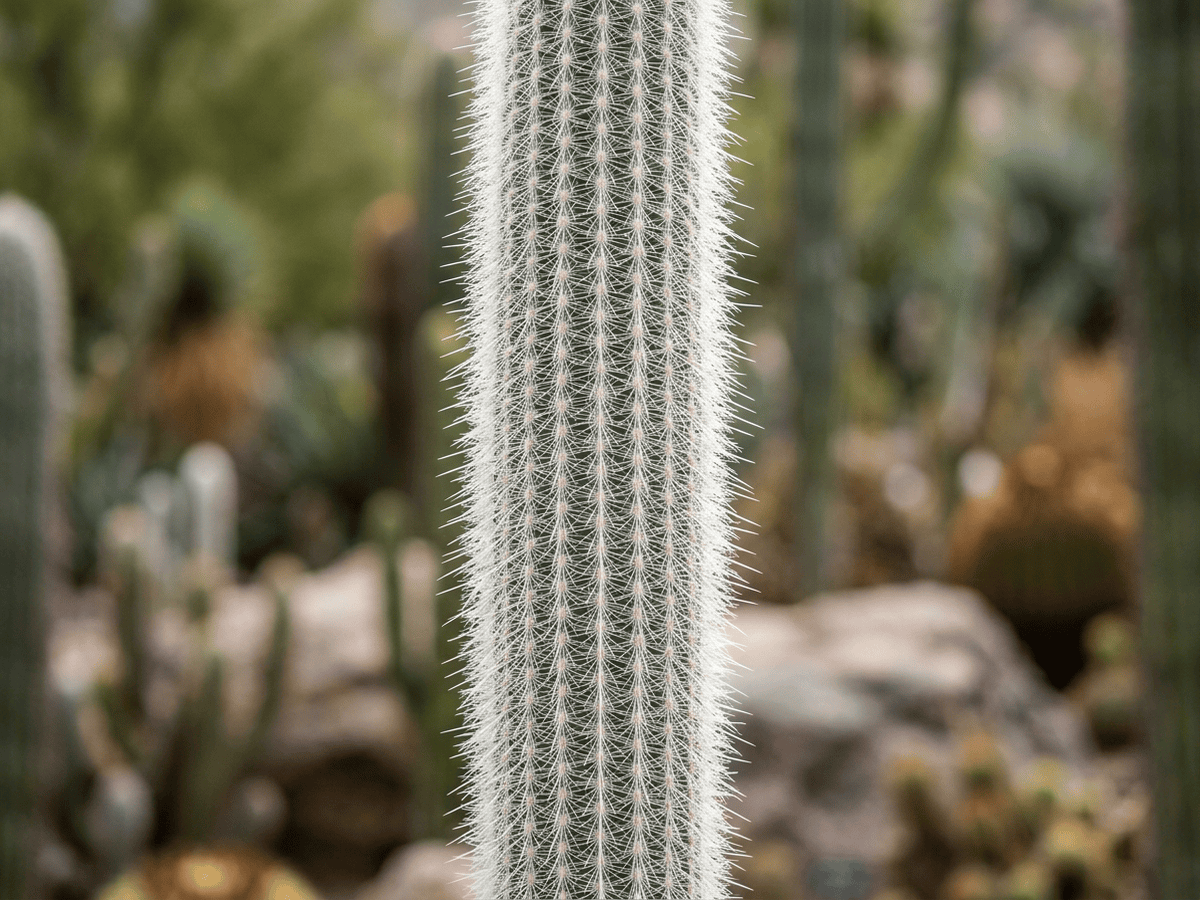
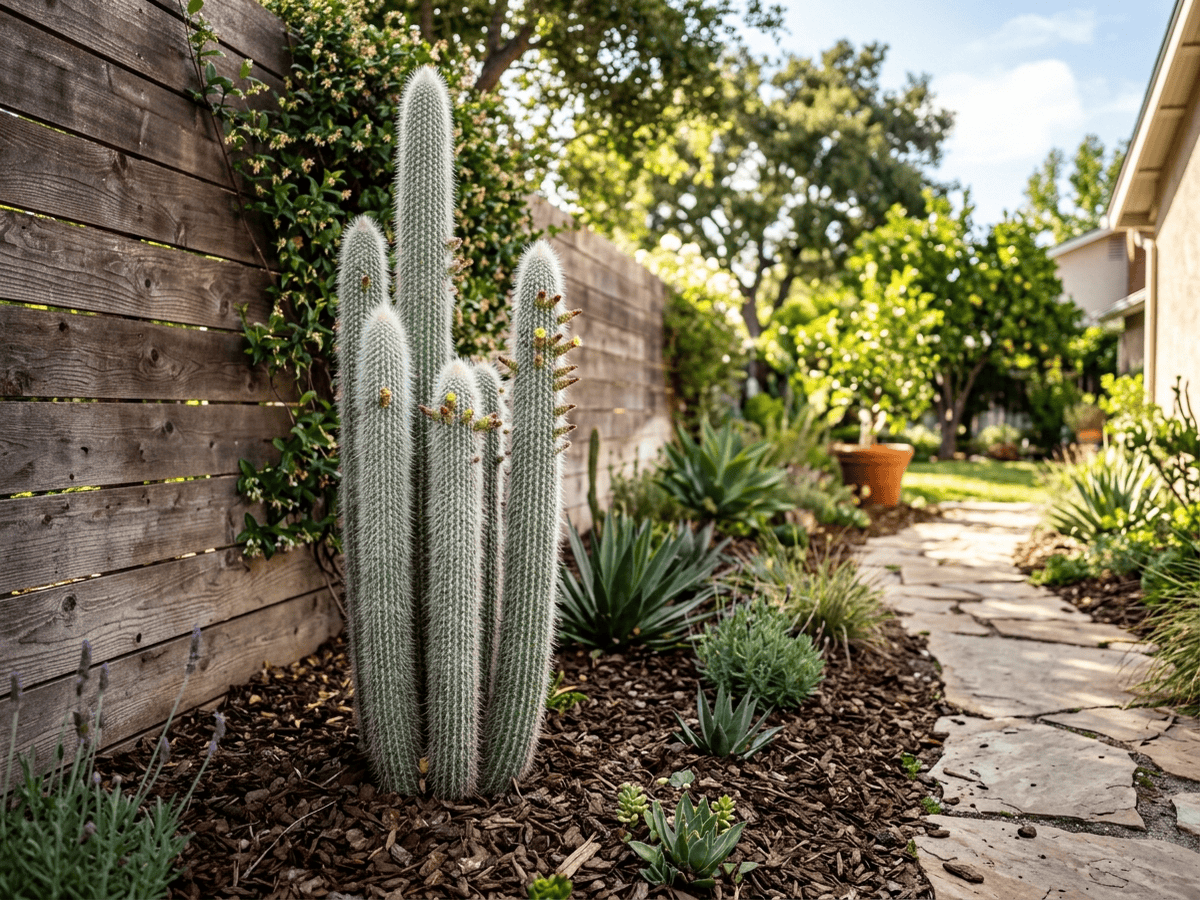
Silver Torch Cactus is a striking columnar cactus from Bolivia and Argentina, forming clumps of slender silvery-white spined columns reaching 6-10 feet tall. Densely covered in fine white spines that give it a glowing silvery appearance, mature plants produce horizontal tubular deep-red flowers that never fully open—pollinated by hummingbirds in their native range. A dramatic specimen for desert landscapes from California to Arizona, and a popular collector cactus.
- Drought-tolerant
- Architectural
- Evergreen
- Pollinator-friendly
How to care for Silver Torch Cactus
Watering
- Springevery 14 days
- Summerevery 14 days
- Fallevery 30 days
- Winterevery 60 days
Soil · Fast-draining
- Main mixSand + pumice + soil 1:1:150%
- DrainagePumice / gravel50%
Keep grit at half the mix or more — this soil is meant to dry out fast.
FERTILIZER
Balanced Feed 14-14-14
An even feed covers all three needs at once, keeping leaves, roots and blooms moving together with nothing pushed out of balance.
- Nitrogen · Leaves
- Phosphorus · Roots + Blooms
- Potassium · Strength
- Springevery 60 days
- Summerevery 60 days
At a Glance
- NativeSouth America
- Height4–10 ft (1.2–3 m)
- Spread1–2 ft (0.3–0.6 m)
- Flower colorRed, Pink
- Foliage colorGreen, Silver
- Fruit colorGreen
- SoilSandy, Well-drained
- LocationsYard · Balcony
Bloom time
BLOOM CYCLE
Peak bloom
Jun–Aug
Horizontal deep-red tubular flowers on mature columns in summer
Toxicity
Pets Slight
Unknown toxic principle
Not reported
EXPOSURE No exposure route is reported.
EFFECT No toxic effect is reported.
NOTE No toxicity is reported for humans in this catalog; this is not evidence that the plant is edible or harmless.
Slight
- Stem
- Contact
EXPOSURE Touching stems.
EFFECT Puncture wounds from bristles.
NOTE Not chemically toxic; bristles pose mechanical injury.
Slight
- Stem
- Contact
EXPOSURE Touching stems.
EFFECT Puncture wounds from bristles.
NOTE Not chemically toxic; bristles pose mechanical injury.
Educational information, not medical or veterinary advice. If exposure is suspected, contact a doctor or veterinarian.
DISTRIBUTION


- Native
- Introduced
- South America
History
Cleistocactus strausii, silver torch cactus, is a columnar cactus native to high-altitude slopes of the Andes in Bolivia and northern Argentina at 1800-3000 meters elevation. German horticulturist Emil Heese described it as Cereus strausii in 1907, honoring fellow German cactus enthusiast Leopold Strauss. German botanist Curt Backeberg transferred the species to Cleistocactus in 1934.
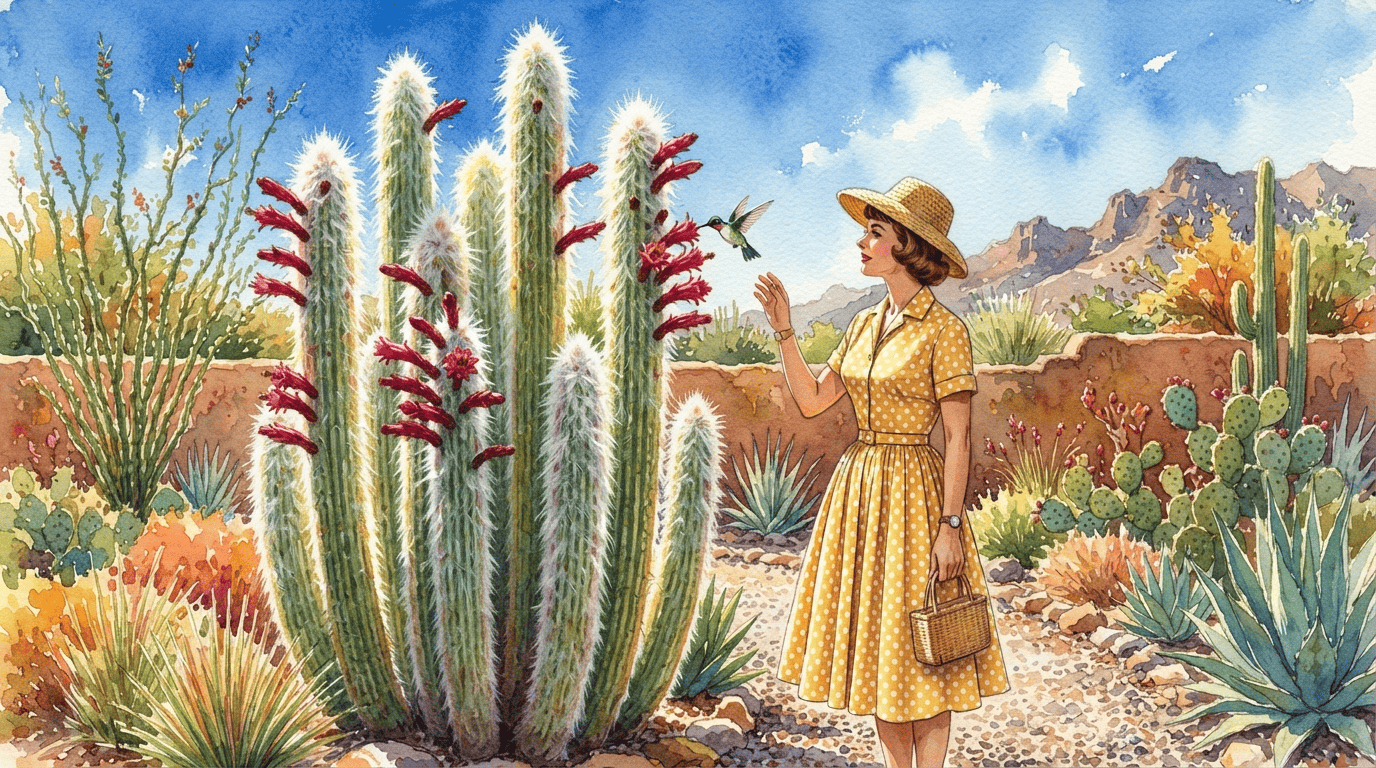
The genus name Cleistocactus (from Greek kleistos = closed) refers to the characteristic that flowers barely open at their tips. Plants form clumping columnar cacti with slender 5-10 cm diameter green stems reaching 1-3 meters tall, densely covered in white woolly bristle-like spines giving the appearance of fuzzy silver torches. In summer mature stems produce distinctive 8-9 cm long tubular deep carmine-red flowers horizontally oriented along the upper stem, adapted for hummingbird pollination, with only the tips opening to expose the anthers.
One of the most recognizable columnar cacti in cultivation and reasonably cold-tolerant down to short periods below freezing. Described in 1893 by Karl Schumann and named for German botanist Ludwig Strauss. A popular Hollywood-era ornamental cactus that defined many mid-century desert garden designs in the American Southwest.
Symbolism & meaning
What It Symbolizes
The silver torch cactus is high-altitude endurance made visible, surviving thin air, brutal sun, and freezing nights in the Bolivian Andes with a stoic upright pillar form. Its brilliance is quieter — a coat of fine white spines that catches desert sunlight and turns each column into a silvery candle. Few cacti combine such severe habitat and such gentle, almost angelic, surface texture.
- Endurance — Andean cactus adapted to cold nights and fierce high-altitude sun
- Brilliance — silvery columns glow in desert sunlight
Where the Name Comes From
'Cleistocactus' from Greek 'kleistos' (closed) for the never-opening flowers; 'strausii' honors Ludwig Strauss.
Uses & Fun Facts
- Silvery white-spined columnar cactus as arid-garden focal point
- Slow upright cactus suited to deep pots in sunny windows
Related plants
Plants with similar care
 Chinese AbeliaAbelia chinensis
 Fragrant AbeliaAbelia mosanensis
 Large-Flowered AbeliaAbelia uniflora
 Glossy AbeliaAbelia x grandiflora
Frequently asked questions
How often should I water Silver Torch Cactus?
In summer, water about every 14 days; in winter, about every 60 days. Adjust for heat, pot size and drainage.
How much light does Silver Torch Cactus need?
Full sun: 6+ hrs direct. Watch the leaves — scorching or stretching means the light needs adjusting.
Is Silver Torch Cactus toxic to cats or dogs?
Pets Slight (Dogs Slight · Cats Slight) Educational information, not medical or veterinary advice. If exposure is suspected, contact a doctor or veterinarian.
Is Silver Torch Cactus easy to grow?
Yes — it is considered an easy, beginner-friendly plant.
When does Silver Torch Cactus bloom?
It typically blooms Jun–Aug in the Northern Hemisphere.
YardMate
Identify any plant in seconds
Snap a photo — YardMate names the plant, diagnoses problems, and reminds you when to water.
Download on the App Store