 YardMate


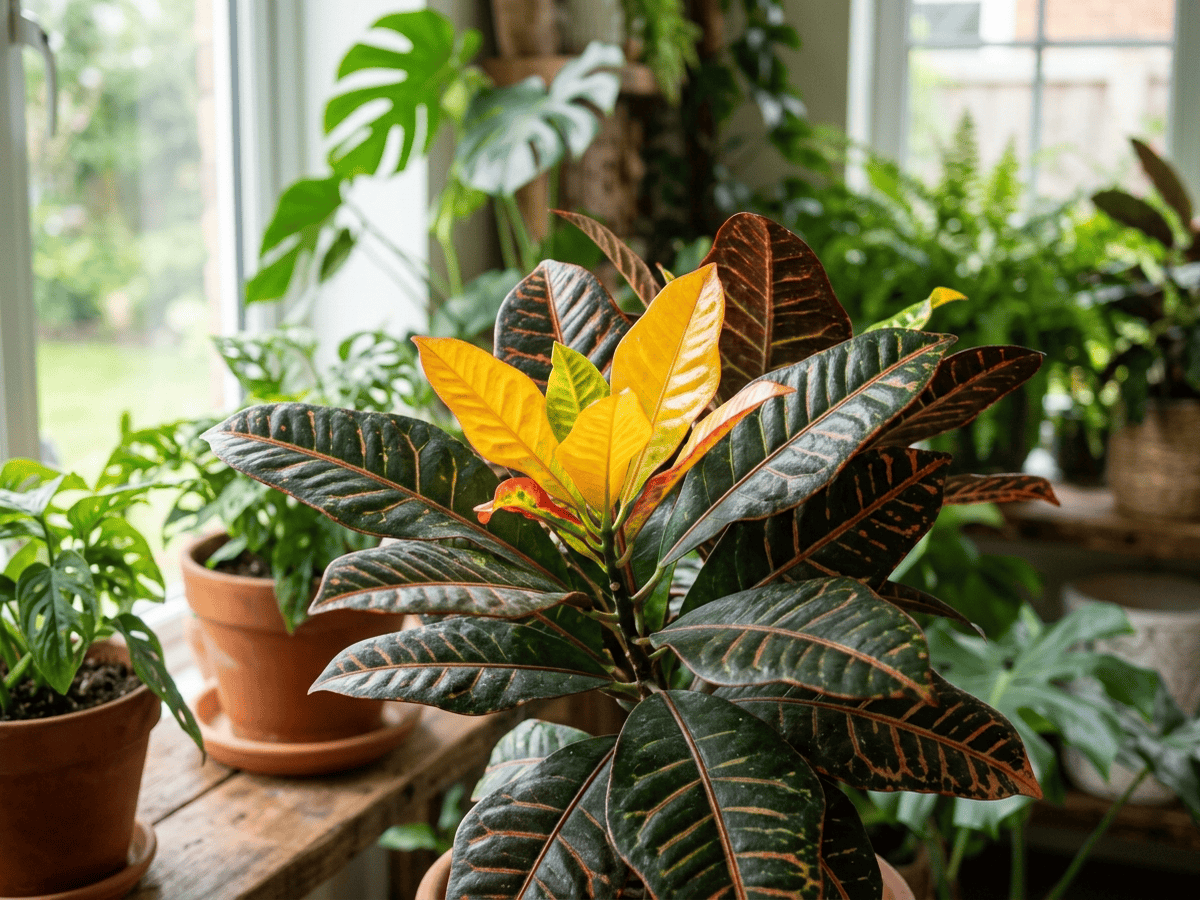

Variegated Croton
Codiaeum variegatum
Medium · Some experienceAbout Variegated Croton
Codiaeum variegatum is the correct botanical name for the plant commonly sold as 'Croton.' This species and Croton variegatum refer to the same plant — a vividly colored tropical shrub from the Euphorbia family. See Croton variegatum for full details. The genus Codiaeum contains about 17 species, all from the Malay Archipelago and Pacific Islands, but C. variegatum is the only one widely cultivated. The name confusion between Codiaeum and Croton persists in the nursery trade, though they are botanically distinct genera.
- Tropical
How to care for Variegated Croton
Watering
- Springevery 7 days
- Summerevery 5 days
- Fallevery 10 days
- Winterevery 14 days
Soil · Well-draining
- Top dressingPine bark mulch10%
- Main mixPotting soil + perlite 2:170%
- DrainageLECA / gravel20%
Never skip the drainage layer — standing water is the top cause of root rot.
FERTILIZER
Balanced Feed 14-14-14
An even feed covers all three needs at once, keeping leaves, roots and blooms moving together with nothing pushed out of balance.
- Nitrogen · Leaves
- Phosphorus · Roots + Blooms
- Potassium · Strength
- Springevery 30 days
- Summerevery 30 days
- Fallevery 60 days
At a Glance
- NativeSoutheast Asia, Australasia
- Height3–5 ft (0.9–1.5 m)
- Spread2–3 ft (0.6–0.9 m)
- Foliage colorGreen, Yellow, Red, Bronze
- SoilLoamy, Well-drained, Rich
- LocationsIndoor · Balcony
Fragrance
NO FRAGRANCE
Not fragrant.
Toxicity
Humans Slight · Pets Slight
5-deoxyingenol (diterpene ester) and latex irritants
Slight
- Leaf
- Stem
- Sap
- Contact
- Ingestion
EXPOSURE Touching leaves, stems, and sap. Eating leaves, stems, and sap.
EFFECT Skin irritation from latex and oral burning, GI upset, possible blistering in sensitive individuals.
NOTE Euphorbiaceae family latex can be significantly irritating; avoid eye contact.
Slight
- Leaf
- Stem
- Ingestion
EXPOSURE Eating leaves and stems.
EFFECT Oral irritation, vomiting, diarrhea, skin irritation from sap contact, and per ASPCA.
NOTE Euphorbiaceae family latex can be significantly irritating; avoid eye contact.
Slight
- Leaf
- Stem
- Ingestion
EXPOSURE Eating leaves and stems.
EFFECT Oral irritation, vomiting, diarrhea, skin irritation from sap contact, and per ASPCA.
NOTE Euphorbiaceae family latex can be significantly irritating; avoid eye contact.
Educational information, not medical or veterinary advice. If exposure is suspected, contact a doctor or veterinarian.
DISTRIBUTION


- Native
- Introduced
- Southeast Asia
- Australasia
History

Codiaeum variegatum is native to Malaysia, Indonesia, the Pacific islands from New Guinea to Fiji, and northern Australia, where it grows as an evergreen shrub to six meters tall in coastal and lowland forest. Pacific island peoples have cultivated it for centuries: in Polynesian, Melanesian, and New Guinea cultures it is planted as hedging to mark land boundaries, used in ceremony and funerary practice, and paired with specific color variants carrying ritual meaning. Western horticulture adopted it in the 19th century, and intensive breeding — especially in Florida and the Netherlands — has produced several hundred named cultivars showing yellow, orange, red, purple, and near-black variegation in a remarkable range of leaf shapes.
Its milky latex contains irritant diterpene esters. The naming confusion between Codiaeum and Croton dates to 1753, when Linnaeus grouped many unrelated tropical plants under 'Croton.' Later botanists separated them, but the nursery trade never caught up.
True Croton is a massive genus of over 1,200 species in the spurge family, mostly non-ornamental. Codiaeum has only 17 species, with C. variegatum being the sole garden star. The plant played a role in colonial botanical gardens across the British Empire — Kew Gardens distributed thousands of cultivars to gardens in India, Singapore, and Australia during the 19th century.
Symbolism & meaning
What It Symbolizes
The Variegated Croton refuses to blend in, its riot of red, yellow, orange, and green leaves embodying boldness and fearless self-expression. It is often read as a flower of tropical confidence, asking no permission to be brilliant in a room of muted greens. To live with it is to accept that quiet good taste is not the only kind of beauty, and that some plants exist precisely to challenge the palette.
- Boldness — Refuses to blend in — its riot of color represents fearless self-expression
Where the Name Comes From
Codiaeum from Malay 'kodiho.' Variegatum means 'variegated.' Often mislabeled as Croton, which is a separate genus in the same family.
Uses & Fun Facts
- Vividly multicolored leathery foliage as tropical accent
- Bold houseplant or patio shrub in warm climates
Related plants
Plants with similar care
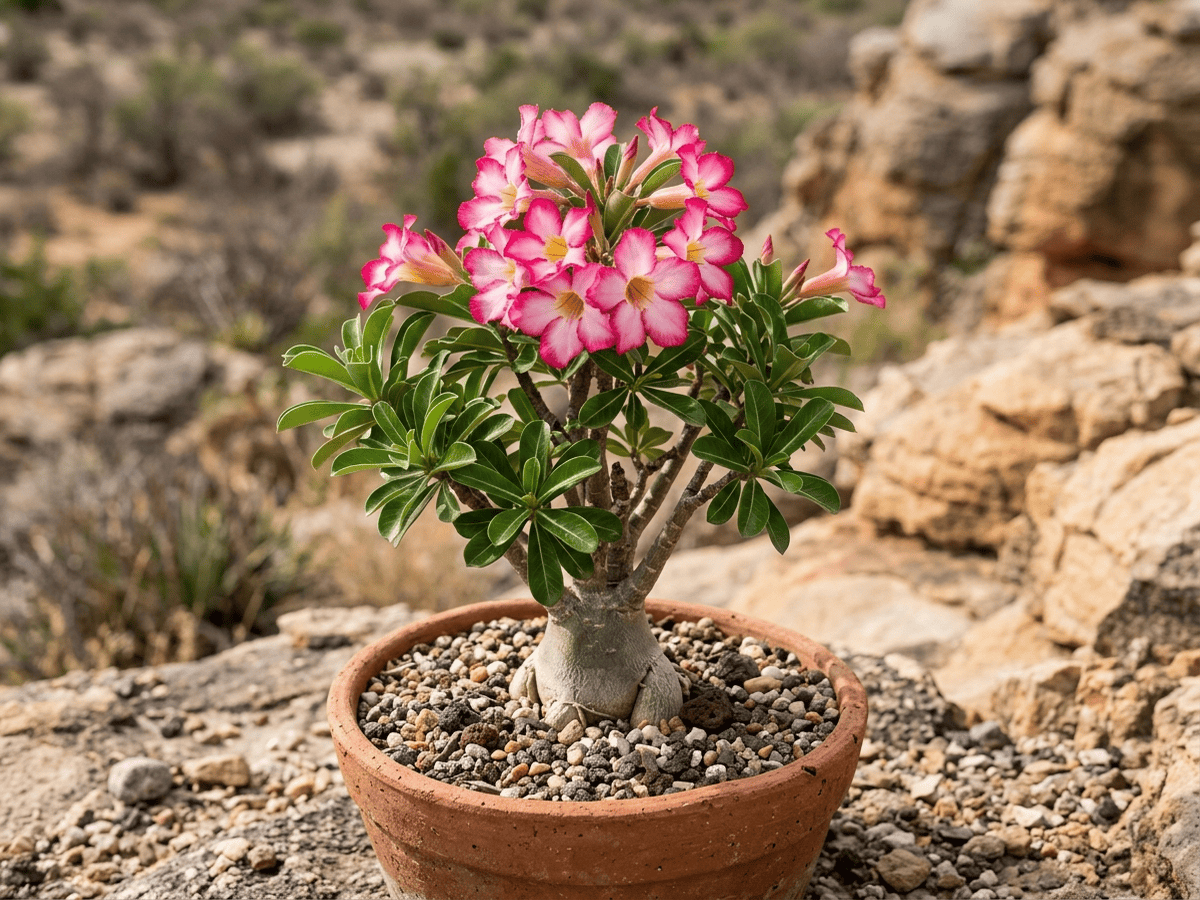 Desert RoseAdenium obesum
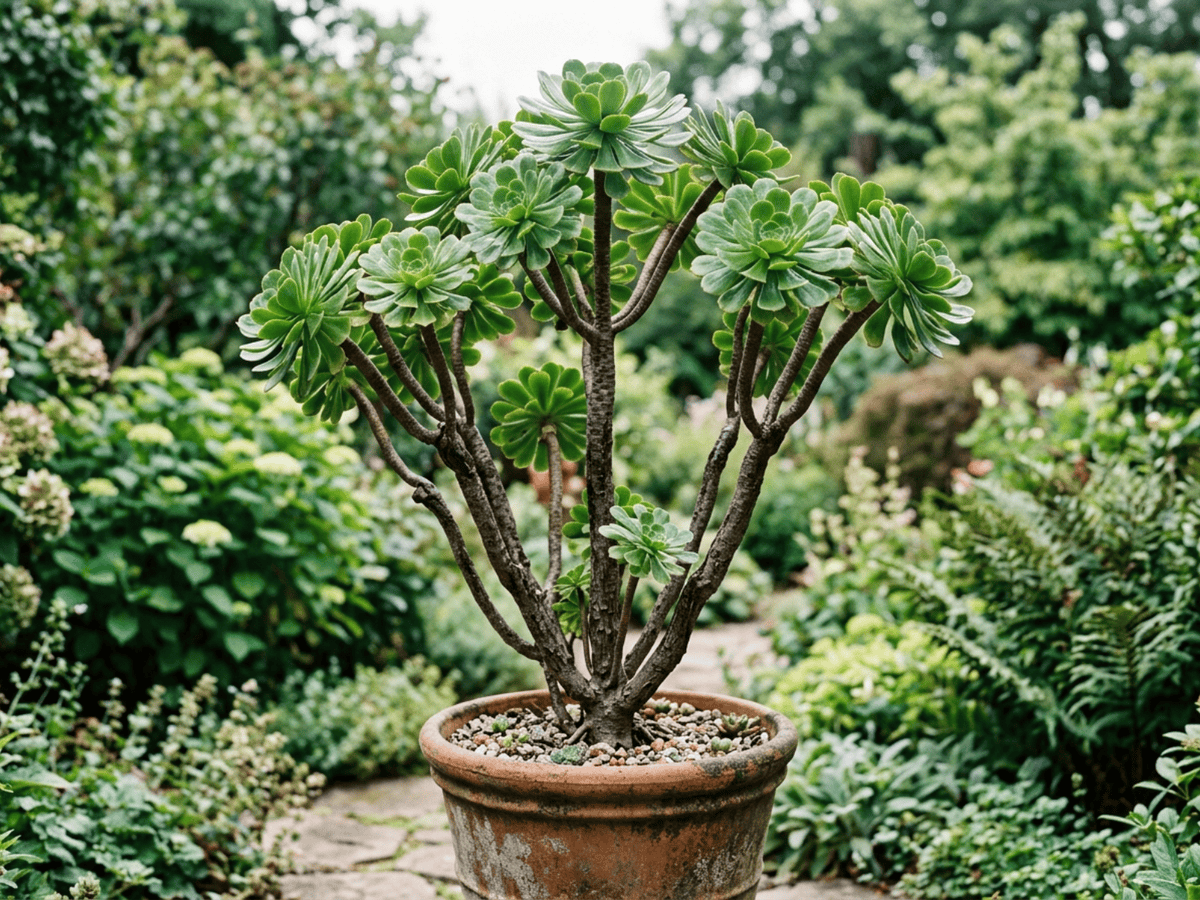 Tree AeoniumAeonium arboreum
 Queen Victoria AgaveAgave victoriae-reginae
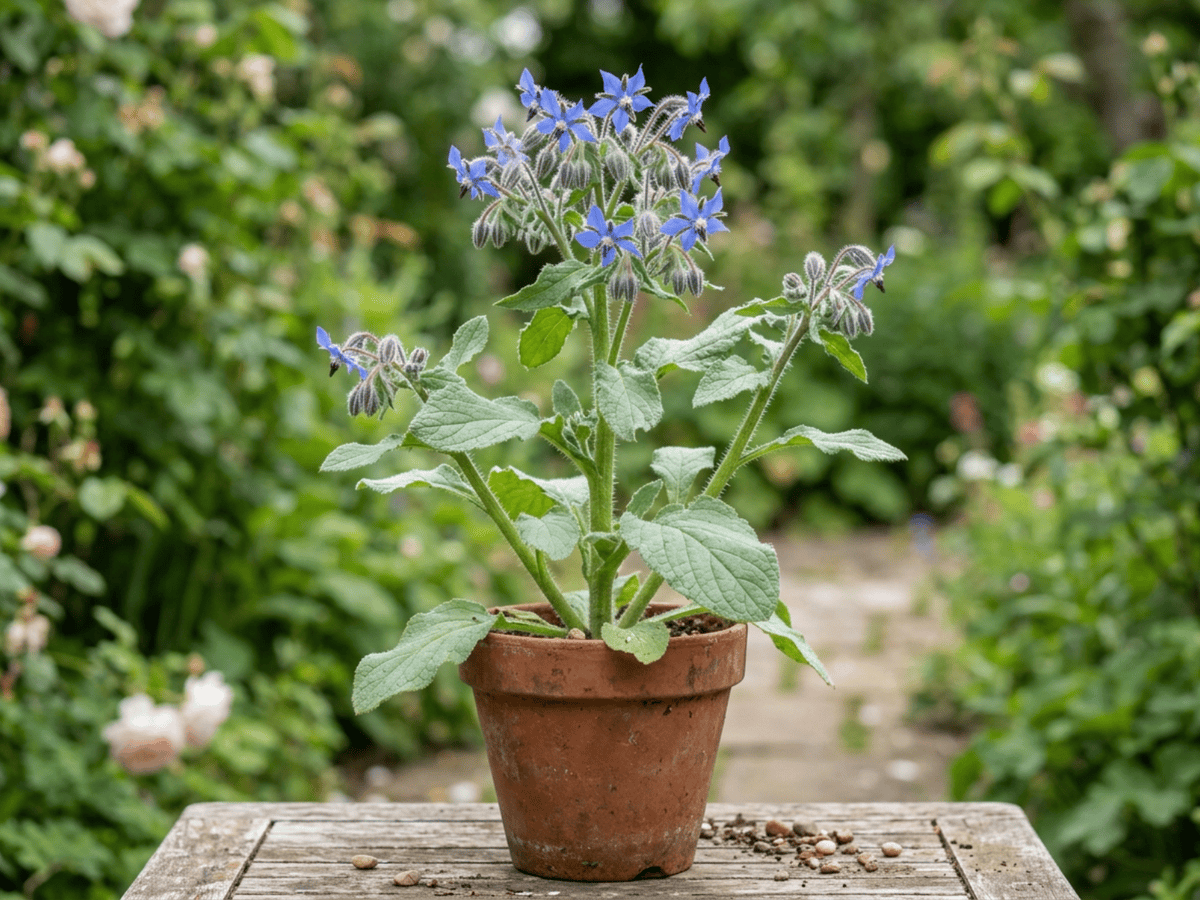 Lemon VerbenaAloysia citriodora
Frequently asked questions
How often should I water Variegated Croton?
In summer, water about every 5 days; in winter, about every 14 days. Adjust for heat, pot size and drainage.
How much light does Variegated Croton need?
Full sun: 6+ hrs direct. Watch the leaves — scorching or stretching means the light needs adjusting.
Is Variegated Croton toxic to cats or dogs?
Pets Slight (Dogs Slight · Cats Slight) Educational information, not medical or veterinary advice. If exposure is suspected, contact a doctor or veterinarian.
Is Variegated Croton easy to grow?
It is moderately demanding: a good choice once you have a little experience.
Can Variegated Croton be grown indoors?
Yes, it adapts well to indoor growing given the right light.
YardMate
Identify any plant in seconds
Snap a photo — YardMate names the plant, diagnoses problems, and reminds you when to water.
Download on the App Store